
Reviewed · VARANASI TOURS FROM DELHI
Golden triangle & The Burning city Varanasi 9 Nights
The striking idea here is the contrast: one trip takes you from Mughal tombs and Rajput palaces to the cremation ghats and prayer rituals of Varanasi. You get the polished monuments of Delhi, Agra, and Jaipur, then a far more raw and spiritual side of India along the Ganges.
I like the excellent range of sights, from the Taj Mahal and Agra Fort to Sarnath and the city’s sacred riverfront. I also like the practical mix of transport, including a train from Agra to Varanasi, a flight back to Delhi, and a Tuk-Tuk ride through the capital. The main consideration is the pace: ten days, nine dinners, and several long sightseeing days leave little room for lazy mornings.
Key points to know before booking
- Four very different destinations: Delhi, Agra, Jaipur, and Varanasi give you architecture, royal history, religion, and daily life in one itinerary.
- The Taj Mahal gets its own day: You are not asked to squeeze India’s most famous monument into a rushed afternoon.
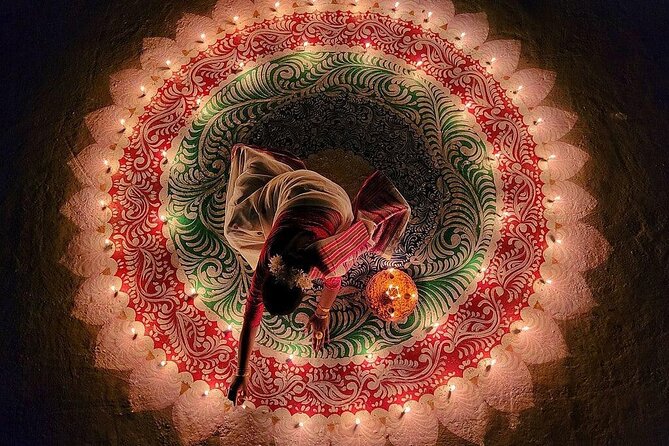
- Varanasi includes a Ganges boat ride: The riverfront and Manikarnika Ghat form the most intense part of the trip.
- A private tour for your group: You are not placed with strangers, and the schedule can be adjusted more easily.
- Guide Rajendra, or Raji: He is especially praised for his patience, cultural knowledge, English and Italian language skills, and willingness to add markets or unscheduled stops.
- Meals and major transport are covered: Breakfast, dinner, the Agra to Varanasi train, and the Varanasi to Delhi flight are included, but lunch is not.
Four cities, four different Indias
This is not simply a monument tour. Delhi gives you imperial buildings, memorials, temples, and street life. Agra brings the great Mughal monuments. Jaipur shifts the mood to painted façades, royal rooms, observatories, and Rajasthani design.
Then Varanasi changes the rules. Here, the focus is not on a single palace or fort. It is on the Ganges, the ghats, temple visits, boat travel, and the visible rituals of life and death. That contrast is the strongest reason to choose this itinerary instead of a standard Golden Triangle trip.
The tour is private, so only your own group takes part. That matters in India, where a little flexibility can make a long day feel much easier. If you want to pause for photographs, ask for a market stop, or spend more time at a favorite monument, the guide can respond to your needs more readily than a large group tour can.
More Varanasi trips from New Delhi:
- Delhi Agra Jaipur & Varanasi Tour – Taj Mahal & Ganga Aarti
★ 5.0 · 50 reviews - 7-Day Golden Triangle & Varanasi Tour from Delhi with Guide
★ 5.0 · 38 reviews - 9 – Days Private Golden Triangle Tour with Khajuraho & Varanasi
★ 5.0 · 22 reviews
Delhi begins with Mughal gates and a Tuk-Tuk ride
The first day covers Jama Masjid, the Lotus Temple, and India Gate, with a short Tuk-Tuk ride added to show a less polished side of Delhi.
Jama Masjid is a powerful opening stop. Its red sandstone and white marble, broad courtyard, tall minarets, and large gates give you an immediate sense of Mughal scale. The scheduled visit lasts about 30 minutes, which is enough for an introduction and photographs, though you may want to ask your guide how much time is actually available if the site feels especially absorbing.
The Lotus Temple offers a sharp change. Its white petal-shaped design belongs to the Bahá’í faith, and the quiet interior provides a pause after the noise and movement of Delhi. You have about 40 minutes here. The stop is less about objects or displays and more about the building’s form and calm atmosphere.
India Gate is a memorial on New Delhi’s ceremonial axis. It is free to enter and takes about 40 minutes on the plan. The monument is tied to military sacrifice, so your guide can help place it within India’s modern national story rather than treating it as just another photo stop.
The Tuk-Tuk ride is a particularly useful touch. It gives you a short look at ordinary urban movement rather than only the grand avenues and famous buildings. Expect it to be a brief taste, not a full neighborhood tour, but it adds texture to a day otherwise built around major landmarks.
Delhi’s second day brings temples, tombs, and memorials
Day two is more varied and, for many people, more rewarding. You visit Swaminarayan Akshardham, Humayun’s Tomb, Raj Ghat, and Gurudwara Bangla Sahib.
Akshardham is a large spiritual and cultural complex opened in 2005. The central temple uses pink sandstone and detailed carving, and the planned hour gives you time to take in its scale. This is a formal religious site, so follow the guide’s instructions about entry and behavior.
Humayun’s Tomb is one of Delhi’s most important Mughal buildings. Built in 1570, it was commissioned for Emperor Humayun and is listed as a UNESCO World Heritage site. Its garden setting and architectural symmetry make it a useful point of comparison with the Taj Mahal, which comes later. Forty minutes is enough for an overview, but the site rewards careful looking at the design rather than a quick photograph.
Raj Ghat is quieter. It marks the cremation site of Mahatma Gandhi and gives the itinerary a modern political and moral focus. The scheduled 30 minutes should feel suitable here. This is a memorial visit, not a sightseeing spectacle.
At Gurudwara Bangla Sahib, you encounter one of Delhi’s main Sikh places of worship. It honors Guru Har Krishan, who stayed at the site in 1664. The visit lasts about 30 minutes and adds a different religious tradition to the trip. Together, these stops make Delhi feel less like a checklist and more like an introduction to the city’s many faiths.
Jaipur shows its royal side in two compact days
Jaipur’s first day includes Birla Mandir, Albert Hall Museum, and Patrika Gate. Birla Mandir is a modern Hindu temple dedicated to Vishnu and Lakshmi, set at the base of Moti Dungari Hill. The half-hour visit is short, but it provides a useful contrast with the older Mughal and Sikh sites in Delhi.
The Albert Hall Museum is an important Jaipur building, designed in an Indo-Saracenic style and built in 1876. The supplied schedule does not give a visit length, so confirm the timing if the museum matters to you. The building itself is part of the attraction, and its placement in the city makes it a good introduction to Jaipur’s public architecture.
Patrika Gate, at Jawahar Circle Garden, is a quick photographic stop. Its painted arches and decorative details draw on Rajasthani artistic traditions. You have about 20 minutes, so treat it as a visual pause rather than a full cultural visit.
The second Jaipur day concentrates on the city’s famous sights. Hawa Mahal, the Palace of Winds, is a five-story façade built in 1799. Its many openings were designed to allow air through the building, and the exterior is one of Jaipur’s most recognizable views. The plan suggests a short photo stop, so do not expect a long interior visit.
The water palace, Jal Mahal, also receives only about 15 minutes. It is best understood as a viewpoint and photography stop. The itinerary does not promise an interior visit, so set your expectations accordingly.
Jantar Mantar deserves more attention than its unusual name might suggest. This UNESCO-listed observatory contains 19 large instruments built in the 18th century by Maharaja Jai Singh II. They were designed to measure astronomical positions and time. The scheduled 30 minutes gives you the basic story, though an interested reader may wish for longer.
City Palace receives two hours, which is sensible. It combines Rajasthani and Mughal design and remains tied to Jaipur’s royal household. This is where you get the fullest look at court life, ceremonial spaces, and decorative detail. Jaipur Gems and Jewellery follows for about 15 minutes. That visit may suit you if you are curious about the city’s cutting and polishing trade, but be clear about your shopping intentions before you go.
More Golden Triangle routes from New Delhi:
- 3-Days Private Golden Triangle Tour: Delhi, Agra & Jaipur by Car
★ 5.0 · 1,107 reviews - 3-Days Private Golden Triangle Tour: Delhi, Agra & Jaipur by Car
★ 5.0 · 1,098 reviews - 3-Day Delhi, Agra and Jaipur Private Tour – India Golden Triangle
★ 5.0 · 812 reviews - Four-Day Private Luxury Golden Triangle Tour to Agra and Jaipur From New Delhi
★ 5.0 · 807 reviews
Abhaneri and Agra bring the Mughal story into focus
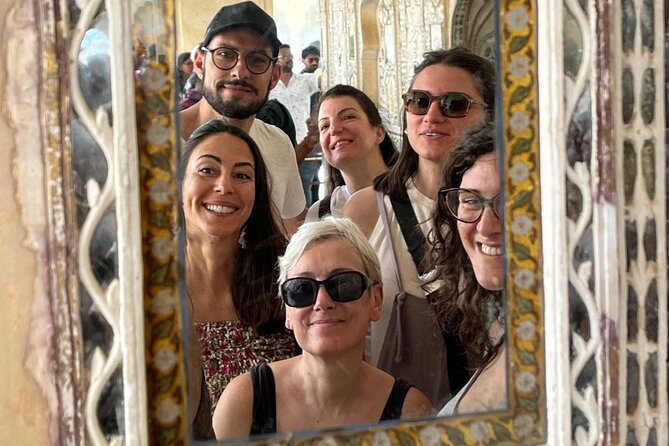
Day five connects Jaipur and Agra with two strong stops: Chand Baori and Agra Fort.
Chand Baori, at Abhaneri, is a ninth-century stepwell built by King Chanda of the Nikumbh dynasty. Its repeated flights of steps create a precise geometric pattern and show how water shaped public architecture in Rajasthan. The scheduled 30 minutes is enough to understand the structure and take photographs, although the heat can make the stop feel more demanding.
Agra Fort gets two hours, and it deserves them. Built by Emperor Akbar in the 16th century, it served as the main residence of Mughal emperors before the capital moved to Delhi. Inside, you see the shift from military power to court life, with walls, gates, and royal spaces telling different parts of the story.
The fort also helps you read the Taj Mahal. The two monuments are often treated as separate attractions, but together they show the Mughal dynasty’s power, taste, and family story. If your guide is Raji, ask him to connect the buildings rather than giving you two unrelated lectures. His strongest quality, according to the information available, is his ability to explain details, legends, and historical context without losing patience when the group has extra requests.
The Taj Mahal gets the time it deserves
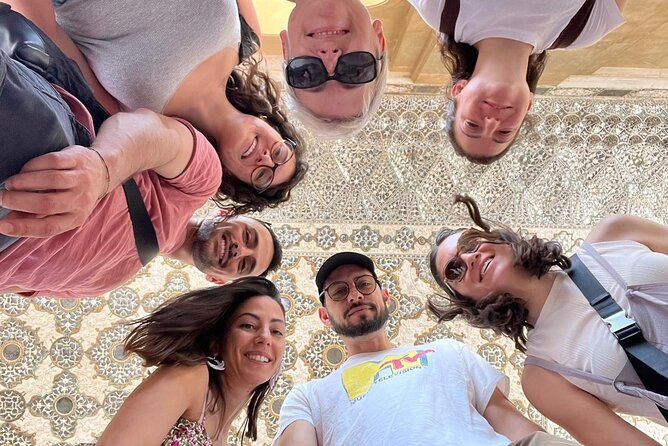
Day six is devoted to the Taj Mahal, with about two hours at the monument. That is a good choice. You are not forced to fit the building between several unrelated stops, and you can spend time looking at the white marble, symmetry, gardens, and changing light.
The Taj Mahal was built by Shah Jahan in memory of Mumtaz Mahal, who died during childbirth. That personal story matters, but the building is also a statement of imperial wealth, design, and grief. Your guide can help you separate the familiar romantic tale from the larger Mughal setting.
Two hours will let you see the main areas and take photographs, but the exact experience depends on entry conditions and the day’s schedule. Bring patience for the approach and allow time for security procedures if required. The tour includes the entrance fee, which simplifies this major stop.
Varanasi moves from monuments to the river
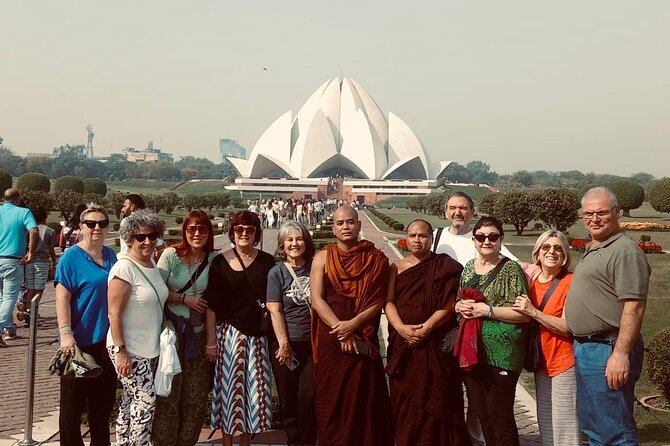
The Agra to Varanasi train is one of the trip’s most useful practical features. It breaks up the road travel and takes you toward the most spiritually distinct part of the itinerary. The precise train timing is not provided, so ask for the confirmed schedule before departure.
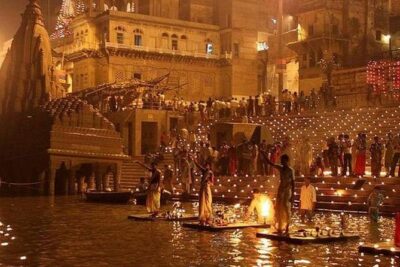
In Varanasi, the Ganges ghats become the main stage. There are more than 80 ghats, each linked with different religious and social uses. A three-hour visit gives you time to see the riverfront rather than simply stopping for a photograph.
The boat ride is the heart of this section. From the water, you can look back at the long line of steps, temples, and buildings along the river. It is a different view from walking, and it gives you space to take in the scale of the ghats.
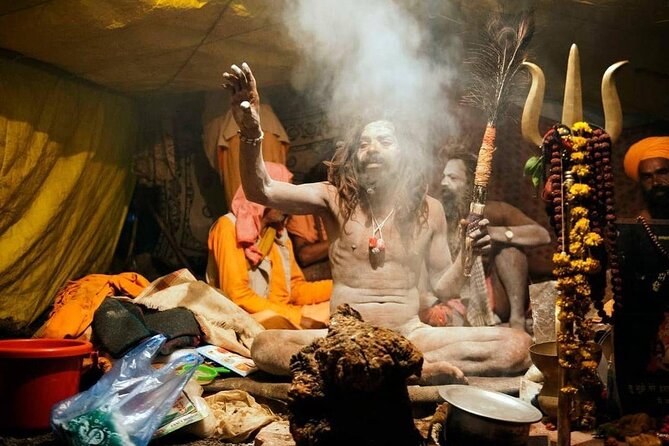
Manikarnika Ghat is the most sensitive stop. It is an active cremation site, not a staged attraction. The itinerary includes a visit to cremation places and a two-hour boat and ghat experience, so you should be prepared for direct contact with Hindu funeral customs. Listen to your guide, keep a respectful distance, and follow any local rules about photography. This part may be difficult, but it is also central to understanding why Varanasi feels so different from Jaipur or Agra.
Sarnath and Durga Temple complete Varanasi
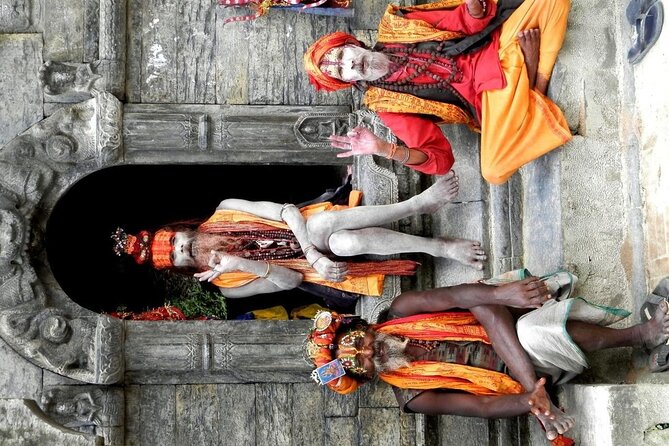
Sarnath provides a calmer second look at the region’s religious importance. It is the place where Buddha gave his first sermon after enlightenment, and the visit lasts about two hours. The site shifts the focus from Hindu ritual on the Ganges to Buddhist teaching and pilgrimage.
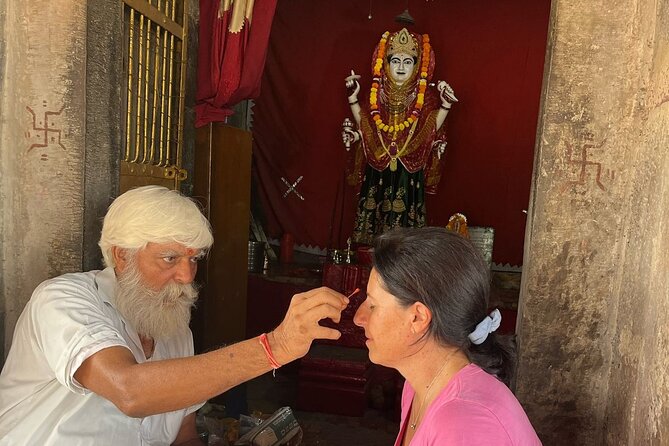
Durga Temple adds another Hindu setting. You visit the temple dedicated to the goddess Durga for about an hour and receive a blessing. As with all religious sites on this route, your guide’s instructions about clothing, conduct, and photography are worth following closely.
After Varanasi, the included flight returns you to Delhi. Day nine is described as an airport pickup followed by a transfer to the hotel for rest. Day ten is the transfer to Indira Gandhi International Airport. These final days are not sightseeing days, but they give the schedule a practical buffer after the train and flight connection.
What the price covers, and what it does not
At $1,163.18 per person, the value depends on how much help you want while moving between four cities. The price includes entrance fees, an air-conditioned vehicle, onboard WiFi, fuel charges, government fees, the Agra to Varanasi train, the Varanasi to Delhi flight, the Ganges boat ride, the Tuk-Tuk ride, eight breakfasts, and nine dinners.
That is a meaningful list of inclusions for a ten-day private trip. You are paying for transport coordination as well as sightseeing, and India’s distances can make that support useful. Lunch is not included, so budget separately for ten midday meals and drinks.
Group discounts are offered. Since this is a private tour, the per-person price may become more attractive if you are traveling with family or friends. The tour is booked on average 34 days ahead, which is a useful planning guide, especially if you want to request a particular guide such as Raji.
Who should choose this India itinerary?
Choose it if you want the headline sights but do not want to stop at the Golden Triangle. The Varanasi extension changes the trip from a palace-and-fort circuit into a broader look at India’s religious life.
It suits you best if you are comfortable with early starts, changing transport, busy cities, and emotionally serious places. The schedule is full, and the Manikarnika Ghat visit requires respect and maturity.
You may prefer a slower trip if you want long free afternoons, extensive museum time, or a gentle pace. The plan gives limited time at some stops, especially Patrika Gate, Jal Mahal, and Hawa Mahal. A private format helps, but it does not remove the distances between cities.
The strongest guide feedback centers on Rajendra Halduniya, known as Raji. He is praised for patience, humor, detailed explanations, flexibility, and fluency in English and Italian. He also adds markets and other unscheduled visits when appropriate. Since guide assignment is not explicitly guaranteed, ask whether Raji is available when you book.
Should you book it?
Book this tour if you want a broad first look at northern India, with major admission fees and long-distance connections arranged in advance. The Taj Mahal, Jaipur’s royal center, Delhi’s religious variety, and Varanasi’s river rituals make a powerful combination.
Think twice if you dislike full days or want to explore independently. For everyone else, the private format, included train and flight, and the option of a guide such as Raji make this a practical way to cover a lot of ground in ten days. Cancellation is free up to six full days before the start time. A 50 percent refund applies two to six days before departure, while cancellations less than two days ahead are nonrefundable.
FAQ
How long is the Golden Triangle and Varanasi tour?
The tour lasts approximately 10 days and includes 9 nights.
Which cities does the tour visit?
The itinerary covers New Delhi, Jaipur, Agra, and Varanasi, with Sarnath visited from Varanasi.
Is this a private tour?
Yes. Only your group participates in the private tour or activity.
Is transportation included?
Yes. The tour includes an air-conditioned vehicle, one train ticket from Agra to Varanasi, one flight from Varanasi to Delhi, a Tuk-Tuk ride, fuel charges, government fees, and WiFi on board.
Is the Ganges boat ride included?
Yes. A Ganges River boat ride is included, along with visits to the ghats and Manikarnika Ghat.
Are meals included?
Breakfast is included on eight days and dinner on nine days. Lunch is not included.
Can I cancel for a full refund?
Yes. You can receive a full refund if you cancel at least six full days before the experience start time. A 50 percent refund applies when you cancel two to six full days before the start time.
Newly reviewed around New Delhi
- Private Customized Tour Of Old/New Delhi Spiritual Sites★ 5.0 · 5 reviews
- Yoga and Meditation Classes in Gurgaon★ 4.5 · 8 reviews
- Yoga class in Delhi★ 5.0 · 29 reviews
- Old Town Delhi Walking Tour (2 Hours Guided Tour with Local)★ 4.5 · 22 reviews
- 5 Days Golden Triangle Tour with Ranthambore(Delhi Agra Jaipur Ranthambore Tour)★ 5.0 · 3 reviews
- Wonderful Old & New Delhi sightseeing tour★ 5.0 · 3 reviews
- Hidden Gems of Old Delhi – Walk★ 5.0 · 8 reviews
- Delhi Zoo White Tigers & lions with Old Fort Visit★ 4.5 · 5 reviews
Varanasi Tours from Delhi, compared.
Delhi Agra Jaipur & Varanasi Tour – Taj Mahal & Ganga Aarti
Read our review →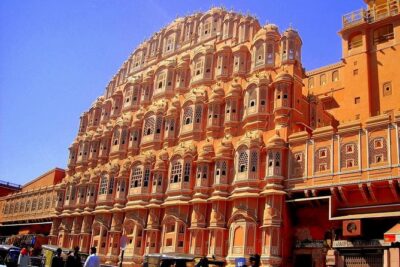
7-Day Golden Triangle & Varanasi Tour from Delhi with Guide
Read our review →
9 – Days Private Golden Triangle Tour with Khajuraho & Varanasi
Read our review →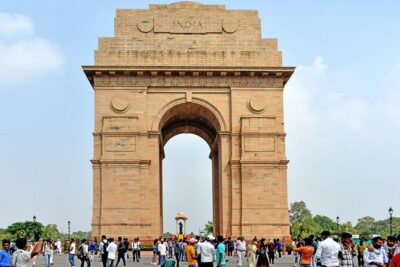
6-Day Private Tour of Delhi, Agra, Jaipur, and Varanasi from Delhi
Read our review →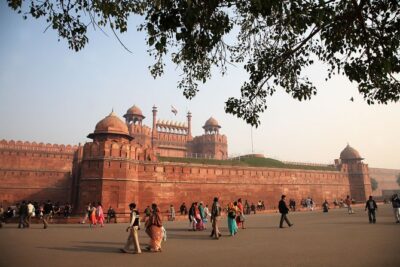
11 Days Golden Triangle & Varanasi With Luxury Accommodation,internal Flights
Read our review →
8-Day Private Luxury Golden Triangle With Spiritual Varanasi Tour
Read our review →
10 Day Private Luxury Golden Triangle with Khajuraho and Varanasi
Read our review →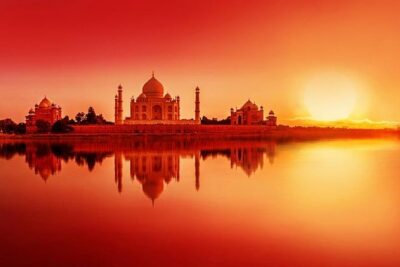
Private Luxury Delhi, Agra, Jaipur & Varanasi from Delhi – 5 Nights 6 Days Tour
Read our review →Browse the lists this tour appears in