
Reviewed · VARANASI TOURS FROM DELHI
9 – Days Private Golden Triangle Tour with Khajuraho & Varanasi
The real appeal here is the sheer range packed into nine days: Mughal monuments in Delhi and Agra, Rajput palaces in Jaipur, medieval temples at Khajuraho, and the spiritual pull of Varanasi. The Taj Mahal and Ganges boat ride provide the big-ticket moments, while Orchha and Sarnath add welcome depth.
I like the private car and local guides, which make a route this busy easier to manage. I also like the mix of transport: you get road travel for flexibility, plus air-conditioned trains between Agra, Jhansi, Khajuraho, and Varanasi. The main drawback is the pace. Several days involve long transfers, early starts, or both, and monument fees add about $100 per person.
Key points to know before booking
- Nine days, six major destinations: Delhi, Jaipur, Agra, Orchha, Khajuraho, and Varanasi are linked in one continuous route.
- Private travel throughout: An English-speaking chauffeur and local guides are provided in Delhi, Jaipur, Agra, Khajuraho, and Varanasi.
- Two unforgettable water moments: You take a boat on the Ganges at sunrise and attend the evening prayer ceremony by the river.
- Rail travel is part of the adventure: The package includes air-conditioned train tickets and one overnight train accommodation.
- The price is attractive but not all-inclusive: The $683 rate includes hotels, breakfast, transport, guides, and several rides, but not entrance fees, tips, or airfares.
- Shopping visits are built in: Agra’s marble factory, Jaipur’s handmade jewelry and stone-cutting factory, and local market stops are part of the plan.
What this nine-day India route does well
At $683 per person, this is an ambitious private tour at a low advertised price. It includes seven hotel nights, one train night, eight breakfasts, a private air-conditioned car, city guides, train tickets, and several useful extras. You are not simply paying for sightseeing tickets. You are paying to have the route arranged across several difficult-to-connect cities.
That matters in India. Delhi, Agra, Jaipur, Khajuraho, and Varanasi are not a tidy cluster, and the route mixes road travel with rail travel. Having a representative meet you at airports and railway stations removes some of the guesswork.
Still, budget another $100 per person for monument admissions, plus tips, meals beyond breakfast, camera fees, and personal spending. The price is best understood as a strong transport-and-guiding package, not a fully prepaid holiday.
The private format is another advantage. Only your group takes part, so the chauffeur can handle your transfers without waiting for a large bus. You also get a separate English-speaking guide in each major sightseeing city. No guide names are provided, so you should confirm the assigned guides before departure if that matters to you.
More Varanasi trips from New Delhi:
- Delhi Agra Jaipur & Varanasi Tour – Taj Mahal & Ganga Aarti
★ 5.0 · 50 reviews - 7-Day Golden Triangle & Varanasi Tour from Delhi with Guide
★ 5.0 · 38 reviews - 6-Day Private Tour of Delhi, Agra, Jaipur, and Varanasi from Delhi
★ 5.0 · 19 reviews
Delhi begins with Mughal power and Old Delhi street life
Your arrival day is intentionally light. A representative meets you at New Delhi International Airport, transfers you to the hotel, and leaves the rest of the day open. After an international flight, that breathing space is useful. Use it to rest rather than planning an ambitious first afternoon.
The next day brings together several very different versions of Delhi. The Red Fort introduces Mughal imperial architecture and the red sandstone walls associated with the city’s royal past. The fort was used for ceremonies by the Mughal rulers, so it gives you a sense of power and pageantry before the tour moves into the crowded streets of Old Delhi.
Chandni Chowk is the sharper contrast. This old market area near Old Delhi Railway Station is noisy, packed, and full of movement. The included rickshaw ride is a good choice here. A car would only leave you stuck at the edge of the action, while a rickshaw lets you see the market at close range. Expect sensory overload rather than a calm introduction.
Humayun’s Tomb rewards slower attention. Built in 1565, nine years after the emperor’s death, it is an early major example of Mughal garden-tomb design. The site helps explain how Mughal architecture developed before the Taj Mahal. Its admission fee is extra.
New Delhi then shifts the subject from emperors to the modern Indian state. You see Rashtrapati Bhavan, the presidential residence, and India Gate, the 42-meter memorial arch at the center of the capital. These are mainly exterior viewing stops, so do not expect a long interior visit.
Qutub Minar closes the sightseeing day with a 73-meter victory tower built in 1193. Its five levels and projecting balconies make it one of Delhi’s most striking monuments. The day covers a lot, and you will likely appreciate having a private vehicle between sites rather than navigating the city alone.
Jaipur combines forts, palaces, and working city streets
Day three is a transfer from Delhi to Jaipur, with hotel check-in after arrival. The schedule does not list sightseeing for that day, which is sensible given the road journey. Jaipur then receives a full sightseeing day.
Amer Palace is the major event. Built on a hillside beginning in 1592, the fort combines Hindu and Muslim design. The included jeep safari takes you up to the fort, saving you from making the climb on foot. Allow the full two hours listed, since the courtyards and palace buildings deserve more than a quick photograph.
Jal Mahal is a short photo stop. The low palace appears to float on the water and was once used as a hunting lodge by the Maharajah. Ten minutes is enough for the planned view, but it is not a full palace visit.
Hawa Mahal, or the Palace of Winds, is another brief stop near Jaipur’s commercial center. Its five-story facade is the city’s familiar symbol. The plan gives you about ten minutes, so treat it as an exterior landmark rather than a detailed architectural visit.
The City Palace offers the longer look at Jaipur’s royal world. Courtyards, gardens, buildings, and decorative work fill the complex, which once served as the seat of the city’s rulers. Jantar Mantar follows with a different kind of royal achievement: nineteen astronomical instruments built by Sawai Jai Singh II and completed in 1734. The site includes the world’s largest stone sundial.
Jaipur also includes a handmade jewelry and stone-cutting factory visit, along with local shopping. These stops may interest you if you want crafts or souvenirs, but factory visits can have a sales purpose. Go in with a clear budget and feel free to browse without buying.
Agra puts the Taj Mahal in context
Day five transfers you from Jaipur to Agra, with hotel check-in before sightseeing. The schedule lists the Taj Mahal and Agra Fort, each with about two hours. That is enough time for a proper visit if transport runs on schedule, though you should remember that the Taj Mahal is closed every Friday.
The Taj Mahal needs no sales pitch, but context improves the visit. Shah Jahan built it as a memorial to his wife Mumtaz Mahal, and the building works best when you take time to notice the balance, stonework, and changing light rather than treating it as a single photo stop. The included battery van ride helps with the approach to the monument.
Agra Fort provides the necessary second chapter. Built by Akbar on the Yamuna River, its crescent-shaped walls extend about 2.4 kilometers and rise roughly 20 meters. Inside, the fort is a maze of courtyards and royal buildings. Seeing both monuments in one day shows the difference between a working imperial fortress and a carefully composed memorial.
The Agra portion also includes a marble factory visit. This can be useful if you want to understand the craft associated with the city, but it belongs in the optional-shopping mindset, not the core sightseeing list.
More Golden Triangle routes from New Delhi:
- 3-Days Private Golden Triangle Tour: Delhi, Agra & Jaipur by Car
★ 5.0 · 1,107 reviews - 3-Days Private Golden Triangle Tour: Delhi, Agra & Jaipur by Car
★ 5.0 · 1,098 reviews - 3-Day Delhi, Agra and Jaipur Private Tour – India Golden Triangle
★ 5.0 · 812 reviews - Four-Day Private Luxury Golden Triangle Tour to Agra and Jaipur From New Delhi
★ 5.0 · 807 reviews
Orchha breaks the route with a quieter medieval stop
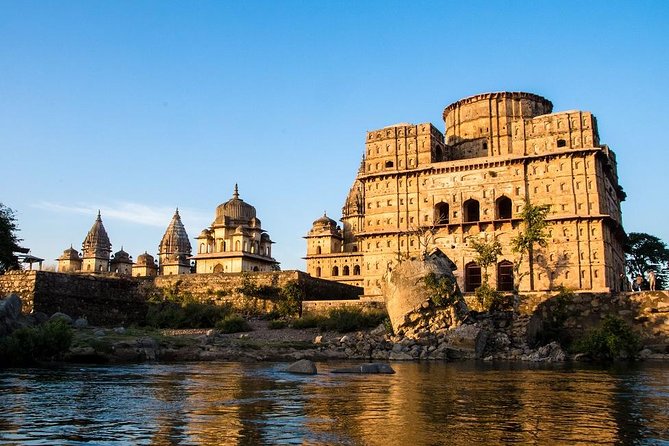
The next morning begins early. You leave Agra for the railway station, take a train to Jhansi in an air-conditioned coach, meet a representative there, and continue toward Khajuraho. Orchha is visited along the way, with about three hours planned.
That stop matters because it breaks up the journey and adds a different type of historic setting. The tour data does not list each Orchha monument, so you should ask your operator exactly which buildings are included and how much time is reserved for each one.
The rail segment is practical, but it also changes the rhythm of the trip. Instead of spending the entire day in a car, you get a glimpse of intercity train travel in an air-conditioned carriage. Keep your important documents and valuables with you during transfers, and expect the day to feel long.
Khajuraho deserves more than a quick photograph
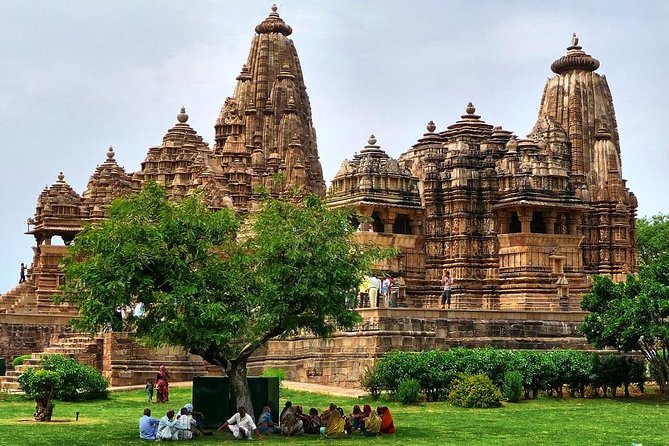
Khajuraho is famous for its erotic temple carvings, but reducing the site to that detail misses most of what you are seeing. The temples are religious buildings covered with scenes of worship, musicians, animals, courtly life, and human intimacy. The carvings are one part of a much larger artistic program.
The Western Group includes fourteen temples, including Kandariya Mahadeo, Matangesvara, Chaunsath Yogini, and Varaha. Two hours gives you a useful introduction, though it is not generous if you want to study the sculpture closely. Wear comfortable shoes and expect to spend much of the time outdoors.
The Eastern Group includes seven temples, with three Hindu and four Jain temples. This second visit helps you compare traditions and architectural styles rather than seeing only the most famous complex. Another two hours is planned, and admission to this group is listed as free.
Khajuraho is one of the tour’s most distinctive additions. Jaipur, Agra, and Delhi appear on many first-time India routes. Khajuraho gives this trip a more unusual historical focus, though reaching it requires the rail and road connection from Agra.
Varanasi shifts the trip from monuments to ritual
On day eight, a representative meets you at Varanasi railway station and transfers you to the hotel. The day begins with Sarnath, a quiet spiritual town and one of the four holiest Buddhist places. Its stupas and Buddhist remains provide a strong contrast with the Mughal and Rajput buildings seen earlier.
Back in Varanasi, the Kashi Vishwanath Temple is dedicated to Shiva and is one of the twelve Jyotirlinga temples. The planned visit is only about thirty minutes, so this is an important but brief stop.
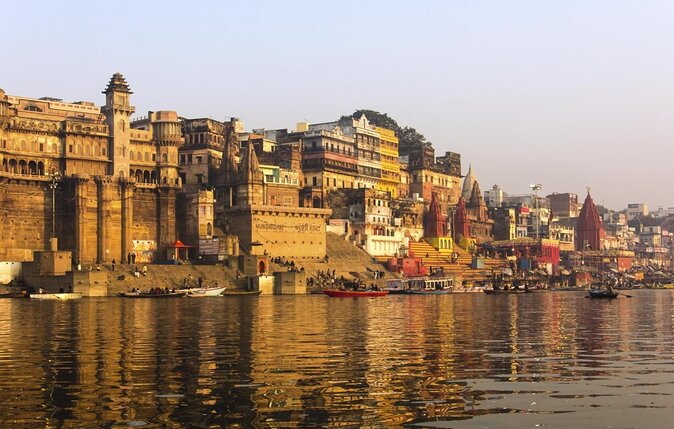
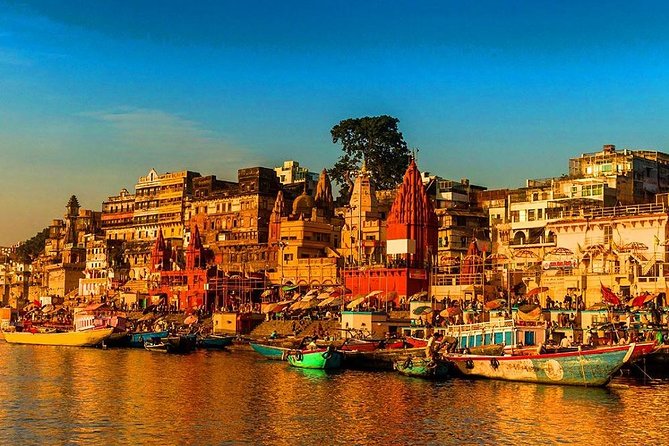
The Banaras Ghats are where Varanasi’s religious life becomes visible along the Ganges. Pilgrims bathe in the river for spiritual purification, and the long chain of ghats gives the city its distinctive character. You also visit Bharat Mata Temple, which contains a marble relief map of India rather than a conventional deity.
Alamgir Mosque adds another layer to the city’s complicated past. It was built by Aurangzeb on the site of a demolished Shiva temple. The stop is short, but it helps show how Hindu and Muslim histories overlap, sometimes uneasily, in Varanasi.
The evening prayer ceremony on the Ganges is one of the tour’s central experiences. The schedule does not give a precise duration or meeting time, so confirm that detail before you travel. Expect crowds and a highly charged religious setting. Dress respectfully and follow your guide’s instructions near the river.
Sunrise on the Ganges is the right final morning
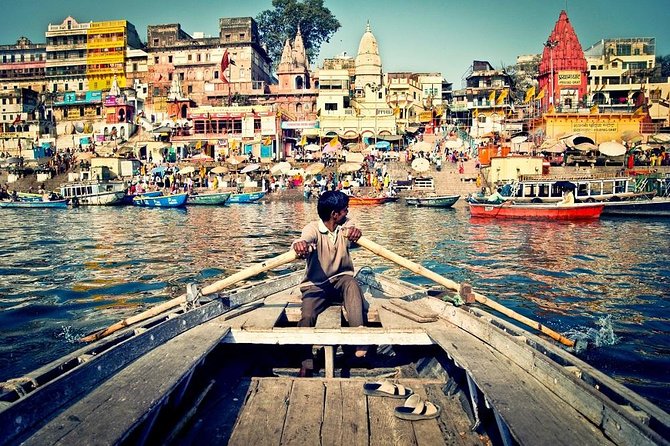
The last morning starts before dawn with a one-hour boat ride on the Ganges. As the sun rises, you see the ghats from the water and watch daily religious activity begin along the river. This is a different experience from the evening ceremony. The night prayer is organized and ceremonial; the morning boat ride is quieter and more observational.
After returning to the hotel for breakfast, you are transferred to Varanasi airport for your onward flight. The early start makes sense, but it also means the previous evening and final morning are tiring. If your flight is late in the day, confirm how much free time you will have after breakfast.
Transport, hotels, and what is really included
The tour includes seven hotel nights and one overnight train accommodation. It also includes train travel from Agra to Jhansi and from Khajuraho to Varanasi in air-conditioned coaches. The exact hotel names, train times, room categories, and train arrangement are not provided, so ask for these details before paying.
Your private car covers the road portions, with fuel, parking, tolls, and government taxes included. That removes several small costs that can otherwise accumulate. Packaged drinking water is also provided, a practical touch during long sightseeing days.
Breakfast is included on eight mornings. Other meals are not, so you will need to budget for lunches and dinners. Tips for drivers and guides, monument admissions, optional activities, camera fees, travel insurance, and all airfares are also outside the package.
Free cancellation is available up to 24 hours before the start time. Changes or cancellations inside that window are not accepted for a refund.
Who should book this private Golden Triangle and Varanasi tour?
I would choose this trip if you want maximum coverage in limited time and prefer having transport, local guides, and station transfers arranged. It suits first-time visitors who want the classic Golden Triangle but also want Khajuraho and Varanasi without building the connections themselves.
You should think twice if you prefer slow mornings, long stays, or independent wandering. The route is demanding, and the train and road transfers leave little room for missed connections or spontaneous detours.
At $683 per person, the package offers good value when you count the car, guides, hotels, train tickets, breakfast, jeep ride, rickshaw ride, battery van, and Ganges boat. Add the roughly $100 monument fee, tips, meals, and air travel before comparing it with other options.
The tour has received a 5.0 rating from 22 reviews, with 100 percent recommending it. One especially useful detail is the praise for professional drivers, clean cars, and pleasant local guides. That is exactly where a private India tour can succeed or fail.
FAQ
How long is the tour?
The experience lasts approximately nine days.
Where does the tour begin?
It begins in New Delhi, with airport pickup and transfer to your hotel.
Is this a private tour?
Yes. Only your group participates, with a private English-speaking chauffeur-driven car and local English-speaking guides in Delhi, Jaipur, Agra, Khajuraho, and Varanasi.
Are hotels included?
Yes. Seven nights of hotel accommodation and one night of overnight train accommodation are included.
Are train tickets included?
Yes. Air-conditioned train tickets are included for the Agra to Jhansi journey and the Khajuraho to Varanasi journey.
Is the Taj Mahal open every day?
No. The Taj Mahal is closed every Friday.
Are monument entrance fees included?
No. Entrance fees are separate and are estimated at about $100 per person. Camera fees may also apply.
Is breakfast included?
Yes. Eight breakfasts are included. Lunches, dinners, and other meals are not included unless specifically stated.
Should you book it?
Book this tour if you want the Taj Mahal, Jaipur’s forts, Delhi’s Mughal sights, Khajuraho’s temples, and Varanasi’s river rituals in one organized route. The private format, station pickups, air-conditioned transport, and local guides give you useful support at a reasonable base price.
Skip it if you want a relaxed holiday or dislike early starts and long transfers. This is a sightseeing-heavy introduction to northern India, not a restful stay in one region. For the right kind of visitor, though, the combination of imperial monuments, living religious traditions, train travel, and the dawn Ganges ride makes the busy schedule worthwhile.
Newly reviewed around New Delhi
- Private Customized Tour Of Old/New Delhi Spiritual Sites★ 5.0 · 5 reviews
- Yoga and Meditation Classes in Gurgaon★ 4.5 · 8 reviews
- Yoga class in Delhi★ 5.0 · 29 reviews
- Old Town Delhi Walking Tour (2 Hours Guided Tour with Local)★ 4.5 · 22 reviews
- 5 Days Golden Triangle Tour with Ranthambore(Delhi Agra Jaipur Ranthambore Tour)★ 5.0 · 3 reviews
- Wonderful Old & New Delhi sightseeing tour★ 5.0 · 3 reviews
- Hidden Gems of Old Delhi – Walk★ 5.0 · 8 reviews
- Delhi Zoo White Tigers & lions with Old Fort Visit★ 4.5 · 5 reviews
Varanasi Tours from Delhi, compared.
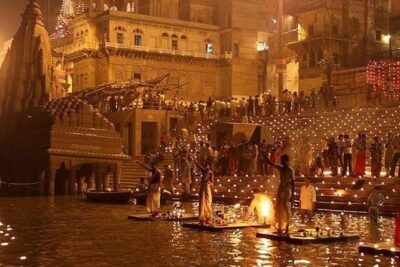
Delhi Agra Jaipur & Varanasi Tour – Taj Mahal & Ganga Aarti
Read our review →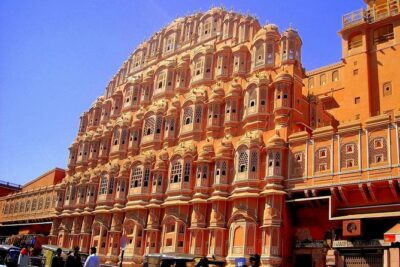
7-Day Golden Triangle & Varanasi Tour from Delhi with Guide
Read our review →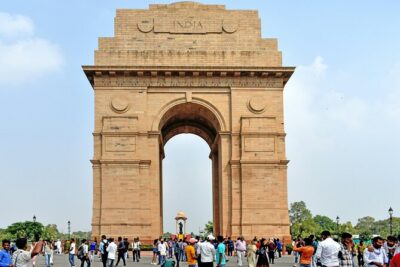
6-Day Private Tour of Delhi, Agra, Jaipur, and Varanasi from Delhi
Read our review →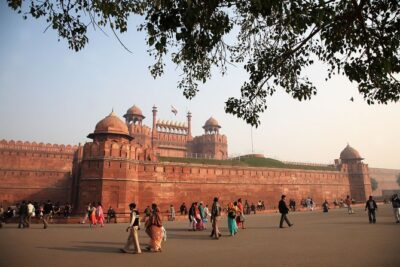
11 Days Golden Triangle & Varanasi With Luxury Accommodation,internal Flights
Read our review →
8-Day Private Luxury Golden Triangle With Spiritual Varanasi Tour
Read our review →
10 Day Private Luxury Golden Triangle with Khajuraho and Varanasi
Read our review →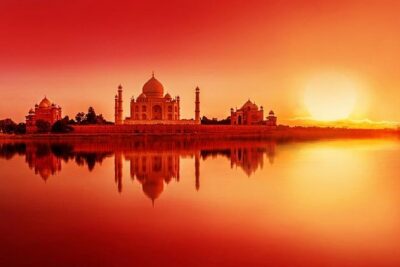
Private Luxury Delhi, Agra, Jaipur & Varanasi from Delhi – 5 Nights 6 Days Tour
Read our review →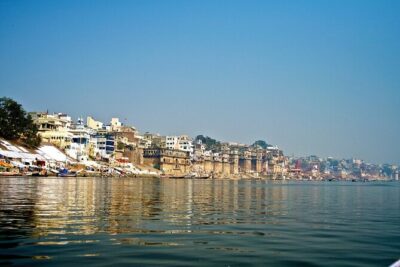
6 Days Private Golden Triangle Tour with Varanasi from Delhi
Read our review →Browse the lists this tour appears in