
Reviewed · VARANASI TOURS FROM DELHI
6 Day Golden Triangle Tour with Varanasi from Delhi
Varanasi is the real hook here. You begin among Delhi’s grand avenues and Mughal monuments, reach the Taj Mahal and Jaipur’s pink palaces, then finish beside the Ganges Ghats, where an evening aarti ceremony and boat ride bring India’s spiritual life close.
I like the mix of famous sights and local texture. Vishnu, the tour organizer, stays involved, while guides such as Shaily and driver Omveer have earned praise for clear explanations, patient help, and good photographs. I also like the private format and the chance to see Fatehpur Sikri between Jaipur and Agra.
The tradeoff is pace. Six days cover four major destinations, with long road journeys and two train transfers. You will see a lot, but you will not have much spare time for wandering, rest, or a second look at the places that catch your interest.
Key points to know before booking
- Varanasi gives the tour its strongest cultural contrast: after forts and palaces, you watch river ceremonies and take boats on the Ganges.
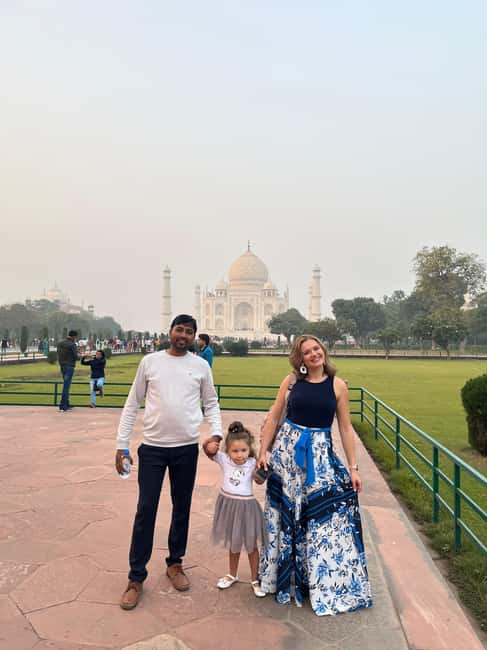
- The Taj Mahal is scheduled at sunrise: this is the right time for softer light, but the visit cannot take place on Friday.
- Fatehpur Sikri breaks up the Jaipur to Agra drive: Akbar’s abandoned Mughal city adds an important historical stop without requiring a separate excursion.
- Private transport and local guides keep the trip personal: the guide language list includes English, German, Italian, Russian, Spanish, French, Japanese, Chinese, and Portuguese.
- The price is unusually low at $134 per person: check exactly what the payment covers, especially train tickets, entrance fees, meals, and hotel arrangements.
- The schedule is demanding: you should be comfortable with early starts, long transfers, a night train, and a final train to Delhi.
Delhi begins with mosques, markets, and monumental India
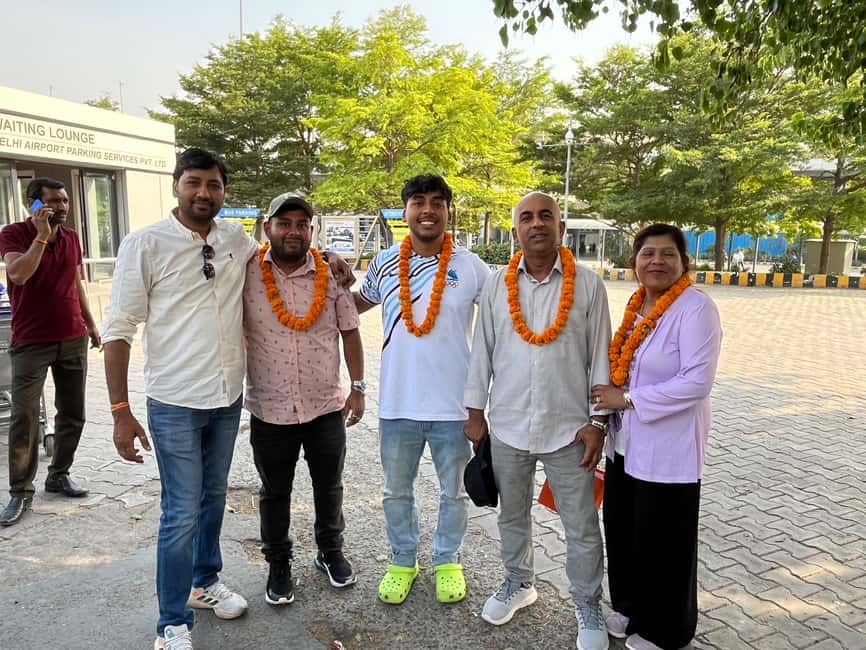
Your Delhi pickup can be arranged from a hotel, airport, Noida, or Gurgaon. At Delhi Airport Terminal 3, the driver meets you at Exit Gate 4 with a board bearing your name. That clear meeting point matters in a city where an airport arrival can feel like a small expedition of its own.
After checking into the hotel and freshening up, you begin sightseeing. Old Delhi brings Jama Masjid and Chandni Chowk, where the city feels close, crowded, and full of movement. The contrast with New Delhi is sharp: broad roads and formal government buildings replace the tighter lanes and market energy.
The program also includes India Gate, Parliament House, Raj Ghat, Akshardham, the Lotus Temple, Qutub Minar, and Humayun’s Tomb. This is a large list for one day, so think of it as a strong first look rather than a slow study of each monument.
Qutub Minar is one of Delhi’s most memorable landmarks, with its tall, carved tower and surrounding complex. Humayun’s Tomb helps you see the Mughal design ideas that later reached a grander scale at the Taj Mahal. Raj Ghat offers a quieter pause, while the Lotus Temple and Akshardham show the city’s modern religious architecture.
Delhi guide Shaily has been singled out for professional explanations. That is useful on a packed day, because a good guide can help you understand why each site matters instead of turning the day into a simple list of photo stops.
More Varanasi trips from New Delhi:
- Delhi Agra Jaipur & Varanasi Tour – Taj Mahal & Ganga Aarti
★ 5.0 · 50 reviews - 7-Day Golden Triangle & Varanasi Tour from Delhi with Guide
★ 5.0 · 38 reviews - 9 – Days Private Golden Triangle Tour with Khajuraho & Varanasi
★ 5.0 · 22 reviews
Jaipur packs royal India into half a day
On day two, you drive from Delhi to Jaipur, then begin a half-day city tour. The schedule includes the City Palace, Jantar Mantar, and Hawa Mahal, followed by a hotel stay in Jaipur.
Jantar Mantar is the most unusual of the three. It is an outdoor collection of large astronomical instruments built for measuring time and tracking the skies. With a guide, the geometric forms make more sense. Without one, you may see only giant stone shapes, so pay attention to the explanation.
Hawa Mahal is Jaipur’s famous honeycomb-like facade, designed with small windows that allowed royal women to observe street life without being seen. The City Palace gives you a look at Jaipur’s royal center, with courtyards, decorative work, and palace buildings.
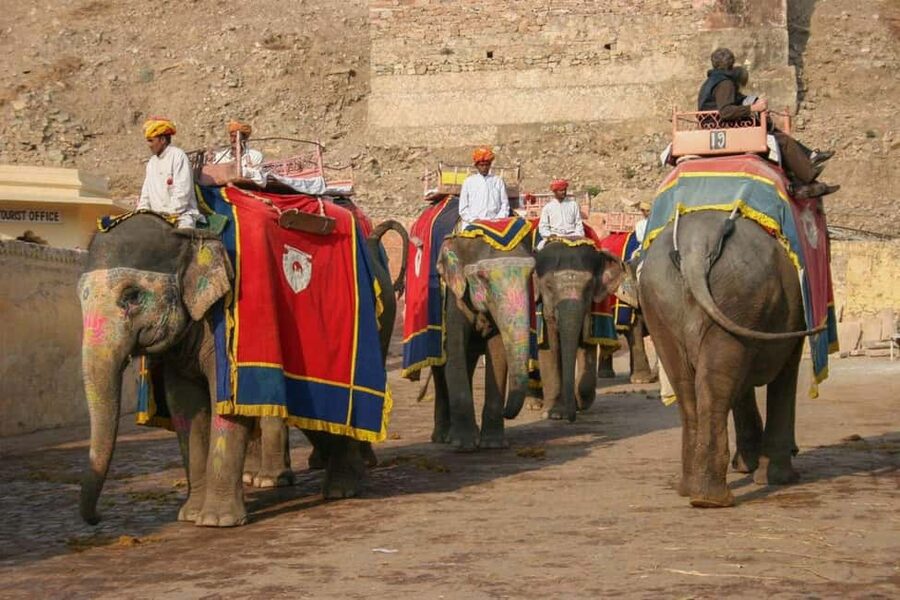
The next morning adds Amber Fort and Jal Mahal before the drive to Agra. Amber Fort is one of the tour’s strongest stops. Its hilltop setting, defensive walls, courtyards, and palace rooms show the power of Jaipur’s former rulers. Jal Mahal, the water palace, is mainly a viewing stop from the shore, but it gives you a fine photograph and a change of pace.
The practical issue is time. Jaipur deserves more than a half-day, especially if you enjoy art, architecture, or markets. This tour gives you the major sights, but it is not designed for a leisurely stay in the old city.
Fatehpur Sikri makes the road to Agra worthwhile
After Amber Fort and Jal Mahal, you continue toward Agra. Fatehpur Sikri breaks up this transfer and adds a major Mughal site to the day.
Akbar founded Fatehpur Sikri, which later became an abandoned city. Its red sandstone buildings, courtyards, and monumental gateways reveal the scale of his court and the ambition of the city. The stop is valuable because it gives you historical context before the Agra monuments, not just another palace visit.
The road portion of this day may feel long. That is the cost of linking Jaipur and Agra while also seeing Fatehpur Sikri. Still, the stop makes practical sense. Instead of spending the whole day inside a vehicle, you get a substantial cultural visit along the way.
After arriving in Agra, you transfer to the hotel. The schedule does not leave much room for independent exploring that evening, so keep your expectations realistic. This is a sightseeing circuit, not a stay-put city break.
Sunrise at the Taj Mahal is the emotional high point
The Taj Mahal visit is set for sunrise. This is a smart choice. Early light gives the marble a softer appearance, and the cooler part of the day is easier for sightseeing. The timing also gives the monument a more reflective feel before the day becomes hotter and busier.
The Taj Mahal is not simply a palace. It is a mausoleum built by Shah Jahan for Mumtaz Mahal, and its balance, white marble, inlaid decoration, and formal gardens explain why it remains India’s best-known monument. Your guide can provide the historical details while you take in the scale and symmetry.
There is one important calendar warning: the Taj Mahal is closed on Fridays. Check your start date carefully before paying, since the rest of the program cannot replace this visit in quite the same way.
Later, you visit Agra Fort, the Tomb of Itimad-ud-Daulah, and Mehtab Bagh. Agra Fort is especially useful for understanding the Mughal court and the political setting behind the Taj Mahal. Itimad-ud-Daulah is smaller and more detailed, with fine decorative work. Mehtab Bagh offers a different view of the Taj across the Yamuna River.
In the evening, you transfer to the railway station for the overnight train to Varanasi. This is a major change in comfort and rhythm. The train saves a hotel night and connects two distant parts of the trip, but you should be ready for a less settled night than you would have in a hotel.
More Golden Triangle routes from New Delhi:
- 3-Days Private Golden Triangle Tour: Delhi, Agra & Jaipur by Car
★ 5.0 · 1,107 reviews - 3-Days Private Golden Triangle Tour: Delhi, Agra & Jaipur by Car
★ 5.0 · 1,098 reviews - 3-Day Delhi, Agra and Jaipur Private Tour – India Golden Triangle
★ 5.0 · 812 reviews - Four-Day Private Luxury Golden Triangle Tour to Agra and Jaipur From New Delhi
★ 5.0 · 807 reviews
Varanasi changes the tone of the entire journey
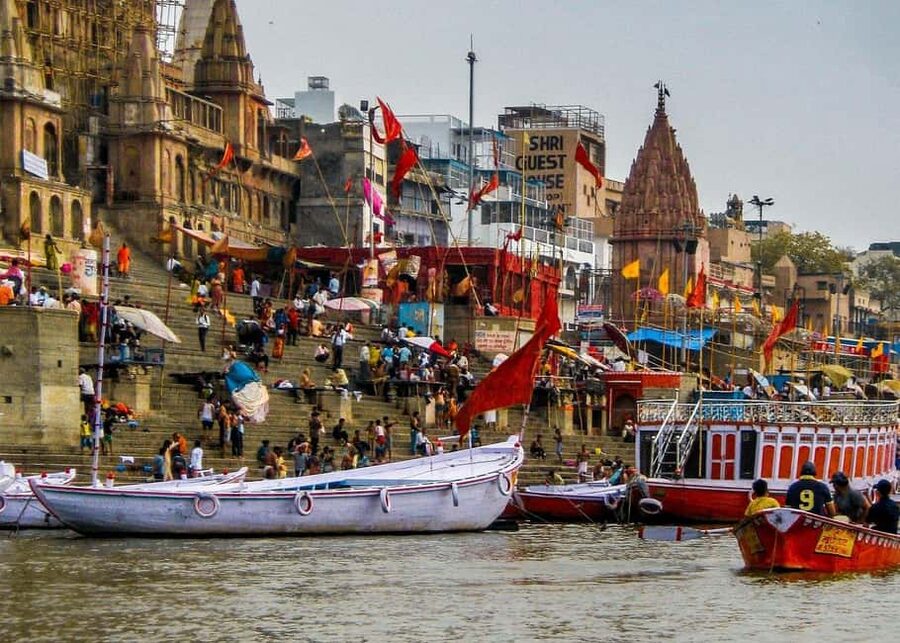
You arrive in Varanasi by train, meet the local team, transfer to the hotel, and freshen up before sightseeing. After the polished monuments of Delhi, Jaipur, and Agra, Varanasi feels more intimate and spiritually charged.
The city tour includes New Vishwanath Temple at Banaras Hindu University, Sankat Mochan Temple, Tulsi Manas Mandir, Durga Mandir, and Tridev Temple. These visits give you a broader picture of Varanasi’s religious life rather than reducing the city to a riverfront photo stop.
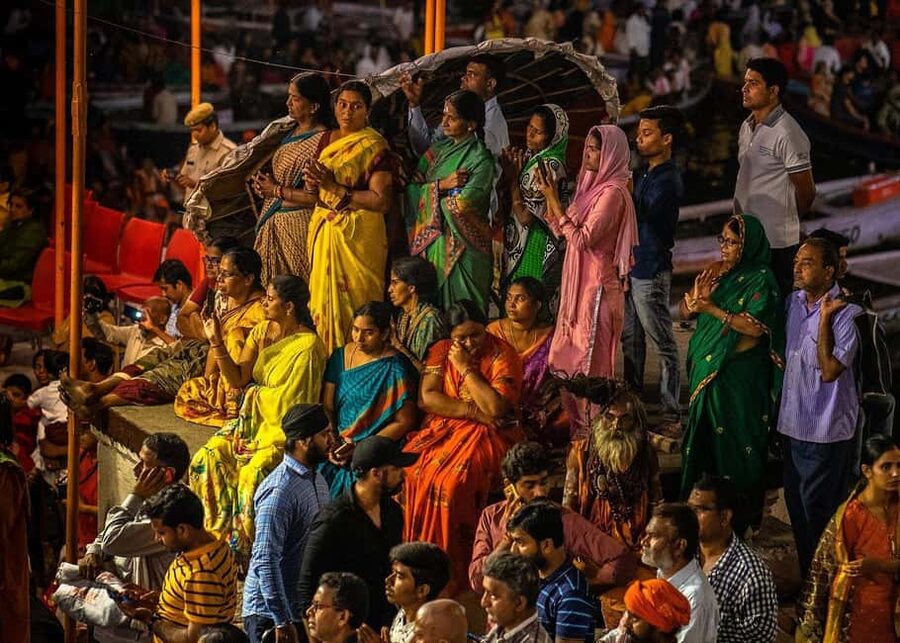
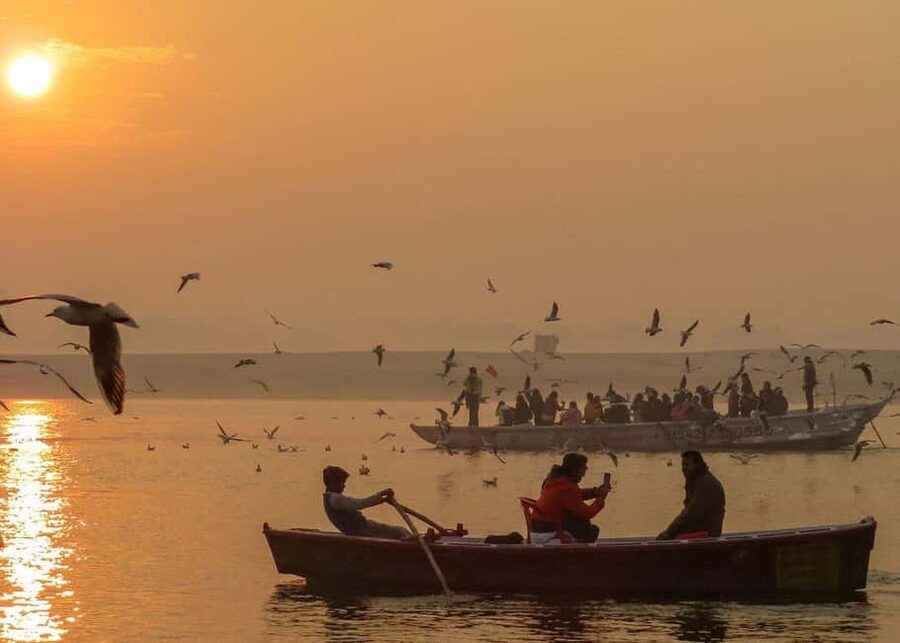
The evening centers on Ganga Aarti at Dasaswamedh Ghat, followed by boating on the Ganges. The ceremony involves lamps, music, ritual gestures, and crowds gathered along the river. From a boat, you see the ghats from a different angle and understand how closely the river is tied to daily worship.
The program also lists the Golden Temple, the main Kashi Vishwanath Temple, Annapurna Temple, and Vishalakshi Temple. Temple access can be subject to local rules, security, and crowd conditions, so remain flexible. The important point is that your guide helps you move through a complex religious setting with some context and direction.
One practical note: Varanasi is not a quiet museum city. The streets, temples, riverfront, and ceremonies can feel intense. That is part of the experience, but you should choose this tour because you want contact with living religious culture, not only clean monuments and easy transport.
The final Ganges ride and train back to Delhi
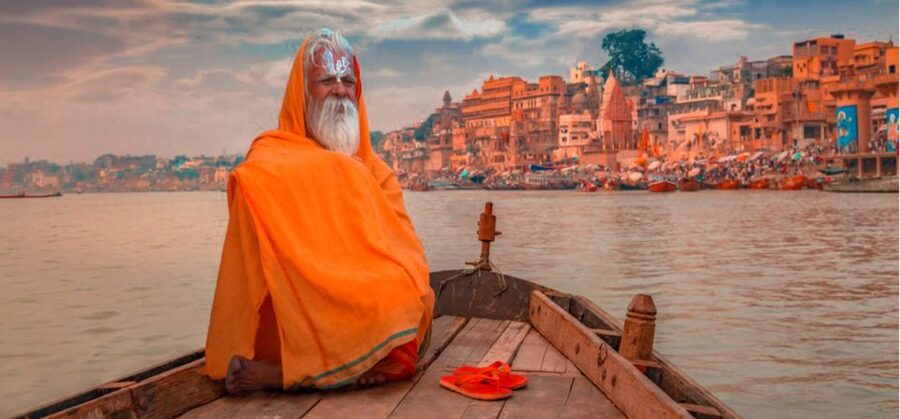
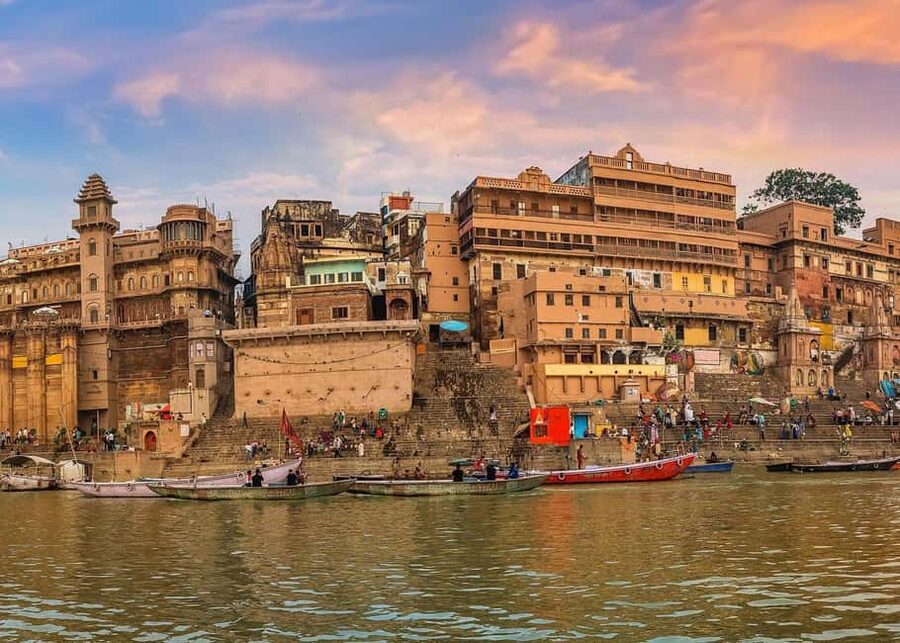
The last morning begins with another early boat ride on the Ganges. Morning light changes the riverfront completely. You may see worship, bathing, temple activity, and the ghats beginning their daily routine.
After breakfast, you transfer to the railway station for the train to Delhi. On arrival, the team provides assistance to the international airport for your onward flight. Do not schedule a tight flight connection without checking the train timing and allowing room for delays. The tour data does not provide a guaranteed arrival time, so build in a sensible buffer.
This final day is mostly a transfer day. It works best if your international flight leaves late enough to allow for the train journey and airport assistance. If you want a relaxed final day in Delhi, this schedule will not provide it.
What the $134 price means in practice
At $134 per person, this is a remarkably inexpensive way to connect Delhi, Jaipur, Agra, and Varanasi. The package includes private-group touring, hotel stays, local guides, road transfers, and train movements according to the supplied program, but the exact list of included costs is not fully detailed.
Before booking, I would ask these direct questions:
- Are all train tickets included, including the overnight train to Varanasi?
- Are entrance fees for the Taj Mahal, Amber Fort, Fatehpur Sikri, and other sites covered?
- Are meals included, or only hotel accommodation?
- What hotel categories and room arrangements apply?
- Is the Varanasi boat ride included in the quoted price?
- What happens if a train is delayed?
The low price is a strength if the main costs are covered. If many admission fees and transport charges are extra, the final amount can rise. The booking terms allow cancellation up to 24 hours before the start for a full refund, and you can reserve now and pay later, which helps if your dates are still shifting.
Guides, transport, and the private-group advantage
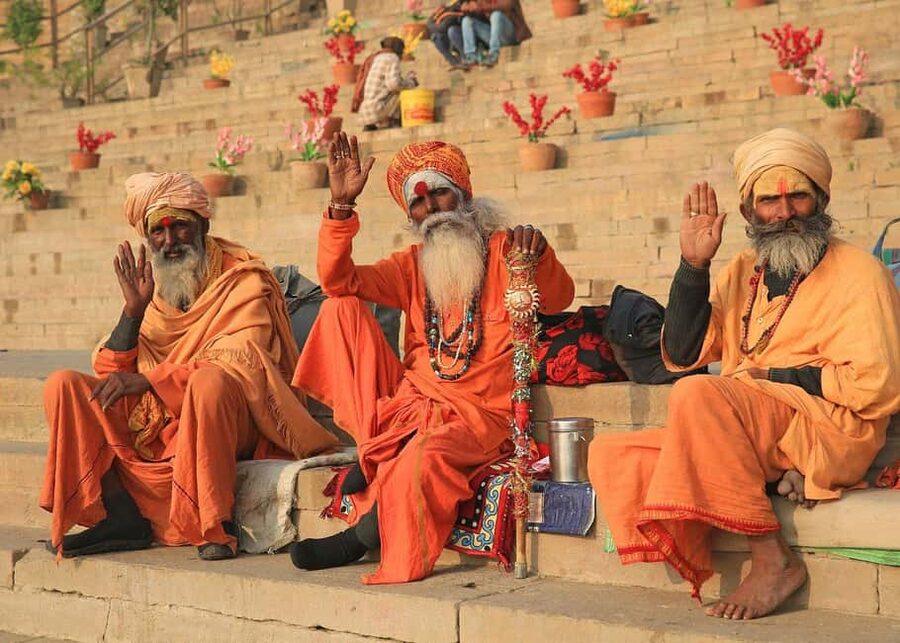
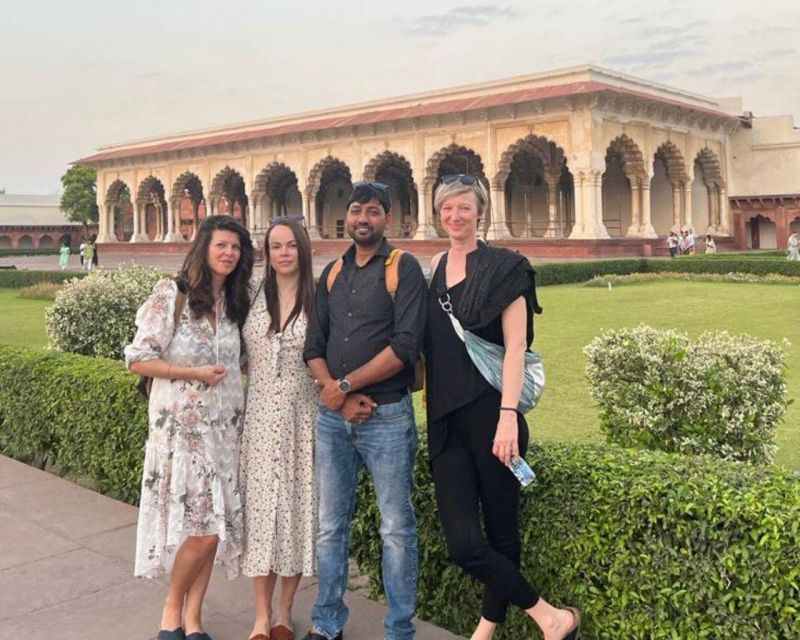
The strongest part of this setup is the human support. Vishnu is the tour organizer, Shaily guides Delhi, and Omveer is named as the driver. The guide language options are unusually broad, covering nine languages.
A private group means you are not tied to a large coach schedule. You can ask questions directly, and the guide can explain the same monument at a pace that suits you. The available feedback also points to clean, air-conditioned hotels, patient explanations in simple English, and guides who helped with photographs.
That said, do not mistake private touring for slow touring. The route still covers great distances, and the schedule remains full. A private vehicle gives you comfort and flexibility between sights, but it cannot shorten the road from Jaipur to Agra or the train from Varanasi to Delhi.
The tour is not suitable for pregnant women, according to the activity information. You also need a passport or ID card. The experience is best for people who can handle early starts, stairs, road travel, temple visits, and overnight rail travel.
Who should book this six-day route?
I would recommend it to a first-time visitor who wants the essential North India circuit in one booking. You get the country’s best-known monuments, strong Mughal and Rajput architecture, and the very different religious atmosphere of Varanasi.
It also suits you if you prefer having pickup, hotels, guides, and intercity movement arranged together. The named team members and wide language support are useful if you do not feel confident managing India’s transport system on your own.
I would hesitate if you want long lunches, free afternoons, market browsing, or time to return to a favorite monument. Jaipur is especially compressed, and Varanasi is better understood with more than one full day. A slower trip would likely require adding nights and perhaps removing a stop.
Should you book it?
Book this tour if your priority is maximum coverage in minimum time. The mix is hard to beat: Delhi’s old and new faces, Jaipur’s observatory and forts, the Taj Mahal at sunrise, Fatehpur Sikri, and the Ganges at Varanasi.
Before committing, confirm the exact inclusions and make sure the Taj Mahal date is not a Friday. If you accept the busy schedule and overnight train, the $134 price offers strong value. If you need comfort, free time, or a calm pace, choose a longer version instead.
FAQ
Where does the tour begin?
The tour begins with pickup from Delhi Airport, a Delhi hotel, Noida, or Gurgaon.
Where does the airport pickup meet me?
At Delhi Airport Terminal 3, the driver meets you at Exit Gate 4 while holding a board with your name.
Which cities does the tour visit?
The route covers Delhi, Jaipur, Agra, and Varanasi.
Is the Taj Mahal included?
Yes. The program includes a sunrise visit to the Taj Mahal. The Taj Mahal is closed on Fridays.
Does the tour visit Fatehpur Sikri?
Yes. You stop at Fatehpur Sikri while traveling from Jaipur to Agra.
Is transportation by train included in the schedule?
Yes. The program uses an overnight train from Agra to Varanasi and a train from Varanasi to Delhi.
Is the tour private?
Yes. It is described as a private-group experience.
Which guide languages are available?
The listed languages are English, German, Italian, Russian, Spanish, French, Japanese, Chinese, and Portuguese.
Is a boat ride on the Ganges included?
Yes. The Varanasi program includes an evening boat ride and an early-morning boat ride on the Ganges.
Can I cancel the booking?
You can cancel up to 24 hours in advance for a full refund. The reserve-now, pay-later option lets you hold the booking without paying immediately.
More 6-Day Experiences in New Delhi
- 5 Nights 6 Days Private Golden Triangle Tour – Delhi Agra Jaipur
★ 5.0 · 574 reviews - 6-Day Private Tour of the Golden Triangle
★ 5.0 · 184 reviews - Golden Triangle Tour: Private Delhi Agra Jaipur 5 Nights 6 Days
★ 5.0 · 157 reviews - From Delhi : 6 Days Delhi, Jaipur, Agra & Ranthambore By Car
★ 5.0 · 73 reviews
Newly reviewed around New Delhi
- Private Customized Tour Of Old/New Delhi Spiritual Sites★ 5.0 · 5 reviews
- Yoga and Meditation Classes in Gurgaon★ 4.5 · 8 reviews
- Yoga class in Delhi★ 5.0 · 29 reviews
- Old Town Delhi Walking Tour (2 Hours Guided Tour with Local)★ 4.5 · 22 reviews
- 5 Days Golden Triangle Tour with Ranthambore(Delhi Agra Jaipur Ranthambore Tour)★ 5.0 · 3 reviews
- Wonderful Old & New Delhi sightseeing tour★ 5.0 · 3 reviews
- Hidden Gems of Old Delhi – Walk★ 5.0 · 8 reviews
- Delhi Zoo White Tigers & lions with Old Fort Visit★ 4.5 · 5 reviews
Varanasi Tours from Delhi, compared.
Delhi Agra Jaipur & Varanasi Tour – Taj Mahal & Ganga Aarti
Read our review →
7-Day Golden Triangle & Varanasi Tour from Delhi with Guide
Read our review →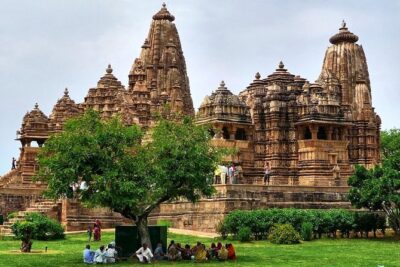
9 – Days Private Golden Triangle Tour with Khajuraho & Varanasi
Read our review →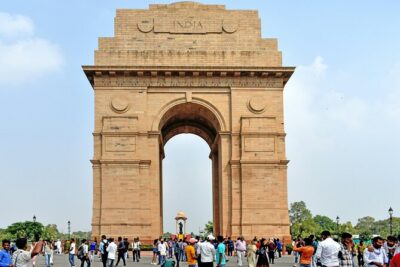
6-Day Private Tour of Delhi, Agra, Jaipur, and Varanasi from Delhi
Read our review →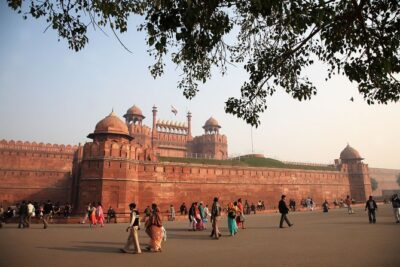
11 Days Golden Triangle & Varanasi With Luxury Accommodation,internal Flights
Read our review →
8-Day Private Luxury Golden Triangle With Spiritual Varanasi Tour
Read our review →
10 Day Private Luxury Golden Triangle with Khajuraho and Varanasi
Read our review →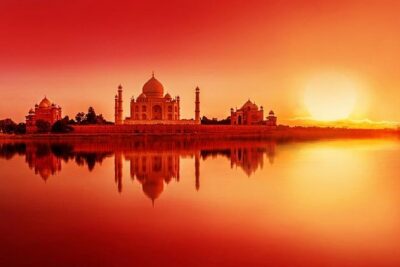
Private Luxury Delhi, Agra, Jaipur & Varanasi from Delhi – 5 Nights 6 Days Tour
Read our review →Browse the lists this tour appears in