
Reviewed · RISHIKESH & HARIDWAR TOURS FROM DELHI
Delhi Agra Jaipur & Varanasi Tour – Taj Mahal & Ganga Aarti
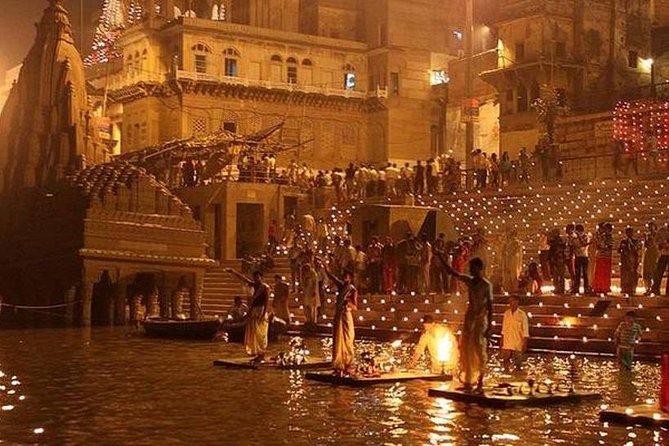
The best part of this seven-day journey is its sweep: in one trip, you move from Delhi’s Mughal monuments to Jaipur’s Rajput palaces, Agra’s Taj Mahal, and Varanasi’s sacred Ganges. Private transport and local guides keep a complicated route manageable, especially when you are changing cities almost every day.
I like two things here. First, the package includes six hotel nights, breakfast, airport or hotel pickup, and train tickets, so many major costs are bundled together. Second, you get both the famous sights and more personal moments, such as a sunrise boat ride in Varanasi and sunset Ganga Aarti.
The catch is pace. This is a full-on trip, with long drives, several hotel changes, and overnight train travel. Monument admission is extra, and you need to check the dates carefully, since the Taj Mahal is closed on Fridays.
Key points to know before booking
- Delhi, Jaipur, Agra, and Varanasi in seven days: You cover North India’s major highlights at a brisk speed.
- Private car and private guides: Your group travels alone, with pickup from your Delhi hotel or airport.
- Six hotel nights with breakfast: Hotel quality depends on the option you select, from 3-star to 5-star lodging.
- Taj Mahal plus Ganga Aarti: The tour pairs India’s best-known monument with Varanasi’s evening river ceremony.
- Train travel is part of the plan: AC First Class or Second Class train tickets are included, with flight options available depending on your selection.
- Admission fees are separate: Budget for monuments, and confirm boat arrangements in Varanasi before departure.
What this North India route does well
This is not a relaxed stay in one or two cities. It is a broad introduction to North India, designed for someone who wants the major sights without arranging every driver, hotel, guide, and train connection alone.
You begin in Delhi, continue to Jaipur, cross to Agra, and then travel onward to Varanasi before returning to Delhi. That route gives each city a clear role. Delhi provides Mughal and modern Indian landmarks. Jaipur brings royal architecture and astronomy. Agra delivers the Taj Mahal and Mughal power. Varanasi offers religious ceremony and river life.
The private format matters. Your group does not share the vehicle or sightseeing schedule with strangers, and the plan can be adjusted to suit your needs. That is useful when you want more time at the Taj Mahal, need a slower morning, or prefer to skip a shopping stop, though any change should be agreed with the operator in advance.
The overall rating is 4.9 from 50 ratings, with a 98 percent recommendation rate. That is a strong signal, but it should be read alongside the trip’s demanding pace and the fact that one poor experience involved a missed Taj Mahal visit after a Friday booking.
More Rishikesh and Haridwar days from New Delhi:
- Private Haridwar and Rishikesh Day Tour from Delhi- All Inclusive
★ 5.0 · 357 reviews - Private Day Trip to Haridwar and Rishikesh from Delhi by Car
★ 5.0 · 43 reviews - Full-Day Private Tour in Rishikesh & Haridwar
★ 5.0 · 32 reviews
Delhi begins with Mughal monuments and a busy first day

Pickup is offered from your Delhi hotel or the airport. The first day includes Raj Ghat, the Red Fort, Jama Masjid, and Qutub Minar, with an overnight stay in Delhi.
Raj Ghat, the memorial to Mahatma Gandhi, is a short stop and gives the day a quiet opening. The Red Fort and Jama Masjid then shift you into Old Delhi and the Mughal era. The Red Fort was commissioned by Shah Jahan, the same emperor associated with the Taj Mahal, while Jama Masjid is one of the city’s largest mosques.
Qutub Minar changes the setting again. The 73-meter victory tower dates to 1193 and is part of a larger historic complex. It is not close to the Old Delhi sights, so having a private car saves you from piecing together separate transport.
The schedule lists short visits at Raj Ghat and the Red Fort, followed by longer stops at Jama Masjid and Qutub Minar. I would treat this as an orientation day rather than a slow study of Delhi. Traffic can affect the order and timing, and you should keep comfortable shoes, water, and modest clothing handy for religious sites.
Admission fees are not included at these monuments. That keeps the headline cost lower, but you need cash or a payment method for the day’s tickets.
Jaipur brings forts, palaces, and a crowded sightseeing list
After breakfast, the drive from Delhi to Jaipur is scheduled at about five hours, with arrival around 2 p.m. The afternoon focuses on Amber Fort and Jal Mahal.
Amber Fort is the major stop. It served as Jaipur’s royal capital before the city was built and is known for its courtyards, palaces, and hilltop setting. Two hours gives you enough time to see the main sections, though not every corner at a leisurely pace.
Jal Mahal is a brief photo stop at Man Sagar Lake. The palace appears to float in the water, and the visit is listed at only 15 minutes. Think of it as a scenic pause rather than a full palace visit.
Day three is packed. You visit Hawa Mahal, City Palace, Jantar Mantar, Albert Hall Museum, Birla Mandir, and the Monkey Temple. The plan begins at 8 a.m., which is sensible because there is a lot to cover.
Hawa Mahal is Jaipur’s famous Palace of Winds, with its honeycomb-like facade facing the street. City Palace gives you a better sense of the city’s royal center, while Jantar Mantar is an unusual and worthwhile stop. Its 19 astronomical instruments were built by Sawai Jai Singh II, and the complex includes the world’s largest stone sundial.
Albert Hall Museum adds art and architecture to the day. Birla Mandir, built from white marble in 1988, provides a later contrast with Jaipur’s older royal buildings. The Monkey Temple, at Galta, sits among the Aravalli hills and includes temple buildings and bathing areas.
I like this mix because it avoids making Jaipur only about palace interiors. The drawback is simple: six stops in one day can make the experience feel like a checklist. If one place matters most to you, tell your guide early. The private format gives you a better chance of adjusting the balance than a fixed group departure would.
Agra centers the trip on the Taj Mahal
The Agra day includes the Taj Mahal, Itmad-ud-Daula, Agra Fort, and Mehtab Bagh. The schedule starts after breakfast at about 9:30 a.m., though the exact timing may depend on your arrival from Jaipur and local traffic.
The Taj Mahal gets two hours, which is a reasonable amount of time for the grounds and main viewing areas. The monument is more than a quick photograph. Take time to notice the symmetry, marble work, gardens, and changing light. Your guide can add the story of Shah Jahan and the Mughal court, but you should also leave room simply to look.
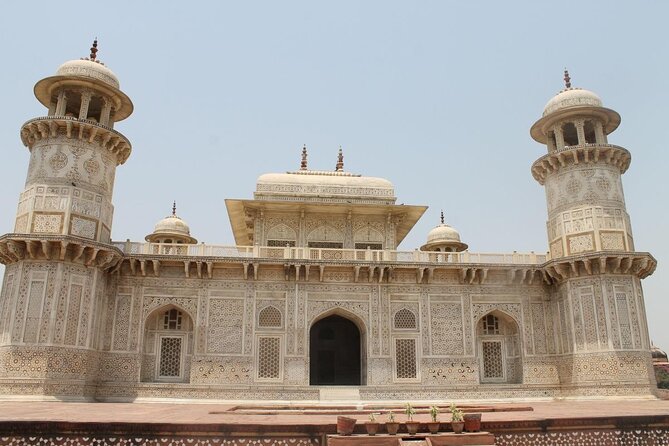
Itmad-ud-Daula is often called the Baby Taj. This smaller Mughal tomb has delicate inlay work and makes a useful comparison with the larger monument. Agra Fort then shows the defensive and royal side of Mughal power, with red sandstone walls and palace spaces.
Mehtab Bagh sits across the Yamuna River from the Taj Mahal. It is a garden stop with a different angle toward the monument, and it can be a calmer way to finish the day.
One practical warning deserves bold type: the Taj Mahal closes every Friday. A booking that placed the Agra visit on a Friday caused a serious problem, so check your calendar before paying. Do not assume the operator will automatically rearrange the route around the closure.
Monument admission is not included. The Taj Mahal ticket is the largest extra cost you are likely to face, and the same applies to the other major sites. Ask for the full admission estimate before departure so the $366.16 starting price does not catch you off guard.
More Varanasi trips from New Delhi:
- 7-Day Golden Triangle & Varanasi Tour from Delhi with Guide
★ 5.0 · 38 reviews - 9 – Days Private Golden Triangle Tour with Khajuraho & Varanasi
★ 5.0 · 22 reviews - 6-Day Private Tour of Delhi, Agra, Jaipur, and Varanasi from Delhi
★ 5.0 · 19 reviews - 8-Day Private Luxury Golden Triangle With Spiritual Varanasi Tour
★ 5.0 · 17 reviews
Varanasi adds ceremony, river life, and Sarnath
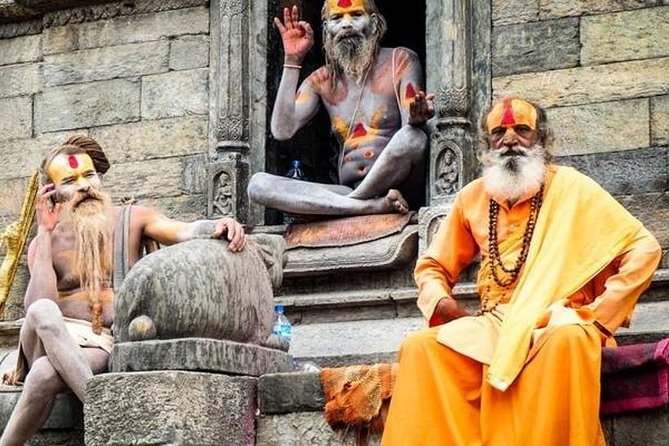
Varanasi changes the mood of the trip. After the historical sights of Delhi, Jaipur, and Agra, you spend time around the Ganges and learn why the city is sacred to Hindus.
The plan brings you to Sarnath after arrival in Varanasi. Sarnath is linked with the Buddha’s first sermon and is an important religious and archaeological site. The scheduled visit is short, so ask your guide how much of the site you will see and whether the timing can be adjusted.
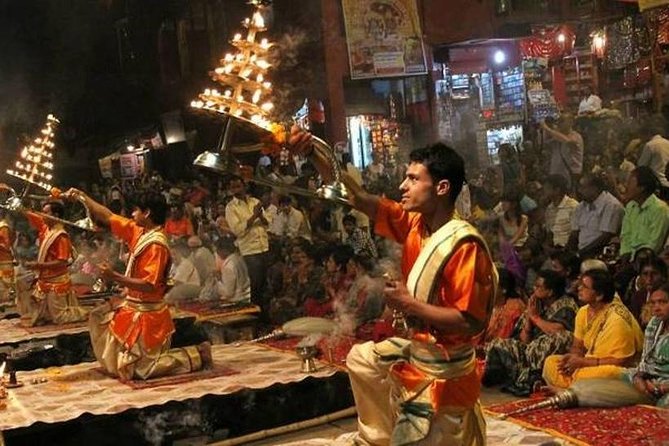
That evening, you attend Ganga Aarti. The experience includes a sunset cruise on the Ganges and a view of the oil-lamp prayer ceremony. This is one of the strongest elements of the tour because it is not simply another monument visit. You see the river used as a living religious space, with ceremony, light, music, and activity along the ghats.
The following morning begins with another boat trip, this time at sunrise. The cruise lasts about two hours and passes historic ghats. Early light gives you a different view of Varanasi from the evening ceremony, and the boat offers a way to understand the city’s relationship with the river.
Dashashwamedh Ghat is the best-known ghat and receives a separate visit. Bharat Kala Bhavan, an art and architecture museum, adds paintings, Hindu and Buddhist sculpture, and archaeological material.
There is a money detail to watch here. The evening Ganga Aarti cruise is listed as included, but Varanasi boat rides are also described as optional in the exclusions. Confirm exactly which boat trips are covered in your chosen package. The sunrise ride in particular should not be treated as automatically included without written confirmation.
Trains and private cars shape the practical side
The tour includes private transportation in a sedan or SUV, along with AC First Class or Second Class train tickets. Flight tickets may be included if you choose a flight-based option.
Private road transport is a major convenience on this route. Delhi, Jaipur, Agra, and Varanasi are not places where you want to solve every transfer at the last minute. Hotel pickup and drop-off also reduce the stress of finding the right driver in unfamiliar cities.
The tradeoff is time in the car. One person who enjoyed the tour still found the sightseeing days followed by five or six hours of driving exhausting. That is a fair warning. You are not spending seven days in one base, and several days combine major sightseeing with a long transfer.
The train section also needs careful reading. The schedule refers to travel to Varanasi by train and later a train back toward Delhi, with overnight arrangements. Train class is included, but the exact train time and berth details should be confirmed before you arrive.
The operator uses different drivers and guides in Delhi, Jaipur, Agra, and Varanasi. One driver named Siri received special praise for being calm, patient, and safe. Since you may spend a good part of the journey with your driver, clear communication matters. Tell the coordinator your preferred start times, meal needs, and tolerance for long road days at the beginning.
Hotels, meals, and the real cost
Six nights of hotel accommodation and six breakfasts are included. The hotel category depends on the option you select, with 3-star, 4-star, and 5-star choices available. The advertised price of $366.16 per person is attractive for a private seven-day route with hotels, guides, road transport, and train tickets, but it is not an all-in total.
You still pay for monument admission. Some boat rides are optional, and anything not specifically named in the inclusions is extra. The value is strongest if you want a ready-made structure and would otherwise book separate cars, guides, hotel rooms, and train tickets.
Hotel quality may not be perfectly even across the route. One person found the Agra hotel weaker than the others, so I would ask for the exact hotel names before booking. The operator says hotel details are sent by email, and getting them in writing gives you a chance to check location and category.
Breakfast is useful on early sightseeing days, but lunch and dinner are not listed as included. Plan for those costs separately.
Who should choose this seven-day tour?
I would recommend it to you if you want a first look at North India and prefer help with the complicated parts. It suits someone who values a private car, wants guides at major monuments, and would rather move efficiently than spend several nights in each city.
It also works well for solo visitors or small groups who want personal attention. The private format means your group is the only group on the activity, and the plan can be discussed around your interests.
I would hesitate if you dislike early starts, long road transfers, changing hotels, or overnight trains. You may be happier with a slower route focused only on Delhi, Agra, and Jaipur, or with extra nights in Varanasi.
Before departure, confirm four things: the Taj Mahal date, hotel names, train times and class, and the exact boat rides included. Those checks address the main sources of disappointment without taking away the trip’s strong point, its wide range of sights.
Cancellation and booking details
You can cancel up to 24 hours before the local start time for a full refund. Changes made within 24 hours are not accepted, and a weather cancellation may result in a new date or full refund.
Confirmation is provided at booking. Most people can participate, and the tour operates as a private activity for your group.
Should you book this India tour?
Book it if you want a tightly organized introduction to Delhi, Jaipur, Agra, and Varanasi, and you accept that seven days will feel busy. The strongest features are the private transport, local guides, included accommodation and breakfast, Taj Mahal visit, and paired evening and morning experiences on the Ganges.
Do not book it without checking the calendar and extra costs. If you protect the Taj Mahal day, confirm the Varanasi boats, and accept the long transfers, this is a good-value way to cover a remarkable amount of North India in one week.
FAQ
Is this a private tour?
Yes. Only your group participates, and private transportation and local guides are provided.
Are hotels included?
Yes. Six nights of hotel accommodation with breakfast are included. The selected package determines whether the hotels are 3-star, 4-star, or 5-star.
Are monument entry fees included?
No. Admission fees for monuments are not included and must be paid separately.
Is the Taj Mahal open every day?
No. The Taj Mahal is closed on Fridays. Check your dates carefully so the Agra visit does not fall on that day.
Are train tickets included?
Yes. AC First Class or Second Class train tickets are included. Flight tickets are available only with the applicable flight option.
Is the Ganga Aarti boat ride included?
The sunset cruise for Ganga Aarti is listed as included, but boat rides are also described as optional in the exclusions. Confirm the exact boat arrangements included with your selected package.
More Agra Tours from New Delhi
- Same Day Taj Mahal, Agra Fort & Baby Taj Tour from Delhi by Car
★ 5.0 · 4,304 reviews - Full Day Taj Mahal, Agra Fort & Baby Taj Tour from Delhi by Car
★ 5.0 · 3,647 reviews - From Delhi: Taj Mahal & Agra Private Day Trip with Transfers
★ 4.9 · 3,181 reviews - From Delhi: Taj Mahal and Agra Fort Private Sunrise Tour
★ 4.9 · 2,270 reviews
More Jaipur Tours from New Delhi
- 3-Days Private Golden Triangle Tour: Delhi, Agra & Jaipur by Car
★ 5.0 · 1,107 reviews - 3-Days Private Golden Triangle Tour: Delhi, Agra & Jaipur by Car
★ 5.0 · 1,098 reviews - 3-Day Delhi, Agra and Jaipur Private Tour – India Golden Triangle
★ 5.0 · 812 reviews - Four-Day Private Luxury Golden Triangle Tour to Agra and Jaipur From New Delhi
★ 5.0 · 807 reviews
Newly reviewed around New Delhi
- Private Customized Tour Of Old/New Delhi Spiritual Sites★ 5.0 · 5 reviews
- Yoga and Meditation Classes in Gurgaon★ 4.5 · 8 reviews
- Yoga class in Delhi★ 5.0 · 29 reviews
- Old Town Delhi Walking Tour (2 Hours Guided Tour with Local)★ 4.5 · 22 reviews
- 5 Days Golden Triangle Tour with Ranthambore(Delhi Agra Jaipur Ranthambore Tour)★ 5.0 · 3 reviews
- Wonderful Old & New Delhi sightseeing tour★ 5.0 · 3 reviews
- Hidden Gems of Old Delhi – Walk★ 5.0 · 8 reviews
- Delhi Zoo White Tigers & lions with Old Fort Visit★ 4.5 · 5 reviews
Rishikesh & Haridwar Tours from Delhi, compared.
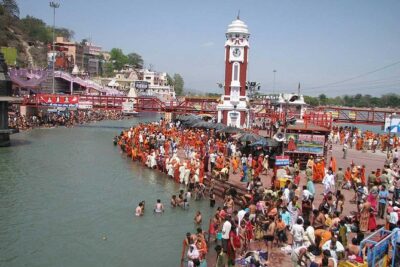
Private Day Trip to Haridwar and Rishikesh from Delhi by Car
Read our review →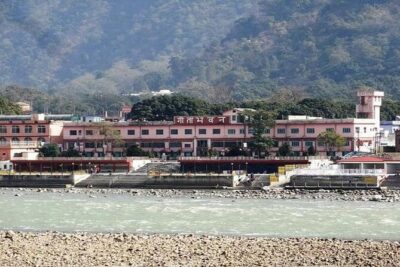

Moderate Himalayan Treks Near Rishikesh From Delhi
Read our review →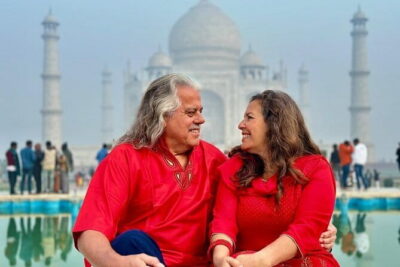
10 Days Private Golden Triangle Tour with Amritsar and Rishikesh
Read our review →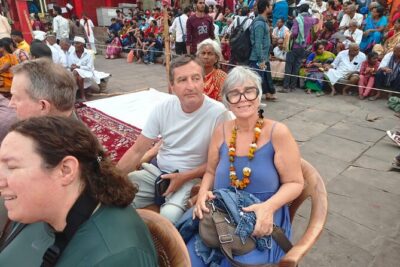
6-Day Rishikesh & Haridwar Spiritual Tour from Delhi
Read our review →
Private Day Trip to Haridwar and Rishikesh from Delhi
Read our review →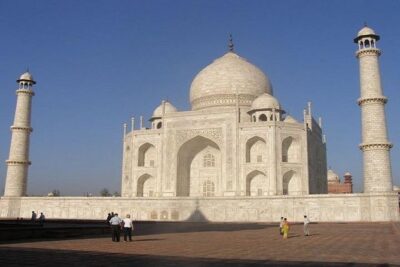
5 Nights / 6 Days – Delhi Agra Haridwar Rishikesh Tour
Read our review →Browse the lists this tour appears in