
Reviewed · DELHI RICKSHAW & TUK TUK TOURS
Old Delhi Tour with Tuk-Tuk/Rickshaw Ride
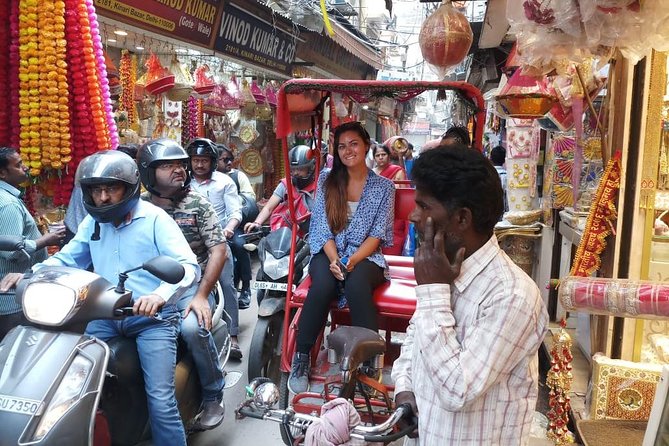
Old Delhi makes more sense from a rickshaw seat than on foot. You glide through narrow lanes, past spice sacks, wedding trimmings, mosques, hawkers, and porters, while your guide explains how this old trading quarter works. The highlight is the stop at Jama Masjid, followed by the Sikh community kitchen at Gurudwara Bangla Sahib.
I like the easy transport, with an air-conditioned car, hotel pickup, and a tuk-tuk ride that saves you from walking beside heavy traffic. I also like the chance to take part in langar, a free community meal open to everyone. The main caution is that the rickshaw portion can feel rough and crowded, and one past participant was unhappy after being asked to give the tuk-tuk driver an extra 200 Indian rupees.
Key points at a glance
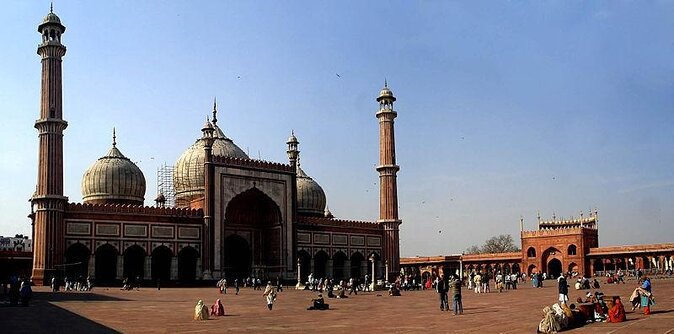
- Jama Masjid visit: Walk across the red sandstone courtyard of one of India’s largest mosques, with an optional minaret climb for Old Delhi views.
- Rickshaw through the old markets: Ride through Chandni Chowk, Kinari Bazaar, and Khari Baoli instead of trying to cover these packed streets on foot.
- Spice-market context: Khari Baoli has operated since the 17th century and offers a close look at the trade in spices and herbs.
- Sikh langar experience: At Gurudwara Bangla Sahib, you can see or assist with the community kitchen and eat there regardless of religion.
- Private door-to-door format: Your price includes a guide, car, fuel, tolls, parking, bottled water, and pickup and return in Delhi, Gurugram, or Noida.
- A half-day introduction: The tour takes about four to five hours, making it useful for a first look at Old Delhi without giving up a full day.
Why a rickshaw is useful in Old Delhi
Old Delhi is not a tidy open-air museum. It is a working part of the city, packed with shops, traffic, deliveries, worshippers, shoppers, and people moving goods through lanes that often feel too narrow for modern vehicles. Walking gives you the closest look, but it can also be tiring and awkward when you are trying to keep up with a guide.
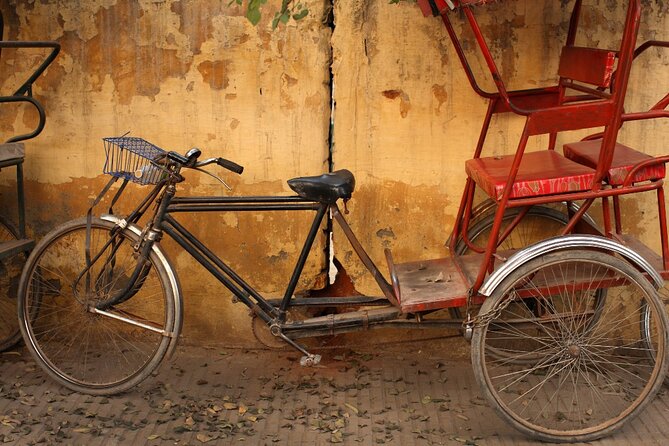
This tour uses a private air-conditioned car for the longer transfers, then switches to a tuk-tuk or cycle rickshaw for the old market area. That is a sensible arrangement. You get relief from the heat and traffic between stops, while the rickshaw places you close to street life without requiring you to walk every crowded lane.
The ride is not polished sightseeing. Expect noise, sudden stops, tight turns, and a fair amount of jostling. That is part of the setting, but it will not suit you if you want a quiet or smooth tour. The supplied experience includes a tuk-tuk or rickshaw ride, though the exact vehicle may vary.
One practical point deserves attention. A past participant felt uncomfortable after the guide asked the group to give the rickshaw driver 200 rupees. The operator explained that tuk-tuk drivers earn little and that navigating the crowded streets with foreign passengers is difficult. You should clarify before the ride if any extra payment is expected, and carry small Indian notes if you choose to tip. The published price does not list this payment as an inclusion.
More rickshaw and tuk tuk rides in New Delhi:
- Old Delhi Food, Heritage&Cultural Walk with Rickshaw ride to Masterji Kee Haveli
★ 5.0 · 742 reviews - Delhi Food Walk: Rickshaw Ride, Street Eats & Market Tour
★ 5.0 · 401 reviews - 3-hour Old Delhi Heritage Walking tour with Rickshaw Ride
★ 5.0 · 240 reviews
Starting from Delhi, Gurugram, or Noida
Pickup is offered at your preferred location in Delhi, Gurugram, or Noida at 9:00 AM, or at the time you provide when booking. A driver collects you first, and your guide meets you on the way before the Old Delhi sightseeing begins.
This arrangement is especially useful if you are staying outside central Delhi or have only a short window in the city. You do not need to arrange a separate taxi to the historic quarter. The return transfer can take you back to your hotel, airport, or railway station in Delhi.
Because the tour lasts about four to five hours, allow extra time beyond the stated sightseeing stops for pickup, traffic, and the return journey. The stop estimates add up to roughly three and a half hours, while the rest of the time is used for transfers and moving between sites.
The activity is private, so only your group takes part. That gives you more freedom to ask questions or slow down at a market, though the pace will still be shaped by traffic, worship schedules, and the crowds around the bazaars.
Jama Masjid and the view over Old Delhi
Your first major stop is Jama Masjid, described as India’s largest mosque. Its broad red sandstone courtyard gives you a break from the packed streets and offers a clear sense of the scale of Mughal-era religious architecture.
You have about 30 minutes here. That is enough for a look around the courtyard and some photographs, but it is not a long architectural study. Ask your guide to point out details of the mosque and explain its place in Old Delhi. The guide is a licensed professional, and the quality of your visit will depend in part on how much context you request.
An optional climb up one of the minarets can provide views across Old Delhi. This is not included in the tour price, so ask about the current admission cost before deciding. The climb may be worthwhile if you want to see how tightly packed the old city is, but it is not essential if you prefer to keep the visit focused on the courtyard.
Dress and behavior matter at a working mosque. The supplied tour details do not give a full clothing rule, so ask your guide what is appropriate on the day. You should also be prepared for the possibility that access to parts of the site may vary.
Chandni Chowk, where the old city gets loud
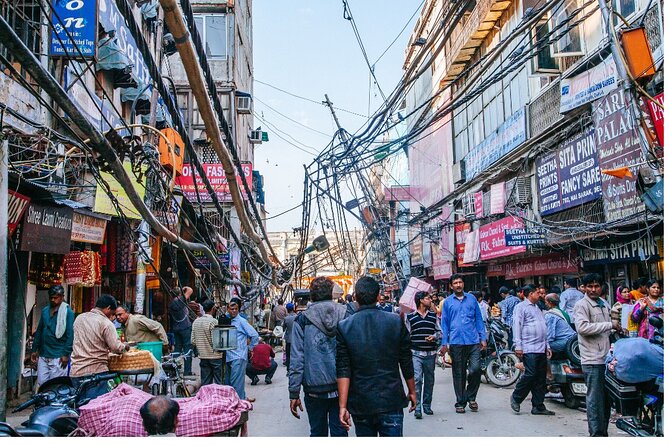
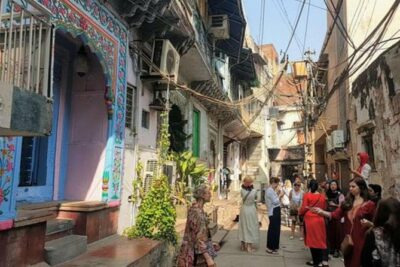
After Jama Masjid, you board the tuk-tuk or cycle rickshaw and travel through Chandni Chowk, Old Delhi’s main thoroughfare. This is the tour’s most immediate lesson in how the old city functions. The lanes are lined with hawkers, porters, wholesalers, and shoppers, and goods move through the same space as people and vehicles.
Chandni Chowk means moonlight place. During Shah Jahan’s reign, a canal ran through the center, with trees along its banks and water that reflected the moon. The canal is gone, but the name preserves a clue to the street’s earlier design.
You get about 30 minutes in this area, mainly from the rickshaw. That is enough to see several kinds of commerce but not enough to explore every lane. Keep your attention on the street rather than trying to photograph everything. The point is the movement around you: deliveries, bargaining, shop displays, and the constant adjustment required to share a narrow road.
The rickshaw also keeps you from getting separated from your guide in the crowd. On the other hand, you have less control over where you stop than you would on a walking tour. If a certain market interests you, tell the guide early and ask if there is time to pause.
More Old Delhi tours:
- The Great Indian Food Tour: Old Delhi Food and Heritage Walk
★ 5.0 · 1,698 reviews - Old Delhi Bike Tour
★ 5.0 · 616 reviews - Old Delhi Street Food Tour
★ 5.0 · 497 reviews - Breakfast Walk in Old Delhi
★ 5.0 · 449 reviews
Kinari Bazaar and the business of decoration
Kinari Bazaar is a very different kind of market. Instead of spices, its shops focus on decorative materials such as fabric, silver, lace, borders, and sequins. It is particularly relevant if you are interested in wedding clothing, craft supplies, or textile work.
The descriptions of this area make it clear why a short rickshaw ride can be useful. You see displays of bright materials without having to walk the entire length of the narrow lanes. You might also spot the practical side of the trade, with porters carrying goods and shopkeepers handling orders.
You have around 30 minutes here. That gives you time to look and ask questions, but not necessarily time to shop at length. If you intend to buy fabric or decorations, tell your guide before the stop ends. Prices, quality, and bargaining are not explained in the tour details, so do not assume that shopping is a major part of the experience.
For most people, the value is visual and cultural. Kinari Bazaar shows that Old Delhi is not only about monuments. It is also a place where specialist markets continue to serve local customers.
Khari Baoli and the smell of the spice trade
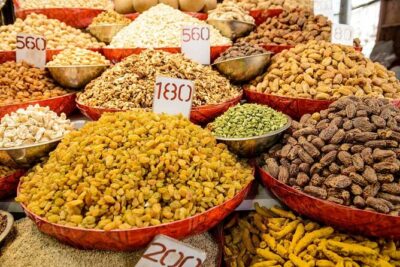
Khari Baoli is presented as Asia’s largest spice market and has existed since the 17th century. The stop gives the tour a strong sensory change. After mosque stonework and glittering textile shops, you turn to sacks, powders, dried goods, and the trade in spices.
Your guide is meant to explain the uses and possible health benefits of different spices. Listen carefully here, and treat medical claims with common sense. The tour can give you background on traditional uses, but it is not a substitute for medical advice.
You have roughly 30 minutes in Khari Baoli. That is a good length for an introduction, especially if you are new to Indian spice markets. The lanes may be dusty or crowded, and the smell can be strong. If you have sensitivity to dust or pungent aromas, keep that in mind when deciding how much time to spend close to open sacks.
This stop helps explain why Old Delhi remains important. It is not simply a preserved historic district. Its markets still handle goods, serve businesses, and support daily life. The best part of the tour is seeing that connection between old street plans and present-day commerce.
Gurudwara Bangla Sahib and the meaning of langar
The final major stop is Gurudwara Bangla Sahib, a Sikh temple in the heart of New Delhi. Its grounds include the gurdwara, a large holy pond, a school, an art gallery, and a kitchen.
The kitchen is the reason this visit feels different from a standard sightseeing stop. Sikh gurdwaras practice langar, a community meal served to all people regardless of race or religion. Food is prepared by Sikh workers and volunteers, and anyone may volunteer as well.
You have about one hour here, the longest stop on the tour. That gives you time to understand the grounds, observe the kitchen, and possibly help with the work before eating in the langar hall. The experience is based on participation and service rather than simply looking at a building.
You must cover your head and remove your shoes before entering. These are not minor formalities. They are basic signs of respect at the shrine. Follow your guide’s instructions, and ask before handling food or joining a task in the kitchen.
This stop was singled out as a favorite part by one past participant, along with a visit to the Gandhi Memorial Site. The Gandhi site is not included in the listed route, so do not count on seeing it unless the operator confirms a change to your program. Gurudwara Bangla Sahib, however, is a clear part of the planned experience.
What the $99 price includes
At $99 per person, this is not the cheapest way to see Old Delhi. The price makes more sense when you consider what is bundled into it: a licensed guide, private air-conditioned car, rickshaw transport in Old Delhi, bottled water, fuel, tolls, parking, taxes, and pickup and drop-off.
For a solo visitor, the price may feel high compared with using local transport and exploring independently. You would also need to arrange your own route, manage the transfer between Delhi, Jama Masjid, the markets, and Gurudwara Bangla Sahib, and decide how to handle the busy streets.
For two or more people, the private format becomes easier to justify, especially if you value door-to-door transport. Group discounts are offered, though the exact reduction is not stated. Ask for the price for your group before booking.
Admission to Jama Masjid is not included, and the optional minaret climb also costs extra. The tour details say that anything not specifically included is excluded, so bring some money for those possibilities. Also clarify the rickshaw payment issue before departure.
Who will get the most from this tour
I would choose this tour if you want a guided first look at Old Delhi without spending the whole day on foot. It suits you especially well if you are staying in Delhi, Gurugram, or Noida and want pickup and return handled in one booking.
It is also a good fit if you want more than monuments. The markets and the langar visit give you contact with working religious and commercial life, not just a sequence of photo stops. The private setup is useful for families and small groups that prefer to ask questions at their own pace.
You may want another option if you dislike crowded transport, have mobility concerns, or prefer a slow walking tour with long time inside each market. Most people can participate, but the tour still involves getting in and out of a rickshaw, walking around a mosque and temple complex, and managing busy streets.
The strongest praise attached to this experience concerns the guide’s manner, clear answers, and careful communication about pickup and payment. That matters here. Old Delhi can feel confusing without a guide who explains what you are seeing and keeps the route moving.
Booking advice and cancellation
Confirmation is provided at booking, and mobile tickets are available. Free cancellation applies when you cancel at least 24 hours before the start time. Cancellations or changes made inside that window are not accepted for a refund.
Before you pay, confirm four things: your pickup time, the exact return point, the expected rickshaw arrangement, and any extra cost for Jama Masjid or the minaret. Those questions remove the only notable uncertainty in an otherwise clearly organized half-day outing.
Should you book it?
Book this tour if you want an efficient, private introduction to Old Delhi that mixes major sights with markets and a genuine Sikh community tradition. The langar visit and the ride through Khari Baoli give it more substance than a simple monument circuit.
Skip it if you want a quiet experience, dislike tuk-tuks, or plan to spend serious time shopping. The ride can be uncomfortable, and the extra 200-rupee request reported by one participant makes it wise to settle tipping expectations in advance. For most first-time visitors who value transport, local context, and a compact schedule, the $99 price is reasonable, particularly when shared by a small group.
FAQ
How long does the Old Delhi tour take?
The experience lasts approximately four to five hours, including pickup, sightseeing, transfers, and return transport.
Where can pickup and drop-off take place?
Pickup is offered from a preferred location in Delhi, Gurugram, or Noida. At the end, you can be transferred back to your hotel, airport, or railway station in Delhi.
Is the tour private?
Yes. Only your group takes part in this private activity.
Is the tuk-tuk or rickshaw ride included?
Yes. A tuk-tuk or rickshaw ride through Old Delhi is included, along with sightseeing in a private air-conditioned car.
Are Jama Masjid admission and the minaret climb included?
No. Jama Masjid admission is not included, and the optional minaret climb is also an extra cost.
What should I wear or bring for Gurudwara Bangla Sahib?
You must cover your head and remove your shoes at the gurdwara. Bottled water is included, and you may bring additional money for excluded costs such as site admission or optional activities.
More New Delhi City Tours
- Old & New Delhi City Tour – Half or Full Day Options Available
★ 5.0 · 4,811 reviews - Old & New Delhi Private Tour – Half or Full Day (Rated Excellent)
★ 5.0 · 2,226 reviews - Old & New Delhi Full or Half Day Sightseeing Tour
★ 5.0 · 1,900 reviews - Delhi: Old and New Delhi Guided Full or Half-Day Tour
★ 5.0 · 976 reviews
Newly reviewed around New Delhi
- Private Customized Tour Of Old/New Delhi Spiritual Sites★ 5.0 · 5 reviews
- Yoga and Meditation Classes in Gurgaon★ 4.5 · 8 reviews
- Yoga class in Delhi★ 5.0 · 29 reviews
- Old Town Delhi Walking Tour (2 Hours Guided Tour with Local)★ 4.5 · 22 reviews
- 5 Days Golden Triangle Tour with Ranthambore(Delhi Agra Jaipur Ranthambore Tour)★ 5.0 · 3 reviews
- Wonderful Old & New Delhi sightseeing tour★ 5.0 · 3 reviews
- Hidden Gems of Old Delhi – Walk★ 5.0 · 8 reviews
- Delhi Zoo White Tigers & lions with Old Fort Visit★ 4.5 · 5 reviews
Delhi Rickshaw & Tuk Tuk Tours, compared.
Old Delhi Food, Heritage&Cultural Walk with Rickshaw ride to Masterji Kee Haveli
Read our review →
Delhi Food Walk: Rickshaw Ride, Street Eats & Market Tour
Read our review →
3-hour Old Delhi Heritage Walking tour with Rickshaw Ride
Read our review →
Private Full Day Old And New Delhi City Tuk Tuk Tour
Read our review →
3-4 Hour Old Delhi Heritage Walk Tour with Tuk Tuk Ride Wherever Required
Read our review →
Half-Day Food Tour with Cycle Rickshaw ride to Masterji Kee Haveli
Read our review →Browse the lists this tour appears in