
Reviewed · DELHI RICKSHAW & TUK TUK TOURS
Luxury Rickshaw Tour of Old Delhi
Old Delhi is easiest to understand from a slow-moving rickshaw, where you can watch decorated shops, shrines, food stalls, and daily life unfold at street level. This private three-hour ride lets you shape the route around markets, architecture, religion, or food instead of following a rigid sightseeing list. I especially like the wireless headsets, which keep the guide audible through the city noise, and the use of old photographs and sketches to explain what you are seeing.
I also like that the experience includes food tastings, bottled water, admissions, and a history book, not just transportation. The main consideration is that the route is flexible enough to be unpredictable: some places may be visited inside, while others may only be seen from the rickshaw. Old Delhi markets also close on Sundays, so your choice of day matters.
Key points at a glance
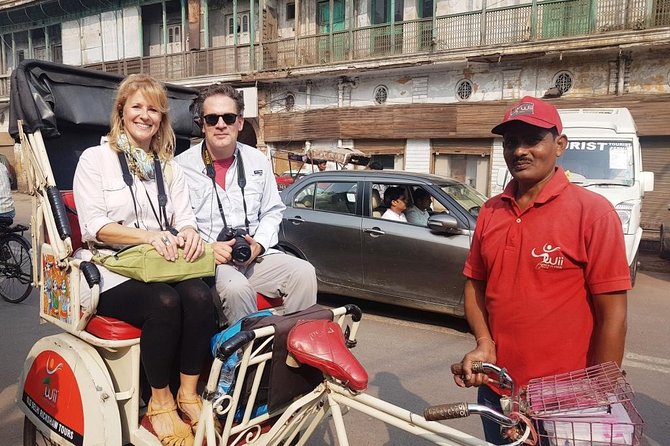
- A private rickshaw through Old Delhi: Your group rides together, with no strangers added to the vehicle.
- A route shaped around your interests: You can focus on palaces, markets, worship sites, food, architecture, or a mix.
- Wireless headsets included: You can hear live commentary while moving through crowded streets.
- Food and history come together: Tastings from famous Old Delhi eateries are paired with historical explanation.
- A useful three-hour introduction: The tour covers a lot without requiring a full day, though some places may be drive-by stops.
Starting beside the Red Fort at Digamber Jain Temple
The tour begins at the Charity Birds Hospital beside Shri Digambar Jain Lal Mandir, opposite the Red Fort in Chandni Chowk. This is a useful starting point because you are already at the edge of Old Delhi’s most historic and crowded quarter.
You do not receive hotel pickup or drop-off, so you need to make your own way to the meeting point. The location is near public transportation, and the activity finishes back at the same place. That return point is handy if you want to continue exploring Chandni Chowk on your own afterward.
The first moments may feel intense. Old Delhi brings together rickshaws, pedestrians, decorated storefronts, religious buildings, food shops, and narrow market lanes in a tight area. A private vehicle and a local guide give you a structured way into that confusion without asking you to manage every turn yourself.
The rickshaw is the star of the experience, but this is not simply a scenic ride. The guide directs the route, explains the buildings, and may take you out for short visits, food stops, and market walks. You should expect a mix of riding and exploring on foot.
More rickshaw and tuk tuk rides in New Delhi:
- Old Delhi Food, Heritage&Cultural Walk with Rickshaw ride to Masterji Kee Haveli
★ 5.0 · 742 reviews - Delhi Food Walk: Rickshaw Ride, Street Eats & Market Tour
★ 5.0 · 401 reviews - 3-hour Old Delhi Heritage Walking tour with Rickshaw Ride
★ 5.0 · 240 reviews
Why the flexible route matters
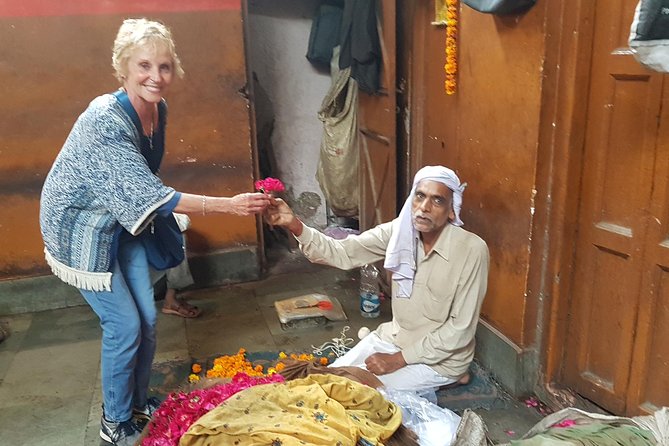
The most useful feature here is customization. Before setting off, you can make your interests clear. If you care about Mughal architecture, the route can emphasize monuments, palaces, havelis, and old facades. If food is your priority, the guide can give more attention to famous eateries and local specialties. Religious sites and markets can also take priority.
This flexibility is valuable in Old Delhi because the area offers more sights than any three-hour visit can cover properly. A fixed route might spend too much time on places that do not interest you. Here, you can help decide what deserves your limited time.
The tradeoff is that the exact itinerary is not guaranteed in advance. The listed sights are possible stops, not a promise that you will enter every building. You may visit some places inside and drive past others. If Jama Masjid, Khari Baoli, or a particular palace is especially important to you, say so at the start.
The tour can include:
- Historic monuments such as Jama Masjid, the Red Fort, and Town Hall
- Worship sites including Gauri Shanker Hindu Temple, Digamber Jain Temple, Christian Baptist Church, Fatehpuri Mosque, and Gurudwara Sis Ganj
- Palaces such as Begum Shamroo Palace, Gadodiya Palace, and Zeenat Mahal Palace
- Heritage havelis with original Mughal architecture
- Chandni Chowk, Kinari Bazaar, Dariba Kalan, and Ballimaran
- Khari Baoli, described as Asia’s largest spice market
- Old eateries serving well-known Old Delhi dishes
That range makes this a good first look at the district, not a narrow architecture tour.
Riding through Chandni Chowk and its side markets
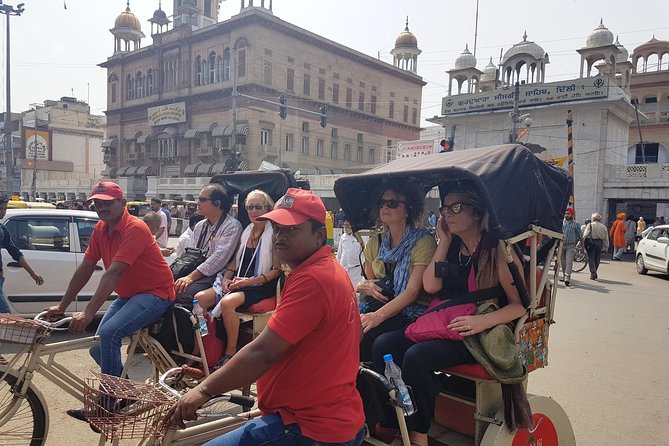
Chandni Chowk means moonlit square, though today it is better understood as a long commercial artery with many side lanes and specialized markets. From the rickshaw, you can watch the area change block by block, with shopfronts, signs, shrines, food counters, and old buildings packed closely together.
The guide may take you into Kinari Bazaar, known for wedding goods and traditional outfits. This is a useful stop if you want to see the commercial side of Old Delhi rather than only its grand monuments. Dariba Kalan is associated with silver, while Ballimaran is known for bangles and footwear.
These markets are not museum displays. Shops serve local customers, lanes can be crowded, and the experience may feel less orderly than a planned attraction. That is part of the point, but it also means you should expect noise, tight spaces, and a quick pace at times.
The private format helps here. You can ask the guide what a shop or street is known for, pause for a closer look, or move on if a market does not fit your interests. The included headset is especially helpful when you are riding past rather than standing in a quiet courtyard.
Khari Baoli and the taste of Old Delhi
Khari Baoli is one of the tour’s most distinctive possible stops. It is presented as Asia’s largest spice market, and the appeal is not only the products. You get a look at a working market tied to the food culture of Delhi, with spices and other goods moving through a busy commercial setting.
A guide adds value here because market streets can be hard to read without context. You can learn what you are looking at, how the area fits into Old Delhi’s trade, and which smells or products connect to the food you taste later.
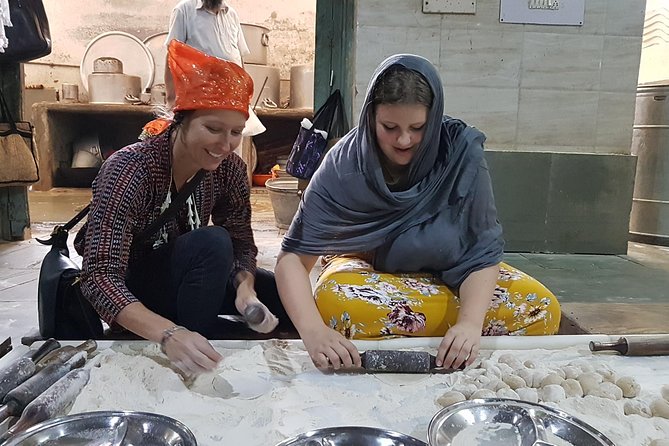
Food samples are included, along with bottled water. The tour description does not specify every dish or how many tastings you receive, so you should treat the food portion as an introduction rather than a full meal. If you have dietary restrictions, ask the operator before booking, since no specific dietary arrangements are stated.
The food stop is one reason this tour can feel more grounded than a monument-only outing. You are not just looking at old buildings. You are also connecting the markets, shops, and eating places to everyday life in the district.
More Old Delhi tours:
- The Great Indian Food Tour: Old Delhi Food and Heritage Walk
★ 5.0 · 1,698 reviews - Old Delhi Bike Tour
★ 5.0 · 616 reviews - Old Delhi Street Food Tour
★ 5.0 · 497 reviews - Breakfast Walk in Old Delhi
★ 5.0 · 449 reviews
Temples, mosques, churches, and a Sikh shrine
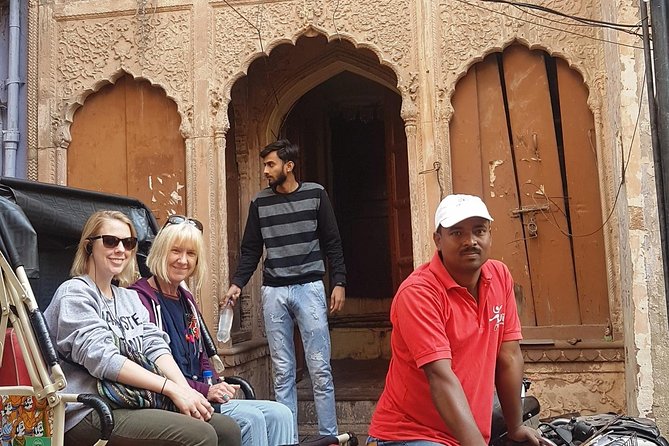
Old Delhi’s religious buildings show how many traditions share the same compact area. Depending on the route, you may see Gauri Shanker Hindu Temple, the Digamber Jain Temple, Fatehpuri Mosque, Gurudwara Sis Ganj, and Christian Baptist Church.
Each site offers a different architectural and cultural setting. A temple, mosque, church, and gurdwara are not interchangeable photo stops, and the guide’s commentary can help explain what makes each place distinct. Some may be visited from inside, while others may remain drive-by views.
You should dress and behave respectfully at all worship sites. The supplied information does not set out specific clothing rules, so follow the instructions given locally by your guide. Since the tour moves through active religious spaces, the focus is observation and explanation rather than a staged performance.
The Digamber Jain Temple is also the meeting point, so you begin with one of the area’s important religious landmarks rather than wasting the first part of the tour on a transfer from a hotel.
Palaces, havelis, and traces of another Old Delhi
Begum Shamroo Palace, Gadodiya Palace, and Zeenat Mahal Palace are among the possible palace stops. These names may be less familiar than the Red Fort, which is precisely why they add something to the route. They help you see Old Delhi through residences and urban buildings, not only through major imperial monuments.
The tour may also include heritage havelis with original Mughal architecture. Havelis were large traditional residences, and their surviving details can be easy to miss when you pass through Old Delhi alone. Look for the contrast between older facades and the active shops and homes around them.
The guide uses rare pictures and sketches to help you picture how the area looked in earlier periods. This is a strong feature for anyone who finds it hard to connect a crowded modern street with its older form. You are given visual evidence of change instead of being asked to imagine everything from a verbal date list.
Still, do not expect a long palace or haveli visit at every stop. The three-hour limit and changing street conditions mean the guide may explain a building from the rickshaw or make a brief visit.
Jama Masjid, the Red Fort, and Town Hall
The major monuments provide the broad historical frame for the smaller streets. Jama Masjid and the Red Fort are among Old Delhi’s best-known landmarks, while Town Hall adds another architectural reference point within the district.
The value of seeing them on this tour is the connection between famous sights and the surrounding neighborhoods. You are not looking at an isolated monument and then leaving. You can see how major buildings relate to markets, religious sites, old homes, and commercial lanes.
Admission to attractions is included, but the itinerary clearly allows for both interior visits and drive-by views. If you need a guaranteed extended visit inside a particular monument, this may not be the right format. A dedicated monument tour would give you more time at one site.
For a first introduction, though, the rickshaw format keeps the day moving. You get a sense of the district’s scale and variety without committing to a full-day walking program.
The guide, headsets, and history book
The English-speaking local guide is central to the experience. The strongest practical detail is the use of wireless headsets, which lets you hear the live commentary while the rickshaw is moving or while the street around you is noisy.
This matters more than it may sound. Old Delhi is not a quiet sightseeing zone. Without a headset, explanations can disappear beneath traffic, shop activity, and the general sound of the streets. You can keep watching what is around you while still following the story.
The guide also uses historical photographs and sketches. That approach can make the commentary more concrete, especially when an old building has been altered or partly hidden by modern shopfronts.
Each guest receives a specially prepared book created with help from experts in Indian history. It gives you something to read after the tour and can help you remember the names and background of places you saw quickly.
No guide’s name is provided in the available details, so you should not book expecting a particular person. What is specified is an English-speaking local guide, live commentary, headsets, and a private format.
Is $85 per person a fair price?
At $85 per person, this is not the cheapest way to see Old Delhi. The price makes more sense when you count what is included: a private rickshaw, an English-speaking guide, live commentary, wireless headsets, bottled water, food tastings, a history book, and admission to attractions.
For two people, the minimum booking requirement means the base cost is $170. That minimum also means you are paying for a private experience rather than joining a large shared vehicle. Group discounts are available, though no discount amounts are specified.
I see the value mainly in the guide and the customization. You could ride through parts of Old Delhi for less, but you would not necessarily know what you were seeing, where to stop, or how to connect the markets and monuments. The included food and admissions reduce extra costs during the three hours.
The price is less compelling if you want only a simple rickshaw ride or a long visit inside one major monument. It is better suited to someone who wants a guided overview with food, history, and local streets all combined.
Timing, Sunday closures, and practical limits
Plan on about three hours, but remember that the route may include both riding and walking. Wear comfortable shoes and keep your schedule realistic after the tour, since Old Delhi has many moving parts and the experience is not designed as a rushed checklist.
Many Old Delhi markets are closed on Sundays. Avoid Sunday if your main goal is Khari Baoli, Kinari Bazaar, Dariba Kalan, Ballimaran, or the wider market atmosphere. The tour may still operate, but the commercial side of the district will not be the same.
Children must be accompanied by an adult. Most people can participate, and the tour is near public transportation. Since no hotel transfer is included, confirm how you will reach the starting point before setting off for the day.
The experience is private, so only your group participates. That gives you more room to ask questions and adjust the emphasis than a large group tour would allow.
Who should book this Old Delhi tour?
I would choose this tour for a first visit to Delhi when you want an organized introduction without spending a full day on foot. It fits people who enjoy a mix of food, markets, religious buildings, architecture, and local street scenes.
It is also a good match for visitors who feel unsure about entering Old Delhi alone. The guide provides direction through the crowds, keeps the history moving through the headset, and helps you make sense of places that might otherwise blur together.
Families can benefit from the rickshaw format, provided children are accompanied by an adult. Food-focused visitors, photographers, and anyone curious about old neighborhoods should also find plenty to watch.
I would hesitate if you need a fixed list of guaranteed interior visits, a quiet tour, hotel pickup, or a full meal. I would also avoid Sunday if the markets are your main reason for booking.
Should you book the Luxury Rickshaw Tour of Old Delhi?
Book it if you want a private, guided sampler of Old Delhi with room to shape the route. The combination of rickshaw travel, wireless commentary, historical images, food tastings, and market stops gives you more context than a ride alone.
Before booking, decide which two or three priorities matter most and tell the guide at the start. Choose a non-Sunday date if you want the markets at their best, and remember that the $85 price covers several useful inclusions but not hotel transportation.
Skip it if your goal is a slow, in-depth visit to one monument or a completely fixed itinerary. For most first-time visitors who want to understand how Old Delhi’s food, faith, commerce, and old buildings fit together, this is a practical and lively three-hour introduction.
FAQ
Where does the tour begin?
It begins at the Charity Birds Hospital beside Shri Digambar Jain Lal Mandir, opposite the Red Fort in Chandni Chowk, Delhi.
Where does the tour end?
The activity ends back at the same meeting point.
How long does the tour last?
The tour lasts approximately three hours.
Is the tour private?
Yes. Only your group participates in the activity.
What is included in the price?
The price includes the rickshaw ride, an English-speaking local guide, live commentary, wireless headsets, bottled water, food tasting, and admission to attractions.
Is hotel pickup included?
No. Hotel pickup and drop-off are not included.
Can the itinerary be customized?
Yes. The route can be adapted to your time and interests, with possible emphasis on monuments, worship sites, palaces, markets, havelis, or food.
Can I take the tour on a Sunday?
The tour may be available on Sunday, but many Old Delhi markets are closed that day. If markets are important to you, choose another day.
Newly reviewed around New Delhi
- Private Customized Tour Of Old/New Delhi Spiritual Sites★ 5.0 · 5 reviews
- Yoga and Meditation Classes in Gurgaon★ 4.5 · 8 reviews
- Yoga class in Delhi★ 5.0 · 29 reviews
- Old Town Delhi Walking Tour (2 Hours Guided Tour with Local)★ 4.5 · 22 reviews
- 5 Days Golden Triangle Tour with Ranthambore(Delhi Agra Jaipur Ranthambore Tour)★ 5.0 · 3 reviews
- Wonderful Old & New Delhi sightseeing tour★ 5.0 · 3 reviews
- Hidden Gems of Old Delhi – Walk★ 5.0 · 8 reviews
- Delhi Zoo White Tigers & lions with Old Fort Visit★ 4.5 · 5 reviews
Delhi Rickshaw & Tuk Tuk Tours, compared.
Old Delhi Food, Heritage&Cultural Walk with Rickshaw ride to Masterji Kee Haveli
Read our review →
Delhi Food Walk: Rickshaw Ride, Street Eats & Market Tour
Read our review →
3-hour Old Delhi Heritage Walking tour with Rickshaw Ride
Read our review →
Private Full Day Old And New Delhi City Tuk Tuk Tour
Read our review →
3-4 Hour Old Delhi Heritage Walk Tour with Tuk Tuk Ride Wherever Required
Read our review →
Half-Day Food Tour with Cycle Rickshaw ride to Masterji Kee Haveli
Read our review →
Old Delhi Photography & Food Tour with Rickshaw Ride to Masterji Kee Haveli
Read our review →Browse the lists this tour appears in