
Reviewed · FATEHPUR SIKRI TOURS
Glories of the Past-3 Day Tour to Delhi Agra Fatehpur-Taj & More
The real appeal here is the way Delhi, Agra, and Fatehpur Sikri fit into one private journey. You move from Sikh devotion and spice markets to Mughal tombs, imperial forts, the Taj Mahal, and Akbar’s red-sandstone city without changing hotels or arranging separate transfers.
I like the private car and flexible pace, especially for a route with long drives. I also like the guides’ personal touch. Mehraj is praised for clear explanations, while Ali is known for strong English, family photographs, and a friendly manner.
The main drawback is the amount of time on the road. Day 2 includes about four hours from Delhi to Agra, and Day 3 adds a long return drive after Fatehpur Sikri. Meals and accommodation are not included, and monument tickets depend on the option you choose.
Key points to know before booking
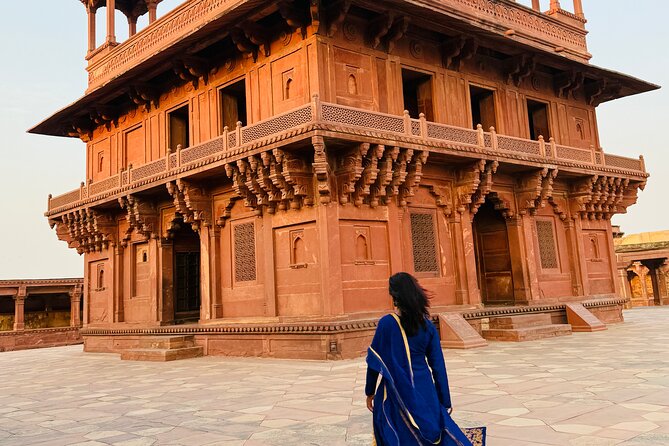
- Delhi begins with variety: Sikh worship at Gurudwara Bangla Sahib, the spice lanes of Khari Baoli, and major Mughal and modern landmarks all appear on Day 1.
- A private air-conditioned car: Pickup is available from Delhi, Noida, Gurugram, Ghaziabad, and Faridabad, with bottled water and light snacks in the vehicle.
- The Taj Mahal gets its own morning: You have about two hours at India’s most famous monument on Day 3.
- Fatehpur Sikri needs time: The four-hour stop gives you room to see Akbar’s old red-sandstone city rather than treating it as a quick photo stop.
- Guides are a major part of the value: If available, ask about Mehraj or Ali, both praised for clear history lessons, good English, and help with photographs.
- The price covers transport, guiding, and fees: At $195 per person, value depends on the selected ticket option and how many people share the private vehicle.
Delhi’s first day moves from prayer to royal tombs
Day 1 packs six important stops into a broad tour of New Delhi and older Delhi. It is a full introduction, not a slow neighborhood walk, so you should expect several short visits and one longer monument stop.
Your first stop is Gurudwara Bangla Sahib, a Sikh place of worship dedicated to the memory of Guru Har Krishan. The visit lasts about 30 minutes and offers a calm start in the middle of the capital. The building is associated with compassion and service, so this is more than an exterior photograph.
Dress and behavior matter at a place of worship. You will need to follow local instructions, and the guide can help you understand what is appropriate. The short visit will not explain every part of Sikh tradition, but it gives the day a human and spiritual beginning.
Next comes Khari Baoli, Asia’s largest spice market. You have about 30 minutes to see the trade in saffron, cardamom, dried chilies, and other goods. The stop is brief, so think of it as a concentrated taste of the market rather than a leisurely shopping session.
This is one of the tour’s most sensory moments. Delhi’s grand monuments tell stories through stone, while Khari Baoli speaks through smell, color, and commerce. Keep your belongings close in any crowded market, and ask your guide before buying spices if you want help with quality or price.
The 15-minute stop at India Gate is the shortest visit of the day. This war memorial honors Indian soldiers who died during World War I. You will have time for an introduction and photographs, but not an in-depth museum-style visit.
India Gate works best as part of the larger route. It gives you a quick look at New Delhi’s planned ceremonial center before the tour turns to Mughal architecture.
You then get about an hour at Humayun’s Tomb, one of the day’s strongest stops. Built in the 16th century by the emperor’s widow, the tomb combines Persian design with Mughal forms. Its gardens and formal layout help you see the architectural ideas that later reached their grandest expression at the Taj Mahal.
I would pay close attention here. Humayun’s Tomb is not simply a smaller Taj Mahal. It has its own importance as an early major Mughal mausoleum, and the guide’s explanation can help you notice the planning, symmetry, and decorative details.
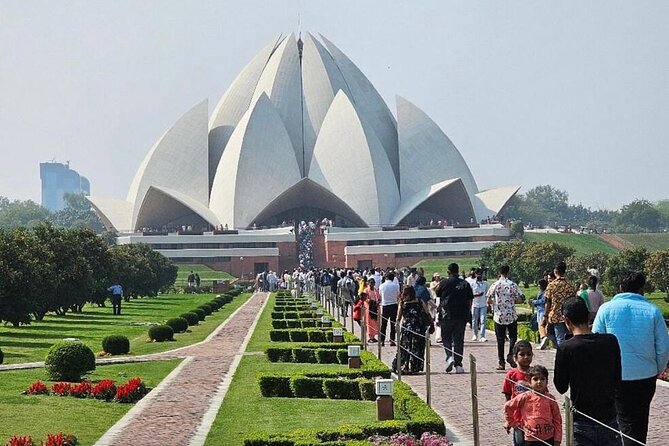
The Lotus Temple follows with a 30-minute visit. Its flower-like shape and open approach to people of different faiths make it a different kind of Delhi landmark. You are visiting for quiet reflection and architecture rather than a conventional historical display.
The final stop is Qutub Minar, allotted about 45 minutes. The 73-meter minaret dates to the 12th century and carries carved decoration and Quranic verses. Ruins around it add context, showing how the site developed over time.
Day 1 covers a lot of ground. That variety is a strength if you want a broad first look at Delhi, but it can feel quick if you prefer long, unhurried visits. The private format helps because your group can ask questions and manage the pace within the day’s schedule.
More Fatehpur Sikri visits:
- From Delhi: 2 Days Taj Mahal & Agra City Tour With Fatehpur Sikri
★ 5.0 · 90 reviews - From Delhi – Day Trip to Taj Mahal, Agra Fort & Fatehpur Sikri
★ 5.0 · 37 reviews - From Delhi: Sameday Taj Mahal Agra and Fatehpur Sikri Tour
★ 5.0 · 32 reviews
The Delhi to Agra drive is part of the plan
Day 2 begins with pickup from your accommodation in Delhi, Noida, Gurugram, Faridabad, or Ghaziabad. The drive to Agra takes about four hours, so the car is not just a transfer. It is a central part of the day.
The supplied details promise an air-conditioned vehicle, bottled mineral water, and light snacks. Meals are not included, so you should plan for food during the day rather than expecting a full meal in the vehicle.
A private car makes this long route easier than joining a large group. You have your own space, a guide assigned to your party, and the option to ask for breaks or clarification. Still, four hours each way is a serious time commitment, and you should be comfortable with extended road travel before booking.
Agra Fort puts Mughal power in red sandstone
At Agra Fort, you spend about an hour inside one of Agra’s key imperial sites. Its red sandstone walls and courtyards tell a different story from the Taj Mahal. The Taj is linked with love and mourning, while Agra Fort shows the machinery of rule, defense, court life, and royal power.
This contrast is one of the best reasons to visit both monuments. Without Agra Fort, the Taj Mahal can seem like an isolated work of beauty. The fort gives you a sense of the dynasty, the rulers, and the court culture that shaped the city.
An hour is enough for a focused visit with a guide, though the site has more to see than any short tour can cover. If you care most about imperial history, use this stop to ask your guide about the Mughal rulers connected with Agra and the fort’s role in their government.
Itmad-ud-Daulah shows the delicate side of Mughal design

The 45-minute visit to Itmad-ud-Daulah, often called the Baby Taj, changes the mood. This smaller mausoleum is noted for delicate workmanship and is often treated as a forerunner to the decorative style associated with the Taj Mahal.
The value here is detail. After the heavy red sandstone of Agra Fort, you see a more refined treatment of marble and ornament. I like this stop because it helps you compare Mughal buildings instead of placing every monument in the shadow of the Taj.
Do not expect the same scale as the Taj Mahal. Itmad-ud-Daulah is valuable precisely because it is more intimate and focused on craftsmanship.
More Agra days out of New Delhi:
- Same Day Taj Mahal, Agra Fort & Baby Taj Tour from Delhi by Car
★ 5.0 · 4,304 reviews - Full Day Taj Mahal, Agra Fort & Baby Taj Tour from Delhi by Car
★ 5.0 · 3,647 reviews - From Delhi: Taj Mahal & Agra Private Day Trip with Transfers
★ 4.9 · 3,181 reviews - From Delhi: Taj Mahal and Agra Fort Private Sunrise Tour
★ 4.9 · 2,270 reviews
Mehtab Bagh offers a different Taj Mahal view
At Mehtab Bagh, you have about an hour in the Moonlight Garden across the Yamuna River. The main attraction is the view back toward the Taj Mahal, especially around sunset. The garden is suited to photographs and a quieter pause after the fort and mausoleum.
The exact light will depend on the day and schedule, so treat the sunset appeal as a possibility rather than a guarantee. The stop remains worthwhile for a reverse view of the Taj, giving you a sense of its position beside the river and its relationship to the wider setting.
This is also where the private format can help. You are not tied to a large group’s photo routine, and you can ask the guide to help with family pictures. Ali has received particular praise for taking numerous photographs, so ask whether he is available if that matters to you.
The Taj Mahal deserves the calmest morning
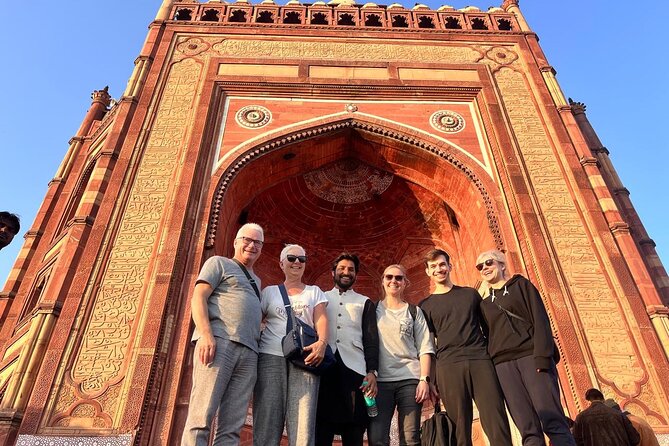
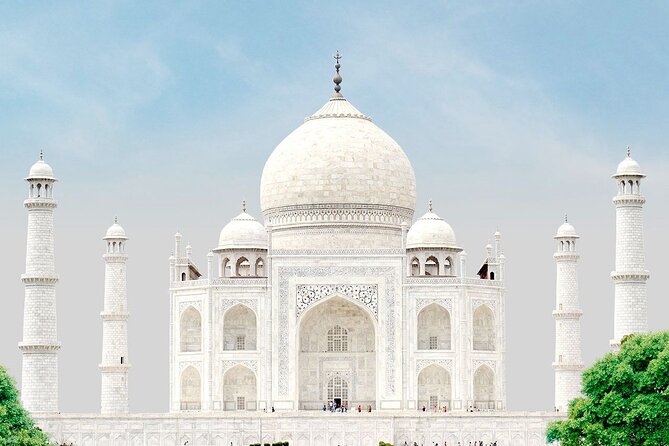
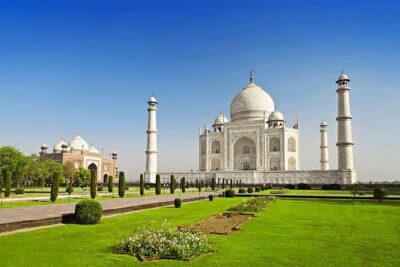
Day 3 begins with about two hours at the Taj Mahal, the emotional center of the tour. The white marble mausoleum was built as a memorial to love, and its symmetry, inlaid decoration, and changing light make it a monument that rewards slow attention.
Two hours is a useful amount of time for the main visit. You can see the exterior, enter the mausoleum area according to the day’s access rules, take photographs, and listen to the guide’s explanation without reducing the stop to a quick look.
Your guide can also help separate familiar stories from useful historical context. The Taj Mahal is famous enough that many visitors arrive with a set picture in their mind. The best guiding adds scale, design details, and the place’s connection to Mughal power and court life.
The schedule places the Taj Mahal before Fatehpur Sikri, which is sensible. You see the most famous monument while your day is still fresh, then continue into a different chapter of Mughal history.
Fatehpur Sikri is the tour’s most unusual stop
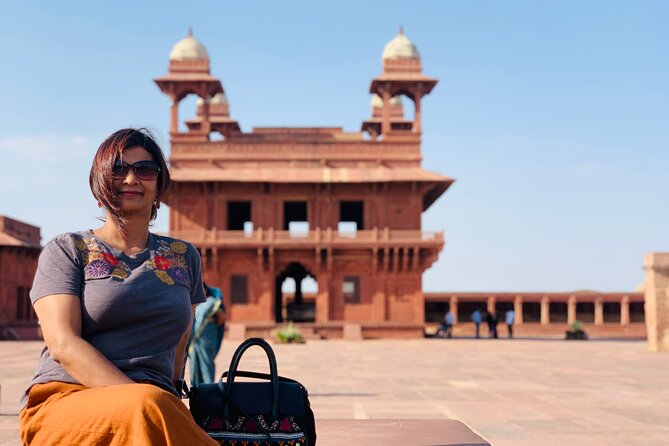
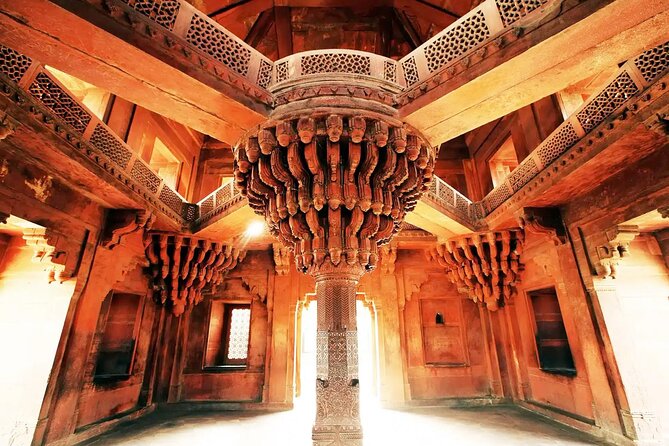
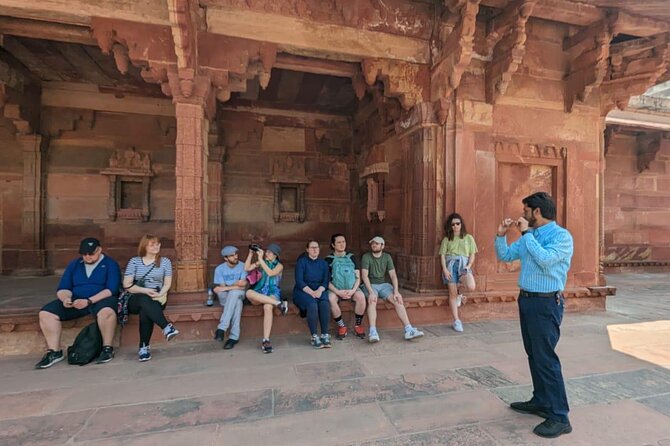
The four-hour visit to Fatehpur Sikri is unusually generous. This red-sandstone city was shaped by Emperor Akbar and later left behind, giving you courtyards, arches, and grand spaces with a quieter feel than Agra’s best-known sights.
I would not treat Fatehpur Sikri as a spare stop added to fill the day. It is one of the places that gives the tour its shape. The Taj shows Mughal artistry at its most famous, Agra Fort shows political power, and Fatehpur Sikri reveals Akbar’s vision for an imperial city.
Four hours allows your guide to explain the site instead of rushing from one photo point to another. Mehraj is especially associated with detailed explanations here, answering questions and helping visitors understand the buildings. Ali is another guide to ask about if available, particularly if clear English and patient discussion are important to you.
The long visit also means you need comfortable shoes and patience. Red sandstone courtyards and historic ruins are best seen on foot, and the site can feel demanding after the Taj Mahal and the return drive still ahead.
The return to Delhi makes this a demanding three days
After Fatehpur Sikri, the return to New Delhi takes about four hours. The tour concludes at your original starting point, with hotel and airport pickup arrangements available in the listed Delhi-area locations.
This routing gives you a lot without requiring a separate hotel change in Agra. That is convenient, but the cost is time. You should choose this plan if you prefer keeping your base in Delhi and do not mind long driving days.
A three-day tour also works well for a first visit when you want the main Mughal sights in one organized package. If you want slow mornings, long meals, or free time in each city, this schedule will feel tight.
What the $195 price really covers
At $195 per person, the price includes a private tour, an air-conditioned vehicle, hotel or airport pickup from the listed areas, a certified guide, bottled water, light snacks, and all fees and taxes. Monument entry tickets are included if you choose the option that includes them.
That last point matters. Compare the booking choices carefully, since a lower starting price may not cover the same entrance fees. The tour does not include accommodation, meals, most beverages, or gratuities for guides and drivers.
The value improves with more people in your private group because the cost is listed per person while the vehicle and guide serve the whole party. You also avoid arranging separate Delhi to Agra transport, local guiding, and the return journey yourself.
I would not call this the cheapest way to see the region. Its value comes from one coordinated private route, direct pickup, and guides who can make sense of monuments that are easy to admire but harder to understand alone.
Guides can shape the quality of the day
The strongest personal praise centers on Mehraj and Ali. Mehraj is described as clear, friendly, and especially good at explaining Fatehpur Sikri. Ali is praised for excellent English, professionalism, detailed answers, and taking family photographs.
You cannot assume which guide will be assigned unless the operator confirms it. Still, it is reasonable to ask about Mehraj or Ali when booking. A good guide matters here because the itinerary contains several large sites, and you will get more from them with context than with photographs alone.
The guiding style also appears suited to questions. That is useful at Humayun’s Tomb, Agra Fort, and Fatehpur Sikri, where architectural details can otherwise blur together.
Who should book this private Delhi and Agra tour
I would recommend it for first-time visitors who want the major sights handled in one plan. Families may like the private setting and help with group photographs, while couples and small groups can enjoy more control than they would have on a coach tour.
It also suits history-minded visitors who want more than the Taj Mahal. The combination of Humayun’s Tomb, Qutub Minar, Agra Fort, Itmad-ud-Daulah, and Fatehpur Sikri gives you a much fuller view of northern India’s imperial architecture.
I would hesitate if you dislike long car journeys or want every day to feel relaxed. The route is ambitious, Day 1 is packed, and the Agra and Fatehpur Sikri days involve substantial road time.
The tour is private, and only your group participates. Group discounts are available, but the supplied details do not specify the discount amount, so ask before booking if you are traveling with several people.
Practical details to settle before you go
Confirmation is provided at booking, and the tour is near public transportation. Most people can participate, though the amount of walking at major monuments and the long drives are worth considering for your own comfort.
Free cancellation is available if you cancel at least 24 hours before the start time. Cancellations or changes within 24 hours are not refunded or accepted, based on the stated local cut-off time.
Pack light, wear comfortable shoes, and keep some money available for meals and gratuities. Bottled water and snacks are supplied in the car, but full meals are not.
Should you book it?
Book this tour if you want Delhi, Agra, the Taj Mahal, and Fatehpur Sikri in one private three-day plan, with transport and guiding already arranged. The strongest reasons are the useful range of monuments, the long Fatehpur Sikri visit, and the personal help available from guides such as Mehraj and Ali.
Skip it if you want a slow holiday or prefer to stay overnight in Agra. At $195 per person, it offers solid convenience and coverage, but you are paying with time as well as money. For a focused first look at Mughal India from a Delhi base, that trade can be worthwhile.
FAQ
What is included in the tour price?
The tour includes a private air-conditioned vehicle, pickup from listed Delhi-area locations, a certified guide, bottled mineral water, light snacks, and all fees and taxes. Monument entry tickets are included if you select the option that includes them.
Are meals included?
No. Meals and beverages are not included, apart from the bottled water and light snacks provided in the vehicle.
Is accommodation included?
No. You arrange and pay for your own accommodation.
Where can pickup be arranged?
Pickup is available from Delhi, Noida, Gurugram, Ghaziabad, and Faridabad. Hotel and airport pickups are listed as available.
Is this a private tour?
Yes. Only your group participates in the tour.
How long is the drive from Delhi to Agra?
The drive to Agra on Day 2 takes about four hours. The return to New Delhi after Fatehpur Sikri on Day 3 also takes about four hours.
What is the cancellation policy?
You receive a full refund if you cancel at least 24 hours before the experience begins. Cancellations or changes made less than 24 hours before the start time are not accepted, and the amount paid is not refunded.
More 3-Day Experiences in New Delhi
- 3-Day Delhi, Agra and Jaipur Private Tour – India Golden Triangle
★ 5.0 · 812 reviews - 3-Day Private Luxury Golden Triangle Tour to Agra and Jaipur From New Delhi
★ 5.0 · 424 reviews - 3-Day Luxury Golden Triangle Tour: New Delhi, Agra & Jaipur
★ 5.0 · 246 reviews - Award-Winning 3-Day Private Golden Triangle Tour of India
★ 5.0 · 240 reviews
Newly reviewed around New Delhi
- Private Customized Tour Of Old/New Delhi Spiritual Sites★ 5.0 · 5 reviews
- Yoga and Meditation Classes in Gurgaon★ 4.5 · 8 reviews
- Yoga class in Delhi★ 5.0 · 29 reviews
- Old Town Delhi Walking Tour (2 Hours Guided Tour with Local)★ 4.5 · 22 reviews
- 5 Days Golden Triangle Tour with Ranthambore(Delhi Agra Jaipur Ranthambore Tour)★ 5.0 · 3 reviews
- Wonderful Old & New Delhi sightseeing tour★ 5.0 · 3 reviews
- Hidden Gems of Old Delhi – Walk★ 5.0 · 8 reviews
- Delhi Zoo White Tigers & lions with Old Fort Visit★ 4.5 · 5 reviews
Fatehpur Sikri Tours, compared.

Day Trip to Taj Mahal, Agra Fort & Fatehpur Sikri
Read our review →
Private One Day Tour of Taj Mahal, Agra Fort & Fatehpur Sikri from New Delhi
Read our review →
Sunrise Taj Mahal 2-Day Tour: Agra Fort & Fatehpur Sikri
Read our review →
2-Day Private Tour of Agra incl Taj Mahal, Fatehpur Sikri & Agra Fort from Delhi
Read our review →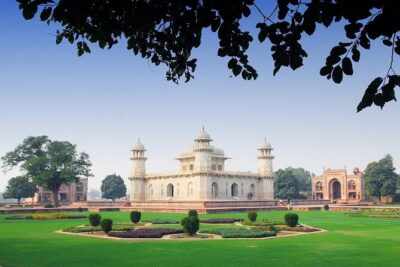
Private Sunrise Taj Mahal Tour from Delhi with Fatehpur Sikri
Read our review →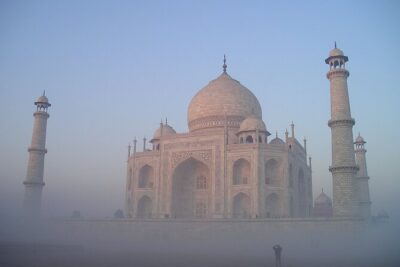
Private Taj mahal and Fatehpur Sikri Tour From Delhi
Read our review →Browse the lists this tour appears in