
Reviewed · GOLDEN TRIANGLE TOURS FROM DELHI
Best of India – 4 Days Golden Triangle Private Trip
The Taj Mahal at sunrise is the headline, but the real strength of this four-day trip is the way it links India’s three great visitor cities without making you arrange every transfer yourself. You move by private, air-conditioned car, with local guides in Delhi, Agra, and Jaipur. I especially like the sunrise Taj Mahal visit and the chance to see both famous monuments and everyday places such as Chandni Chowk’s spice market and the Sikh community kitchen at Gurudwara Bangla Sahib.
I also like the flexibility: pickup can be arranged from a hotel, airport, railway station, or another location in Delhi, Noida, or Gurugram, and the car stays with your group. The main drawback is the pace. Four days cover a great deal of ground, with long drives, early starts, several hotel changes, and admission fees, meals, and accommodation not included.
Key points to know before booking
- Sunrise at the Taj Mahal: Start early for the monument’s prettiest light, then return to your hotel for breakfast and checkout.
- Private transport for up to five people: One to two passengers use a sedan, while three to five use a seven-seat MPV.
- Three cities, one tight route: Delhi, Agra, and Jaipur are covered with a return to Delhi on the third night.
- Local guides in each destination: You receive guide service at the main sightseeing stops rather than relying only on the driver.
- Old Delhi gets real street-level attention: Jama Masjid, Chandni Chowk, the spice market, and a rickshaw ride bring a very different side of the capital.
- Budget carefully: Hotels, food, shopping, tips, and monument tickets are extra, and the quoted price needs clarification because the details describe both a per-person rate and a group rate.
Why this Golden Triangle route works
India’s Golden Triangle is popular for a good reason. Delhi gives you Mughal and colonial landmarks, Agra brings the Taj Mahal, and Jaipur adds Rajput forts, palaces, and the unmistakable pink city setting.
This tour follows the efficient road route from Delhi to Agra, then Jaipur, before returning to Delhi. You do not have to book separate taxis, negotiate intercity transfers, or work out how to reach a monument outside the city center. The driver handles the road, tolls, parking, fuel, and state charges.
The price is listed as $299 per person, and the tour details also say the price is for a private group of up to five passengers. That difference matters. If five people share a vehicle and the final price is calculated by group, the value could be strong. If $299 applies to each person, the package is still useful, but you must add hotels, meals, and entry tickets before comparing it with other private tours.
The private format is best for families, couples, or a small group of friends who want control over stops. You can request changes after booking, and the car can make additional sightseeing stops according to the information provided. Do not treat that flexibility as unlimited time, however. The route is full, and every extra stop will affect rest, meals, or the next day’s departure.
More Golden Triangle routes from New Delhi:
- 3-Days Private Golden Triangle Tour: Delhi, Agra & Jaipur by Car
★ 5.0 · 1,107 reviews - 3-Days Private Golden Triangle Tour: Delhi, Agra & Jaipur by Car
★ 5.0 · 1,098 reviews - 3-Day Delhi, Agra and Jaipur Private Tour – India Golden Triangle
★ 5.0 · 812 reviews
Day one: Delhi to Agra, then Mughal power
Pickup takes place after breakfast from your chosen location in Delhi, Noida, or Gurugram. The drive to Agra is scheduled at about three hours, though road conditions can affect the timing. This is a useful reason to let the driver handle the transfer rather than trying to combine an early train with several local rides.
After arriving in Agra, you check into your hotel and have time for lunch or a rest. Accommodation is not part of the tour, so you need to arrange the hotel yourself. That gives you choice, but it also means you should select a property with a sensible location and clear check-in arrangements.
Your first major monument is Agra Fort. The red sandstone complex was the seat of Mughal power, and its courtyards, halls, and palace buildings help explain the world that produced the Taj Mahal. A local guide is included here, which is valuable because a fort of this size can otherwise feel like a sequence of walls and rooms without a clear story.
The guide explains Mughal rulers, palace life, and the architecture. Expect about an hour at the fort. Admission is extra, so keep cash or a payment method ready for monument tickets.
Next comes Itmad-ud-Daula, often called the Baby Taj. It is smaller and more delicate than the Taj Mahal, with fine decorative work and a calmer scale. It is an especially useful stop because it lets you see some of the artistic ideas that later appeared in a grander form at the Taj.
The day ends at a Taj Mahal viewpoint on the Yamuna River. This is not the main entrance to the monument. It is a chance to see the Taj from across the water, with sunset light and a wider view. The listed visit lasts about 45 minutes. Admission is not included, and the viewpoint’s stated opening hours run from sunrise to midnight.
This first day balances a long transfer with three meaningful Agra stops. It is not a lazy arrival day. If you are tired after an international flight, the schedule may feel demanding, especially if you also plan to enjoy the sunset view.
Day two: the Taj Mahal before breakfast
The early start is the tour’s defining moment. You visit the Taj Mahal at sunrise, spending about two hours at the monument before returning to the hotel for breakfast and checkout.
Early morning gives you softer light and a cooler setting than the middle of the day. It also places the most important sight before the road to Jaipur. Bring water and keep your belongings simple, since major monuments may have their own entry rules. The ticket is not included.
A guide accompanies the visit, explaining the building and its Mughal setting. The value of a guide here is not just information. It helps you understand where to go, how to use your time, and how the Taj connects with the earlier Agra sights.
After breakfast, the schedule includes Agra arts and crafts. The stop is listed as free, but shopping is not. If you want to buy marble work, textiles, or other local goods, set a budget before you go and ask clearly about prices. Shopping stops can be useful for seeing traditional work, but they can also take more time than expected.
The drive to Jaipur takes about five hours, including a lunch break. This is the longest road section of the trip. The private car, water bottles, air conditioning, and included road costs make the transfer easier, but no vehicle turns a five-hour drive into a short one. Use the time to rest, and keep the day’s expectations realistic.
On the way to Jaipur, you stop at Chand Baori in Abhaneri. This stepwell reaches roughly 30 meters into the ground and is one of the most striking structures on the route. Its repeated steps create strong geometric patterns, while its original purpose was practical, providing access to water.
The visit lasts about 40 minutes, and the admission ticket is extra. Chand Baori is a smart addition because it breaks up the road journey and gives you a major piece of Rajasthan beyond the usual palace circuit.
You spend the night in Jaipur. Since the hotel is not included, check your booking carefully and allow time for arrival, dinner, and rest. The next morning brings another full sightseeing schedule.
Day three: Jaipur forts, palaces, and photo stops
Amber Fort is the main event in Jaipur. Allow about two hours to explore the hilltop fort and palace complex, where Rajput rulers built grand halls, gates, courtyards, and defensive walls.
A local guide is included. That matters at Amber because the site combines military design with royal decoration, and the size can make it hard to know what deserves attention. Wear comfortable shoes and expect walking. The admission fee is extra.
Back in the city, Hawa Mahal, or the Palace of Wind, receives a shorter 30-minute stop. Its famous facade was designed with many small windows, allowing royal women to observe street life without being seen. The visit is brief and mainly suited to photographs and an explanation from the guide.
The schedule then includes Jal Mahal, the Water Palace, set in the middle of a lake. You walk near the viewing area and take photographs, but the listed stop does not promise an interior visit. Think of it as a scenic pause rather than a full palace tour.
City Palace receives about an hour. The complex remains connected to Jaipur’s royal family, and the guide helps place its courtyards, displays, and architecture in the story of the city. Entry is not included.
Lunch and local arts and crafts take about two hours. Again, shopping is optional and personal expenses are extra. This is a good point to ask the guide about the difference between a cultural stop and a commercial stop, especially if you prefer more time at monuments.
The return drive to Delhi is scheduled at four hours, followed by a night in Delhi. This is a very long day: Amber Fort, three central Jaipur sights, lunch, shopping, and an intercity transfer. I would not choose this format if you want a slow, detailed look at Jaipur. I would choose it if your priority is seeing the main sights in one efficient pass.
A few more New Delhi day trips worth putting side by side
- 4 Days Golden Triangle Tour
★ 5.0 · 499 reviews - Private Luxury Delhi – Agra – Jaipur Golden Triangle Tour – 3 Nights 4 Days
★ 5.0 · 306 reviews - Private 4-Day Golden Triangle Tour with Ranthambore Tiger Safari
★ 5.0 · 248 reviews - Private Golden Triangle Tour 3 Night/4 Days – All Inclusive
★ 5.0 · 185 reviews
Day four: Old Delhi from the rickshaw seat

The final day begins at 9 a.m. with Old Delhi. Jama Masjid, the grand Friday mosque, is among the central stops, along with Chandni Chowk and the local bazaar.
A rickshaw ride is included in the Old Delhi experience. That helps you cover more ground through narrow, crowded streets than you could comfortably manage on foot. The area is busy and intense, so keep valuables secure, follow the guide’s directions, and expect plenty of sensory input.
The spice market is scheduled separately for about 30 minutes. The tour description calls it one of Asia’s biggest spice markets, and the appeal is clear: sacks, aromas, shopfronts, and a working commercial district rather than a polished attraction. Admission is not included, though the listed ticket status may simply refer to local entry arrangements. Ask your guide if any payment is needed before entering.
Gandhi Smriti follows, with about 45 minutes at the house where Mahatma Gandhi lived during his final days and was killed. It is now a museum focused on his life and India’s freedom struggle. This stop changes the tone from street activity to modern political history.
Humayun’s Tomb receives about an hour. The Mughal monument was commissioned by the emperor’s wife and is an important architectural predecessor to the Taj Mahal. Seeing it after Agra gives you a useful comparison: the Delhi tomb is formal and spacious, while the Taj is more polished and symbolically focused.
The Lotus Temple is next, with about 40 minutes. This Bahá’í house of worship is open to people of all faiths. The building’s flower-like form is the main visual draw, while the interior offers a quieter pause in a busy day.
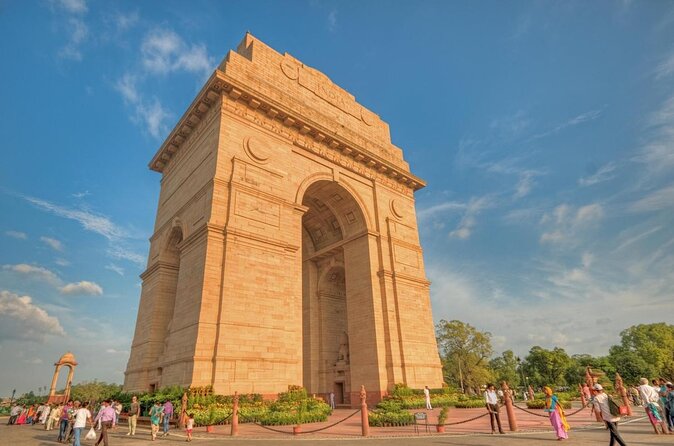
India Gate and the Lutyens area come after that. You see the war memorial and drive past the President’s Estate, gaining a view of New Delhi’s planned political district. This is mainly a drive-by and short photo stop, listed at about 30 minutes.
The final stop is Gurudwara Bangla Sahib, a major Sikh temple. You learn about Sikhism and see the community kitchen, where free food is served. This is one of the most human stops on the route because it shows service and shared daily practice, not just royal buildings and monuments. Dress respectfully and follow the guide’s instructions inside the complex.
After the tour, you can be dropped at a desired location in Delhi, including the airport. The day contains eight stops, so you will see a lot, but you should not expect long, unhurried visits at every place.
What the private car and guides add
The car is provided for the entire trip, with a sedan for one or two people and a seven-seat MPV for three to five. The package includes the driver, fuel, tolls, parking, road and state taxes, and driver expenses. Water bottles are provided in the vehicle.
The driver’s role is mainly transport, but the service description also notes good area knowledge and enough English for communication. One named driver associated with the experience is Raza, who has been praised for both driving and helpful trip advice. Driver assignments can change, so do not assume Raza will be your driver unless confirmed.
Local guide service is included in each city. This arrangement is better than expecting one person to explain every site across the whole route. A Delhi guide can handle Old Delhi’s streets, an Agra guide can explain the Mughal monuments, and a Jaipur guide can interpret Rajput palaces.
The experience is private, so only your group participates. That gives you more room to ask questions and adjust the pace, though the route’s fixed number of sights still limits how much time you can spend at each one.
Who should book this four-day trip
I would recommend it to first-time visitors who want the Golden Triangle covered with minimal transport planning. It suits small groups of up to five, families who value a private vehicle, and couples who prefer not to join a large coach.
It also works well if you want a mix of major monuments and everyday culture. The Taj Mahal, Amber Fort, and City Palace provide the classic sights, while Chandni Chowk, the spice market, the rickshaw ride, and Gurudwara Bangla Sahib add more local texture.
I would hesitate if you want slow travel, long museum visits, or substantial free time. The schedule is tightly packed, and the return to Delhi after Jaipur makes day three especially tiring.
The advertised 4.9 rating from 61 ratings and 100 percent recommendation rate suggest a strong record, with particular praise for the driving and helpful advice. Still, a high rating cannot remove the practical tradeoffs: the route is busy, extras add up, and the price wording should be clarified before payment.
Should you book it?
Book this tour if you want the main Golden Triangle sights in four days, prefer a private car, and value having a local guide at each destination. It offers a practical route, airport drop-off, flexible pickup, and useful stops beyond the three headline cities.
Skip it if you dislike early mornings, long road journeys, shopping stops, or a full sightseeing schedule. Before booking, confirm the total price for your group of up to five, ask which hotels are available or excluded, and calculate monument tickets, meals, tips, and personal spending. Cancel at least 24 hours before the start time for a full refund.
FAQ
How long is the Golden Triangle private tour?
The tour lasts approximately four days.
Which cities does the tour visit?
The route covers New Delhi, Agra, and Jaipur, with transport between the cities and a return to Delhi.
Is the Taj Mahal visited at sunrise?
Yes. Day two begins with a sunrise visit to the Taj Mahal, followed by breakfast and checkout at the Agra hotel.
Is transportation included?
Yes. A private, air-conditioned car with driver is provided for the full trip. Fuel, tolls, parking, road and state taxes, and driver expenses are included.
What type of vehicle is used?
One or two passengers travel in an air-conditioned four-seat sedan. Groups of three to five use an air-conditioned seven-seat MPV.
Are local guides included?
Yes. Guide service is included in each destination, including Agra, Jaipur, and Delhi.
Are hotels included?
No. Accommodation is not included, so you must arrange and pay for hotels yourself.
Are meals included?
No. Meals and personal expenses are not included.
Are monument admission tickets included?
No. Admission tickets for attractions such as Agra Fort, the Taj Mahal, Amber Fort, City Palace, and the Delhi sights are not included.
Where can pickup take place?
Pickup is available from an airport, railway station, hotel, or another requested location in Delhi, Noida, or Gurugram. After the tour, drop-off can be arranged at a desired Delhi location, including the airport.
Newly reviewed around New Delhi
- Private Customized Tour Of Old/New Delhi Spiritual Sites★ 5.0 · 5 reviews
- Yoga and Meditation Classes in Gurgaon★ 4.5 · 8 reviews
- Yoga class in Delhi★ 5.0 · 29 reviews
- Old Town Delhi Walking Tour (2 Hours Guided Tour with Local)★ 4.5 · 22 reviews
- 5 Days Golden Triangle Tour with Ranthambore(Delhi Agra Jaipur Ranthambore Tour)★ 5.0 · 3 reviews
- Wonderful Old & New Delhi sightseeing tour★ 5.0 · 3 reviews
- Hidden Gems of Old Delhi – Walk★ 5.0 · 8 reviews
- Delhi Zoo White Tigers & lions with Old Fort Visit★ 4.5 · 5 reviews
Golden Triangle Tours from Delhi, compared.
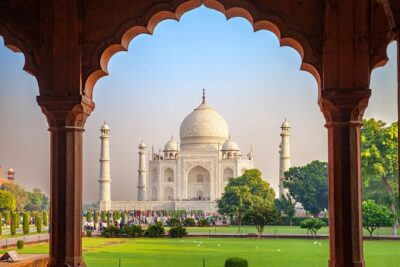
3-Days Private Golden Triangle Tour: Delhi, Agra & Jaipur by Car
Read our review →3-Days Private Golden Triangle Tour: Delhi, Agra & Jaipur by Car
Read our review →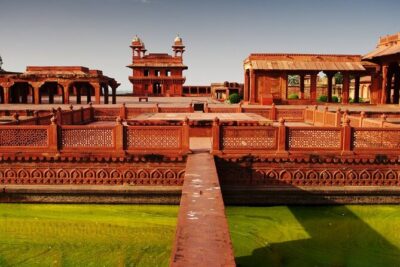
3-Day Delhi, Agra and Jaipur Private Tour – India Golden Triangle
Read our review →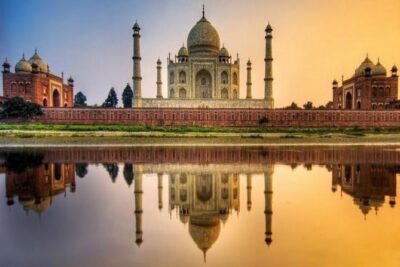
Four-Day Private Luxury Golden Triangle Tour to Agra and Jaipur From New Delhi
Read our review →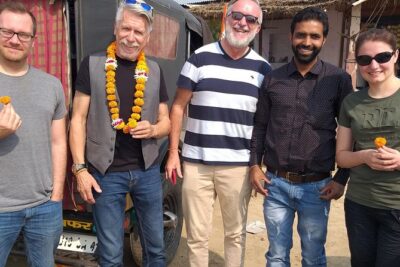
5 Nights 6 Days Private Golden Triangle Tour – Delhi Agra Jaipur
Read our review →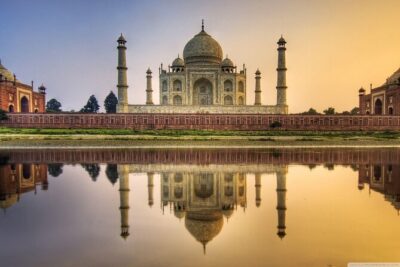

Private Car and Drive for Golden Triangle (4N/5D)
Read our review →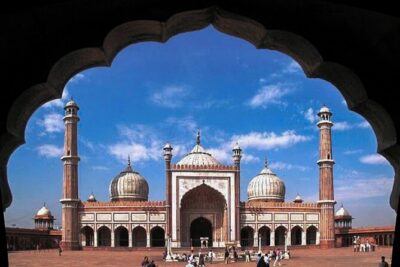
Private Golden Triangle Tour Delhi Agra Jaipur ( Top Rated )
Read our review →Browse the lists this tour appears in