
Reviewed · RANTHAMBORE TIGER SAFARI TOURS FROM DELHI
Private 4-Day Golden Triangle Tour with Ranthambore Tiger Safari
Ranthambore’s tiger safari gives this Golden Triangle tour an extra twist. You get Delhi’s Mughal sights, the Taj Mahal at sunrise, Jaipur’s royal monuments, and a chance to search for Bengal tigers, all with a private car and driver arranged for your group. I like the rickshaw ride through Old Delhi and the freedom to adjust the sightseeing plan.
I also like having guides join you at the main monuments, since a good explanation can make the Taj Mahal, Amber Fort, and Jantar Mantar far more meaningful. The tradeoff is time: the distances are large, and several days include long drives, with the final return to Delhi expected around 9 p.m.
Key points to know before booking
- Sunrise Taj Mahal visit: You enter Agra’s most famous sight early, with roughly three hours set aside for the visit.
- Ranthambore safari is shared: The park assigns zones through the government system, and your vehicle may be a shared jeep or a larger canter.
- Private road travel: Your group gets a private air-conditioned vehicle, driver, and local guides at the major stops.
- Old Delhi by rickshaw: A short ride carries you through the tight lanes around Chandni Chowk.
- Entrance fees cost extra: Monument tickets are listed at about $180 per person, a major addition to the $230 tour price.
- Four busy days: You see a great deal, but you will spend long stretches in the car.
Four days across northern India
This tour packs four very different places into one route: Delhi, Agra, Ranthambore, and Jaipur. You travel by private car rather than joining a large road group, so your driver can handle hotel pickups, highway transfers, and the complicated traffic around Delhi and Jaipur.
The route is designed for a first visit. You get the famous sights, some lesser-known stops, a taste of Old Delhi street life, and a wildlife outing. It is not a slow trip. Think of it as an efficient introduction to northern India, with comfort and sightseeing taking priority over long stays in each city.
The price begins at $230 per person, depending on the option selected. That includes three nights of accommodation, breakfasts, the private vehicle and driver, local guides, the rickshaw ride, fuel, service charges, one dinner at the hotel, and the Ranthambore safari. The important catch is the monument entry cost, listed at about $180 per person, which can nearly double your basic tour expense.
You can choose three, four, or five-star hotel arrangements, or select the option without hotels and book your own accommodation. Ask for the full cost before paying, especially if you want two rooms for three people. Triple-sharing is the default for a group of three.
More tiger safaris and wildlife trips from New Delhi:
- Private 5-Day Ranthambhore Tiger Tour from Delhi including the Taj Mahal, Agra and Jaipur
★ 5.0 · 197 reviews - 4 Day Golden Triangle with Ranthambore Tiger Safari Tour from Delhi
★ 5.0 · 110 reviews - From Delhi : 6 Days Delhi, Jaipur, Agra & Ranthambore By Car
★ 5.0 · 73 reviews
Day one: Old Delhi, grand avenues, and the drive to Agra
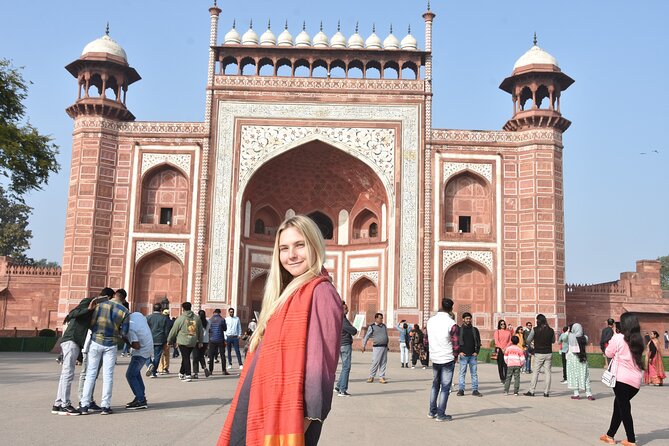
Your first day begins in Old Delhi, where the pace changes quickly from broad roads to narrow lanes and crowded market streets. Jama Masjid, built by Mughal emperor Shah Jahan between 1650 and 1656, is a strong opening stop. Allow about an hour, and remember that the entrance fee is not included.
From there, you move into Chandni Chowk, Delhi’s old commercial heart. The market area is known for spices, dried fruit, silver jewelry, and colorful saris. This is a place to watch daily life rather than simply check off a monument, though the lanes can feel intense if you are not used to crowds and traffic.
The rickshaw ride lasts about 30 minutes and provides a practical way to see the old quarter. A rickshaw can reach lanes that a car cannot, giving you a closer look at the old city’s shops and movement. Keep your belongings secure and expect a short, lively ride rather than a long sightseeing excursion.
The Red Fort follows. It was the main home of Mughal emperors for nearly two centuries and now contains museums. The scheduled visit is only about 30 minutes, so you will see the outside and selected areas rather than explore every corner at a leisurely pace. The listed entry is free, but confirm the current arrangements with your guide.
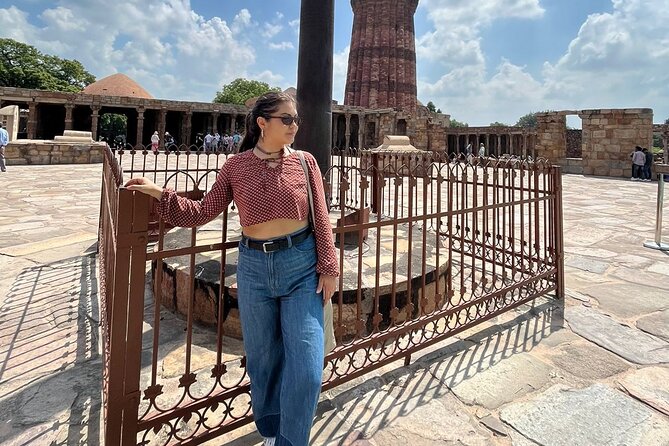
Qutub Minar takes you to an earlier chapter of Delhi’s past. The tower was begun in 1193 by Qutub-ud-din Aibak, founder of the Delhi Sultanate, and it is a UNESCO World Heritage site. You have about an hour here, with admission extra. The spiral staircase is part of the monument’s story, though access rules can change.
The Lotus Temple offers a visual break from Delhi’s forts and mosques. Its flower-shaped design was completed in 1986, and the visit is free. India Gate then shifts the mood again, with a war memorial honoring soldiers of British India. You also pass the Parliament House and Rashtrapati Bhavan, the President’s official residence. These are mainly exterior viewing points, so do not expect an indoor visit unless your guide confirms otherwise.
Agrasen Ki Baoli is a quick but worthwhile stop. This protected stepwell offers a glimpse of Delhi’s older water-management systems and takes only about 15 minutes. It works well as a brief pause before lunch and the long road south.
After lunch near the Yamuna Sports Complex, you drive by expressway toward Agra. The transfer is listed at about three hours, though traffic can alter the timing. On arrival, you check into your hotel and have the rest of the evening free.
This first day is full. I would not plan a demanding evening activity in Agra. Use the time to rest, prepare for an early morning, and confirm your Taj Mahal pickup time with the driver.
Day two: sunrise at the Taj Mahal and Agra Fort
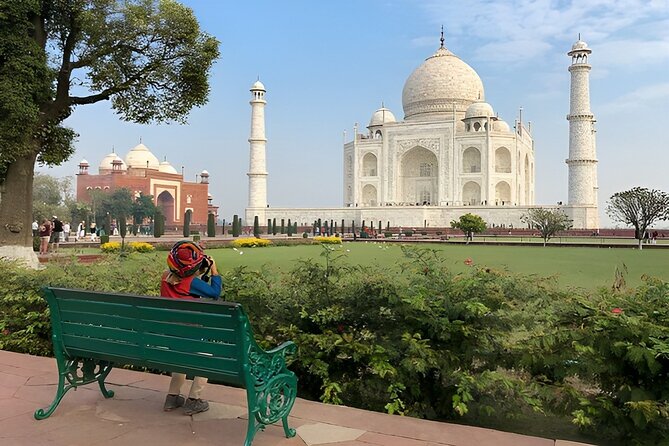
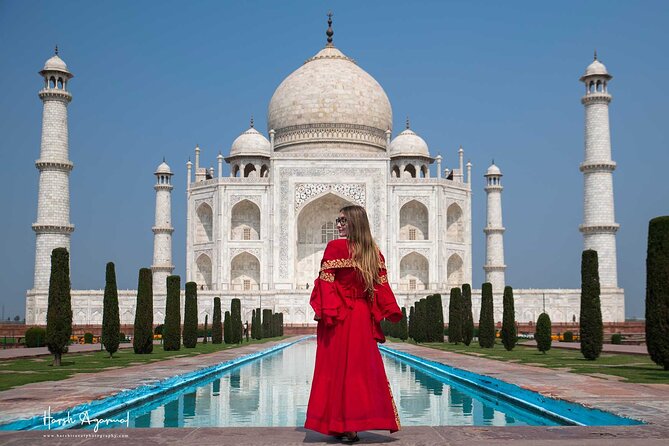
The Taj Mahal visit begins early, which is exactly right. The white marble monument is at its most atmospheric in the morning, and the early start helps you avoid the worst heat later in the day. The visit lasts about three hours, including the guided portion inside.
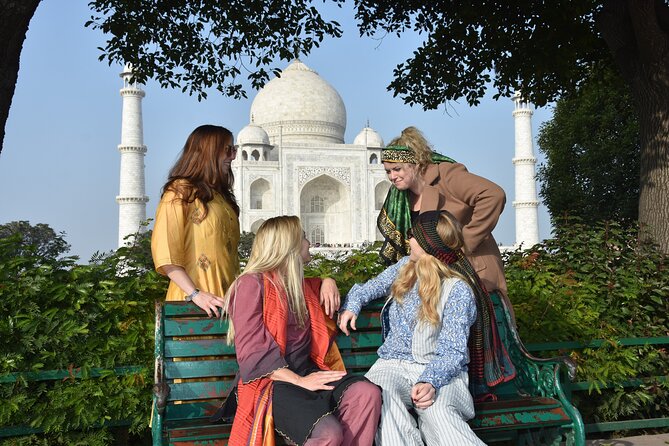
A local guide can add useful detail here. Guides named Shan and Aamir have led visitors through the monument, while other departures may assign different guides. Shan is noted for using small details and stories to make the visit more engaging, and for helping visitors feel secure throughout the day. Your guide should also help you purchase the entrance ticket, but admission itself is not included.
Wear comfortable shoes. The Taj Mahal grounds require walking, and the combination of early departure, crowds, security procedures, and a large site can make the visit longer than the actual time spent inside the mausoleum.
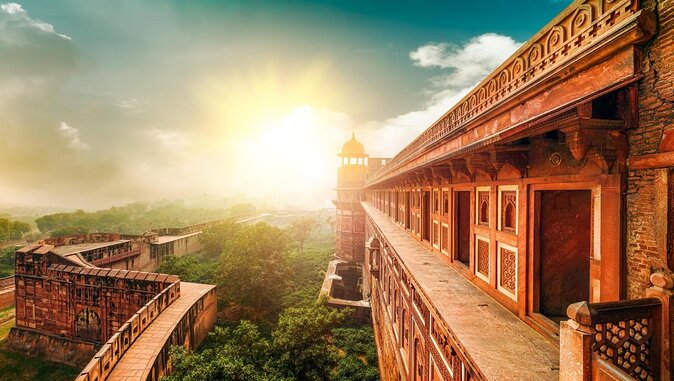
Agra Fort follows, with about an hour for the courtyards, palace rooms, and defensive walls. This UNESCO site gives you a useful contrast to the Taj Mahal. The Taj is associated with love and mourning, while the fort reveals the working center of Mughal power. Entrance costs extra here as well.
The route then turns toward Ranthambore. This is one of the tour’s longest travel sections, and the schedule lists roughly four hours for the transfer. You check into the Ranthambore hotel and have free time afterward.
This is where the tour asks you to accept some road time in exchange for variety. Agra and Ranthambore are not next-door stops. The private car makes the transfer easier than arranging several separate connections, but you should still expect a tiring day.
Day three: the Ranthambore tiger safari
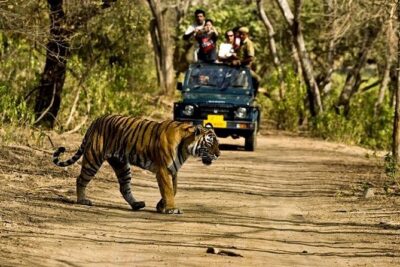
The safari begins early, with two to three hours in Ranthambore National Park. You travel in a shared jeep or canter with a local government-appointed guide and search for wild Bengal tigers in the park’s forest.
The wildlife sighting is never guaranteed. The park assigns safari zones based on availability, so you may not choose the section of the park you visit. The operator aims to secure a shared jeep, but limited jeep supply means a shared canter may be used instead. A jeep usually feels more intimate, while a canter carries more people and gives the outing a different feel.
Your safari guide speaks English, but fluency can vary. Expect basic explanations about the park and animals rather than a polished private nature lecture. That limitation matters if wildlife interpretation is your main reason for booking.
Still, the safari adds something the standard Delhi, Agra, and Jaipur route cannot provide. You are not just moving between monuments. You have a chance to watch for animals, scan the forest, and see a very different side of northern India. Go in with patience and realistic expectations. A tiger safari is about the setting and the search as much as the final sighting.
After the safari, you travel to Jaipur and check into your hotel. The transfer is listed at about three hours. The rest of the day is free, which is useful because the early safari may leave you ready for a quiet evening.
More Golden Triangle routes from New Delhi:
- 3-Days Private Golden Triangle Tour: Delhi, Agra & Jaipur by Car
★ 5.0 · 1,107 reviews - 3-Days Private Golden Triangle Tour: Delhi, Agra & Jaipur by Car
★ 5.0 · 1,098 reviews - 3-Day Delhi, Agra and Jaipur Private Tour – India Golden Triangle
★ 5.0 · 812 reviews - Four-Day Private Luxury Golden Triangle Tour to Agra and Jaipur From New Delhi
★ 5.0 · 807 reviews
Day four: Jaipur’s stepwells, palaces, and observatory
Jaipur’s sightseeing begins at Panna Meena ka Kund, a stepwell with geometric stairways and a calm setting. The stop lasts about 20 minutes, so you will mainly photograph the structure and hear a short explanation.
Amber Fort receives the most time, about two hours. This hilltop complex combines defensive walls, courtyards, decorated halls, and views over the surrounding area. Your guide can help you make sense of how the fort worked as both a royal residence and a military site. Admission is extra.
Jal Mahal is a short photo stop beside Man Sagar Lake. The palace sits in the water, and visitors generally view it from the shore rather than enter. The visit takes about 30 minutes, so it is a welcome pause between larger sites.
The City Palace gives you a closer look at Jaipur’s royal administration and ceremonial life. The complex now contains museum displays connected with the former ruling family. Plan about two hours, with admission extra.
Jantar Mantar is one of Jaipur’s most unusual sights. Its nineteen large astronomical instruments were built in 1734 by Sawai Jai Singh II. This is easier to appreciate with a guide who can explain what the instruments measured and how their scale helped with observation. The entrance fee is not included.
Hawa Mahal, the Palace of Winds, is usually a brief exterior visit. Its red and pink sandstone facade has rows of small windows and a distinctive five-story shape. You have about 30 minutes, enough for photographs and a short explanation.
Gaitore Ki Chhatriyan finishes the sightseeing day with ornate royal cenotaphs. The site is quieter than the main Jaipur attractions and offers a final look at Rajput design. From there, you begin the return to Delhi, expected around 9 p.m. You can ask to arrive earlier or later, but any change has to work with traffic and the day’s schedule.
Guides, drivers, and the comfort of private transport
The private format is one of the strongest parts of this trip. Your driver stays with you through the intercity route, while local guides join at the major sights. The arrangement gives you more control than a fixed large-group coach tour.
Drivers named Bilal and Amar have been praised for comfortable cars, safe handling, water provided during long rides, and calm driving through difficult traffic. Guides including Aamir, Shan, Isha, Ali, Faisal, Saif, and Sandeep have been singled out for clear explanations, patience, and help with practical matters such as food choices and monument entry.
You should still see these names as examples, not a guarantee of who will be assigned. The tour uses different local guides in each city, and the guide quality may vary by location. That is normal for a multi-city package.
Vehicle size depends on your group:
- One or two people usually travel in a three-seat sedan such as a Toyota Etios.
- Three to five people generally use a six-seat Toyota Innova or similar vehicle.
- Six to 10 people use a larger Tempo Traveler van.
The car is private for your group, but the Ranthambore safari is not. That distinction is important.
Who will get the most from this itinerary?
I would recommend this tour to a first-time visitor who wants the major sights arranged in one booking. Families and groups of friends should especially like the private vehicle, flexible sightseeing, and ability to request changes after booking.
It also suits you if you value practical help. Guides can assist with entrance tickets, drivers manage the long transfers, and the operator can adjust or remove monuments when requested. Comfortable walking shoes are essential, and you need a valid passport on the travel day.
This is less suitable if you want slow travel, long meals, or extended time at each monument. The schedule is ambitious, and traffic can make transfers longer. It is also not the right choice if you expect a private safari vehicle or a guaranteed tiger sighting.
Check the calendar before booking. The Taj Mahal is closed on Fridays. If your tour begins on Thursday, the route changes to Delhi, Jaipur, Ranthambore, Agra, then Delhi so the Taj Mahal can be visited on an open day. Red Fort and Lotus Temple are closed on Mondays, and the replacement visit is Gurudwara Bangla Sahib.
Is the $230 price good value?
The starting price is attractive for a four-day private route with a car, driver, hotels, breakfasts, local guides, a rickshaw ride, and a safari. Compared with arranging Delhi, Agra, Ranthambore, and Jaipur independently, the convenience has real value.
But the monument fee changes the calculation. Add the listed $180 per person for entry tickets, then consider the hotel category, room setup, meals beyond the included breakfast and one dinner, and personal expenses. The advertised base price is not the final trip budget.
I would choose the package if you want a managed route and do not want to handle Indian rail, road, hotel, and guide arrangements separately. If you already have hotels or prefer to pick your own, the no-hotel option may give you more control.
Should you book this four-day tour?
Book it if you want the classic sights plus a wildlife stop and accept a fast pace. The private car, flexible plan, and steady guide support make this a sensible first introduction to Delhi, Agra, Ranthambore, and Jaipur.
Think twice if your priority is a relaxed holiday, a private tiger safari, or detailed time at every monument. Before booking, confirm the hotel category, total monument fees, room arrangement, Friday and Monday closures, and the likely safari vehicle. With those expectations clear, this tour offers a practical way to cover a huge amount of northern India in four demanding but rewarding days.
FAQ
Is the tour private?
The road tour is private, with only your group participating. You receive private transport, a private driver, and local guides for sightseeing. The Ranthambore safari is shared with other participants in a jeep or canter.
Are hotels included?
Three nights of accommodation with breakfast are included when you select a hotel option. Three, four, and five-star choices are available. You can also choose the option without hotels and arrange your own accommodation.
Are monument entrance fees included?
No. Monument entry fees are listed separately at about $180 per person. Your guide can assist you with purchasing tickets and help you avoid waiting in the ticket line.
What happens if the tour starts on a Thursday?
Because the Taj Mahal is closed every Friday, the route changes to Delhi, Jaipur, Ranthambore, Agra, then Delhi. This allows the Taj Mahal visit to take place on an open day.
What happens if the tour falls on a Monday?
The Red Fort and Lotus Temple are closed on Mondays. The itinerary replaces that visit with Gurudwara Bangla Sahib.
Is a tiger sighting guaranteed?
No. The safari gives you a chance to search for Bengal tigers, but sightings are not guaranteed. The government assigns the safari zone based on availability, and the vehicle may be a shared jeep or canter.
More 4-Day Experiences in New Delhi
- 4 Days Golden Triangle Tour
★ 5.0 · 499 reviews - Private Luxury Delhi – Agra – Jaipur Golden Triangle Tour – 3 Nights 4 Days
★ 5.0 · 306 reviews - Private Golden Triangle Tour 3 Night/4 Days – All Inclusive
★ 5.0 · 185 reviews - 4 Days Private Golden Triangle Tour to Agra and Jaipur from Delhi
★ 5.0 · 112 reviews
Newly reviewed around New Delhi
- Private Customized Tour Of Old/New Delhi Spiritual Sites★ 5.0 · 5 reviews
- Yoga and Meditation Classes in Gurgaon★ 4.5 · 8 reviews
- Yoga class in Delhi★ 5.0 · 29 reviews
- Old Town Delhi Walking Tour (2 Hours Guided Tour with Local)★ 4.5 · 22 reviews
- 5 Days Golden Triangle Tour with Ranthambore(Delhi Agra Jaipur Ranthambore Tour)★ 5.0 · 3 reviews
- Wonderful Old & New Delhi sightseeing tour★ 5.0 · 3 reviews
- Hidden Gems of Old Delhi – Walk★ 5.0 · 8 reviews
- Delhi Zoo White Tigers & lions with Old Fort Visit★ 4.5 · 5 reviews
Ranthambore Tiger Safari Tours from Delhi, compared.
Private 5-Day Ranthambhore Tiger Tour from Delhi including the Taj Mahal, Agra and Jaipur
Read our review →
4 Day Golden Triangle with Ranthambore Tiger Safari Tour from Delhi
Read our review →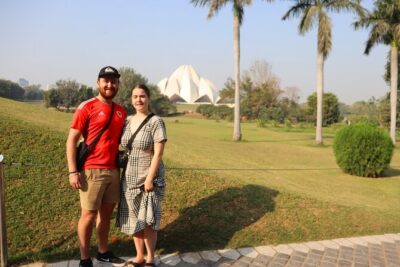
6 Days Delhi, Jaipur, Agra & Ranthambore By Car
Read our review →
4-Day Private Delhi, Agra & Jaipur with Ranthambore Tiger Safari
Read our review →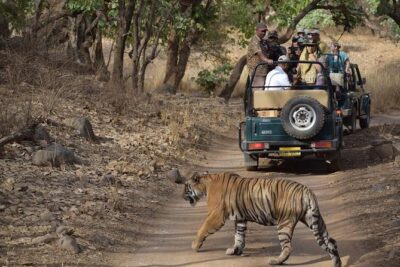
Private 6-Day Ranthambhore Tiger Tour including Delhi, Agra and Jaipur
Read our review →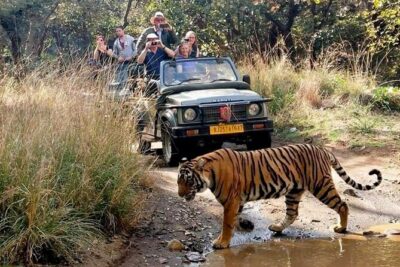
7-Day Golden Triangle Tour with Ranthambore Tiger Safari
Read our review →
Ranthambhore Tiger Tour of Delhi, Agra, and Jaipur 5 Star Hotel
Read our review →
8 Day Golden Triangle Tour with Ranthambore {Taj , Tigers & More}
Read our review →Browse the lists this tour appears in