

Reviewed · RANTHAMBORE TIGER SAFARI TOURS FROM DELHI
8 Days Golden Triangle Tour with Ranthambore Tiger Tour
The biggest draw here is the pairing of India’s famous Golden Triangle with two Ranthambore safaris. You get Mughal monuments, royal Jaipur, Old Delhi street life, and a real shot at seeing Bengal tigers in the wild, all in one eight-day trip.
I like the sunrise Taj Mahal visit, which gives you the monument at its most atmospheric, and I like the practical setup: private air-conditioned transport, hotel pickup, seven breakfasts, and a guide in each city. The main caution is the pace. Delhi, Agra, Ranthambore, and Jaipur mean several long drives, and the $749 price does not include about $79 in monument fees.
Key points to know before booking
- Two Ranthambore game drives: Morning and afternoon safaris give you more time in the park, though tiger sightings can never be promised.
- Sunrise at the Taj Mahal: You visit at 5:45 AM, then return to the hotel for breakfast before driving onward.
- Private road transport: Your group travels in a private air-conditioned vehicle with water, rather than joining a larger sightseeing bus.
- Guides in each city: Local guides lead the sightseeing in Delhi, Agra, and Jaipur. Names connected with past bookings include Sonia, Vivek, Rajendra Sharma, and Ajay.
- Flexible final departure: You can leave from Jaipur or take a roughly five-hour drive back to Delhi for your flight.
- Extra entrance costs: The tour price covers much of the structure, but monument tickets are separate and listed at $79 per person.
Delhi begins with Old City streets and Mughal landmarks
Your first day is intentionally light. A chauffeur meets you on arrival in New Delhi, takes you to your pre-booked hotel, and gives you time to check in. That simple transfer matters after a long flight, especially because the next day is full.
Day two covers both Old Delhi and New Delhi. Jama Masjid, built by Shah Jahan in 1656, is one of the major early stops. You have about 30 minutes there, and the entrance fee is not included, so keep that extra cost in mind.
The short cycle-rickshaw ride through Chandni Chowk adds a local touch that a car tour cannot match. You pass through narrow market streets and get a quick feel for the noise and movement of Old Delhi. It is brief, so think of it as an introduction rather than a full market visit.
The Red Fort is viewed from outside, with time for photographs. Much of the complex is occupied by the Indian Army, so you should not expect an interior tour here. That is one of the clearest compromises in the program. The fort is important, but the stop is more about seeing its massive red walls than exploring its courtyards.
At Raj Ghat, the memorial to Mahatma Gandhi, the mood changes. The simple black marble platform and eternal flame offer a quiet pause between busy sights. You then continue to India Gate, Parliament House, and Rashtrapati Bhavan, mainly for short photo stops.
The longer visits go to Humayun’s Tomb and Qutub Minar. Humayun’s Tomb, completed in the 16th century, is an early garden tomb and an important link in the development of Mughal design. Qutub Minar rises 73 meters and is one of Delhi’s major UNESCO-listed sights. Each receives about an hour, giving your guide room to explain the architecture instead of rushing you through a photograph.
Delhi’s second day is packed. I like the range, from a mosque and market ride to imperial avenues and medieval towers, but you should expect traffic and a lot of time in the vehicle. The private car helps because you can return to your hotel at the end without waiting for a large group.
More tiger safaris and wildlife trips from New Delhi:
- Private 4-Day Golden Triangle Tour with Ranthambore Tiger Safari
★ 5.0 · 248 reviews - Private 5-Day Ranthambhore Tiger Tour from Delhi including the Taj Mahal, Agra and Jaipur
★ 5.0 · 197 reviews - 4 Day Golden Triangle with Ranthambore Tiger Safari Tour from Delhi
★ 5.0 · 110 reviews
Agra brings the Taj Mahal into focus
On day three, you drive from Delhi to Agra, a trip listed at about four hours. After checking in and taking a short break, you visit Agra Fort. Built by Akbar in 1565 and later changed by Shah Jahan, the fort was a main Mughal residence and offers a useful counterpoint to the Taj Mahal.
The fort is not simply another palace stop. It helps explain the power behind the Taj Mahal, and its courtyards and buildings show how Mughal rulers lived and governed. The entrance fee is extra, and you should allow about an hour here with your guide.
Late in the day, Mehtab Bagh provides a view toward the Taj Mahal across the Yamuna River. The garden is linked to the Mughal period and is a calmer place to see the monument from a distance. The 45-minute stop is well chosen because it lets you see the Taj before the early morning visit from another angle.
Your hotel night in Agra is important. The next morning begins at 5:45 AM, and staying locally saves you from a pre-dawn drive from Delhi.
Sunrise at the Taj Mahal is the trip’s signature moment

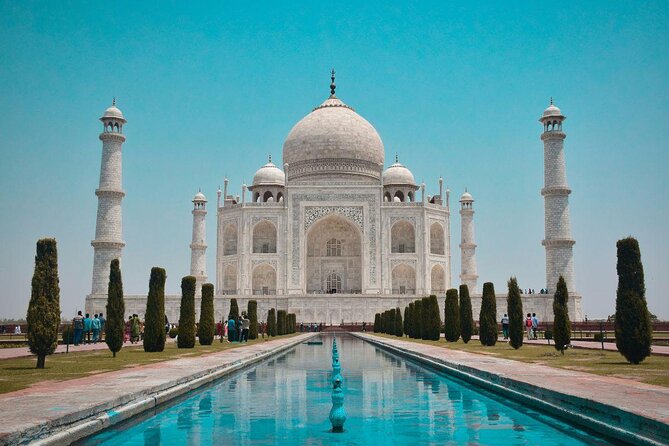
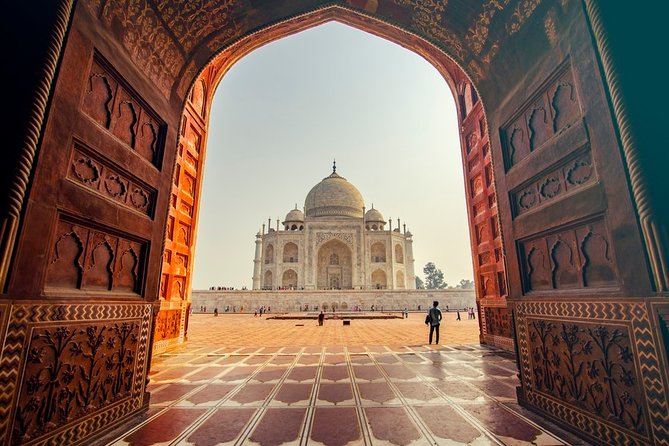
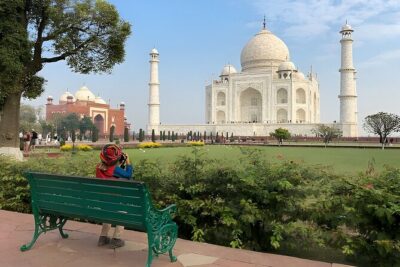
The Taj Mahal visit on day four is the emotional center of the trip. You meet your guide in the hotel lobby and go to the monument early, when the marble can take on soft morning colors. The visit lasts about two hours.
The Taj was built by Shah Jahan in memory of his wife, and the guide adds the human story behind the marble, gardens, domes, and delicate decoration. Going at sunrise also makes practical sense. The light is attractive, and the early start leaves time for breakfast and a freshen-up before the next drive.
Admission is not included, so factor it into your budget. Also note the early hour. If you prefer slow mornings, this is the one day when comfort takes second place to timing. I think the trade is worthwhile, especially since the visit is followed by a hotel breakfast rather than a rushed roadside meal.
Fatehpur Sikri adds a striking stop on the road to Ranthambore
After the Taj Mahal, you leave Agra for Ranthambore, with a stop at Fatehpur Sikri. The former Mughal capital lies about 35 kilometers west of Agra and was built by Akbar in 1571.
This red sandstone complex is one of the strongest architectural stops on the route. You see grand courtyards and palace structures that reflect Akbar’s court. The site was later abandoned, which gives it a different feel from Agra’s still-active monuments.
The transfer onward to Sawai Madhopur takes about five hours. This is a long travel day: sunrise monument, breakfast, Fatehpur Sikri, and then a substantial drive into Rajasthan. The reward is arriving near the national park instead of trying to make a same-day safari from a distant city.
More Golden Triangle routes from New Delhi:
- 3-Days Private Golden Triangle Tour: Delhi, Agra & Jaipur by Car
★ 5.0 · 1,107 reviews - 3-Days Private Golden Triangle Tour: Delhi, Agra & Jaipur by Car
★ 5.0 · 1,098 reviews - 3-Day Delhi, Agra and Jaipur Private Tour – India Golden Triangle
★ 5.0 · 812 reviews - Four-Day Private Luxury Golden Triangle Tour to Agra and Jaipur From New Delhi
★ 5.0 · 807 reviews
Ranthambore offers two chances to search for tigers
Ranthambore is where the tour changes pace and purpose. You leave around 6:00 AM for the first safari, which lasts about two to three hours. Afterward, you return to the hotel for breakfast, lunch, and several hours of rest.
The afternoon drive begins at about 2:30 PM and lasts three to four hours. Both safaris use a shared jeep or canter, even though the road travel between cities is private. That distinction matters. You have private transport for sightseeing and transfers, but the park experience is shared.
The reserve is known for Bengal tigers, and you might also spot leopards, deer, and many bird species. Still, no safari can guarantee a tiger. The two drives improve your chances simply by giving you more time and different periods of the day, but wildlife remains unpredictable.
I like the built-in midday break. A full day in an open safari vehicle can be tiring, and returning to the hotel prevents the wildlife portion from becoming an endurance test. The early start and afternoon return also make this day one of the most demanding, so comfortable clothing and realistic expectations will help.
Jaipur shifts from wildlife to royal Rajasthan
On day six, you drive about three hours from Sawai Madhopur to Jaipur. After checking in, you choose between Galta Ji, known for its sacred water tanks and resident macaque and langur monkeys, and Birla Mandir, a modern white-marble Hindu temple dedicated to Vishnu and Lakshmi.
Galta Ji is the more unusual option, with a stronger sense of place and the chance to see the temple’s monkey population. Birla Mandir is the tidier choice, with carved religious scenes and a polished white-marble design. Entrance fees are separate for these stops.
Day seven is Jaipur’s main sightseeing day. The major fort stop receives about two hours. The tour description calls it Jaipur Fort and identifies it with the complex built by Raja Man Singh I in 1592 and expanded later. Its sandstone, marble, courtyards, and hill setting show the power of the Rajput rulers.
You then stop at Jal Mahal for photographs. The palace sits in Man Sagar Lake, and much of the building is underwater when the lake is full. The stop lasts only 15 minutes, so treat it as a quick view rather than a palace visit.
The City Palace gives you a closer look at Jaipur’s royal household. It combines Rajput, Mughal, and European design and receives about an hour. Jantar Mantar follows, with its large stone instruments and famous sundial. This is a good place to pay attention to your guide, since the instruments make more sense when you understand how they were used to track time and celestial movement.
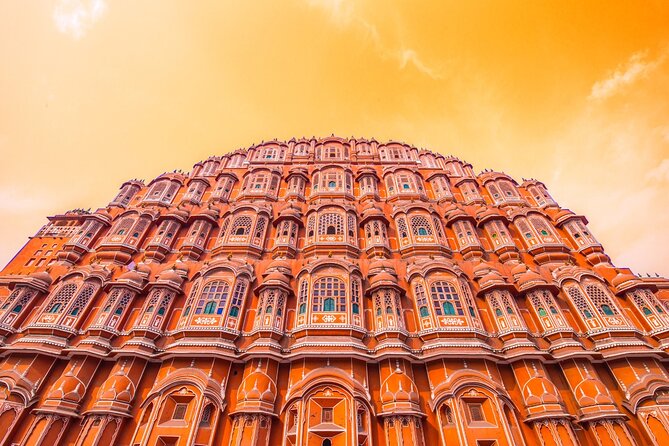
Hawa Mahal is another photo stop, lasting about 15 minutes. Its five-story facade allowed royal women to watch street life without being seen. The building is best understood from the outside, and the short visit reflects that.
You finish with time in Jaipur’s local markets, where you can look for handicrafts, jewelry, textiles, and Rajasthani souvenirs. The word time matters here because shopping is listed according to your preference, not as a fixed long session. Tell your guide what you want to see, and avoid letting the market visit swallow the monuments if those matter more to you.
What the $749 price really covers
At $749 per person, the tour offers solid value for someone who wants one organized trip covering four major destinations. Included are three, four, or five-star hotel options, a private air-conditioned vehicle with water, airport or railway station pickup and drop-off, seven breakfasts, city guides, and two park safaris.
The price also reduces the need to arrange separate cars and guides in each place. That is especially useful in India, where the distances are large and the route has several moving parts.
The important extra is the $79 per-person monument fee. Add that to the advertised price when comparing options. You should also account for anything not specifically listed as included, such as meals beyond breakfast and other personal costs.
The tour is private for your group, which is a strong advantage for families and small parties. Past service connected with the experience includes drivers named Ajay and Rajendra Sharma, along with guides named Sonia and Vivek. Ajay was singled out for comfort and safety, while Sonia and Vivek were flexible when a family wanted to add sights for a 75th birthday trip.
That flexibility is useful, but do not assume every extra stop is automatic. Discuss changes with the operator before or during the trip, and remember that additional entrances or longer driving can affect the day.
Who will get the most from this eight-day route
I would choose this trip if you want the major sights without managing separate hotel transfers, cars, guides, and safari bookings. It suits first-time visitors, families, couples, and anyone who wants culture and wildlife in the same trip.
It is also a good fit for people who value a private vehicle and the ability to depart from either Jaipur or Delhi. The Delhi return option is useful when your international flight leaves from the capital, though the final drive takes about five hours.
I would hesitate if you want a slow, deeply local trip with long stays in each city. The route is efficient but busy. Delhi has a packed sightseeing day, Agra leads quickly into Ranthambore, and Jaipur has several major stops in one day.
The safari should also be treated as a chance, not a promise. You receive two game drives, which is helpful, but the park cannot control where animals appear.
Cancellation terms are firm near departure. Cancel at least six full days before the start time for a full refund. Two to six days before departure brings a 50 percent refund, while cancellation within two days brings no refund.
Should you book this tour?
Book it if you want a well-organized first look at northern India, with the Taj Mahal, Mughal sites, Jaipur’s palaces, and two opportunities to search for tigers. The private road transport, hotel choices, local guides, and flexible final departure make the $749 starting price useful, even after adding monument fees.
Skip it if you dislike early mornings, long drives, shared safari vehicles, or a tightly packed sightseeing schedule. For most people who have only eight days, though, this is a sensible way to connect the Golden Triangle with Ranthambore without having to solve every transfer yourself.
FAQ
How long does the tour last?
The experience lasts approximately eight days, beginning with arrival in Delhi and ending with departure from Jaipur or Delhi.
What cities and areas does the tour visit?
It visits New Delhi, Agra, Ranthambore near Sawai Madhopur, and Jaipur.
Is the Taj Mahal visited at sunrise?
Yes. You leave for the Taj Mahal at about 5:45 AM on day four, with approximately two hours at the monument.
Are two Ranthambore safaris included?
Yes. The tour includes one early morning safari and one afternoon safari, using a shared jeep or canter.
Are hotels included?
Yes. Hotel accommodation is included, with three-star, four-star, or five-star options available according to the selection made.
Is breakfast included?
Yes. Seven breakfasts are included during the eight-day experience.
Is transportation private?
The tour includes a private air-conditioned vehicle with water for transfers and city travel. The two Ranthambore safaris are shared.
Are guides provided?
Yes. Professional guides are provided in each city.
Are monument entrance fees included?
No. Monument entrance fees are listed separately at approximately $79 per person.
Can I finish the tour in Jaipur or Delhi?
Yes. You can depart from Jaipur International Airport, or take a roughly five-hour drive to Delhi for airport drop-off or another location in Delhi.
Newly reviewed around New Delhi
- Private Customized Tour Of Old/New Delhi Spiritual Sites★ 5.0 · 5 reviews
- Yoga and Meditation Classes in Gurgaon★ 4.5 · 8 reviews
- Yoga class in Delhi★ 5.0 · 29 reviews
- 5 Days Golden Triangle Tour with Ranthambore(Delhi Agra Jaipur Ranthambore Tour)★ 5.0 · 3 reviews
- Wonderful Old & New Delhi sightseeing tour★ 5.0 · 3 reviews
- Old Town Delhi Walking Tour (2 Hours Guided Tour with Local)★ 4.5 · 22 reviews
- Hidden Gems of Old Delhi – Walk★ 5.0 · 8 reviews
- Delhi Zoo White Tigers & lions with Old Fort Visit★ 4.5 · 5 reviews
Ranthambore Tiger Safari Tours from Delhi, compared.
Private 4-Day Golden Triangle Tour with Ranthambore Tiger Safari
Read our review →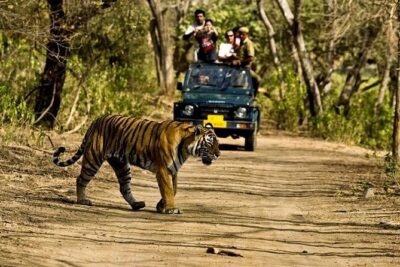
Private 5-Day Ranthambhore Tiger Tour from Delhi including the Taj Mahal, Agra and Jaipur
Read our review →
4 Day Golden Triangle with Ranthambore Tiger Safari Tour from Delhi
Read our review →
6 Days Delhi, Jaipur, Agra & Ranthambore By Car
Read our review →
4-Day Private Delhi, Agra & Jaipur with Ranthambore Tiger Safari
Read our review →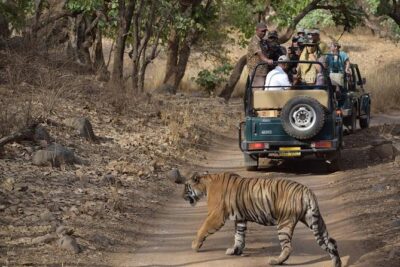
Private 6-Day Ranthambhore Tiger Tour including Delhi, Agra and Jaipur
Read our review →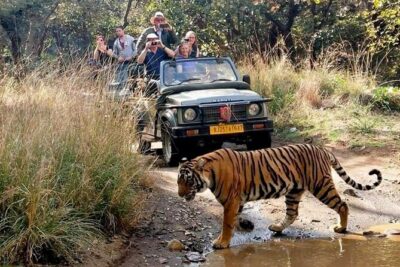
7-Day Golden Triangle Tour with Ranthambore Tiger Safari
Read our review →
Ranthambhore Tiger Tour of Delhi, Agra, and Jaipur 5 Star Hotel
Read our review →Browse the lists this tour appears in