

Reviewed · RANTHAMBORE TIGER SAFARI TOURS FROM DELHI
08 Days Golden Triangle Tour with Ranthambore and Jhalana Safari
The best part of this eight-day private tour is its unusual mix: India’s grandest monuments paired with real time in two wildlife parks. You see the Taj Mahal, Amber Fort, Delhi’s Mughal sights, Ranthambore’s tiger country, and Jhalana’s leopard habitat without trying to cram the Golden Triangle into three frantic days.
I like the private car and driver, which lets you stop, rest, and adjust the pace. I also like the two safari areas, since they give you a better chance to see wildlife than a single park visit. The tradeoff is long road days, especially the five-hour return from Jaipur to Delhi, and several monument admission fees are extra.
Key points to know before booking

- Two safari settings: Ranthambore is aimed at tiger sightings, while Jhalana is known for leopards.
- Sunrise at the Taj Mahal: Day four includes an early return for a guided visit and morning light.
- Private transport throughout: A sedan serves one or two people, a wagon three or four, and a minivan five to ten.
- Seven nights included with the hotel option: Breakfast is included, while room arrangements are normally twin sharing.
- Flexible family planning: Gopal has helped arrange custom routes, and previous groups have praised drivers including Surendra and Maan Singh.
- Extra monument costs matter: The listed price is $553.85 per person, but major entry tickets can add several thousand rupees.
Why this route works better than a quick Golden Triangle
Delhi, Agra, and Jaipur are often sold as a rushed three or four-day circuit. That approach covers the famous names, but it leaves little time for traffic, hotel check-ins, or a second look at anything that catches your eye.
This plan spreads the sightseeing over eight days and adds two wildlife stops. You still spend plenty of time on the road, but the schedule gives you a full Delhi day, an overnight in Agra, two safari sessions at Ranthambore, and a full Jaipur sightseeing day.
The private format is especially useful in India, where traffic and distances can turn a simple route into a tiring one. You are not waiting for a large group to finish shopping, meals, or photographs. You can also request adjustments, a feature that has helped families with children, older relatives, and different hotel preferences.
The tour begins with airport, hotel, or another agreed pickup point in New Delhi. The service offers 24-hour support, and the route ends with a drop-off at the Delhi airport, a hotel, or another location in the city.
More tiger safaris and wildlife trips from New Delhi:
- Private 4-Day Golden Triangle Tour with Ranthambore Tiger Safari
★ 5.0 · 248 reviews - Private 5-Day Ranthambhore Tiger Tour from Delhi including the Taj Mahal, Agra and Jaipur
★ 5.0 · 197 reviews - 4 Day Golden Triangle with Ranthambore Tiger Safari Tour from Delhi
★ 5.0 · 110 reviews
Delhi begins with temples, tombs, and Old City noise
The first day is gentle, with a visit to Gurudwara Bangla Sahib. Allow about 30 minutes. The Sikh shrine is known for its peaceful setting and the story of the eighth Sikh Guru, who visited Delhi during a smallpox and cholera outbreak. Water from the temple tank was distributed to help the sick.
This is a good first stop because it introduces a living place of worship rather than another monument viewed only from the outside. Dress respectfully and follow the guide’s instructions about footwear and head covering.
Day two is packed. Qutub Minar takes about an hour, and the 73-meter tower is one of Delhi’s key early Islamic monuments. Its admission fee is not included, listed at ₹550 per person. The scale is impressive, but the surrounding complex deserves your attention too, so do not rush straight to the tower and back.
The Lotus Temple offers a sharp change in mood. Its white, flower-shaped design was completed in 1986, and people of all religions are welcome. Entry is free, with about 30 minutes planned.
India Gate and the Parliament House area provide a quick look at New Delhi’s ceremonial center. India Gate honors soldiers of British India who died in wartime. The stop lasts about 30 minutes, and Parliament House is viewed as part of the drive and city tour rather than as a full interior visit.
Jama Masjid brings you back to Old Delhi. Built under Shah Jahan between 1650 and 1656, it is one of India’s largest mosques. The visit is short, so the guide will help you understand the setting before you move on.
Agrasen Ki Baoli is a brief but memorable stop. This protected stepwell drops deep below street level and gives you a glimpse of Delhi’s older water systems. Fifteen minutes is not long, but it is enough to see the geometry and take photographs.
Humayun’s Tomb deserves more time, about an hour. It was commissioned in 1558 by Empress Bega Begum for the Mughal emperor Humayun and is an important forerunner to later Mughal architecture. Its ₹550 admission charge is extra.
The day ends in Chandni Chowk, where one hour allows you to see spice shops, dried fruit, silver jewelry, saris, and narrow lanes filled with small businesses. This is the most sensory part of Delhi’s program, but it can also feel intense. Keep valuables secure and stay close to your guide.
Agra gives you two views of the Taj Mahal
The drive from Delhi to Agra covers about 222 kilometers and takes roughly four hours. After checking in, the program turns straight to the Taj Mahal, Agra Fort, Itmad-ud-Daula, and Mehtab Bagh.
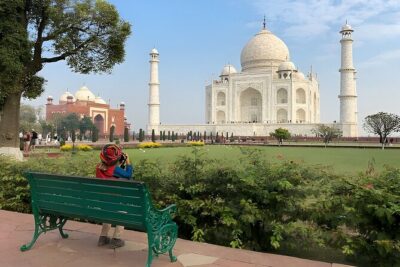
The Taj Mahal visit is scheduled for about two hours. This is the monument that defines the route, but the guide adds value by explaining the building as Shah Jahan’s mausoleum for Mumtaz Mahal, rather than reducing the stop to a photo session.
The monument ticket is extra at ₹1,100 per person. A battery bus to and from the parking area is included, which saves you from part of the approach on foot.
Agra Fort takes about 90 minutes and costs ₹600 per person. The red sandstone complex connects the city to Mughal rulers including Akbar and Shah Jahan. The fort helps you understand the power behind the Taj Mahal, and it provides a useful contrast between military architecture and the Taj’s formal symmetry.
Itmad-ud-Daula, often called the Baby Taj, is a smaller marble tomb with a delicate feel. It costs ₹500 and receives about an hour. Mehtab Bagh then gives you a view of the Taj from across the Yamuna River, with about 30 minutes planned around sunset.
Day four begins with another Taj Mahal visit at sunrise. This repeated visit is not wasted time. Morning light changes the marble, and the quieter early hour can feel very different from the previous day. You receive a guided visit of about two hours, but the early departure means a short night, so plan your evening in Agra carefully.
Fatehpur Sikri and Chand Baori break up the road
After the morning Taj visit, the route moves toward Fatehpur Sikri. Emperor Akbar built this former capital in the late 16th century, and it served as the Mughal capital for about a decade.
The complex receives roughly an hour. The free entry makes it an easy addition, though the timing is fairly tight for a large site. You will see grand courtyards and palace buildings, but the visit works best with a guide who can explain how the different spaces were used.
Chand Baori at Abhaneri is another strong stop. This stepwell descends about 30 meters and is one of India’s largest and deepest. Allow an hour, with admission listed as extra. It is a fine place to break up the drive before Ranthambore.
The day ends with arrival at Ranthambore and a hotel check-in. The itinerary allows about five hours for this transfer and arrival stage. You should expect a road-heavy day after the sunrise start, but the payoff is two safari outings the next day.
More Golden Triangle routes from New Delhi:
- 3-Days Private Golden Triangle Tour: Delhi, Agra & Jaipur by Car
★ 5.0 · 1,107 reviews - 3-Days Private Golden Triangle Tour: Delhi, Agra & Jaipur by Car
★ 5.0 · 1,098 reviews - 3-Day Delhi, Agra and Jaipur Private Tour – India Golden Triangle
★ 5.0 · 812 reviews - Four-Day Private Luxury Golden Triangle Tour to Agra and Jaipur From New Delhi
★ 5.0 · 807 reviews
Ranthambore offers two chances to search for tigers
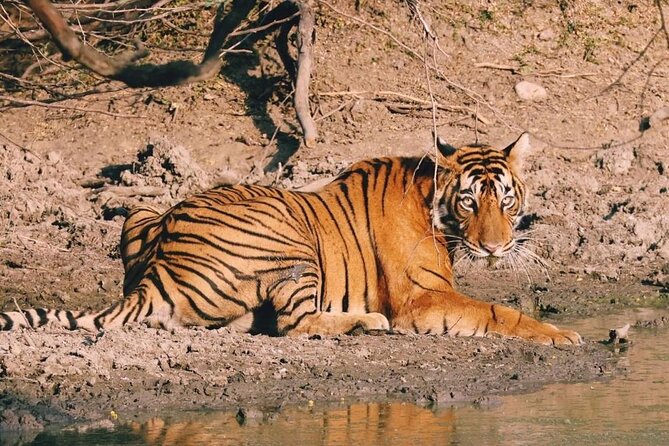
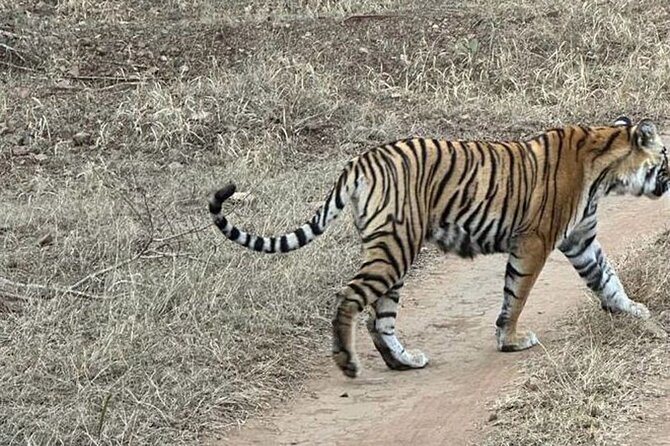
Ranthambore National Park receives one safari in the morning and another in the evening on day five, each lasting about three hours. The park is known for tiger sightings, but no wildlife outing can promise an animal appearance. The value here is the chance to search twice, at different times of day, rather than relying on one brief drive.
The safari park entrance is included. That is important because wildlife fees can add up, and it keeps one major cost inside the package. Hotel accommodation at Ranthambore is included if you select the option with hotels.
The schedule gives you a full six hours in the park, but you should still expect waiting, slow movement, and periods when the main event is simply watching the forest and open areas. Bring patience. A tiger sighting is a bonus, not a guaranteed feature.
This section works well for families and for anyone who wants more than monuments. It also changes the rhythm of the trip. After several formal buildings and guided city visits, you spend time looking outward and letting the setting set the pace.
Jaipur starts with temples and a leopard safari
Day six moves from Ranthambore toward Jaipur and includes Galtaji Temple, also called the Monkey Temple, and Birla Mandir. Galtaji receives only 15 minutes in the schedule, while Birla Mandir receives about 30 minutes.
Galtaji is known for its temple buildings, sacred water pools, and monkeys. Keep food and loose items secured, and follow local guidance around the pools and religious spaces. Birla Mandir is a white marble Hindu temple dedicated to Lord Vishnu, with detailed latticework and a setting near Moti Dungri.
After the Jaipur hotel check-in, the program includes an evening safari at Jhalana Safari Park. This outing lasts about three hours, and entrance is included. Jhalana is associated with leopard sightings, giving you a different wildlife focus from Ranthambore’s tiger search.
The Jaipur timing is efficient but not leisurely. You are arriving from another city, visiting two temples, checking in, and then heading out for a safari. If your priority is wildlife, this is a worthwhile use of the evening. If you prefer slow city exploration, you may want to discuss adjustments before booking.
Jaipur’s forts and palaces fill the final sightseeing day
Day seven is the most concentrated sightseeing day. Panna Meena Ka Kund begins the morning with a 15-minute look at a stepwell near Amber Fort. It is a quick stop, but its geometric stairs make it one of the more distinctive views around Jaipur.
Amber Palace receives two hours and has a ₹550 admission fee listed as extra. The palace was built by Raja Man Singh I and served as Rajasthan’s capital until 1728. With a guide, the courtyards, halls, and decorative details make more sense than they would on a quick self-guided walk.
Jal Mahal is a short photo stop at Man Sagar Lake. The palace appears to float in the water, though the itinerary allows only 15 minutes. City Palace then receives an hour and costs ₹700 per person. This was the administrative and ceremonial seat of Jaipur’s Maharaja, and it gives you a closer look at the city’s royal past.
Jantar Mantar is a UNESCO-listed collection of 19 astronomical instruments built in 1734. The admission fee is ₹250, and an hour is planned. This is one of the tour’s most unusual stops because the instruments are large architectural tools, not just decorative objects.
Hawa Mahal receives about 30 minutes, with a listed fee of ₹250. The five-story Palace of Winds is best known for its pink and red sandstone facade, designed with openings that allowed royal women to watch street life unseen.
The final stop is Albert Hall Museum, the oldest museum in Rajasthan. Only 15 minutes are planned, and admission is listed as extra. That is enough for a quick exterior look, but not enough for a full museum visit. If the collection interests you, ask if the schedule can be adjusted.
What the $553.85 price really covers
At $553.85 per person, the package has good value for someone who wants the major transport and planning handled. You receive seven nights of accommodation when that option is selected, private air-conditioned transport, hotel or airport transfers, local guides, breakfast each day, bottled water during journeys, and both safari park entrances.
The private car is a major part of the value. A sedan is used for one or two people, a six-seat wagon for three or four, and a 10-seat minivan for five to ten. Larger families avoid splitting into separate cars, while a couple gets a more compact vehicle.
Do not treat the listed price as the complete sightseeing budget. The extra tickets include ₹1,100 for the Taj Mahal, ₹600 for Agra Fort, ₹500 for Itmad-ud-Daula, ₹550 for Qutub Minar, ₹550 for Humayun’s Tomb, ₹700 for City Palace, ₹250 for Jantar Mantar, and ₹250 for Hawa Mahal.
That adds ₹5,050 per person if you visit every listed paid site. Taxes, personal purchases, laundry, drinks, and tips are also excluded. Check the exact hotel category and ticket arrangement before paying, since accommodation is offered through different booking options.
Who should book this private India tour
I would choose this tour if you want the Golden Triangle but also care about wildlife. It suits first-time visitors who prefer one driver, arranged guides, and a clear route rather than negotiating each transfer independently.
Families can benefit from the private format. The service has handled groups ranging from children around six years old to older relatives in their seventies, and Gopal has helped adjust plans for family needs. Names connected with the service include drivers Surendra and Maan Singh, both praised for safe driving and helpful support.
The tour also suits couples who want flexibility, including the option to arrange their own hotels. Twin-sharing rooms are standard, and a group of three is normally placed in a triple room. If three people want two rooms, an extra charge applies.
I would hesitate if you dislike long drives, early mornings, or tightly timed sightseeing. The Taj sunrise visit and two six-hour safari days add excitement, but the route is active. Also remember that neither tigers nor leopards are guaranteed.
Free cancellation is available up to 24 hours before the local start time. A cancellation inside that window is not refunded, and poor weather or failure to meet the minimum group size can lead to a new date or a full refund.
Should you book it?
Book this tour if you want monuments, wildlife, private transport, and hotel planning in one package. The strongest features are the extra time compared with a short Golden Triangle circuit, the second Taj Mahal visit at sunrise, two Ranthambore safaris, and the included Jhalana entrance.
Before booking, price the extra monument tickets and confirm the hotel option. If you accept the long drives and keep realistic expectations about wildlife sightings, this is a well-balanced introduction to Delhi, Agra, Jaipur, tigers, and leopards.
FAQ
How long is the Golden Triangle and wildlife tour?
The tour lasts approximately eight days and includes seven nights.
Where does the tour begin?
Pickup begins at Indira Gandhi International Airport in New Delhi. Hotel pickup is also offered.
Where does the tour end?
The tour returns you to Delhi, with drop-off available at the airport, a hotel, or another requested location in the city.
Is this a private tour?
Yes. Only your own group participates in the private activity.
What type of transport is used?
One or two people travel in a four-seat sedan. Groups of three or four use a six-seat wagon, while groups of five to ten use a 10-seat minivan.
Are hotels included?
Seven nights of accommodation are included when you select the booking option that includes hotels.
Is breakfast included?
Seven breakfasts are included when the hotel option is selected.
Are the safari entrance fees included?
Ranthambore Safari Park entrance and Jhalana Safari Park entrance are included.
Are monument admission fees included?
Several monument fees are extra, including the Taj Mahal, Agra Fort, Qutub Minar, Humayun’s Tomb, City Palace, Jantar Mantar, Hawa Mahal, and Itmad-ud-Daula’s Tomb.
Can three people have two rooms?
Rooms are normally arranged as triple sharing for a booking of three people. Two rooms can be requested for an additional charge.
Newly reviewed around New Delhi
- Private Customized Tour Of Old/New Delhi Spiritual Sites★ 5.0 · 5 reviews
- Yoga and Meditation Classes in Gurgaon★ 4.5 · 8 reviews
- Yoga class in Delhi★ 5.0 · 29 reviews
- Old Town Delhi Walking Tour (2 Hours Guided Tour with Local)★ 4.5 · 22 reviews
- 5 Days Golden Triangle Tour with Ranthambore(Delhi Agra Jaipur Ranthambore Tour)★ 5.0 · 3 reviews
- Wonderful Old & New Delhi sightseeing tour★ 5.0 · 3 reviews
- Hidden Gems of Old Delhi – Walk★ 5.0 · 8 reviews
- Delhi Zoo White Tigers & lions with Old Fort Visit★ 4.5 · 5 reviews
Ranthambore Tiger Safari Tours from Delhi, compared.
Private 4-Day Golden Triangle Tour with Ranthambore Tiger Safari
Read our review →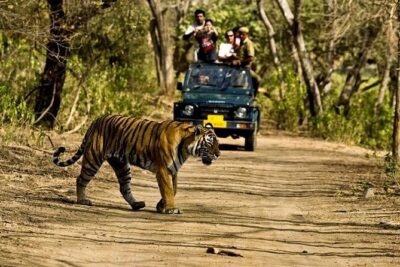
Private 5-Day Ranthambhore Tiger Tour from Delhi including the Taj Mahal, Agra and Jaipur
Read our review →
4 Day Golden Triangle with Ranthambore Tiger Safari Tour from Delhi
Read our review →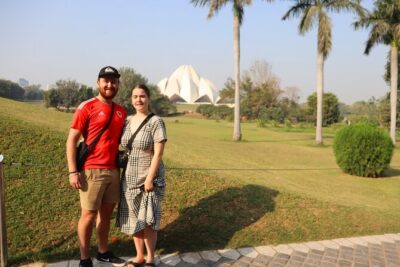
6 Days Delhi, Jaipur, Agra & Ranthambore By Car
Read our review →
4-Day Private Delhi, Agra & Jaipur with Ranthambore Tiger Safari
Read our review →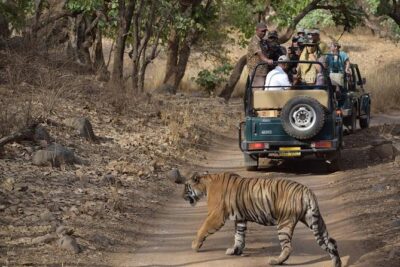
Private 6-Day Ranthambhore Tiger Tour including Delhi, Agra and Jaipur
Read our review →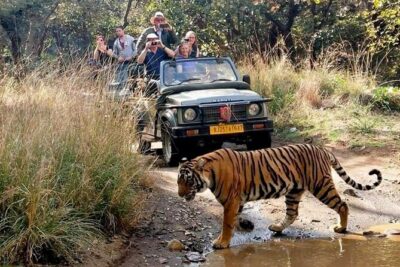
7-Day Golden Triangle Tour with Ranthambore Tiger Safari
Read our review →
Ranthambhore Tiger Tour of Delhi, Agra, and Jaipur 5 Star Hotel
Read our review →Browse the lists this tour appears in