
Reviewed · GOLDEN TRIANGLE TOURS FROM DELHI
From Delhi: Private 3-Day Golden Triangle Tour with Hotel Options
The Taj Mahal at first light, a rickshaw rattling through Old Delhi, and sunset views from Amber Fort: this three-day private Golden Triangle tour packs India’s essential sights into a tight schedule. I like the door-to-door service and the fact that you get a guide at every major site, so you are not left guessing what you are looking at. I also like the flexible route, especially when closures or your own priorities call for a change.
The tradeoff is time. You will cover long distances by road and spend much of each day sightseeing or transferring between cities. The advertised price of $80 per person looks low, but monument tickets and meals add about $140 per person, and hotel cost depends on the option you choose. This is a good fit if you value convenience and want to see the headline sights quickly.
Key points at a glance
- Old Delhi by rickshaw: Ride through Chandni Chowk and visit Khari Baoli spice market, with a private guide to explain the streets and markets.
- Taj Mahal at the best hour: Visit in the early morning, then continue to Agra Fort before driving to Jaipur.
- Private door-to-door travel: Pickup and drop-off are provided from Delhi, the airport, Gurugram, Aerocity, Noida, Ghaziabad, or Faridabad.
- Flexible hotel choices: Select a basic, 4-star, or 5-star package, with breakfast included when the accommodation option includes it.
- A full Jaipur finale: See Amber Fort, Hawa Mahal, City Palace, Jantar Mantar, Jal Mahal, Panna Meena ka Kund, and Gaitore Ki Chhatriyan.
- Useful named contacts: Akil is identified as the tour operator in several bookings, while Kamal is singled out for his Jaipur guiding and Naval for careful driving.
What the three-day route really involves
The Golden Triangle links Delhi, Agra, and Jaipur in a classic North India circuit. Each city gives you a different piece of the story: Delhi brings Mughal and modern capital sights, Agra centers on imperial architecture and the Taj Mahal, and Jaipur offers royal palaces, hill forts, and the distinctive style of Rajasthan.
You travel in a private air-conditioned vehicle with a uniformed driver. The vehicle size depends on your party: a three-seat sedan for one or two people, a six-seat Toyota Innova or similar for three to five, and a ten-seat Tempo Traveler for six to ten. That matters on long road days. A private car gives you more control than a shared coach, though traffic can make the stated transfer times longer.
This is not a slow, lingering tour. It is a sightseeing sprint with the big sights arranged in a sensible order. Your guides meet you at the sites, explain the buildings and their stories, and help with practical details such as entrances and the Taj Mahal parking area.
The tour can be adjusted after booking. You can request additions, removals, or changes to the monuments, which is useful if you want more time at the Taj Mahal or less time in shopping areas. Still, three days will not allow unlimited changes without cutting something else.
More Golden Triangle routes from New Delhi:
- 3-Days Private Golden Triangle Tour: Delhi, Agra & Jaipur by Car
★ 5.0 · 1,107 reviews - 3-Days Private Golden Triangle Tour: Delhi, Agra & Jaipur by Car
★ 5.0 · 1,098 reviews - 3-Day Delhi, Agra and Jaipur Private Tour – India Golden Triangle
★ 5.0 · 812 reviews
Day one: Sikh devotion, Mughal Delhi, and the road to Agra
Pickup begins in Delhi or nearby areas. If you are arriving at the airport, airport pickup and drop-off can be arranged. The first stop is Gurudwara Bangla Sahib, a Sikh place of worship connected with the eighth Sikh Guru and known for its healing Sarovar.
Allow about 30 minutes here. It is a calmer opening than plunging straight into Old Delhi traffic, and it gives you a quick introduction to Sikh religious life. Admission is not included, and visitors should follow the site’s rules for dress and behavior.
From there, you head to Jama Masjid, one of India’s great Mughal mosques. Built in 1656 with the labor of about 5,000 workers, it faces the Red Fort and occupies a commanding place in Old Delhi. The planned visit lasts up to two hours, so you have time to study the broad courtyard, domes, and scale of the complex rather than treating it as a quick photo stop.
Next comes Chandni Chowk, where the rickshaw ride is one of the most useful parts of the day. The narrow streets and busy market lanes can be hard to understand from a car. A rickshaw lets you see the old commercial quarter at street level, while your guide explains how the markets fit into daily life.
Khari Baoli adds another sensory stop. It is known for spices, so expect strong aromas, sacks, color, and plenty of movement. The listed visit lasts about an hour. This is a good place to ask your guide about how spices are used, but keep your belongings close in crowded market lanes and agree clearly on any shopping plans.
After Old Delhi, the mood changes at India Gate. The memorial honors 13,300 Indian soldiers who died in the First World War, with their names engraved on its walls. You spend about 30 minutes here, enough for photographs and a short explanation of its purpose.
Humayun’s Tomb is the day’s major architectural stop. This UNESCO World Heritage Site is often described as India’s first garden tomb, and its formal layout helped shape later Mughal tomb design. The one-hour visit gives you time to see the building within its gardens, rather than only viewing it from the entrance.
The Lotus Temple closes the sightseeing portion of the Delhi day. Its white, lotus-shaped design has become one of the city’s best-known modern landmarks. The stop is scheduled for about an hour, though the time you spend inside may depend on entry arrangements and visitor flow.
The Red Fort is not part of the listed route, despite Jama Masjid facing it. That is worth knowing if the fort is high on your list. Red Fort and Lotus Temple are closed on Mondays, and the schedule substitutes Gurudwara Bangla Sahib when needed. Ask for the exact Monday plan before departure.
You then drive to Agra and check into your hotel. The transfer is listed at about three hours, but road conditions can change that. The evening is free, which is welcome after a packed Delhi day.
Day two: the Taj Mahal before Agra wakes up
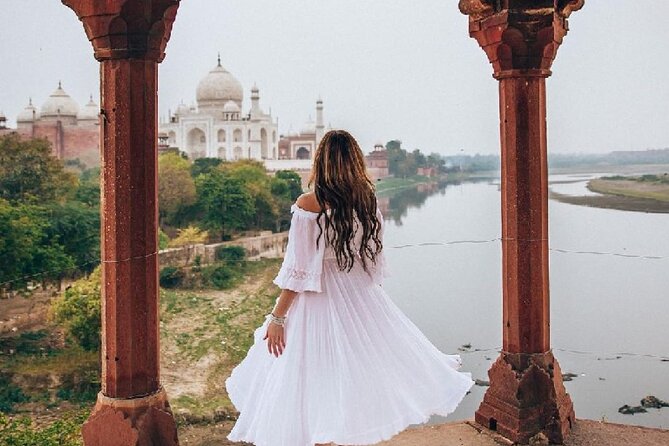
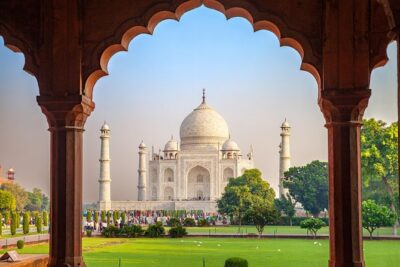
The Taj Mahal is scheduled for the morning, when the light is softer and the heat is usually less demanding. Your personal guide accompanies you, and a golf cart takes you between the parking area and the monument entrance. Shoe covers are provided, and the entry ticket is extra.
Give the Taj Mahal the attention it deserves. The white marble changes character with the light, and the setting matters as much as the central dome. Your guide can explain the building’s place in Mughal history and point out details that are easy to miss when you are focused only on the famous front view.
The Taj Mahal is closed on Fridays. If Friday falls within your dates, the route changes to Delhi, Jaipur, Agra, then Delhi. That reverses the order of the trip, so check the calendar before you commit to hotels and onward plans.
Agra Fort follows the Taj Mahal. Emperor Akbar began the fort in 1565 beside the Yamuna River, and later rulers expanded it. Shah Jahan added white marble rooms, and the fort offers a useful counterpoint to the Taj Mahal: here you see the machinery of imperial life, not only a monumental memorial.
The stop lasts about an hour. It is enough for the main courtyards and notable interiors, but not for every corner of the enormous complex. If you are especially interested in Mughal architecture, ask your guide to focus on the sections that matter most to you.
After Agra Fort, you travel to Jaipur and check into the second hotel. The road transfer is listed at about four hours. This is one of the hardest stretches of the trip, so use the time to rest rather than planning a full evening program in Jaipur.
The route is efficient, but it asks a lot from you. Delhi sightseeing on day one, an early Taj Mahal visit on day two, then a long drive to Jaipur means good shoes, water, and realistic expectations are important.
Day three: Jaipur’s forts, palaces, and astronomical instruments
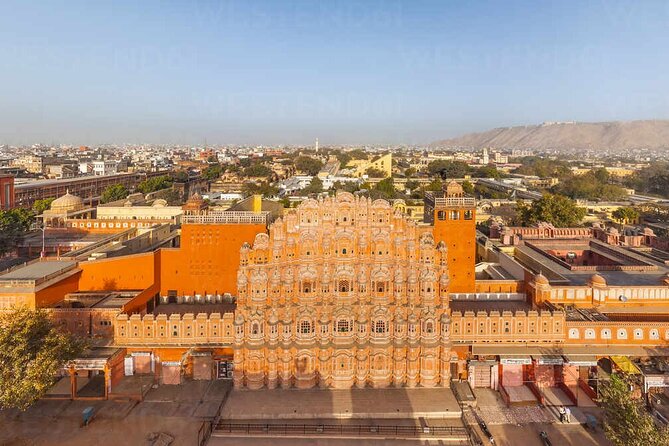
Jaipur begins with Hawa Mahal, the Palace of Winds. Its honeycomb-like facade and small windows were designed to let royal women observe street life without being easily seen. The visit is scheduled for 30 minutes, so expect a quick look and photographs rather than a long palace tour.
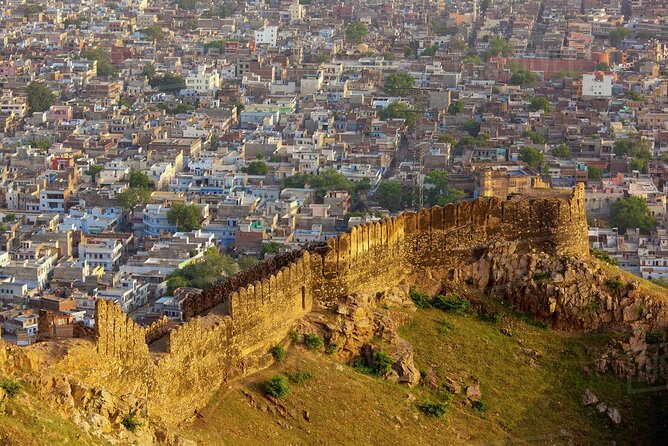
Amber Fort is the main event of Jaipur day. Set among the hills above Maota Lake, the fort contains courtyards, temples, decorative rooms, and broad views. The guided visit lasts about two hours, which gives you time to appreciate both the defensive setting and the courtly interiors.
The route does not list an elephant ride. That is a positive practical point if you prefer to avoid that type of activity, and it keeps the visit focused on the fort itself. You should still expect steps and uneven surfaces in an old hilltop complex.
Panna Meena ka Kund is a brief stop at a symmetrical stepwell. Its geometric stairs and old water system make it a fine place for photographs and a quieter pause after Amber Fort. The visit lasts about 30 minutes, so it is a short addition rather than a full attraction on its own.
Jal Mahal is viewed from the shore. The palace sits in the middle of Man Sagar Lake, and the stop lasts about half an hour. You should not expect a palace interior visit here. The value is the view, the unusual setting, and a break from the road.
Gaitore Ki Chhatriyan brings you to the royal cenotaphs of Jaipur. The carved memorial pavilions are more peaceful than the city’s main sights and give your guide room to explain the royal family and the purpose of these monuments. Again, allow about 30 minutes.
The City Palace takes about an hour. This complex blends Mughal and Rajasthani design and includes museums, courtyards, and palace buildings. It is a useful place to connect Jaipur’s royal past with the city you have been seeing outside the car.
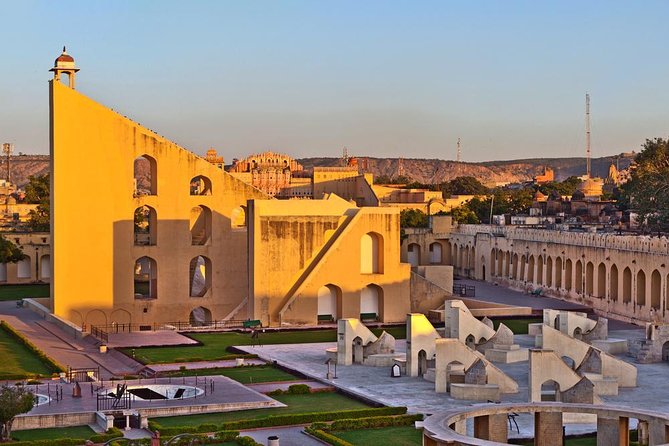
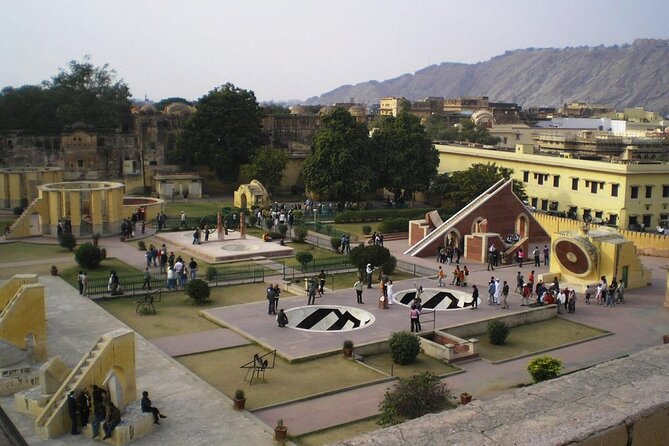
Jantar Mantar completes the sightseeing. Maharaja Jai Singh II built this astronomical observatory with massive instruments for measuring celestial movements. It is a UNESCO World Heritage Site, and a guide makes a real difference here because the instruments can look abstract until someone explains what each one was meant to calculate.
After Jantar Mantar, you return to Delhi. The transfer is listed at about four hours, and the tour can finish at Delhi airport or a hotel in Delhi, Gurugram, Aerocity, Noida, Ghaziabad, or Faridabad. Do not schedule a tight flight immediately after the stated arrival time. Traffic is specifically noted as a variable.
A few more New Delhi day trips worth putting side by side
- 3-Day Private Luxury Golden Triangle Tour to Agra and Jaipur From New Delhi
★ 5.0 · 424 reviews - 3-Day Luxury Golden Triangle Tour: New Delhi, Agra & Jaipur
★ 5.0 · 246 reviews - Award-Winning 3-Day Private Golden Triangle Tour of India
★ 5.0 · 240 reviews - 3-Day Private Golden Triangle Tour to Agra &Jaipur from New Delhi
★ 5.0 · 116 reviews
Guides, drivers, and the private format
The private setup is the strongest practical feature. Only your group participates, and you have a personal guide at each site rather than a single guide trying to cover three cities from one vehicle.
Akil is named as the responsive operator in several bookings. Kamal receives particular praise for Jaipur guiding, while Naval is identified as a careful driver. Guide assignments can change, so treat these names as useful points of reference, not a guaranteed roster.
The guides are especially valuable at Jantar Mantar, Humayun’s Tomb, Agra Fort, and the City Palace. Without context, some of the buildings can blur together after three full days. At the same time, guides may take you toward shops or stops connected to local commerce, so speak up if you want to keep the day strictly monument-focused.
The driver stays with the vehicle while local guides handle the sights. That division is normal for this type of private circuit and keeps each city visit focused.
What the price includes, and what it does not
The starting price is listed at $80 per person. That includes hotel or airport pickup and drop-off, the private air-conditioned vehicle, driver, rickshaw ride in Old Delhi, Taj Mahal golf cart, shoe covers, and guides at all sites.
Hotel accommodation and breakfast depend on the package selected. You can choose an option with two nights of accommodation, including a 4-star or 5-star upgrade. Check the room selection carefully: single, double, or twin-sharing is standard, and three-person groups receive a double room with an extra bed unless separate rooms are requested for an added charge.
Meals are listed at $70 per person, and entry tickets at another $70 per person. That makes the known add-ons significant. Your realistic budget is not simply the headline $80, especially if you choose a higher hotel category or prefer separate rooms.
Some monuments do not accept cards, so carry Indian rupees for admission. Your guide can help locate an ATM, but it is better to have cash ready before a full sightseeing day.
The value comes from saved planning time, a private vehicle, local guides, and coordinated hotel transfers. If you already enjoy arranging trains, cars, hotels, and site tickets yourself, the package may feel less economical. If you have only three days, the convenience is easier to justify.
Who should book this Golden Triangle tour
I would choose this tour if you are short on time, want a private vehicle, and prefer having someone manage the route. It also suits families and first-time visitors who want a driver and guide without joining a large group.
Solo visitors may appreciate the structured transport and the direct hotel pickup. The private format also lets you request itinerary changes, which can help if you need a slower pace or want to remove a stop.
I would hesitate if you dislike early starts, long road transfers, or tightly scheduled sightseeing. The route gives you a strong first look at three major cities, but it does not offer much time for wandering, shopping at leisure, or spontaneous detours.
The non-refundable booking rule is another reason to check dates carefully. Confirm the Friday Taj Mahal closure, Monday closures, room type, and final drop-off plan before paying.
Final verdict: a strong first visit, at a fast pace
Book this tour if your priority is seeing Delhi, the Taj Mahal, Agra Fort, and Jaipur’s major sights in three days with private support. The rickshaw ride, early Taj Mahal visit, guides, and flexible route give it more substance than a basic city-transfer package.
Skip it if you want a relaxed India itinerary. For the right person, the tour’s value is not the low starting price alone. It is the time saved, the private transport, and the reassurance of having Akil’s organizing support, a local guide in each city, and a driver handling the long roads.
FAQ
Is this a private tour?
Yes. Only your group participates, with a private air-conditioned vehicle and personal guides at the sites.
What cities does the tour visit?
The route covers Delhi, Agra, and Jaipur before returning to Delhi.
Is hotel accommodation included?
Two nights of hotel accommodation are included only when you select an accommodation package. Hotel categories include basic options as well as 4-star and 5-star upgrades.
Is breakfast included?
Breakfast is included when you select the hotel option that includes it.
Are meals included?
No. Meals are listed as an additional cost of $70 per person.
Are monument entrance tickets included?
No. Entry tickets are listed separately at $70 per person.
What happens if the tour includes a Friday?
The Taj Mahal is closed on Fridays, so the route changes to Delhi, Jaipur, Agra, and then Delhi.
What happens if the tour includes a Monday?
The Red Fort and Lotus Temple are closed on Mondays. The schedule is adjusted, with Gurudwara Bangla Sahib used in place of the affected attractions as specified by the operator.
Can the itinerary be changed?
Yes. You can request additions, removals, or other changes after booking, subject to the time available.
What vehicle is used?
One or two people travel in a three-seat sedan such as a Toyota Etios. Groups of three to five use a six-seat wagon such as a Toyota Innova, while groups of six to ten use a ten-seat van such as a Tempo Traveler.
Newly reviewed around New Delhi
- Private Customized Tour Of Old/New Delhi Spiritual Sites★ 5.0 · 5 reviews
- Yoga and Meditation Classes in Gurgaon★ 4.5 · 8 reviews
- Yoga class in Delhi★ 5.0 · 29 reviews
- Old Town Delhi Walking Tour (2 Hours Guided Tour with Local)★ 4.5 · 22 reviews
- 5 Days Golden Triangle Tour with Ranthambore(Delhi Agra Jaipur Ranthambore Tour)★ 5.0 · 3 reviews
- Wonderful Old & New Delhi sightseeing tour★ 5.0 · 3 reviews
- Hidden Gems of Old Delhi – Walk★ 5.0 · 8 reviews
- Delhi Zoo White Tigers & lions with Old Fort Visit★ 4.5 · 5 reviews
Golden Triangle Tours from Delhi, compared.
3-Days Private Golden Triangle Tour: Delhi, Agra & Jaipur by Car
Read our review →3-Days Private Golden Triangle Tour: Delhi, Agra & Jaipur by Car
Read our review →
3-Day Delhi, Agra and Jaipur Private Tour – India Golden Triangle
Read our review →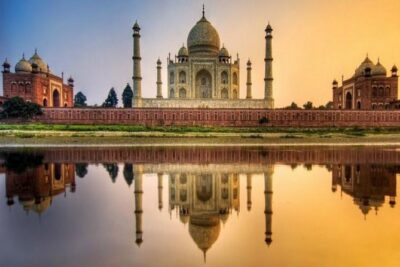
Four-Day Private Luxury Golden Triangle Tour to Agra and Jaipur From New Delhi
Read our review →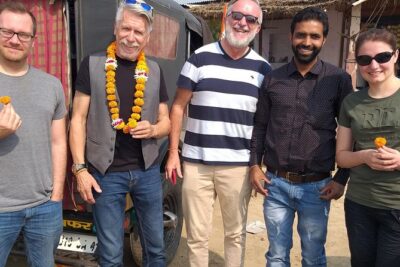
5 Nights 6 Days Private Golden Triangle Tour – Delhi Agra Jaipur
Read our review →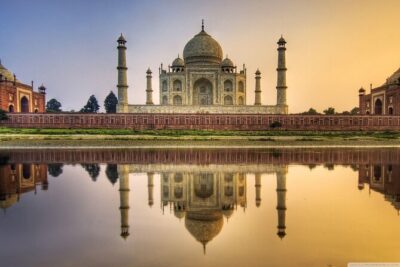

Private Car and Drive for Golden Triangle (4N/5D)
Read our review →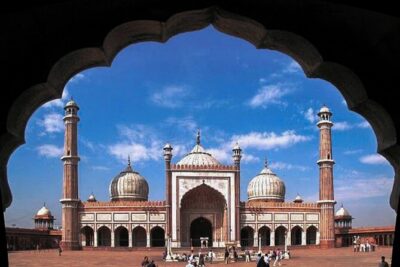
Private Golden Triangle Tour Delhi Agra Jaipur ( Top Rated )
Read our review →Browse the lists this tour appears in