
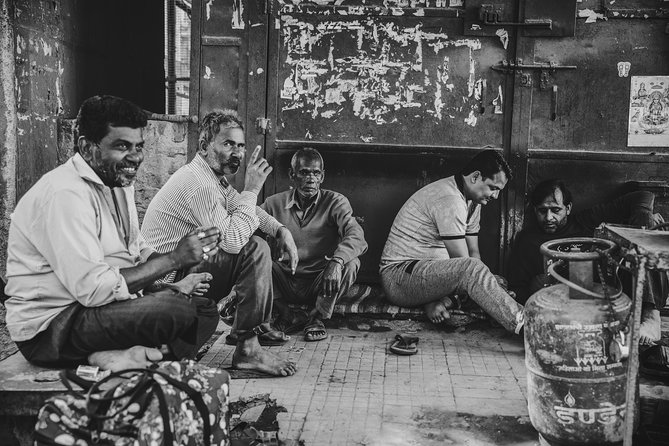
Reviewed · DELHI SLUM TOURS
Small- Group Delhi Slum Walking Tour
Delhi’s Sangam Colony is not a sightseeing set piece. It is a working neighborhood built beside railway tracks, with homes, small industries, temples, fruit sellers, and families going about daily life. A local guide leads you through it, explains the social and economic setting, and introduces you to the community with care.
I like two things right away: the guide comes from the area, and the money has a clear local purpose, with 80 percent going to a non-profit organization. The visit to an education and vocational center also gives the walk more substance than simply looking around. The main caution is that the experience depends heavily on the guide and local arrangements. One booking had a 15-minute delay and a mix-up over the guide, so patience helps.
Key points to know before booking
- Railway-side neighborhood: Walk through Sangam Colony, built on both sides of a railway track, with trains passing nearby.
- Local guides: Sunny and Abhishek have led this walk, and guides are from the community itself.
- Community focus: Visit an education and vocational training center, not just residential streets.
- Small group: The maximum group size is nine people, which allows more room for questions and conversation.
- Tea with residents: You may share black tea, milk tea, or a cold drink with a local family.
- Good value with a purpose: The $23.47 price includes the walk, center visit, and drinks, while 80 percent of proceeds supports local work.
What this Delhi walk is really about

This tour asks you to look at Delhi from ground level. You are not visiting a monument or a market designed for sightseeing. You are walking through an informal settlement where people live, work, worship, raise children, and run small businesses.
That difference matters. The guide’s job is not simply to point out crowded lanes. You learn how the neighborhood functions, how different industries fit into the area, and how families manage daily life in a place with limited resources.
I would book this only if you are ready to listen and observe respectfully. The tour is not entertainment in the usual sense. It is a guided encounter with a community, and your attitude will shape the experience as much as the route itself.
The strongest part is the local connection. Sunny, one of the guides, lives in the area and has been praised for making people feel welcome and safe. Abhishek has also led the walk and explained the social and economic setting in a clear way. Guide quality can vary, but having someone from the neighborhood gives the visit a useful human frame.
More community tours in New Delhi:
- Sanjay Colony Slum Tour
★ 5.0 · 498 reviews - New Delhi Slum Walking Tour
★ 5.0 · 360 reviews - Sanjay Colony Slum Tour with Local Guide
★ 5.0 · 160 reviews
Starting at Pandav Nagar near the railway tracks

The walk begins at Main Patel Road in Block B, Baljit Nagar, near Shadipur. The meeting point is served by public transportation, but hotel pickup and drop-off are not included. You return to this same point at the end.
The first major portion takes place around Pandav Nagar. Here, you see the local mix of homes, industries, temples, and fruit markets. The railway line is part of the setting, not a distant feature. Trains may pass as you walk, giving you a very direct sense of how closely transport routes and homes sit together.
That proximity is one of the most distinctive parts of the route. It also means you should pay attention to where you walk and follow your guide’s instructions. The supplied details do not promise a smooth, paved route, so comfortable shoes are sensible.
The fruit market is another useful stop. It gives the tour a practical, everyday side. You are not only seeing housing conditions; you are also seeing how people buy, sell, and earn money in the neighborhood. Supporting local businesses is part of the stated purpose of the visit.
The area also includes temples. These stops help show that Sangam Colony is a complete community rather than a row of temporary shelters. People have religious places, workplaces, shops, family homes, and local services within the same small area.
Walking through Sangam Colony
The dedicated walk through Sangam Colony lasts about 30 minutes, though the full experience takes two to three hours. The settlement is built on both sides of the railway track, so the route gives you changing views of the community and its tight connection to the rail corridor.
Your guide explains the socioeconomic setting as you walk. That context is essential. Without it, you might notice only narrow lanes or modest homes. With it, you can better understand how housing, work, transport, education, and family life fit together.
The tour includes visits to local homes, but you should treat these as personal spaces, not exhibits. Ask before taking photographs, and let your guide manage introductions. The chance to speak with residents is valuable, but it should remain a respectful exchange rather than an inspection.
An optional tea break with a local family can make the visit more personal. Black tea, milk tea, or a cold drink is included. The break also gives you time to hear stories of survival and daily life in a calmer setting than a moving walk.
Do not expect a scripted performance. Conversations may depend on who is available and what can be comfortably discussed that day. That uncertainty is part of the point, but it also means you should not book this expecting a guaranteed set of personal stories or a fixed sequence of meetings.
Visiting the education and vocational center

The Pandav Nagar center is one of the tour’s most worthwhile stops. About 25 minutes are set aside to visit the education and vocational training center operated by the organization behind the walk.
This changes the focus from poverty alone to local efforts and future options. You learn about projects that support education and job skills, and you see where some of the proceeds are directed. The center gives the tour a constructive angle without pretending that one small project solves the neighborhood’s larger problems.
I especially like this stop because it gives you something concrete to think about after leaving. A walk through difficult living conditions can become voyeuristic if it ends at the point of observation. A training center shows that residents and organizers are also working toward practical change.
The information provided does not specify exactly which vocational courses operate there or how many students attend. Your guide can explain what is running during your visit. Keep your expectations open rather than arriving with a fixed picture of the center.
More walking tours in New Delhi:
- The Great Indian Food Tour: Old Delhi Food and Heritage Walk
★ 5.0 · 1,698 reviews - Old Delhi Heritage Walking Tour
★ 5.0 · 247 reviews - 3-hour Old Delhi Heritage Walking tour with Rickshaw Ride
★ 5.0 · 240 reviews - Old Delhi Walking Tour: Food, Culture & Spice Bazaars
★ 5.0 · 94 reviews
How the small group affects the experience
The maximum group size is nine people. That is a useful limit for this kind of walking tour. A huge group would block lanes, make conversation awkward, and put more pressure on residents.
With fewer people, you have a better chance to hear the guide, ask questions, and take part in a tea visit without turning it into a public event. Small groups also make it easier for the guide to explain local customs and keep everyone together near the railway line.
The tradeoff is that a small operation can be more vulnerable to last-minute changes. One participant encountered an administrative mix-up, met a different person at first, and waited about 15 minutes for the intended guide. That appears to be an exception rather than the usual pattern, but you should keep the start of your day flexible.
Sunny received especially strong praise for stepping in after a booking problem and leading an insightful walk at short notice. That suggests the local team can respond well when things go wrong, though it does not remove the need to confirm your meeting details.
What the $23.47 price buys you
At $23.47 per person, this is inexpensive for a two to three-hour guided experience in Delhi. The price includes the local guide, visits to the settlement, fruit market, temple, local homes, and community center, plus a black tea, milk tea, or cold drink.
The better value comes from the purpose behind the payment. Eighty percent of proceeds benefit a local non-profit organization. You are paying for time, explanation, and access, while also helping fund education and vocational work.
Still, this is not a luxury tour. There is no hotel transportation, no large visitor center, and no promise of air-conditioned shelter along the route. If you want a polished sightseeing product, choose another Delhi activity. If you want a direct local encounter with a social purpose, the price is fair.
The 4.9 rating from 26 ratings and 96 percent recommendation figure suggest that the experience has worked very well for most bookings. The smaller number of ratings means you should not treat those figures as a guarantee. The guide, timing, weather, and local conditions all matter.
Safety, comfort, and respectful conduct
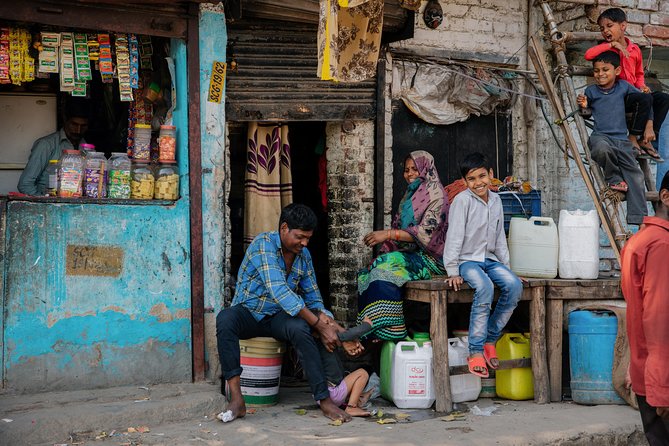
The tour has been described as safe and well organized by people who took it, and most participants can take part. Even so, you are walking through a dense residential area, sometimes beside railway tracks. Stay with your guide and do not wander ahead to take photographs.
Wear comfortable shoes and modest clothing suitable for visiting homes and temples. The tour information does not list special clothing rules, but respectful dress is a sensible choice in any Delhi neighborhood that includes religious sites and family homes.
Ask before photographing people, children, homes, or businesses. The most valuable part of this experience is human contact, and that contact works best when you treat residents as neighbors rather than subjects.
The walk requires good weather. If poor weather forces cancellation, you can receive a different date or a full refund. Delhi can be hot, and the tour includes outdoor walking, so check the forecast and carry water unless your guide gives different advice.
Who will appreciate this experience most
I would recommend this to you if you want to understand Delhi beyond its famous forts, tombs, and markets. It suits people who value conversation, local context, and community projects more than a polished route.
It can also work well for visitors who have already seen the main monuments and want a different side of the city. The fruit market, temples, railway line, and training center give the walk several points of interest, so it is not only a discussion about poverty.
Families with older children may find the experience meaningful, though adults should prepare children to behave respectfully around homes and residents. The information says most people can participate, but it does not specify an age minimum or detailed mobility conditions.
You may want to skip it if you dislike uncertain schedules, modest surroundings, or direct discussions about hardship. The walk can be uplifting, but it can also feel confronting. Go with curiosity, not with the expectation of taking dramatic photographs.
Booking details that matter
The tour lasts approximately two to three hours and ends back at the meeting point on Main Patel Road. It does not include hotel pickup or drop-off, so plan your own way to Baljit Nagar, Shadipur.
You receive confirmation at booking, and the activity uses a mobile ticket. It is often booked about 13 days ahead, so reserve in advance if your Delhi dates are fixed.
Free cancellation is available up to 24 hours before the start time. Cancellations or changes made less than 24 hours before the local start time are not accepted for a refund. The activity also requires a minimum number of participants. If that minimum is not met, or if poor weather cancels the walk, you are offered another date or experience, or a full refund.
Should you book the Sangam Colony walk?
Book it if you want a small, locally guided experience that connects daily life with practical community work. Sunny and Abhishek are names to look for, but the key feature is that the guide comes from the area and can explain it from personal knowledge.
The railway-side setting, family tea visit, local market, and training center make this more useful than a quick pass through a poor neighborhood. Just keep your expectations realistic. The route may be informal, arrangements may occasionally run late, and the experience asks for sensitivity.
For about $23.47, I think it is a strong choice for an open-minded visitor who wants to see how one Delhi community works and support a local non-profit at the same time. If you want effortless transport and a tightly scripted outing, choose a different tour.
FAQ
Where does the tour start?
It starts at Main Patel Road, Block B, Baljit Nagar, Shadipur, New Delhi, Delhi, 110008, India.
Where does the tour end?
The activity ends back at the meeting point.
How long does the experience last?
The tour lasts approximately two to three hours.
How large is the group?
The activity has a maximum of nine participants.
Is hotel pickup included?
No. Hotel pickup and drop-off are not included.
What places are visited?
The tour includes Pandav Nagar, Sangam Colony, a fruit market, a temple, local homes, railway-side areas, and an education and vocational training center.
Are drinks included?
Yes. The included drinks are black tea, milk tea, or cold drinks.
Who leads the walk?
A local guide from the same area leads the tour. Sunny and Abhishek have both led this experience.
What happens if the tour is canceled?
If poor weather or an insufficient number of participants causes cancellation, you are offered another date or experience, or a full refund.
Newly reviewed around New Delhi
- Private Customized Tour Of Old/New Delhi Spiritual Sites★ 5.0 · 5 reviews
- Yoga and Meditation Classes in Gurgaon★ 4.5 · 8 reviews
- Yoga class in Delhi★ 5.0 · 29 reviews
- Old Town Delhi Walking Tour (2 Hours Guided Tour with Local)★ 4.5 · 22 reviews
- 5 Days Golden Triangle Tour with Ranthambore(Delhi Agra Jaipur Ranthambore Tour)★ 5.0 · 3 reviews
- Wonderful Old & New Delhi sightseeing tour★ 5.0 · 3 reviews
- Delhi Zoo White Tigers & lions with Old Fort Visit★ 4.5 · 5 reviews
- Hidden Gems of Old Delhi – Walk★ 5.0 · 8 reviews
Delhi Slum Tours, compared.



New Delhi Sanjay Colony slum Tour (Private Tour)
Read our review →
Moral Slum Tour in Delhi with hotel pickup & drop
Read our review →
Sanjay Colony Slum & Old delhi Street Food Tasting tour
Read our review →Browse the lists this tour appears in