
Reviewed · DELHI SLUM TOURS
New Delhi Sanjay Colony slum Tour (Private Tour)
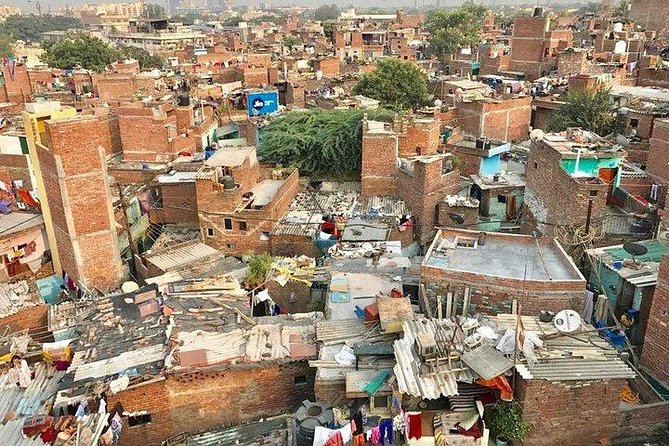
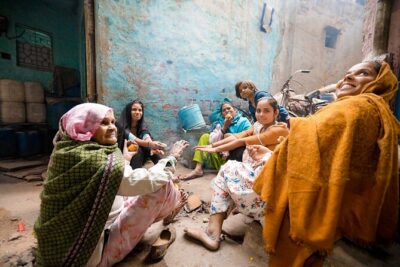
Sanjay Colony is not a sightseeing backdrop. It is a working neighborhood of about 60,000 people, and this private walk gives you a careful look at daily life in Delhi. You learn how clothing work, faith, education, water, electricity, and hygiene fit together in a crowded community.
I like two things right away: the group is capped at six, so you can ask real questions, and 50 percent of the profits support Learning by Locals, a nonprofit connected to the area. The main consideration is simple: photography is not allowed, and the tour asks you to observe with respect rather than collect images.
Key points at a glance
- A small private group: Up to six people take part, making conversation with the guide easier.
- A look at local work: You learn about clothing production and the businesses that help support families.
- Faith in everyday life: The route includes a temple and explains its place in the community.
- Education beyond the classroom: You see a public school from outside and learn about education in Delhi and Sanjay Colony.
- Practical local issues: Water, electricity, hygiene, and housing are discussed in plain terms.
- A direct social benefit: Half of the profits go to Learning by Locals, the nonprofit linked to the community.
Why Sanjay Colony adds something different to Delhi
Delhi can be easy to reduce to grand monuments, Mughal architecture, markets, and traffic. Those places matter, but they do not explain how many people earn a living, educate their children, find water, or organize home life in the city.
This walk gives you that missing piece. Sanjay Colony is presented as a place where people work, worship, study, and manage ordinary routines under difficult conditions. You are not simply shown hardship. You are asked to see the systems around it, including small businesses, schools, religious life, power access, hygiene, and local efforts to improve education.
That makes the experience more useful than a quick pass through a poor neighborhood. A guide can explain what you are looking at and answer questions that would be hard to resolve on your own. Guides associated with the company include Pradeep, the founder, along with Sukh and Badal. Badal is from the area, which can add a direct local connection to the walk.
The tone matters here. You are told not to take photographs. That rule protects residents from becoming subjects in a photo collection and changes the way you pay attention. You will need to rely on memory, conversation, and the guide’s explanations.
More community tours in New Delhi:
- Sanjay Colony Slum Tour
★ 5.0 · 498 reviews - New Delhi Slum Walking Tour
★ 5.0 · 360 reviews - Sanjay Colony Slum Tour with Local Guide
★ 5.0 · 160 reviews
Meeting at Harkesh Nagar Okhla Metro
The tour begins at Harkesh Nagar Okhla Metro Gate No. 2, at the listed location in Harkesh Nagar, Okhla, New Delhi. The metro connection is useful because you do not need to arrange a long private transfer simply to reach the starting point.
The meeting point is also something to check carefully before you leave. The tour is short, and a late arrival could cut into the walking time. Keep the exact gate information on your phone and allow enough time to find the correct exit.
The activity returns to the same meeting point. That is helpful if you have another Delhi plan afterward, but you should still leave some space in your schedule. A 90-minute walking tour can run close to its stated length, and city transport is not always predictable.
The tour is private, with a maximum of six people per booking. This is one of the stronger features for an experience based on discussion. A large group would make it harder to hear explanations, ask personal questions, or move through a tight residential area without becoming intrusive.
Seeing work inside Sanjay Colony
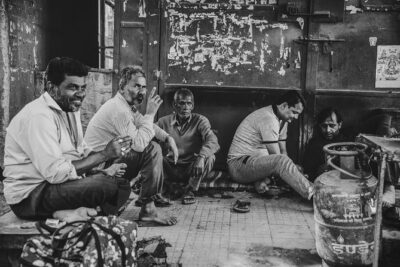
One of the most useful parts of the walk is the look at the clothing industry. You learn how people work and how local business operates inside the neighborhood. This is not just a general talk about poverty. It connects housing and income, showing how work takes place near where people live.
The value is in the ordinary details. You might see how a small production setup fits into a dense community, how people organize their working day, and how local businesses help keep money moving through the area. The information provided does not promise a particular factory visit or hands-on activity, so you should expect explanation and observation rather than a formal industrial tour.
That distinction is important. If you want a business tour with machines, production statistics, or a long workshop visit, this is not the right choice. If you want to understand how work fits into everyday neighborhood life, it offers a more useful view.
The guide also discusses homes and living conditions. You will not be shown a staged display. You are looking at real residential spaces and learning how people manage daily routines in a crowded setting. The subject can feel personal, so your role is to listen, keep an open manner, and avoid treating the area as a spectacle.
The temple and the place of faith
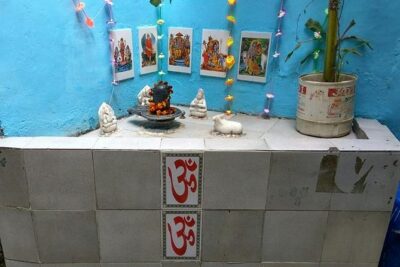
The route includes a temple in Sanjay Colony. This stop helps explain the role faith plays in local life, rather than treating religion as a separate attraction.
The temple visit is brief, but it gives the walk a wider frame. You see that the neighborhood is not defined only by material challenges. People also build community through belief, ritual, and shared places. The guide can explain how faith fits into ordinary routines and how residents understand their surroundings.
As with the rest of the walk, respectful behavior matters. Follow the guide’s directions at the temple, listen before asking questions, and remember that this is an active place of worship, not a set built for visitors.
The temple also helps balance the tour. Water problems, limited space, and hygiene concerns are serious topics, but they are only part of the story. Faith, work, education, and family life all exist alongside those challenges.
A few more New Delhi day trips worth putting side by side
- From Delhi: Taj Mahal & Agra Private Day Trip with Transfers
★ 4.9 · 3,181 reviews - All Inclusive Private Taj Mahal Luxury Tour from Delhi by Car
★ 5.0 · 2,564 reviews - From Delhi: Taj Mahal and Agra Fort Private Sunrise Tour
★ 4.9 · 2,270 reviews - Old & New Delhi Private Tour – Half or Full Day (Rated Excellent)
★ 5.0 · 2,226 reviews
The school stop and Learning by Locals
Education is another main theme. The tour includes a visit to the area around an SDMC primary school, with the school viewed from outside. You learn about the education system in Delhi and how schooling relates to children growing up in Sanjay Colony.
Do not expect a long classroom visit or a scheduled lesson with students. The school portion is brief and observational. Its strength is the explanation around it: the guide can place public education within the wider life of the neighborhood.
The tour also connects with Learning by Locals, the nonprofit supported by half of the profits. You may hear about its work and meet students connected with the organization, depending on how the visit is arranged. The supplied details specifically describe the nonprofit as being in the slum and linked to local education.
That gives the price a purpose beyond the walk itself. Your $35 fee is not only paying for a guide and a short experience. A stated 50 percent goes back into a local nonprofit. You should still view the tour as a commercial activity, but the social contribution is clear and unusually specific.
The education focus is particularly useful if you want to understand more than the phrase access to schooling. You can ask how public education fits into daily life, what the local system looks like, and how community programs add support. The tour does not promise a full policy lecture, so the depth will depend partly on your questions and guide.
Water, power, hygiene, and home life
The most practical part of the walk concerns basic services. The guide explains day-to-day challenges linked to water, electricity, and hygiene, as well as the ways education and local systems operate in a tight residential area.
These subjects can sound abstract until you see the setting. In Sanjay Colony, limited space affects how homes function, how people move around, and how services are used. The tour helps you connect those issues with real routines instead of viewing them as distant development statistics.
The wording of the experience also points to the ways systems can flourish despite pressure. That balance is worth keeping in mind. You will hear about problems, but you will also see organization, work, community life, and efforts to improve conditions.
This is where the guide’s local perspective matters most. Pradeep, Sukh, and Badal are associated with different tours and guiding experiences through Delhi by Locals, and Badal is described as living in the area. A local guide can explain details with more care than a map or a passing glance from a vehicle.
You should ask questions politely and avoid pressing people for private information. The best approach is to let the guide lead conversations and explain when interaction is appropriate.
Tea, water, and the 90-minute pace
The tour lasts about one hour and 30 minutes. It includes a cup of local tea and a bottle of water, which are small but welcome touches during a walking visit.
The route has listed stops at the SDMC primary school and Learning by Locals, along with the temple, homes, work areas, and neighborhood streets. The timetable shown for individual stops is short, so much of the experience comes from walking between places and listening to the guide as the surroundings change.
That pace suits you if you want a focused introduction rather than a half-day commitment. You can fit it into a Delhi schedule before or after other sightseeing. The tradeoff is that 90 minutes cannot cover every part of a community of 60,000 people. You will get selected examples and context, not a complete account of Sanjay Colony.
The tea also gives the experience a simple social pause. It is not a restaurant stop or a cooking class. Think of it as a chance to sit or pause, talk with the guide, and absorb what you have seen.
Is $35 a fair price?
At $35 per person, this is not Delhi’s cheapest short outing. It is also not priced like a basic self-guided walk. You are paying for a private guide, a small group, local interpretation, tea, water, and a stated contribution of half the profits to Learning by Locals.
For one person, the cost may feel high for 90 minutes. For a small private group, the value improves because the maximum is six people and the guide can respond to your interests. The nonprofit contribution also gives the fee a clear social purpose.
I would consider it good value if you want context and conversation. I would be less enthusiastic if your main goal is a long itinerary, extensive photography, or a broad tour of Delhi’s famous sights. This is a specialized experience, not a replacement for Old Delhi, the Red Fort, or a city highlights tour.
Group discounts are available, though the supplied details do not state the exact reduced price. If you are traveling with several people, check the total before booking. A group of four to six may find the private format especially reasonable.
Who should book this walk?
I would recommend it to you if you want to understand Delhi through ordinary life rather than monuments alone. It suits adults, families, students, and culturally curious visitors who can listen carefully and accept the no-photography rule.
It is also a strong choice if you value local guides and social enterprise. The connection with Learning by Locals makes the visit more than a simple neighborhood tour, though you should keep your expectations practical. It is a short walk with discussion, not a large development project visit.
You may want to skip it if you are uncomfortable seeing poverty up close, dislike walking through residential areas, or want complete freedom to photograph. The tour is designed around respect, and that includes accepting that some moments are for observation rather than recording.
The experience may also suit you if you have already seen Delhi’s major attractions and want a different angle on the city. It gives you language and context for understanding the many people who make Delhi function every day.
Practical booking advice
Confirmation arrives at booking, and free cancellation is available up to 24 hours before the start time. Cancellations or changes made less than 24 hours before the start are not accepted for a refund.
The activity is private, near public transportation, and open to most people. The information provided does not list special accessibility details, so contact the provider if you have mobility needs or questions about the walking route.
Wear practical clothing and shoes suitable for a neighborhood walk. Most important, arrive ready to listen, keep your camera away, and let the guide explain when interaction is welcome.
Should you book the Sanjay Colony tour?
Book it if you want a brief, serious look at work, education, faith, and household life in Delhi, and if supporting a local nonprofit matters to you. The small group, local guides, temple visit, school context, and clear contribution to Learning by Locals give the tour substance.
Skip it if you want polished sightseeing, extensive photos, or a longer activity. For the right visitor, the value is not in the number of stops. It is in leaving with a better understanding of how a large Delhi neighborhood works, and how people build ordinary lives within tight limits.
FAQ
How long does the Sanjay Colony tour last?
The tour lasts approximately 1 hour and 30 minutes.
How much does the tour cost?
The listed price is $35 per person. Group discounts are available, but the exact discount is not provided.
How many people can join the private tour?
A maximum of six people can take part in one booking. Only your group participates.
Where does the tour start and finish?
The tour starts at Harkesh Nagar Okhla Metro, Gate No. 2, in Harkesh Nagar, Okhla, New Delhi. It ends back at the same meeting point.
Is photography allowed during the tour?
No. Photography is not allowed because the tour is conducted in a respectful way.
What is included in the price?
The price includes a local guide, local tea, and a bottle of water.
Newly reviewed around New Delhi
- Private Customized Tour Of Old/New Delhi Spiritual Sites★ 5.0 · 5 reviews
- Yoga and Meditation Classes in Gurgaon★ 4.5 · 8 reviews
- Yoga class in Delhi★ 5.0 · 29 reviews
- Old Town Delhi Walking Tour (2 Hours Guided Tour with Local)★ 4.5 · 22 reviews
- 5 Days Golden Triangle Tour with Ranthambore(Delhi Agra Jaipur Ranthambore Tour)★ 5.0 · 3 reviews
- Wonderful Old & New Delhi sightseeing tour★ 5.0 · 3 reviews
- Hidden Gems of Old Delhi – Walk★ 5.0 · 8 reviews
- Delhi Zoo White Tigers & lions with Old Fort Visit★ 4.5 · 5 reviews
Delhi Slum Tours, compared.

Moral Slum Tour in Delhi with hotel pickup & drop
Read our review →
Sanjay Colony Slum & Old delhi Street Food Tasting tour
Read our review →Browse the lists this tour appears in