
Reviewed · DELHI SLUM TOURS
New Delhi: Sanjay Colony Slum Tour with Locals
Sanjay Colony is home to roughly 60,000 people, and this local-led walk gives you a careful look at daily life beyond Delhi’s monuments. You’ll hear about water access, education, religion, home life, recycling, and clothing work, with stops at a local NGO and a public school.
I like the small group size, capped at 10, and the chance to meet people involved with Learning by Locals. I also like the practical setup: local tea, bottled water, and a guide who can explain what you’re seeing instead of leaving you to guess. The main consideration is that this is a visit to a working residential community, not a staged attraction, so you need to bring respect, patience, and restraint with photography.
Key points
- Local guides such as Badal and Sukhmani lead the walk and explain community life directly.
- Learning by Locals provides a window into youth education and empowerment work.
- Sanjay Colony’s clothing and recycling work show how local families earn a living.
- A public school viewed from outside gives you a short introduction to Delhi’s education system.
- Tea and bottled water are included, useful during a warm walk through the area.
- The tour lasts about 1 hour 45 minutes and begins near Harkesh Nagar Okhla Metro Station.
A careful walk through Sanjay Colony
This experience is less about sightseeing in the usual sense and more about learning how a large Delhi community works day by day. Sanjay Colony is one of more than 700 slum areas in Delhi, and the walk brings you into a place where homes, workshops, shops, schools, religious spaces, and streets all form part of ordinary life.
That makes the guide especially important. Without context, a visitor could see only crowded lanes and hurried activity. With a local guide, you can ask about the things that are easy to miss: where people find water, how families manage home life, how children use the education system, and how work in clothing and recycling supports the neighborhood.
The tour is described as a small-group experience, with no more than 10 people and a maximum of 6 people per booking. That matters here. A large group would feel intrusive and make it harder to ask thoughtful questions. With fewer people, you have a better chance to listen, keep the group together, and avoid turning the walk into a spectacle.
More community tours in New Delhi:
- Sanjay Colony Slum Tour
★ 5.0 · 498 reviews - New Delhi Slum Walking Tour
★ 5.0 · 360 reviews - Sanjay Colony Slum Tour with Local Guide
★ 5.0 · 160 reviews
Meeting at Harkesh Nagar Okhla Metro Station
The walk begins at Harkesh Nagar Okhla Metro Station, Gate No. 2. The meeting point is practical rather than scenic, so plan to arrive with the station name and gate number ready on your phone.
The tour ends at the metro station area, at Metro Gate, G-16, Okhla Phase II, near Harkesh Nagar. This makes public transport a natural choice and keeps the experience simple for anyone staying in Delhi and using the metro. Pickup is offered, but the details depend on the booking arrangement. If you book a private tour with a car, the operator says you can be dropped back at your hotel. Otherwise, the standard end point is the Harkesh Nagar Okhla Metro Station area.
The full activity takes about 1 hour 45 minutes. The listed stops account for only part of that time, since the main walk between them is where much of the explanation happens. You’ll want comfortable shoes, modest clothing, and enough time to stay with the group rather than rushing from one stop to the next.
Stop one: seeing work and home life up close
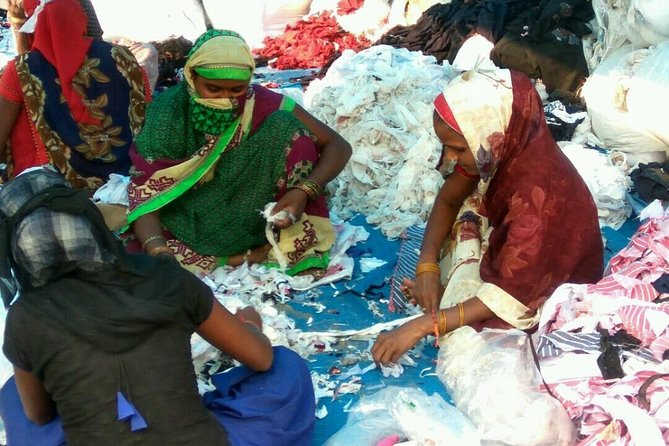
The first part of the walk introduces Sanjay Colony as a living neighborhood. The focus includes local livelihoods such as recycling and clothing work, two subjects that help explain how people earn money in the area.
The clothing industry is one of the more useful details to understand. Delhi’s garment economy is not limited to large factories or polished retail districts. Small-scale work can take place close to homes, and a guide can explain how these activities fit into family life and the local economy. You may see signs of work as you walk, but the value comes from the explanation rather than from simply passing a workshop.
Recycling is another important part of the conversation. It shows how work in the colony can connect with the wider city, while also making clear that income often depends on practical, demanding labor. The point is not to treat hardship as an attraction. It is to understand the skills and effort behind the streets you are walking through.
Your guide also discusses daily challenges, including access to water. This is a useful reminder that city life is not experienced in the same way by everyone. Something as basic as getting enough water can shape a family’s routine, and a local explanation gives the subject more meaning than a quick photograph ever could.
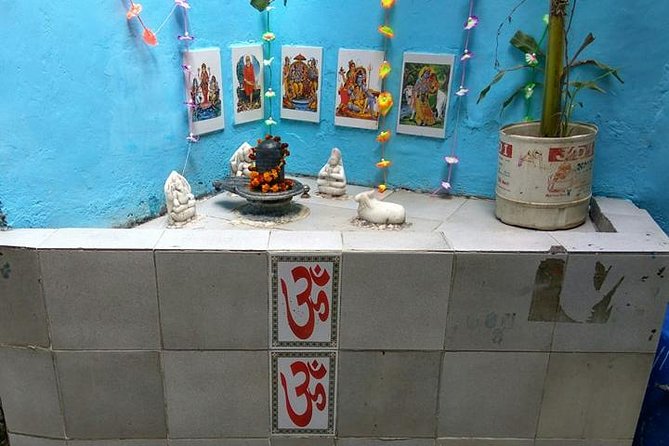
Home life, religion, and local customs also form part of the walk. You are expected to observe from public spaces and listen. The experience works best when you ask questions about systems and routines, rather than pressing residents for personal details.
Stop two: Learning by Locals and the work with young people
One of the most meaningful stops is Learning by Locals, a local NGO. The visit lasts about 15 minutes, but it gives the walk a clear human focus.
The organization’s work centers on youth education and empowerment. The tour can help you understand how community projects respond to gaps or challenges in the formal education system. Several visitors found this part especially moving, including one who described the education work as heartening after only a few days in India.
Guides named Badal and Sukhmani have been praised for explaining the work and helping people connect with the students and projects. Badal is also described as friendly and well informed about the community work. Guide availability can vary, so you should not assume that a particular person will lead your departure, but these names give you an idea of the local team associated with the experience.
This stop also helps keep the tour from becoming a simple look at poverty. You see not only the problems but also the effort being made to give young people more choices. That balance is important. Sanjay Colony is not presented as a place without ambition or community strength. The education work shows people building practical answers from within the neighborhood.
The visit may be the most memorable part for you if you care about schools, youth programs, or locally led social projects. It is also where respectful behavior matters most. Listen carefully, avoid making the children feel like photo subjects, and follow the guide’s lead about what is appropriate.
Same starting point, a completely different day out:
- Old & New Delhi City Tour – Half or Full Day Options Available
★ 5.0 · 4,811 reviews - Same Day Taj Mahal, Agra Fort & Baby Taj Tour from Delhi by Car
★ 5.0 · 4,304 reviews - Taj Mahal Day Tour from Delhi by Superfast Train – TOP RATED TOUR
★ 5.0 · 4,166 reviews - Full Day Taj Mahal, Agra Fort & Baby Taj Tour from Delhi by Car
★ 5.0 · 3,647 reviews
Stop three: the public school and Delhi’s education system
The group then views S.D.M.C. Primary School from outside. This is a short stop of about five minutes, so you should not expect a school tour or a long classroom visit.
Instead, the guide uses the building as a starting point for explaining the public education system. That may include the role of primary schooling and the opportunities and difficulties faced by children in the area. Since the school is viewed from outside, the value lies in the conversation, not in seeing the inside of the building.
This stop pairs well with Learning by Locals. One shows a community organization working with young people, while the other points to the formal public system. Together, they give you a more useful picture than either stop alone.
If education is your main reason for booking, keep your expectations realistic. The school portion is brief. The tour is a neighborhood walk with several themes, not a dedicated school visit.
Tea, water, and the pace of the walk
Local tea and a bottle of water are included. That is a small but welcome touch, especially during a Delhi walk where heat and dust can wear you down. You should still arrive hydrated, since the tour is close to two hours and the included bottle is not a substitute for planning ahead.
The tea also creates a simple point of contact with local life. It is not an elaborate meal or a cooking activity. Think of it as a short refreshment during a guided walk.
The pace appears suited to most visitors, and the activity information says most people can participate. Still, streets in a dense neighborhood may require attention underfoot and patience when the group pauses. If you are tired or recovering from illness, tell the operator in advance. One participant who became sick the day before described having an extra guide walk alongside her, which suggests the team may try to offer added support when circumstances allow, though this should not be treated as a guaranteed service.
Is $12 good value?
At $12 per person, this is inexpensive for a guided experience lasting about 1 hour 45 minutes. The price includes the local guide, tea, and water, while the real value comes from access to explanations and community projects you would be unlikely to understand by walking around alone.
A cheap tour is not automatically a good tour, especially in a residential area. Here, the small group limit and the connection with Learning by Locals make the price more appealing. You are paying for local interpretation, not for a list of famous sights.
The value is strongest if you want context. You’ll hear about work, water, religion, homes, and education in one compact outing. It is less suitable if you want a polished cultural show, extensive indoor visits, or a long stop at each site.
The tour has been highly rated, with a 4.9 score from 46 ratings and a 98 percent recommendation rate. That points to a consistently positive experience, particularly around the guides, the respectful tone, and the education work. Ratings cannot guarantee the exact guide or pace on your day, but they do support the idea that the format is working well for many people.
How to visit respectfully
A slum tour can raise a fair concern: are you learning about a community, or simply looking at hardship? The answer depends on how the tour is run and how you behave within it.
This experience is built around local guides, questions, the NGO, and discussion of everyday systems. That is a better foundation than a walk that treats homes as scenery. Still, you remain a visitor in someone else’s neighborhood.
Keep these habits in mind:
- Ask before taking photographs of people, homes, children, or workplaces.
- Do not block narrow paths or gather around residents.
- Listen to the guide before making judgments about housing, work, or family life.
- Avoid handing out sweets, money, or gifts unless the guide specifically explains an appropriate way to help.
- Wear modest clothing and keep your voice low.
- Treat the school and NGO as working places, not photo backdrops.
The most respectful question is often a practical one. Ask how a system works, what challenges people face, or how a local project helps. Avoid treating residents as examples of poverty. They are people living, working, studying, worshipping, and raising families in a demanding urban setting.
Who should book this experience?
I would recommend this walk to you if you want to understand Delhi through its people and local systems, not only through forts, tombs, and markets. It suits visitors who are comfortable listening, walking through a working neighborhood, and accepting that some parts of the experience may feel serious.
It is also a good match for anyone interested in education, community work, recycling, clothing production, or urban inequality. Parents and older children may find the education discussion useful, though the operator’s information does not give a specific minimum age.
You should think twice if you want a relaxed sightseeing stroll with guaranteed photo opportunities. The subject matter can be confronting, and the tour asks you to behave with care. It is also not the right choice if you expect a long school visit or a broad tour of every part of Sanjay Colony.
The small group makes it easier to keep the visit respectful. If you can, choose a time when you are not rushing to another appointment. The best questions often come after you have watched the neighborhood for a few minutes and noticed how work, school, worship, and home life share the same streets.
Final verdict: a thoughtful choice for the right visitor
Book this tour if you want a short, locally led introduction to life in Sanjay Colony, especially if the work of Learning by Locals interests you. The combination of neighborhood walking, community education, public schooling, and discussion of water and livelihoods gives the experience more substance than a quick look from a car window.
I especially value the local guides, the limited group size, and the link to youth education. The main condition is simple: arrive ready to listen and behave as you would in any residential community. At $12, it offers strong value for an experience that can change how you understand the city beyond its major sights.
FAQ
How long does the Sanjay Colony tour last?
The tour lasts approximately 1 hour and 45 minutes.
Where does the tour begin?
It begins at Harkesh Nagar Okhla Metro Station, Gate No. 2, in New Delhi.
Where does the tour end?
The standard end point is the Harkesh Nagar Okhla Metro Station area, at Metro Gate in G-16, Okhla Phase II.
What is included in the tour?
A local guide, local tea, and one bottle of water are included.
How many people can join?
The experience has a maximum of 10 travelers, with a maximum of 6 people per booking.
Does the tour visit a school?
The group views S.D.M.C. Primary School from outside and learns about the education system. The information does not describe an indoor school visit.
Can I cancel for a full refund?
Yes. You can cancel up to 24 hours before the experience start time for a full refund. Cancellations or changes made less than 24 hours before the start time are not accepted for a refund.
Newly reviewed around New Delhi
- Private Customized Tour Of Old/New Delhi Spiritual Sites★ 5.0 · 5 reviews
- Yoga and Meditation Classes in Gurgaon★ 4.5 · 8 reviews
- Yoga class in Delhi★ 5.0 · 29 reviews
- Old Town Delhi Walking Tour (2 Hours Guided Tour with Local)★ 4.5 · 22 reviews
- 5 Days Golden Triangle Tour with Ranthambore(Delhi Agra Jaipur Ranthambore Tour)★ 5.0 · 3 reviews
- Wonderful Old & New Delhi sightseeing tour★ 5.0 · 3 reviews
- Hidden Gems of Old Delhi – Walk★ 5.0 · 8 reviews
- Delhi Zoo White Tigers & lions with Old Fort Visit★ 4.5 · 5 reviews
Delhi Slum Tours, compared.


New Delhi Sanjay Colony slum Tour (Private Tour)
Read our review →
Moral Slum Tour in Delhi with hotel pickup & drop
Read our review →
Sanjay Colony Slum & Old delhi Street Food Tasting tour
Read our review →Browse the lists this tour appears in