
Reviewed · DELHI RICKSHAW & TUK TUK TOURS
Guided 3‑hour rickshaw ride through Old Delhi with transfers
Old Delhi is best understood from street level, where a bicycle rickshaw slips through lanes too tight for cars and every turn brings a market, shrine, workshop, or food stall. This tour links the district’s key sights with an English-speaking local guide and hotel pickup and drop-off.
I like the mix of Jama Masjid and Gurudwara Sis Ganj Sahib, since you see two important places of worship in one short outing. I also like the practical route through Chawri Bazaar, Kinari Bazaar, Chandni Chowk, and Khari Baoli, where shopping and daily life matter as much as monuments.
The main drawback is the pace. Three hours goes quickly, and the route includes walking, crowded streets, stairs if you choose the minaret at Jama Masjid, and time in markets where you may want to browse longer. The ₹450 Jama Masjid entrance fee is also extra.
Key points to know before booking
- Bicycle rickshaw access: Travel through narrow Old Delhi lanes that are difficult to reach by larger vehicles.
- Two major religious sites: Visit Jama Masjid and Gurudwara Sis Ganj Sahib, with modest clothing and shoe removal required.
- Market-focused route: See brass and paper goods at Chawri Bazaar, wedding decorations at Kinari Bazaar, and spices at Khari Baoli.
- Local guide quality matters: Guides named Akansha, Kanika, and Mona have been praised for friendly explanations and a good feel for the area.
- Hotel transfers included: Pickup and drop-off make this easier on a first Delhi morning, especially after an early arrival.
- Small-group format: The maximum group size is 12 people, which is useful in tight lanes and busy markets.
Why a rickshaw is the right way into Old Delhi
Old Delhi can feel overwhelming when you first arrive. Cars, pedestrians, bicycles, handcarts, shopkeepers, and motorbikes all compete for the same narrow spaces. A bicycle-driven rickshaw gives you a seat while still keeping you close to the action.
You will not glide through the district in silence. This is a noisy, crowded, sometimes rough-edged experience. That is also the point. From the rickshaw, you can look into shopfronts, watch goods move through the lanes, and see how the markets work without spending the whole tour trying to find your way.
The ride is mixed with walks at each stop. I would not treat this as a sightseeing ride only. Comfortable shoes matter, and you should expect to remove them at religious sites. Shoes and slippers are stored safely while you visit.
The group limit of 12 is reasonable for this setting. A larger group would be hard to keep together in the lanes, and a smaller group may feel more personal. The actual feel will depend on the day’s traffic and the guide assigned to you.
More rickshaw and tuk tuk rides in New Delhi:
- Old Delhi Food, Heritage&Cultural Walk with Rickshaw ride to Masterji Kee Haveli
★ 5.0 · 742 reviews - Delhi Food Walk: Rickshaw Ride, Street Eats & Market Tour
★ 5.0 · 401 reviews - 3-hour Old Delhi Heritage Walking tour with Rickshaw Ride
★ 5.0 · 240 reviews
Starting among the old trade lanes of Chawri Bazaar
The route begins at Chawri Bazaar, one of Delhi’s oldest markets. Its traditional trade centers on brass, copper, and paper products, giving the area a working character rather than a polished sightseeing feel.
You get about 15 minutes here. That is enough to take in the narrow lanes and old buildings, but not enough for a long shopping session. Look up as you move through the area. The architecture is part of the appeal, especially when it appears above the signs, wires, and merchandise.
This is a useful first stop because it sets the tone for the rest of the outing. You are not just being taken from one famous monument to another. You are seeing the commercial life that has kept Old Delhi moving for generations.
Jama Masjid and the choice to climb higher
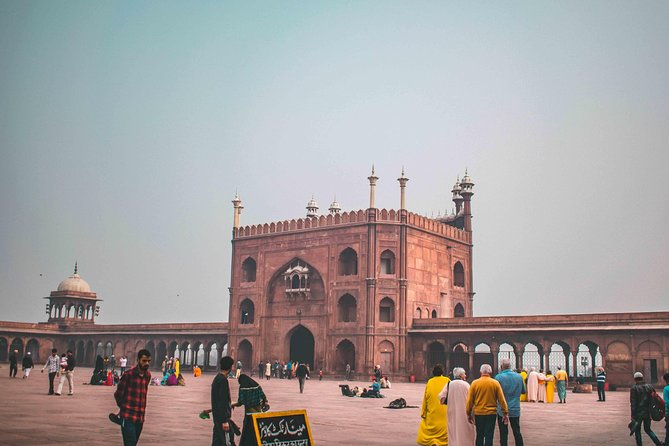
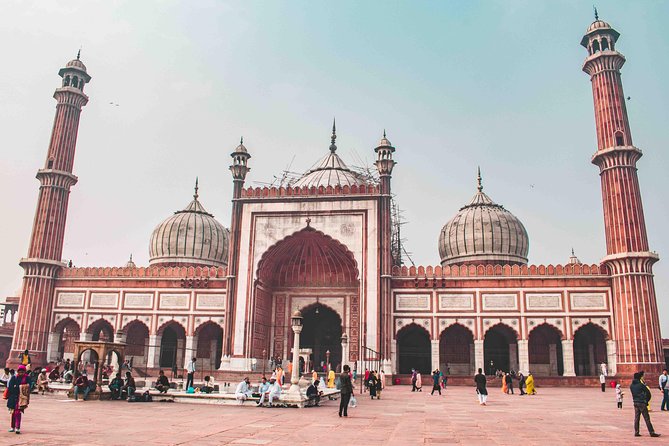
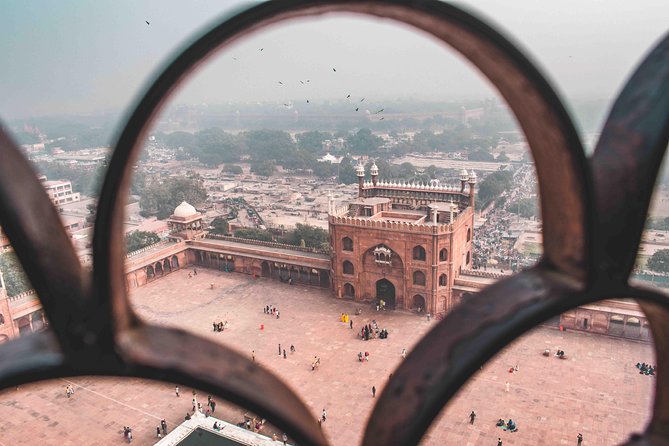
Jama Masjid is the tour’s major architectural stop. It is one of India’s largest mosques and a powerful example of Mughal design. You have about 30 minutes here, including time to look around and absorb the scale of the courtyard and buildings.
The entrance fee is not included. The stated charge is ₹450 per person, so add that to the advertised price when working out your budget. The tour price is $26.74 per person, which remains reasonable for a three-hour guided outing with transfers, but the extra mosque fee is worth noting before you book.
You may also choose to climb the minaret for a broad view over Old Delhi. This is optional, and the climb adds physical effort and can reduce the time available elsewhere. If you want the view, wear footwear that is easy to remove and carry.
Dress carefully for Jama Masjid and the other religious sites. Knees and shoulders must be covered. The rule applies to all places of worship on this route, not just the mosque.
Kinari Bazaar, where wedding goods fill the lanes
After Jama Masjid, the rickshaw heads toward Kinari Bazaar. This market is known for wedding accessories, including colorful and highly worked decorative items. The stop is brief, around 10 minutes, so think of it as a quick look rather than a serious shopping appointment.
Kinari Bazaar gives you a different view of Delhi’s commercial culture. Chawri Bazaar is tied to wholesale goods and supplies, while Kinari Bazaar focuses more on ceremony, decoration, and personal display.
You may find the narrow shops difficult to browse in detail during such a short visit. Keep your expectations practical. The value here is seeing the market in context and letting the guide point out what you are looking at, not completing a shopping list.
More Old Delhi tours:
- The Great Indian Food Tour: Old Delhi Food and Heritage Walk
★ 5.0 · 1,698 reviews - Old Delhi Bike Tour
★ 5.0 · 616 reviews - Old Delhi Street Food Tour
★ 5.0 · 497 reviews - Breakfast Walk in Old Delhi
★ 5.0 · 449 reviews
Naughara Gali and Old Delhi’s quieter architecture
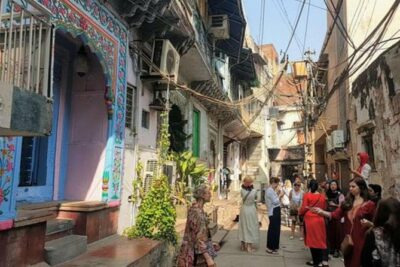
Naughara Gali offers a pause from the market traffic. The lane is known for old havelis, traditional Indian mansions with decorative details and an enclosed neighborhood feel.
The planned stop lasts about 15 minutes. This is one of the shorter architectural visits, but it helps break up the market sequence. After the noise and movement of Chawri and Kinari, a lane of older homes gives you a glimpse of how people once lived in this part of the city.
The tour does not promise an extended interior visit, so you should expect to admire the lane from outside. Your guide can help you notice details that are easy to miss while moving through a crowded district.
Gurudwara Sis Ganj Sahib and the meaning of langar
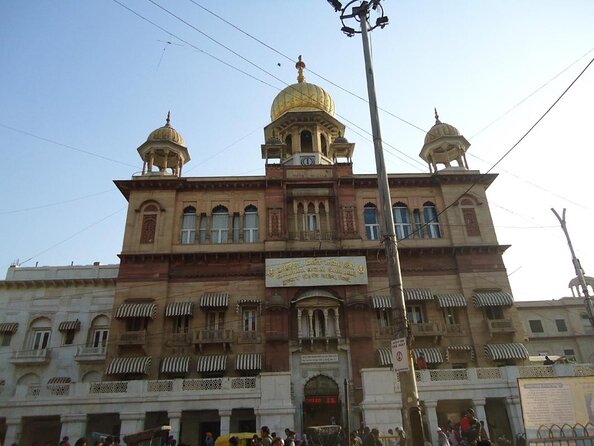
Gurudwara Sis Ganj Sahib is an important Sikh temple and one of the route’s most worthwhile stops. You have about 30 minutes here, enough to enter, look around, and learn why the site matters.
If possible, you may take part in langar, the community meal offered by the gurudwara. This is a meaningful part of Sikh practice, but availability and timing can vary, so do not treat it as guaranteed. Follow the temple’s instructions and dress respectfully.
You must remove your shoes or slippers here. They are stored for you, and you should plan on walking comfortably in the temple area. Knees and shoulders need to be covered.
This stop adds depth to the tour because it is not only about architecture. You are seeing a working place of worship and a community tradition. The guide’s role is especially useful here, since a short explanation can give the visit much more meaning than a quick look inside.
Chandni Chowk, street food, and controlled browsing
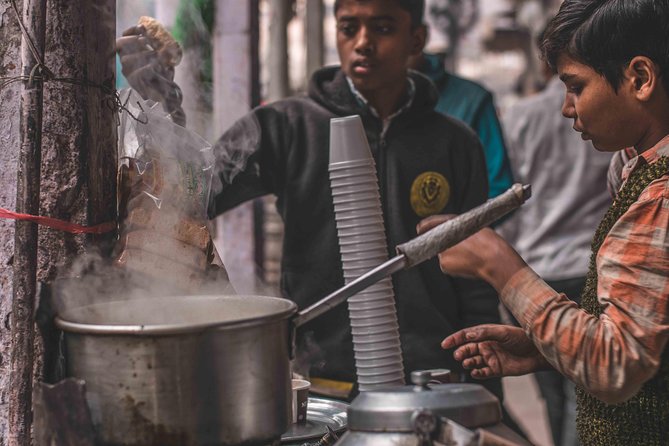
The rickshaw then passes through Chandni Chowk, one of Delhi’s oldest and busiest market areas. This is where the tour feels most energetic, with shops, food, clothing, souvenirs, and spices competing for your attention.
You have about 30 minutes in this area. The tour allows time to sample local snacks and shop, though the exact food stops are not specified. If you have dietary restrictions, ask the guide what is suitable before eating.
Chandni Chowk is not a place for a slow, quiet stroll. Stay close to the guide and keep your belongings secure. The rickshaw helps you cover more ground, but you will still walk through crowded sections.
I like this part of the route because it connects the historic sights with ordinary shopping and eating. You can see what people buy, how goods are displayed, and how quickly the character of one lane changes into the next. If you are hoping to purchase clothes or souvenirs, this is one of your best chances, but remember that the schedule is short.
Khari Baoli and the final wall of spices
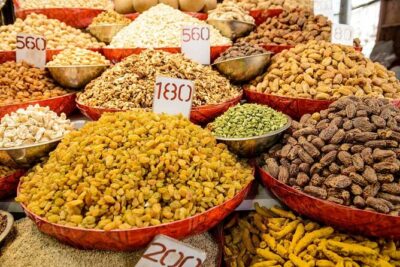
The ride ends at Khari Baoli, described as Asia’s largest spice market. You get around 30 minutes to walk through the area and buy spices if you wish.
This is a memorable final stop because the market is easy to experience with your senses. Look for sacks, displays, and the movement of goods as you walk. If you buy spices, ask about packing and transport before committing to a large quantity.
Khari Baoli is also a practical place to finish. After three hours of moving through Old Delhi, you can browse at your own speed for a little while instead of rushing straight back into a vehicle.
The market visit is not a cooking lesson or a formal tasting session. It is a chance to see a major trade center and shop with help from someone who understands the area. If you are unsure what to buy, ask the guide for suggestions, but make your own final choice and check the price carefully.
What the guides add to the experience
The quality of this tour depends heavily on the person leading it. Akansha has been singled out for making the outing enjoyable, and Kanika has been praised for being friendly, accommodating, and well informed without talking too much.
Kanika is also described as a native of Old Delhi, which can be especially useful in a district where a guide’s local familiarity affects the whole day. Mona has been described as friendly and able to coordinate well with the rickshaw driver, helping the route feel less chaotic.
Mona also led an outing that included a metro ride, additional rickshaws, and plenty of walking in rainy weather. That detail suggests the exact transport pattern may vary from the simple description of a single rickshaw ride. Your included experience is a rickshaw ride in Old Delhi, but urban conditions may require short changes in how you move around.
You should not assume you will receive a particular guide. Still, the named guides give you a useful idea of the service style to hope for: personal, friendly, locally grounded, and willing to explain rather than deliver a long lecture.
Is $26.74 a fair price?
At $26.74 per person, this is a solid value if you want transport, a guide, and a focused introduction to Old Delhi in one package. Hotel pickup and drop-off are included, which matters in Delhi traffic and saves you from arranging your own route into the old city.
The price is less attractive if you only want a short rickshaw ride or already know Old Delhi well. You will also pay ₹450 per person for Jama Masjid, and shopping or food purchases are additional.
For a first visit, I think the value comes from the structure. You get seven distinct areas in about three hours, rather than spending your morning trying to decide which lane or market to visit next. The tradeoff is limited time at each place.
The average booking time is 29 days ahead, so this is not usually a last-minute decision for many people. If your dates are fixed, reserving early is sensible, especially if you need hotel pickup.
Who should book this Old Delhi outing?
This tour suits you if you want a quick, guided introduction rather than a full-day study of the district. It is a good match for first-time visitors, families with older children, and anyone who would rather let a local guide handle the route.
It also works well early in a Delhi itinerary. One person arrived from Canada at 4 a.m. and had the tour arranged for 10 a.m., finding it a useful introduction despite heavy rain. That timing could be tiring, so plan your energy carefully, but the experience can help you get your bearings fast.
You should have a moderate level of physical fitness. The tour includes walking, crowded lanes, standing, shoe removal, and optional stairs at the mosque. It is not a pure seated ride.
This is less suitable if you dislike crowds, want a quiet museum-style tour, or need long, unhurried shopping stops. The route is busy by nature, and three hours leaves little room for delays.
Practical details that make the day easier
Wear clothing that covers your knees and shoulders. This is required at the places of worship and saves you from trying to adjust your clothing during the tour.
Choose comfortable walking shoes or slippers that you can remove without trouble. You will need to remove footwear at religious sites, and it will be stored safely while you visit.
Keep your shopping ambitions modest. Chawri Bazaar, Kinari Bazaar, Chandni Chowk, and Khari Baoli all invite browsing, but the schedule gives you only short windows. Pick one or two things you truly want rather than trying to shop every market.
The tour accepts mobile tickets and offers pickup. Confirmation is provided at booking, and the maximum group size is 12 people. Free cancellation is available up to 24 hours before the start time. Changes or cancellations inside that 24-hour window are not accepted for a refund.
Should you book it?
Book this tour if you want Old Delhi explained while you move through it, with hotel transfers and a manageable three-hour route. The combination of rickshaw travel, Jama Masjid, a Sikh temple, old lanes, and working markets gives you a useful first look at the district.
I would book it with realistic expectations. You will not see every corner, linger over every snack, or conduct a leisurely shopping trip. You will get a fast, crowded, sensory introduction led by a local guide, with the best value coming from the route and the time saved.
The strongest reason to choose it is the guide-led access to places that can feel confusing on your own. The main caution is the pace and the extra Jama Masjid fee. For a first morning in Delhi, those are reasonable tradeoffs.
FAQ
How long does the Old Delhi rickshaw tour last?
The experience lasts approximately three hours.
Is hotel pickup and drop-off included?
Yes. Hotel pickup and drop-off are included in the experience.
What is included in the price?
The price includes the Old Delhi rickshaw ride and an English-speaking local guide, along with hotel pickup and drop-off.
Is the Jama Masjid entrance fee included?
No. The Jama Masjid entrance fee is listed separately at ₹450 per person.
What should I wear to the religious sites?
Your knees and shoulders must be covered at all places of worship. You must also remove your shoes or slippers, which will be stored safely for you.
How many people can join the tour?
The maximum group size is 12 people.
Can I cancel for a full refund?
Yes, if you cancel at least 24 hours before the experience start time. Cancellations or changes made less than 24 hours before the start time are not accepted for a refund.
Newly reviewed around New Delhi
- Private Customized Tour Of Old/New Delhi Spiritual Sites★ 5.0 · 5 reviews
- Yoga and Meditation Classes in Gurgaon★ 4.5 · 8 reviews
- Yoga class in Delhi★ 5.0 · 29 reviews
- Old Town Delhi Walking Tour (2 Hours Guided Tour with Local)★ 4.5 · 22 reviews
- 5 Days Golden Triangle Tour with Ranthambore(Delhi Agra Jaipur Ranthambore Tour)★ 5.0 · 3 reviews
- Wonderful Old & New Delhi sightseeing tour★ 5.0 · 3 reviews
- Hidden Gems of Old Delhi – Walk★ 5.0 · 8 reviews
- Delhi Zoo White Tigers & lions with Old Fort Visit★ 4.5 · 5 reviews
Delhi Rickshaw & Tuk Tuk Tours, compared.
Old Delhi Food, Heritage&Cultural Walk with Rickshaw ride to Masterji Kee Haveli
Read our review →
Delhi Food Walk: Rickshaw Ride, Street Eats & Market Tour
Read our review →
3-hour Old Delhi Heritage Walking tour with Rickshaw Ride
Read our review →
Private Full Day Old And New Delhi City Tuk Tuk Tour
Read our review →
3-4 Hour Old Delhi Heritage Walk Tour with Tuk Tuk Ride Wherever Required
Read our review →
Half-Day Food Tour with Cycle Rickshaw ride to Masterji Kee Haveli
Read our review →Browse the lists this tour appears in