
Reviewed · RAJASTHAN TOURS FROM DELHI
8-Day Golden Triangle & Rajasthan Private Tour from Delhi
The most striking feature here is the sheer sweep of the route. In eight days, you move from Delhi’s Mughal monuments to the Taj Mahal, Jaipur’s pink sandstone, the Thar Desert, Jodhpur’s blue streets, and Udaipur’s lakes. A private car and driver keep the schedule under your control, while local guides handle the major sights.
I like two things in particular: the sunrise Taj Mahal visit gives you the best chance of seeing Agra’s great monument in soft morning light, and the tour adds memorable activities beyond palace-hopping, including a rickshaw ride near Jama Masjid, a camel safari in Jaisalmer, and a boat ride on Lake Pichola. The main drawback is the pace. Several days cover long distances, and many entrance fees are extra.
Key points at a glance
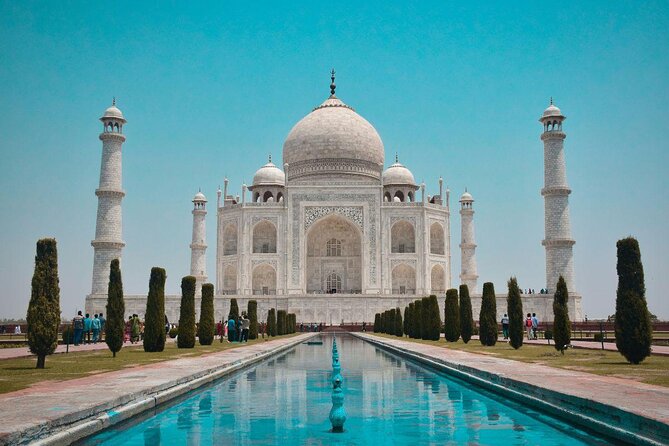
- A full north India sweep: Delhi, Agra, Jaipur, Bikaner, Jaisalmer, Jodhpur, and Udaipur appear in one eight-day route.
- Private travel only: Your group gets its own air-conditioned sedan or SUV, driver, and sightseeing guides.
- Early start in Agra: The Taj Mahal visit begins around 5:30 a.m., a worthwhile trade for cooler weather and better light.
- Desert activities included: The Jaisalmer section includes a camel safari, jeep safari, and cultural folk performances.
- Hotel choice affects the price: You can select three-star, four-star, or five-star accommodation.
- Budget carefully for admissions: Many forts, palaces, museums, and monuments charge fees that are not included.
What this eight-day Rajasthan tour is really like
This is not a slow, single-city holiday. It is a high-mileage introduction to northern India, built for someone who wants to see a lot without arranging each hotel, transfer, and guide separately.
The route begins in Delhi and ends in Udaipur, so you do not return to your starting point. That is efficient for sightseeing, though you should plan your international flight or onward journey from Udaipur. The tour includes seven hotel nights, seven breakfasts, airport or hotel pickup in Delhi, and a drop-off at Udaipur Airport or station.
The private format matters. You are not tied to the pace of a large bus group, and only your own party joins the activity. You can ask your driver to pause when you need a break, though the overall schedule remains demanding because so much ground is covered.
A previous booking included a driver named Amit, described as caring and skilled behind the wheel. That detail is worth noting because the driver is a major part of a route with several long road days. Guide names are not provided in advance, and the guide may change from city to city.
More Rajasthan circuits from New Delhi:
- 12-Days – Splendors of Golden Triangle & Rajasthan
★ 5.0 · 72 reviews - 14 Days Golden Triangle with Wildlife Safari & Heritage Rajasthan
★ 5.0 · 37 reviews - Private Golden Triangle Tour With Jodhpur From Delhi
★ 5.0 · 22 reviews
Day one: Delhi’s Mughal monuments and modern symbols
The first day starts with a welcome at Delhi airport or your hotel, followed by transfer to your accommodation. Sightseeing includes Jama Masjid, Qutub Minar, Raj Ghat, Humayun’s Tomb, and the Lotus Temple.
Jama Masjid gives you an immediate sense of Old Delhi. The red sandstone and white marble mosque dates to the Mughal period, and the nearby rickshaw ride is a practical way to get through the crowded lanes around the mosque. It is one of the tour’s more local-feeling touches, though you should expect noise, traffic, and plenty of visual activity.
Qutub Minar is a major early monument, with a tall decorated minaret forming part of the Qutb complex. The scheduled visit is only about 30 minutes, so you will get an overview rather than a long archaeological visit. Admission is not included.
At Raj Ghat, the mood changes. This simple black marble platform marks the cremation site of Mahatma Gandhi. The stop is short and free, but it offers a quiet pause between Delhi’s larger monuments.
Humayun’s Tomb deserves its hour. Its formal garden setting and Mughal design help you understand the architectural ideas that later reached their most famous form at the Taj Mahal. The Lotus Temple provides a sharp contrast: a modern Bahá’í House of Worship shaped like a white lotus. Both Humayun’s Tomb and Qutub Minar list admission as extra, so keep cash or payment options ready for sightseeing costs.
This is a packed opening day. If your arrival is late or you are tired from a long flight, you may appreciate the hotel transfer more than the full sightseeing schedule. The order and timing may need adjustment.
Day two: the Taj Mahal at sunrise and Agra’s Mughal story
The early start is one of the tour’s best choices. Your guide is scheduled to meet you at about 5:30 a.m. for the Taj Mahal, where you have roughly three hours. That gives you time to see the monument from different angles rather than rushing through a brief photo stop.
The Taj Mahal is best approached as more than a famous photograph. Its changing light, white marble details, gardens, and position beside the Yamuna River reward a slower visit. The early hour also avoids the heat of later morning, though the start can be tough after a busy Delhi day.
Agra Fort follows, with about an hour inside the former Mughal imperial residence. The fort is not simply a defensive wall. Its courtyards, palaces, and elevated views help explain the power of the rulers who commissioned the Taj Mahal. Admission is extra.
After lunch, you visit Itmad-ud-Daula, often called the Baby Taj. This smaller tomb is useful for seeing delicate inlay work and design details at a closer scale. Mehtab Bagh, across the Yamuna, then gives you a different view toward the Taj Mahal.
The day is well balanced in subject, but not in sleep. I would treat the afternoon as your last major sightseeing push in Agra. The tour includes the major sites, but it does not leave much spare time for wandering bazaars or sitting over a long meal.
Day three: Jaipur’s forts, palace, and astronomical instruments
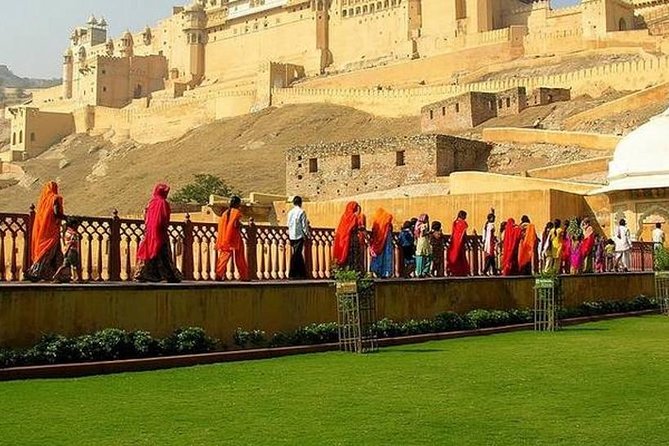
After breakfast, the route continues to Jaipur, known as the Pink City. The day centers on Amber Fort, Jal Mahal, the City Palace, Jantar Mantar, and Hawa Mahal.
Amber Fort gets about two hours, which is appropriate for a large hilltop complex with courtyards, gateways, and royal rooms. It is the day’s biggest sight, so pay attention to the walking and stairs involved. The schedule does not list an elephant ride, which is a positive point for anyone who wants to visit the fort without adding that activity.
Jal Mahal is a short photo stop at Man Sagar Lake. The palace sits in the water, and the view is brief rather than a full interior visit. After lunch, the City Palace provides the clearest look at Jaipur’s royal administration and residence.
Jantar Mantar is more than a collection of unusual stone shapes. Its large instruments were designed for astronomical observations, and the site shows how science and royal government worked together in eighteenth-century Jaipur. The visit is scheduled for about 30 minutes, so ask your guide to explain how the instruments were used.
Hawa Mahal, the Palace of Wind, is another short stop. Its pink and red sandstone facade is best appreciated from outside, where the many small windows create the building’s distinctive pattern. Admission fees for Amber Fort, City Palace, and Jantar Mantar are not included.
Jaipur gives you a lot in one day, but the schedule favors highlights over long museum visits. You will see the city’s signature sights, then leave with plenty more to explore if you return on a slower trip.
More Golden Triangle routes from New Delhi:
- 3-Days Private Golden Triangle Tour: Delhi, Agra & Jaipur by Car
★ 5.0 · 1,107 reviews - 3-Days Private Golden Triangle Tour: Delhi, Agra & Jaipur by Car
★ 5.0 · 1,098 reviews - 3-Day Delhi, Agra and Jaipur Private Tour – India Golden Triangle
★ 5.0 · 812 reviews - Four-Day Private Luxury Golden Triangle Tour to Agra and Jaipur From New Delhi
★ 5.0 · 807 reviews
Day four: Bikaner and an unusual temple visit

The road to Bikaner takes about four and a half hours, with departure after breakfast. That transfer is a reminder that this is a road tour, not a rail-based or flight-assisted route. You check into the Bikaner hotel around midday, then continue sightseeing after lunch.
Junagarh Fort is the main attraction. Unlike many hilltop forts, it is set in the city rather than high on a ridge. Its interiors, courtyards, and royal rooms make it a strong stop for architecture and court life. Admission is extra.
Karni Mata Temple is the day’s unusual experience. It is dedicated to Karni Mata, whom local belief identifies with the goddess Durga, and is widely known for its resident rats. This is not a standard palace visit, and it may not suit everyone. If you are uncomfortable with animals in a religious setting, you should know what to expect before entering.
Lalgarh Palace and Museum adds an Indo-Saracenic royal building to the day. The one-hour visit gives you another look at Rajasthan’s princely era, this time through a palace designed in the early twentieth century.
Bikaner is a useful change of pace after Jaipur. The schedule gives you a taste of the city, though the four-and-a-half-hour drive means you will spend a good part of the day in the car.
Day five: Jaisalmer’s golden stone and the desert
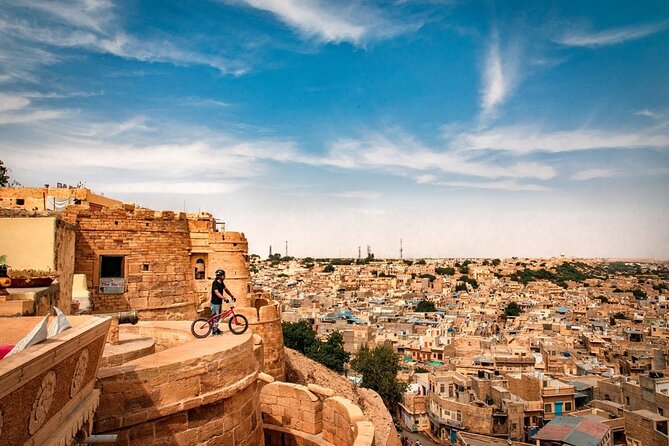
Jaisalmer brings a different setting and a more dramatic change in color. The city is built from warm sandstone, and Jaisalmer Fort remains the center of the visit. Allow about two hours for the fort, then continue to Patwon-ki-Haveli, Salim Singh-ki Haveli, and Gadisar Lake.
Patwon-ki-Haveli is a cluster of five ornate residences built by the wealthy Patwa family. It is a good place to look closely at carved stonework rather than simply photographing a large facade. Salim Singh-ki Haveli provides another example of Jaisalmer’s elaborate merchant architecture.
Gadisar Lake is a short, quieter stop. It was built as an artificial water source and later rebuilt, and it helps explain how a desert city supported itself. The listed visit is only about 30 minutes.
The desert program begins around 3:30 p.m. at Sam Dunes. You get a camel safari, jeep safari, and cultural folk dance performances. This is the tour’s most activity-focused section, and it adds something that a standard fort tour cannot.
The timing is tight. After the desert activities, the schedule calls for a drive of about three and a half hours to Jodhpur, with arrival later in the evening. You should expect a long day, and you may want to keep a small overnight bag easy to reach rather than unpacking everything at each hotel.
Day six: Mehrangarh Fort and Jodhpur’s royal past
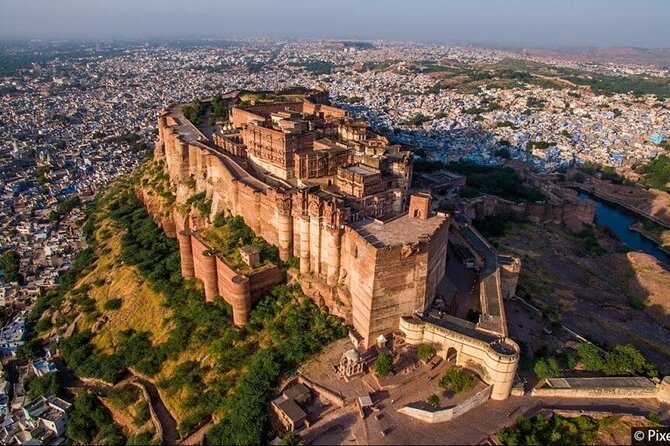
Jodhpur, often called the Blue City, receives a full sightseeing day. Mehrangarh Fort is the centerpiece, with about two hours scheduled. Its high position gives you broad views over the city, while the palaces inside show the wealth and ceremony of Jodhpur’s rulers.
Jaswant Thada follows. This white marble cenotaph was built in 1899 in memory of Maharaja Jaswant Singh II. It is smaller and more peaceful than Mehrangarh, and the contrast makes the two stops work well together.
Ghanta Ghar, the clock tower, offers a quick landmark visit in the old part of the city. The tower was built in the nineteenth century and remains a recognizable part of Jodhpur.
Umaid Bhawan Museum completes the day. The palace is one of the world’s largest private residences, and part of the building is managed by Taj Hotels. The museum visit gives you another angle on Rajasthan’s later royal period, though the admission fee is extra.
This is a strong day for anyone who prefers grand buildings and royal stories. It is less focused on markets or free time, so tell your guide if you would rather linger in one area than collect several short stops.
Day seven: Udaipur by boat, palace, and garden
The final sightseeing day is in Udaipur, where water changes the mood of the trip. A one-hour boat ride on Lake Pichola is included, giving you views across the lake and toward the city’s palaces and waterfront buildings.
The City Palace of Udaipur then fills in the royal story. Its construction took place over nearly four centuries, so the complex contains several layers of design. You have about an hour, enough for a useful visit but not every corner.
Jagdish Temple is a working Hindu temple in the center of Udaipur. It has been in continuous worship since 1651, so approach it as a religious site as well as a tourist attraction. Dress and behavior should be respectful.
Sahelion-ki-Bari offers a change from stone and royal rooms, with fountains, kiosks, a lotus pool, and marble elephants. Fateh Sagar Lake adds another short waterfront stop.
Bagore Ki Haveli Museum is scheduled for about an hour and a half in the evening. Located near Gangori Ghat on Lake Pichola, the eighteenth-century haveli provides a fitting final visit after the boat ride and palace. Admission is not included.
Udaipur is a pleasant place to end the route, but the trip gives you only one main sightseeing day there. If lakeside time matters most to you, consider staying an extra night after the tour ends.
What the price includes, and what it does not
At about $492.41 per person, the value depends heavily on the number of people in your group and the hotel category you select. The price covers seven nights, a private air-conditioned car, driver, sightseeing guides, seven breakfasts, taxes, tolls, parking, service charges, bottled water, and the three special activities.
That is a useful bundle for a route this complicated. Booking each hotel, intercity transfer, local guide, and desert activity separately would take time, and the private vehicle removes the need to solve every transfer on your own.
The price does not include anything outside the stated plan. Most major admissions are separate, including the Taj Mahal, Agra Fort, Jaipur’s main monuments, Rajasthan’s forts, and several museums. Meals beyond the seven breakfasts are also not listed as included.
The three-star, four-star, and five-star choices let you control the total cost. I would choose based on how much time you expect to spend at the hotels. With this schedule, much of each day is spent sightseeing or driving, so the highest hotel category may not be the best use of your budget unless hotel comfort is a major priority.
Who should book this private route?
I would recommend it to a first-time visitor who wants the major sights of Delhi, Agra, and Rajasthan without managing a complicated series of bookings. It also suits families and groups of friends because the vehicle and guides are private, and group discounts may be available.
You should be comfortable with early mornings, long drives, changing hotels, and a full sightseeing schedule. The tour is not ideal if you want two or three quiet days in each city, or if your main goal is independent wandering.
Most people can participate, and pickup is offered from Delhi airport or hotel. The tour ends with a drop-off at Udaipur airport or station, which makes it useful for continuing your trip from there.
The cancellation terms are flexible if your plans change: you can receive a full refund by canceling at least 24 hours before the start time. Changes or cancellations inside that window are not accepted for a refund.
Should you book it?
Book this tour if you value coverage, private transport, and simple logistics more than a relaxed pace. The sunrise Taj Mahal, Jaisalmer desert activities, and Lake Pichola boat ride give the route memorable variety, while the driver and guides remove much of the stress from a demanding region.
Think twice if you dislike long road days or want entrance fees and meals bundled into one final price. For the right group, especially four or more people sharing a private vehicle, the tour offers a practical way to see a remarkable amount of northern India in eight days.
FAQ
How long is the tour?
The experience lasts approximately eight days and includes seven nights of hotel accommodation.
Where does the tour begin and end?
It begins with pickup at Delhi airport or a Delhi hotel and ends with drop-off at Udaipur airport or station.
Is the tour private?
Yes. Only your own group participates, with a private air-conditioned sedan or SUV and a private guide for sightseeing.
Which hotel categories are available?
You can choose three-star, four-star, or five-star accommodation, depending on the option booked.
Are meals included?
Seven breakfasts are included. Other meals are not listed as included.
Are monument entrance fees included?
No. Admission fees for many monuments, forts, palaces, and museums are extra.
Newly reviewed around New Delhi
- Private Customized Tour Of Old/New Delhi Spiritual Sites★ 5.0 · 5 reviews
- Yoga and Meditation Classes in Gurgaon★ 4.5 · 8 reviews
- Yoga class in Delhi★ 5.0 · 29 reviews
- Old Town Delhi Walking Tour (2 Hours Guided Tour with Local)★ 4.5 · 22 reviews
- 5 Days Golden Triangle Tour with Ranthambore(Delhi Agra Jaipur Ranthambore Tour)★ 5.0 · 3 reviews
- Wonderful Old & New Delhi sightseeing tour★ 5.0 · 3 reviews
- Delhi Zoo White Tigers & lions with Old Fort Visit★ 4.5 · 5 reviews
- Hidden Gems of Old Delhi – Walk★ 5.0 · 8 reviews
Rajasthan Tours from Delhi, compared.

12-Days – Splendors of Golden Triangle & Rajasthan
Read our review →
14 Days Golden Triangle with Wildlife Safari & Heritage Rajasthan
Read our review →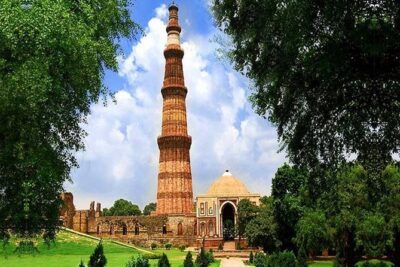
Private Golden Triangle Tour With Jodhpur From Delhi
Read our review →
12 Days Golden Triangle With Udaipur Jodhpur Jaisalmer Pushkar
Read our review →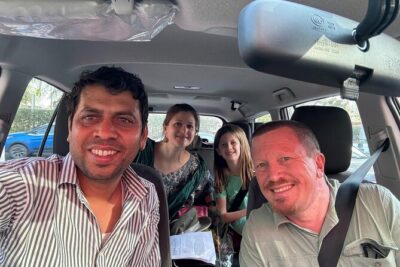
7-Days Private Golden Triangle with Pushkar Yoga Spiritual Tour
Read our review →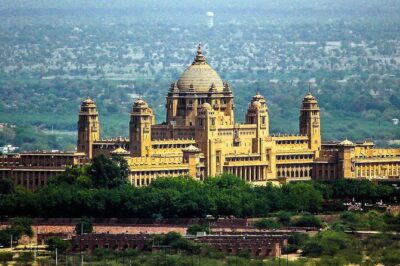
Rajasthan:- Maharaja Places of Royal Rajasthan 07- Days Tour
Read our review →
8 Days Delhi Agra Ranthambore Udaipur Jaipur Delhi Tour(Taj, Tigers & Lakes)
Read our review →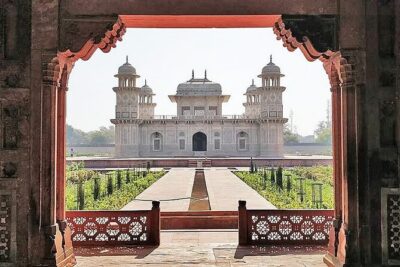
Golden Triangle India: 5-Day Delhi, Agra, Jaipur & Pushkar Tour
Read our review →Browse the lists this tour appears in