
Reviewed · GOLDEN TRIANGLE TOURS FROM DELHI
3 Days Golden Triangle Private Tour
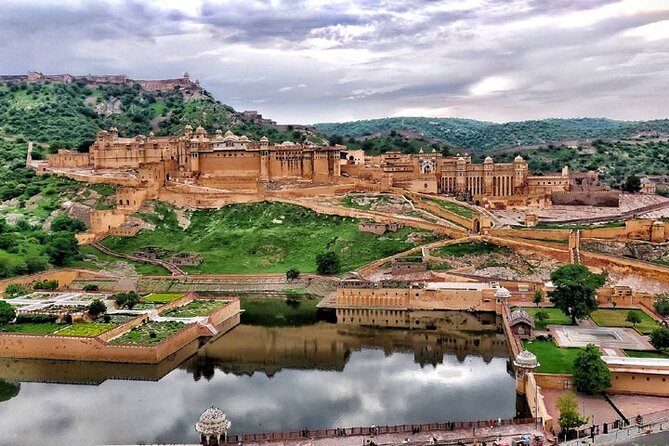
The Taj Mahal at sunrise is the centerpiece, but this three-day Golden Triangle tour packs in far more: Old Delhi’s lanes, Mughal tombs and forts, Jaipur’s pink sandstone sights, and the great stepwell at Abhaneri. You travel in a private air-conditioned car, with a guide in each city rather than one person trying to cover every stop.
I like the flexible package choices, since you can select guiding only, transport with guiding, or a fuller option with hotels, meals, and monument tickets. I also like the guide flexibility: visitors who had already seen planned sights were able to switch stops, and guides such as Rahul in Delhi, Priya in Agra, and Arbab in Jaipur were praised for clear explanations and helpful service.
The main caution is the pace. Day 1 covers much of Delhi before a roughly three-hour drive to Agra, and Day 3 ends with about five hours on the road back to Delhi or a Jaipur airport drop-off. The $20 starting price needs careful checking, since hotels, tickets, meals, and transport depend on the option you choose.
Key points to know before booking
- Sunrise at the Taj Mahal: An early start gives you the tour’s most memorable monument in cooler, softer light.
- Private car between three cities: Air-conditioning, fuel, tolls, and parking are covered in the transport option.
- Old Delhi by rickshaw: Chandni Chowk and Jama Masjid come with a short ride through the lanes of Shahjahanabad.
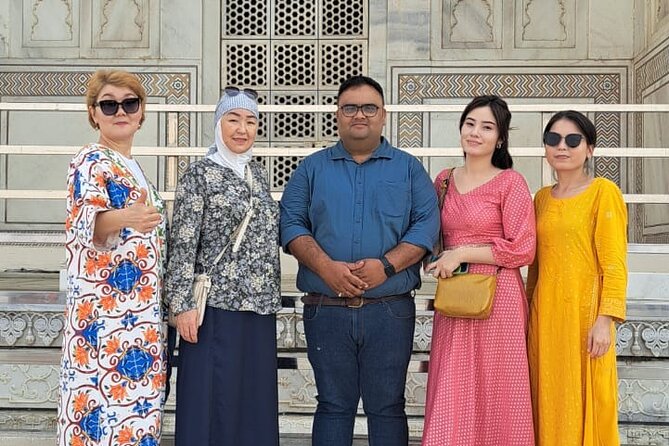
- Three separate city guides: Guide names can vary, but Rahul, Priya, and Arbab were among the guides assigned on past departures.
- Flexible inclusions: The all-inclusive choice can cover entrance tickets, two breakfasts, two dinners, and hotel stays.
- A very full schedule: You see a lot, but this is not a slow, leisurely tour.
What the three-day route really covers
This is a classic Golden Triangle circuit, linking New Delhi, Agra, and Jaipur. The route works well if you have only three days and want the main monuments handled for you, especially if arranging a car, hotels, entrance tickets, and local guides feels like too much work.
The tradeoff is time. You are not settling into one city for several days. Instead, you spend long stretches moving between sights and cities, with the biggest concentration of stops on the first day. I would treat this as an efficient introduction to northern India, not a restful holiday.
The private format matters. Only your group takes part, and the vehicle includes fuel, tolls, and parking when transport is selected. You can also request pickup and drop-off assistance, which is useful when your arrival point, hotel, or departure airport does not fit a standard group schedule.
More Golden Triangle routes from New Delhi:
- 3-Days Private Golden Triangle Tour: Delhi, Agra & Jaipur by Car
★ 5.0 · 1,107 reviews - 3-Days Private Golden Triangle Tour: Delhi, Agra & Jaipur by Car
★ 5.0 · 1,098 reviews - 3-Day Delhi, Agra and Jaipur Private Tour – India Golden Triangle
★ 5.0 · 812 reviews
Day 1: Qutub Minar and Delhi’s grand avenues
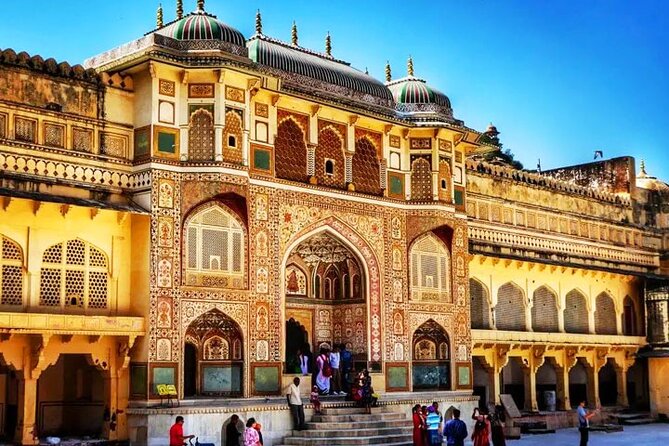
The first Delhi stop is Qutub Minar, a UNESCO World Heritage site built in 1193 by Qutub-ud-din Aibak, founder of the Delhi Sultanate. Its tall, carved tower and spiral staircase give the guide plenty to explain about early Islamic rule in Delhi.
You have about an hour here. The admission is listed as free within the tour plan, though you should confirm exactly what your selected package covers before booking. Qutub Minar is one of the day’s strongest historical stops, so do not rush past the carved details while focusing only on the tower’s height.
Next comes Lotus Temple, with roughly 30 minutes for its flower-shaped exterior. Built in 1986, it offers a sharp change from Delhi’s medieval monuments. The short visit is enough for a look and photographs, but not a long interior experience.
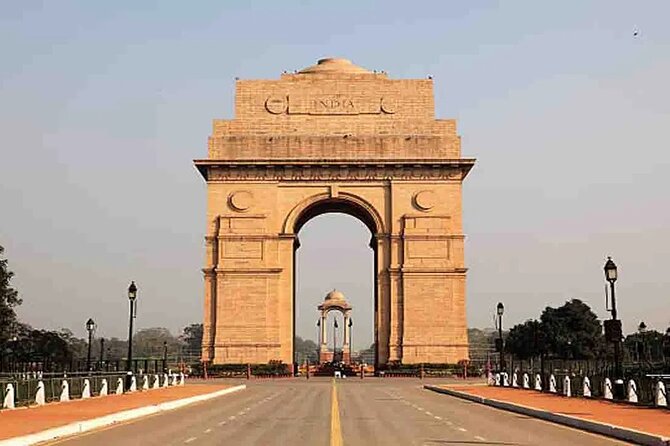
India Gate follows, with about an hour. This war memorial honors Indian soldiers who died in battle while serving under British rule. Its position beside Rajpath gives you a view of Delhi’s ceremonial core, and the stop helps explain the city’s modern political identity.
The route then passes Parliament House, also called Sansad Bhavan, and Rashtrapati Bhavan, the President of India’s official residence. Each stop is listed at around 30 minutes. You should expect an exterior visit and guided explanation rather than a full tour inside the working government buildings.
These stops are useful because Delhi is not only a city of forts and tombs. Its wide avenues, government buildings, and memorials tell a different story, one shaped by British rule and modern Indian government. The contrast works well when a guide keeps the commentary focused.
Day 1: Small monuments and Mughal Delhi
Agrasen Ki Baoli is a quick 15-minute stop, but it may be one of the day’s most unusual. This medieval stepwell measures about 60 meters long and 15 meters wide, with descending steps built to reach stored water.
The brief visit means you will not spend long studying it, but the site adds variety to the itinerary. It is also a good reminder that old Delhi’s engineering achievements are not limited to palaces, domes, and defensive walls.
Humayun’s Tomb gets about an hour and is one of Delhi’s essential monuments. Commissioned in 1558 by Bega Begum for her husband, the Mughal emperor Humayun, the tomb is a major early Mughal work. Its formal gardens and large central structure help you understand the design ideas later used at the Taj Mahal.
From there, the tour moves into Old Delhi. Chandni Chowk is a market district filled with spices, dried fruit, silver jewelry, and saris. The narrow lanes can feel intense, especially after a morning of formal monuments, but this is where the city becomes more immediate and street-level.
Jama Masjid, built by Shah Jahan between 1650 and 1656, follows with about an hour. It is one of India’s largest mosques and sits close to the old Mughal center. Dress and entry rules can matter at religious sites, so listen closely to your guide and allow time for the visit rather than treating it as a quick photo stop.
A rickshaw ride through Old Delhi takes about 30 minutes. This is a smart addition because walking through every lane would take much longer, while riding gives you a moving look at the market district. It also breaks up the day’s walking.
The Red Fort is included in the Delhi route, though the schedule gives it only about 30 minutes. Shah Jahan’s fort served as the Mughal emperors’ main home for almost 200 years, until 1856. Thirty minutes is enough for an overview, but you should not expect to see every museum or courtyard.
The road to Agra and the first night
After lunch at a nearby restaurant, you take the Yamuna Expressway toward Agra. The listed drive is about three hours, so this is the point where the day catches up with you.
The private vehicle makes this transfer easier than arranging separate trains, taxis, and local rides. Air-conditioning, parking, fuel, and tolls are included when the transport option is selected. Mineral water is also provided during the trip.
After checking into your Agra hotel, the rest of the evening is free. Hotel accommodation is included only if you choose the package that contains it, so check the exact booking option rather than assuming the $20 starting price covers a room.
A few more New Delhi day trips worth putting side by side
- 3-Day Private Luxury Golden Triangle Tour to Agra and Jaipur From New Delhi
★ 5.0 · 424 reviews - 3-Day Luxury Golden Triangle Tour: New Delhi, Agra & Jaipur
★ 5.0 · 246 reviews - Award-Winning 3-Day Private Golden Triangle Tour of India
★ 5.0 · 240 reviews - 3-Day Private Golden Triangle Tour to Agra &Jaipur from New Delhi
★ 5.0 · 116 reviews
Day 2: The Taj Mahal at sunrise
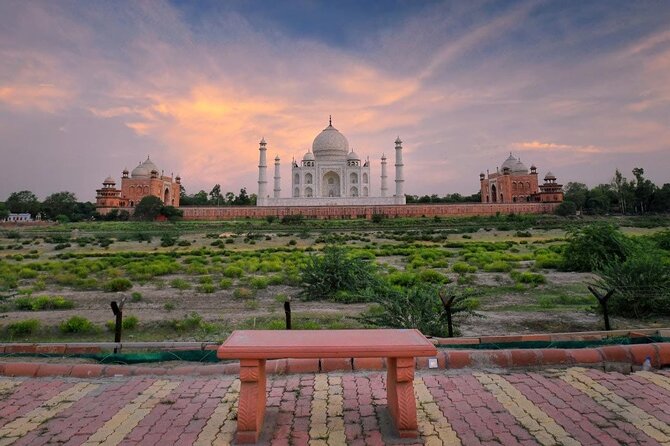
The early Taj Mahal visit is the reason many people choose this route. You begin before the day gets hot and spend about three hours at the monument, including a guided visit of roughly two hours inside the complex.
The Taj Mahal is a UNESCO World Heritage site and the tour’s best chance for a calm, focused experience. The guide can explain its design and place it within Mughal architecture, while you have time to look beyond the famous front view.
The early start does require discipline. If you prefer late mornings, this may be the toughest part of the schedule. Still, the cooler air and morning light make the effort worthwhile, and the long allotted visit gives you more than a quick stop for photographs.
Agra Fort comes next, with about an hour. This UNESCO World Heritage site is more than a military structure. Its apartments, courtyards, and views toward the Taj Mahal help connect Agra’s imperial power with the monument you have just seen.
Itmad-ud-Daula, often called the Baby Taj, receives about 30 minutes. The Mughal monument includes a main building, gardens, and smaller structures. It is a shorter visit, but it adds another layer to Agra’s architectural story and gives you a quieter contrast to the Taj Mahal.
Chand Baori and the move to Jaipur
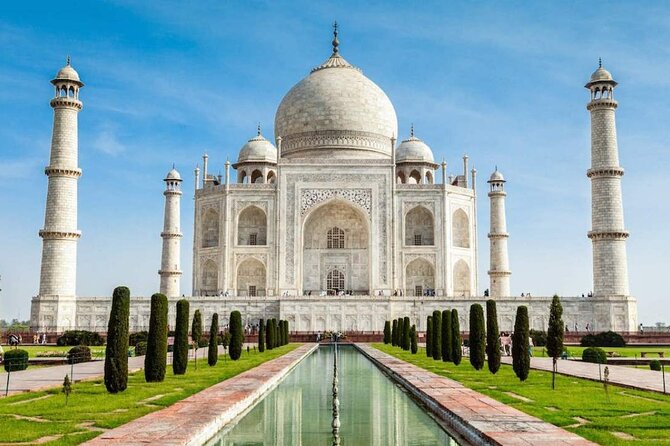
After Agra, the route continues to Chand Baori at Abhaneri. This enormous stepwell dates from the eighth or ninth century and has about 3,500 steps leading down toward the water.
The hour here is well used. Chand Baori is visually different from the Mughal monuments, with its precise repeated steps and dramatic depth. It is also the kind of place that benefits from a guide who can explain how a water structure shaped daily life, rather than leaving you with only a set of impressive photographs.
The drive continues to Jaipur, with arrival and hotel check-in listed at about five hours. That is a long transfer after the sunrise start and Agra sightseeing. You may have little energy left for independent evening plans, but the route avoids arranging another intercity journey yourself.
The night in Jaipur depends on your selected package. Breakfast and dinner are listed as included in the fuller option, with two of each across the tour. Confirm the hotel standard, meal arrangements, and exact inclusions before paying, since the advertised starting price does not represent every package level.
Day 3: Jaipur’s stepwell, lake palace, and royal center
The final sightseeing day begins with Panna Meena ka Kund, a stepwell near Amber Fort. The stop is only about 15 minutes, so expect a quick look rather than a long visit.
Jal Mahal follows at Man Sagar Lake. The palace sits in the middle of the lake and was expanded and refurbished in the 18th century by Maharaja Jai Singh II of Amber. The schedule allows about 30 minutes, enough to view the building from the shore and hear its place in Jaipur’s royal story.
Jaipur’s City Palace receives an hour. Built in 1721, it served as the official and ceremonial home of the Maharaja of Jaipur. This is one of the day’s main stops, with palace buildings and spaces connected to religious and cultural events.
Jantar Mantar is next, with another hour. Built in 1734, this UNESCO World Heritage site contains 19 large astronomical instruments. The structures can look abstract at first, so a guide adds real value by explaining how they measured time and tracked the heavens.
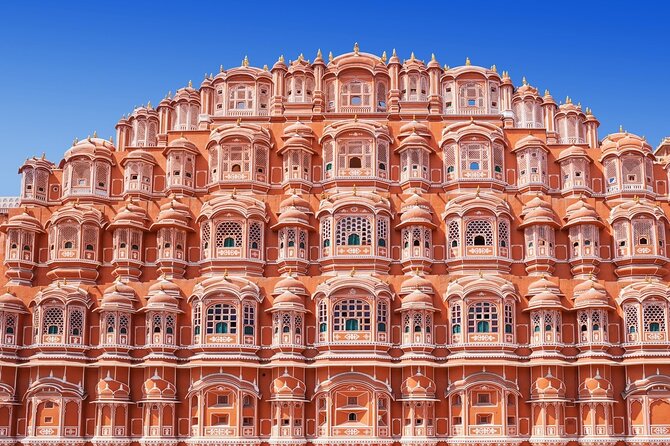
Hawa Mahal, the Palace of Winds, is the final Jaipur sight. Its red and pink sandstone facade is one of the city’s most recognizable views, but the schedule allows only about 15 minutes. Think of it as a photo and explanation stop, not a full palace visit.
The Jaipur portion works best when you want an overview of the city’s royal architecture and scientific heritage. It will not satisfy you if you want long museum visits, shopping time, or an unhurried look at every palace room.
Returning to Delhi or ending in Jaipur
After Jaipur sightseeing, the return to New Delhi takes about five hours. You can also be dropped at Jaipur airport, which makes the route useful for travelers ending their India trip in Rajasthan.
That final drive is a major planning point. A three-day tour can connect all three cities, but Day 3 is not finished when you leave Hawa Mahal. If you have a late flight, confirm the timing carefully and allow extra room for road conditions.
What the guides add to the experience
The tour uses a guide in each city, rather than promising one guide for the whole circuit. Names assigned on past trips include Rahul in Delhi, Priya in Agra, and Arbab in Jaipur. Agra guides Azhar and Mohammad Kadir have also been specifically praised for friendly help, clear explanations, and assistance with photographs.
That city-by-city approach can be useful. A Delhi guide can focus on the Sultanate, Mughal, colonial, and modern capital in one day, while an Agra guide can give the Taj Mahal and forts their proper context. In Jaipur, Arbab was singled out for helpful service and strong explanations.
You should still tell your guide what you have already seen. One couple had several planned monuments replaced with different sights, showing that the private format can allow changes. Ask early, since the route is full and changes may not be possible if they create extra driving.
Price, packages, and what you actually receive
The advertised price is $20 per person, but treat that as a starting figure, not the likely total for the complete three-day arrangement. The package choices can include guide service only, transport, or a luxury option with hotels.
The transport package includes a private air-conditioned vehicle, fuel, tolls, and parking during the tour. The fuller option can include entrance tickets to all monuments, hotel accommodation, two dinners, and two breakfasts. Mineral water is complimentary during the trip.
This can be good value if you want one booking to handle a complicated route. You are paying not just for sightseeing, but for intercity transfers, local guides, and help with the practical pieces of Delhi, Agra, and Jaipur.
The value is weaker if you already have hotels and transport arranged. In that case, a guide-only option may make more sense. Compare the package details line by line before booking, especially monument tickets and accommodation.
Who should book this Golden Triangle tour?
I would recommend it to a first-time visitor with limited time, a couple or small group wanting a private vehicle, and anyone who prefers local guides at the major monuments. It also suits people who want to begin in Delhi and finish in Jaipur airport.
It is less suitable if you dislike early mornings, long car journeys, or tightly packed sightseeing. You should also think twice if your main goal is slow travel, extended time in museums, or several free evenings.
The current rating information is strong, with a 5 out of 5 score from 45 ratings and 98 percent recommending the experience. The most consistent praise centers on friendly guides, safe driving, useful explanations, and flexibility when a private group has already seen a planned sight.
Cancellation is free up to 24 hours before the start time. Inside that window, the amount paid is not refunded, and changes are not accepted. Poor weather can lead to a new date or a full refund.
Should you book it?
Book this tour if you want the Golden Triangle’s major sights covered in three days and value a private car, local guides, and a ready-made route. The Taj Mahal sunrise, Old Delhi rickshaw ride, Chand Baori, and Jaipur’s observatory give the trip plenty of variety.
Do not book it expecting a relaxed schedule or a final price of only $20 for every inclusion. Choose the package carefully, confirm the hotel and ticket details, and plan around the long drives. For a short first visit to northern India, this is an efficient and well-supported introduction.
FAQ
Is this a private tour?
Yes. Only your group participates, and the tour uses private activity arrangements.
Does the tour include transport?
Transport is included when you choose the transport package. The vehicle is air-conditioned, and fuel, tolls, and parking charges during the tour are included.
Are entrance tickets included?
Entrance tickets to all monuments are included if you choose the all-inclusive option. Check the selected package before booking.
Are hotels and meals included?
Hotel accommodation is included if you choose the option with hotels. The fuller package lists two breakfasts and two dinners.
Can I end the tour at Jaipur airport?
Yes. After the Jaipur sightseeing day, you can return to New Delhi or request drop-off at Jaipur airport.
What is the cancellation policy?
You receive a full refund if you cancel at least 24 hours before the experience start time. Cancellations or changes made within 24 hours are not accepted for a refund.
Newly reviewed around New Delhi
- Private Customized Tour Of Old/New Delhi Spiritual Sites★ 5.0 · 5 reviews
- Yoga and Meditation Classes in Gurgaon★ 4.5 · 8 reviews
- Yoga class in Delhi★ 5.0 · 29 reviews
- Old Town Delhi Walking Tour (2 Hours Guided Tour with Local)★ 4.5 · 22 reviews
- 5 Days Golden Triangle Tour with Ranthambore(Delhi Agra Jaipur Ranthambore Tour)★ 5.0 · 3 reviews
- Wonderful Old & New Delhi sightseeing tour★ 5.0 · 3 reviews
- Hidden Gems of Old Delhi – Walk★ 5.0 · 8 reviews
- Delhi Zoo White Tigers & lions with Old Fort Visit★ 4.5 · 5 reviews
Golden Triangle Tours from Delhi, compared.
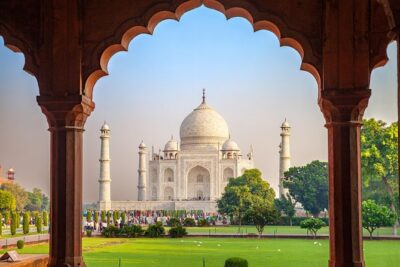
3-Days Private Golden Triangle Tour: Delhi, Agra & Jaipur by Car
Read our review →3-Days Private Golden Triangle Tour: Delhi, Agra & Jaipur by Car
Read our review →
3-Day Delhi, Agra and Jaipur Private Tour – India Golden Triangle
Read our review →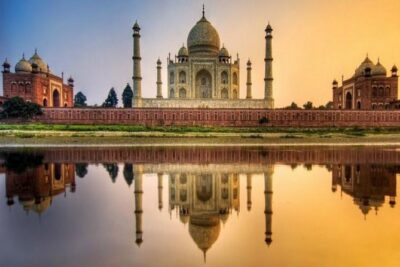
Four-Day Private Luxury Golden Triangle Tour to Agra and Jaipur From New Delhi
Read our review →
5 Nights 6 Days Private Golden Triangle Tour – Delhi Agra Jaipur
Read our review →

Private Car and Drive for Golden Triangle (4N/5D)
Read our review →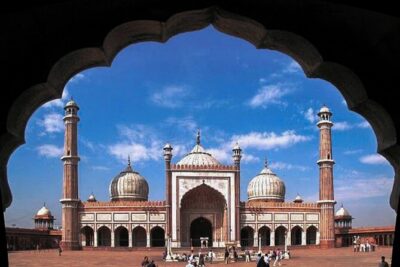
Private Golden Triangle Tour Delhi Agra Jaipur ( Top Rated )
Read our review →Browse the lists this tour appears in