
Reviewed · GOLDEN TRIANGLE TOURS FROM DELHI
4 Days Golden Triangle Tour India From Delhi
The Taj Mahal at sunrise is the emotional center of this four-day journey, but the route gives you more than a quick monument photo. You move through Mughal Agra, the abandoned red-sandstone capital of Fatehpur Sikri, and Jaipur’s royal heart, with a private vehicle and your own group.
I like the private format, which lets you adjust the pace with the driver, and I like the practical pricing: $190 per person includes three breakfasts, fuel, tolls, parking, and local taxes. The main drawback is a demanding schedule, with long road transfers and several admission fees left for you to pay.
Key points at a glance
- The Taj Mahal gets a full two-hour visit, with Agra Fort and Fatehpur Sikri added the same day.
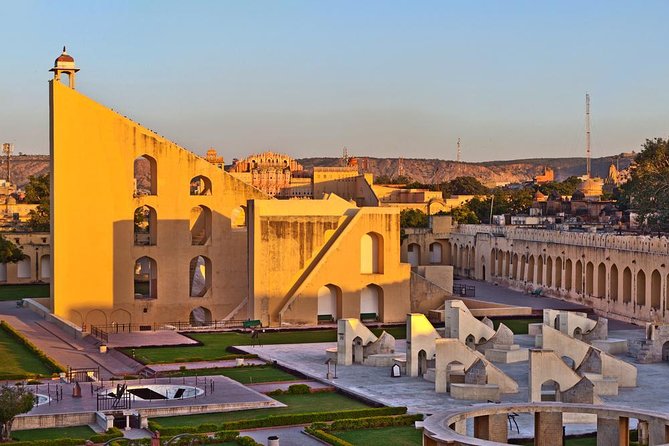
- Jaipur is covered through four focused stops, including the City Palace, Jantar Mantar, Hawa Mahal, and Jal Mahal.
- Driver Tabul is specifically praised for safe, helpful service, while Sumit is noted for arranging flexible schedules and transport support.
- The tour is private, so only your own group participates rather than joining a large coach.
- Three breakfasts are included, along with tolls, fuel, parking, and interstate taxes.
- Admission tickets are mostly extra, so you need to budget beyond the advertised $190 price.
Why this Golden Triangle route works

India’s Golden Triangle links Delhi, Agra, and Jaipur in a compact circuit. This version gives Agra the first serious look, then moves into Jaipur before returning you to Delhi on the fourth day.
The appeal is contrast. Agra is tied to the Mughal court and white-marble architecture. Fatehpur Sikri shows Emperor Akbar’s grand red-sandstone experiment. Jaipur shifts the mood toward Rajput palaces, astronomy, market streets, and pink-painted city walls.
I like that the program does not stop at the Taj Mahal. A shorter tour can leave you with one famous photograph and little sense of the region. Here, you see the tomb of Itmad-ud-Daulah, the Yamuna River view from Mehtab Bagh, Agra Fort, and several of Jaipur’s main landmarks.
The private setup matters. The company can collect you in Delhi, and only your group takes part. Past arrangements have included driver Tabul, who is praised for careful driving, safety, and practical help, while Sumit has helped with transport and schedule changes. The information does not name a specific guide for every monument, so ask before booking if you want guided interpretation at each stop.
More Golden Triangle routes from New Delhi:
- 3-Days Private Golden Triangle Tour: Delhi, Agra & Jaipur by Car
★ 5.0 · 1,107 reviews - 3-Days Private Golden Triangle Tour: Delhi, Agra & Jaipur by Car
★ 5.0 · 1,098 reviews - 3-Day Delhi, Agra and Jaipur Private Tour – India Golden Triangle
★ 5.0 · 812 reviews
Day 1: Itmad-ud-Daulah and the Yamuna view
The first listed sightseeing day begins with Itmad-ud-Daulah, often called the Baby Taj. Nur Jahan built this Mughal mausoleum between 1622 and 1628 for her father, Mirza Ghiyas Beg.
The nickname can make the building sound like a smaller copy of the Taj Mahal, but that undersells it. The tomb is valued for its delicate marble work and jewel-box appearance. A one-hour stop gives you enough time to see the structure without rushing, though admission is not included in the tour price.
This visit helps you understand the design world that led to the Taj Mahal. Look for the fine surface decoration and the compact garden setting. The building feels more intimate than Agra’s larger monuments, which makes it a good first stop.
Next comes Mehtab Bagh, a charbagh garden across the Yamuna River from the Taj Mahal. The planned garden is now known mainly as a place for viewing the Taj from the opposite bank, especially around sunset.
The visit lasts about 30 minutes, and admission is extra. Keep your expectations sensible. This is a viewpoint, not a second Taj Mahal visit, and the quality of the view depends on light, weather, and the river conditions. Still, the angle gives you a useful sense of the monument’s position beside the Yamuna.
The opening day is lighter than the next one, which is sensible. You get a smaller Mughal monument and a distant Taj view before the main visit. The exact pickup sequence from Delhi and hotel arrangements should be confirmed in advance, since the supplied details give a 9:00 am start but do not spell out every transfer time.
Day 2: The Taj Mahal, Agra Fort, and Fatehpur Sikri
The second day carries the biggest visual reward: the Taj Mahal. The monument was built by Mughal Emperor Shah Jahan in memory of his wife and completed in 1653.
The planned visit lasts about two hours. That is enough time to move through the main complex, see the gardens, and take in the marble mausoleum without treating it as a five-minute photo stop. Admission is not included, so factor the ticket into your spending.
The Taj is best approached with patience. First notice the overall symmetry, then look at the detailed stone inlay and the way the building changes with the light. You are in a large, maintained complex, so there is more to see than the central tomb itself.
Your next stop is Agra Fort, a 16th-century Mughal residence complex and UNESCO World Heritage site. Plan for about an hour, with the entrance ticket again paid separately.
Agra Fort gives the day needed political context. This was a royal residence until 1638, and it is also linked to Shah Jahan’s final years after his son deposed and confined him. From the fort, the connection between imperial power, domestic life, and the Taj becomes clearer.
An hour is useful but not generous. If you enjoy Mughal architecture, you may want to ask how much flexibility the driver can offer. The private format helps here, since the schedule can potentially be adjusted, but the route still has to reach Jaipur.
The final stop is Fatehpur Sikri, the short-lived Mughal capital built during Akbar’s reign. The city served as the imperial capital from 1572 to 1585, and its red-sandstone buildings remain clustered around the central area.
This is a non-guided visit, and the time listed is about one hour. That keeps the tour moving, but it also means you will get less explanation of the complex’s purpose and layout unless you arrange a guide separately.
Fatehpur Sikri is free of admission charges according to the tour details, which helps offset some of the paid monuments. It is also the day’s most demanding part. You see three major sites after the Taj, then continue toward Jaipur. I would treat this as a full sightseeing and transfer day rather than a relaxed outing.
Day 3: Four views of Jaipur
Jaipur’s third day begins at Jal Mahal, the Water Palace. The building sits in the middle of Man Sagar Lake and was constructed by Sawai Pratap Singh in 1799.
The stop lasts only about 10 minutes and admission is free. Think of it as a roadside viewing point rather than a palace tour. You will see the palace from outside, take photographs, and move on.
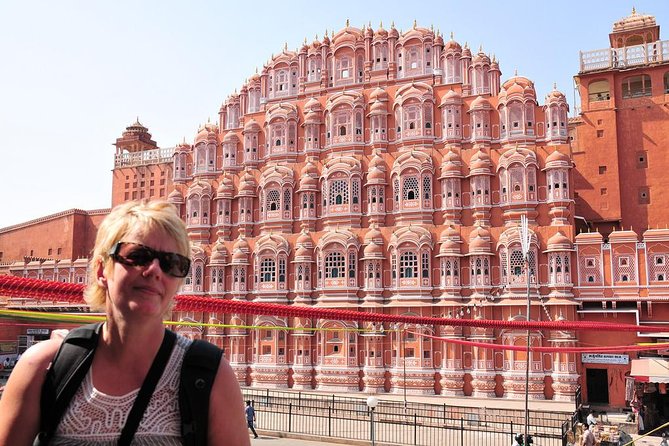
Next is Hawa Mahal, the Palace of Breeze. This five-story pink-sandstone building is known for its honeycomb front and 953 small windows, or jharokhas.
The facade was designed to allow members of the royal household to look onto street life without being seen. The listed visit lasts 30 minutes, and admission is extra. That is enough for an exterior view and a quick look inside if the schedule permits, but not a long architectural study.
Hawa Mahal is one of Jaipur’s most recognizable sights, yet the front can be more impressive than the short visit suggests. If you want time for photographs, tell the driver before the stop rather than trying to squeeze in one more rushed angle.
Jantar Mantar gives the Jaipur day a different flavor. This astronomical instrument site was built in 1734 by Rajput ruler Sawai Jai Singh II and includes the world’s largest stone sundial.
The one-hour visit is worthwhile because it shows Jaipur’s interest in mathematics and observation, not only royal decoration. The instruments are large, practical structures, and they make more sense when someone explains what each one measures. The admission ticket is not included.
The day ends at the City Palace, a large complex of courtyards, gardens, galleries, and royal objects. Allow about an hour, with admission extra.
The City Palace is the broadest look at Jaipur’s court life in this program. The visit is not just one building. You move through a collection of spaces with different uses and styles, so the hour can pass quickly.
Together, the four stops form a good overview, but the time limits are clear. Jal Mahal is a brief photo stop, Hawa Mahal is short, and the City Palace and Jantar Mantar each get about an hour. If one place matters most to you, use the private arrangement to ask about shifting time from a less important stop.
A few more New Delhi day trips worth putting side by side
- 4 Days Golden Triangle Tour
★ 5.0 · 499 reviews - Private Luxury Delhi – Agra – Jaipur Golden Triangle Tour – 3 Nights 4 Days
★ 5.0 · 306 reviews - Private 4-Day Golden Triangle Tour with Ranthambore Tiger Safari
★ 5.0 · 248 reviews - Private Golden Triangle Tour 3 Night/4 Days – All Inclusive
★ 5.0 · 185 reviews
Day 4: Returning to Delhi
The final day is mainly a return transfer. After arriving in Delhi, the company provides departure transport to the airport, railway station, or another location within Delhi according to your needs.
This is useful if you are connecting to another part of India or leaving the country. It also means you should avoid booking an extremely tight flight or train connection unless the transfer time has been confirmed directly.
The tour begins at 9:00 am, but the supplied plan does not give exact road times between cities or a fixed Delhi arrival hour. India’s roads can make schedules less predictable, so treat the final day as a transfer window rather than a sightseeing day.
What the $190 price really covers
At $190 per person, the tour can be good value if you want a private vehicle and a ready-made route through three major cities. The price includes fuel, toll taxes, parking fees, driver expenses, local and interstate taxes, and three breakfasts.
Those inclusions matter on a road circuit. Tolls and fuel can add up, and having them covered makes the advertised price easier to understand. Breakfast also removes one small daily decision, though the type of hotel and breakfast service should be confirmed before booking.
The price does not include monument admission, drinks, personal expenses, tips, optional tours, or hotel minibar and other hotel services. Most of the major sights list admission as extra, including Itmad-ud-Daulah, Mehtab Bagh, the Taj Mahal, Agra Fort, Hawa Mahal, Jantar Mantar, and the City Palace.
So $190 is not the final amount you will spend. It is a reasonable starting price for a private four-day route, but you should set aside additional money for entrance fees and tips. One past arrangement also involved an expensive tiger safari add-on and substantial extra driving, so ask for a written price before adding optional activities.
The private driver advantage
This tour is strongest when you value personal transport and a flexible schedule. Only your group participates, and the driver can help manage the long road sections between Delhi, Agra, and Jaipur.
Tabul is specifically praised for safe driving, helpful suggestions, and a friendly manner. Sumit is also noted for being available during transport and for adjusting plans, especially for solo visitors. That kind of support can make a real difference on a busy first trip to India.
You should distinguish between a driver and a monument guide. The details confirm strong driver support and mention good English-speaking guides in connection with the main sights, but they do not specify which guide will meet you at each site. Ask clearly if you want a guide at the Taj Mahal, Agra Fort, or Jaipur’s monuments.
The private format is also useful for solo visitors and couples. You are not locked into a large group’s pace, and the company has a record of adjusting schedules. Still, flexibility has limits because the four-day route covers a lot of ground.
Who should book this tour
I would recommend this tour to a first-time visitor who wants to see the Taj Mahal, Agra Fort, Fatehpur Sikri, and Jaipur’s headline sights without arranging every transfer alone.
It suits couples, families, and solo visitors who prefer a private car. The included transport costs, breakfast, and Delhi departure transfer simplify the trip, while the named driver support adds reassurance during the road portions.
I would be more cautious if you want slow travel, long museum visits, or plenty of free time. The schedule is packed, admission costs are extra, and the second day in particular combines several major sights with a long transfer.
Before paying, confirm the hotel names, vehicle type, exact pickup point, monument guide arrangements, entrance fees, and expected arrival time in Delhi. Those details will tell you how comfortable the trip will feel.
Should you book it?
Book this Golden Triangle tour if you want an efficient private route with the Taj Mahal at its center and Jaipur added without much planning work. The strongest parts are the private vehicle, included road costs, flexible support from people such as Tabul and Sumit, and the broad mix of Mughal and Rajput sights.
Skip it if you want an unhurried schedule or a fully guided experience at every monument. For most first visits, though, the $190 starting price offers a useful base, as long as you budget for admission tickets and confirm the details before departure.
FAQ
How long is the Golden Triangle tour?
The tour lasts approximately four days.
Where does the tour start?
It starts in New Delhi, with a listed start time of 9:00 am.
Is this a private tour?
Yes. Only your own group participates in the activity.
Is pickup available?
Yes, pickup is offered.
Is breakfast included?
Yes. Three breakfasts are included.
Are monument entrance tickets included?
No. Admission is listed as not included for most major monuments, including the Taj Mahal, Agra Fort, Itmad-ud-Daulah, Mehtab Bagh, Hawa Mahal, Jantar Mantar, and the City Palace.
Is Fatehpur Sikri included?
Yes. The tour includes a visit to Fatehpur Sikri, and admission is listed as free.
What costs are included besides breakfast?
The price includes toll taxes, parking fees, driver expenses, fuel costs, and local and interstate taxes.
Does the tour return to Delhi?
Yes. On day four, the company provides a departure transfer to Delhi airport, a railway station, or another location within Delhi as requested.
Can I cancel for a full refund?
Yes, if you cancel at least 24 hours before the experience start time. Cancellations made less than 24 hours in advance are not refundable, and changes made within that period are not accepted.
Newly reviewed around New Delhi
- Private Customized Tour Of Old/New Delhi Spiritual Sites★ 5.0 · 5 reviews
- Yoga and Meditation Classes in Gurgaon★ 4.5 · 8 reviews
- Yoga class in Delhi★ 5.0 · 29 reviews
- Old Town Delhi Walking Tour (2 Hours Guided Tour with Local)★ 4.5 · 22 reviews
- 5 Days Golden Triangle Tour with Ranthambore(Delhi Agra Jaipur Ranthambore Tour)★ 5.0 · 3 reviews
- Wonderful Old & New Delhi sightseeing tour★ 5.0 · 3 reviews
- Delhi Zoo White Tigers & lions with Old Fort Visit★ 4.5 · 5 reviews
- Hidden Gems of Old Delhi – Walk★ 5.0 · 8 reviews
Golden Triangle Tours from Delhi, compared.
3-Days Private Golden Triangle Tour: Delhi, Agra & Jaipur by Car
Read our review →3-Days Private Golden Triangle Tour: Delhi, Agra & Jaipur by Car
Read our review →
3-Day Delhi, Agra and Jaipur Private Tour – India Golden Triangle
Read our review →
Four-Day Private Luxury Golden Triangle Tour to Agra and Jaipur From New Delhi
Read our review →
5 Nights 6 Days Private Golden Triangle Tour – Delhi Agra Jaipur
Read our review →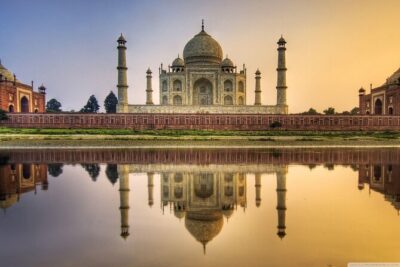
Private Car and Drive for Golden Triangle (4N/5D)
Read our review →
Private Golden Triangle Tour Delhi Agra Jaipur ( Top Rated )
Read our review →Browse the lists this tour appears in