
Reviewed · GOLDEN TRIANGLE TOURS FROM DELHI
3 Days Luxury Golden Triangle Tour
Delhi’s Jama Masjid, the Taj Mahal at sunrise, and Jaipur’s pink-city palaces give this three-day Golden Triangle tour a lot of punch. You move by private, air-conditioned vehicle, with an English-speaking guide and airport pickup or drop-off in Delhi or Jaipur.
I like the mix of famous sights and lesser-visited stops, especially Humayun’s Tomb, Fatehpur Sikri, and Jantar Mantar. I also like the private format: your group controls the car, and a reliable driver such as Ajay Kumar can make India’s busy roads feel far less stressful. The drawback is clear: this is a packed schedule with several long drives, and the hotel arrangements should be confirmed before booking.
Key points to know before booking
- Sunrise at the Taj Mahal: The early visit gives you a quieter, softer look at Agra’s most famous monument.
- Private air-conditioned transport: You travel with your own group rather than sharing a vehicle with strangers.
- Delhi’s contrasting sides: Old Delhi’s Jama Masjid and Chandni Chowk are paired with New Delhi’s India Gate and government buildings.
- A full Jaipur day: Hawa Mahal, City Palace, Jantar Mantar, and Albert Hall Museum all fit into the final sightseeing day.
- Ajay Kumar’s personal service: If assigned to your trip, he has been praised for calm driving, patience, punctuality, and helping solo visitors feel secure.
- Good value, with one question: At $152 per person, the price is attractive for private transport, guides, entrance fees, and two breakfasts, but confirm exactly what hotel costs cover.
Why this three-day route works
India’s Golden Triangle connects New Delhi, Agra, and Jaipur in a compact circuit. Each city offers a different view of the country. Delhi gives you imperial avenues, Mughal monuments, and Old Delhi street life. Agra brings the Taj Mahal and Agra Fort. Jaipur finishes with Rajput palaces, astronomical instruments, and museum collections.
The route works best if you want to see the major sights without arranging several separate drivers, guides, and admission tickets. You will not spend much time in any one city, but you will cover a remarkable amount of ground.
The private setup matters here. Delhi, Agra, and Jaipur are connected by busy roads, and the drives can be tiring. A private car lets you stay with your own schedule and group. The supplied vehicle is air-conditioned, a practical benefit in India’s heat and traffic.
The schedule begins at 8:00 a.m., though the first day can become long once sightseeing and the drive to Agra are combined. You should think of this as an efficient introduction to northern India, not a slow, stay-in-one-place holiday.
More Golden Triangle routes from New Delhi:
- 3-Days Private Golden Triangle Tour: Delhi, Agra & Jaipur by Car
★ 5.0 · 1,107 reviews - 3-Days Private Golden Triangle Tour: Delhi, Agra & Jaipur by Car
★ 5.0 · 1,098 reviews - 3-Day Delhi, Agra and Jaipur Private Tour – India Golden Triangle
★ 5.0 · 812 reviews
Old Delhi begins with Jama Masjid and Chandni Chowk
Your first day starts with pickup from Delhi airport or another Delhi location. The opening stops take you into Old Delhi, beginning with Jama Masjid, one of the city’s largest and best-known mosques.
Jama Masjid is important both as a place of worship and as a major Mughal monument. The broad courtyard and large scale give you a strong first sense of Old Delhi’s religious and architectural importance. Admission is included, but dress and behavior should be respectful because this remains an active religious site.
From there, you visit Chandni Chowk for about an hour. This is not a polished museum district. It is a working part of the city, known for commerce, food, shopping, and constant movement. The value of this stop is the contrast with Delhi’s formal government quarter later in the day.
You may find Chandni Chowk crowded and noisy, so keep your belongings close and stay aware of the group. The short visit gives you a taste rather than a full exploration. If food or shopping is a priority, ask how much free time you have before you commit to anything.
Delhi’s grand landmarks are mostly seen from the road
The Red Fort is included as a drive-by stop rather than a full interior visit. You can see the imposing red sandstone walls and connect the fort with the Mughal story of Old Delhi, but admission is not included and the schedule does not provide a proper visit inside.
That limitation is worth noting. The Red Fort deserves more than a passing glance if you have a strong interest in Mughal architecture. Still, a drive-by keeps the day moving and makes room for Qutub Minar and Humayun’s Tomb, both of which receive dedicated visits.
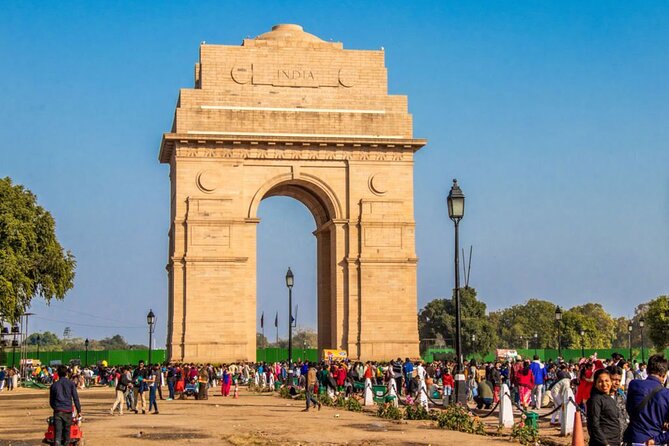
India Gate receives about 30 minutes. This memorial is one of New Delhi’s most recognizable landmarks, linked with military sacrifice and national identity. It is a useful photo stop and a chance to see one of the city’s broad ceremonial avenues.
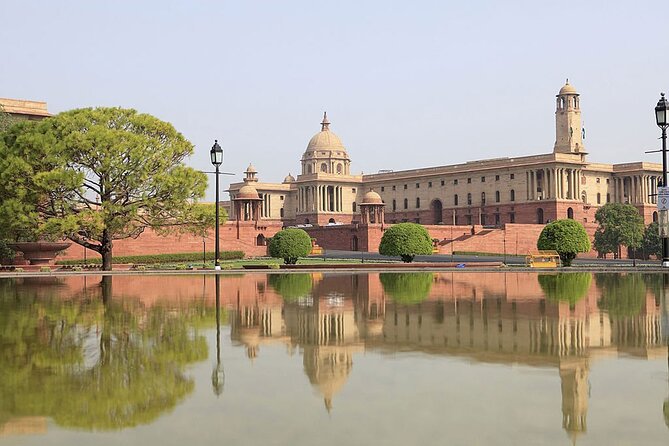
The drive also passes Rashtrapati Bhavan, the President’s official residence, and Parliament House. These are viewing stops from the vehicle, not full tours. Their value is visual: you see the formal government district planned during the British period, with wide roads and monumental buildings.
I would treat these stops as orientation rather than deep sightseeing. If you want to enter government buildings or spend hours at the Red Fort, this tour does not leave room for that.
Qutub Minar and Humayun’s Tomb add depth to Delhi
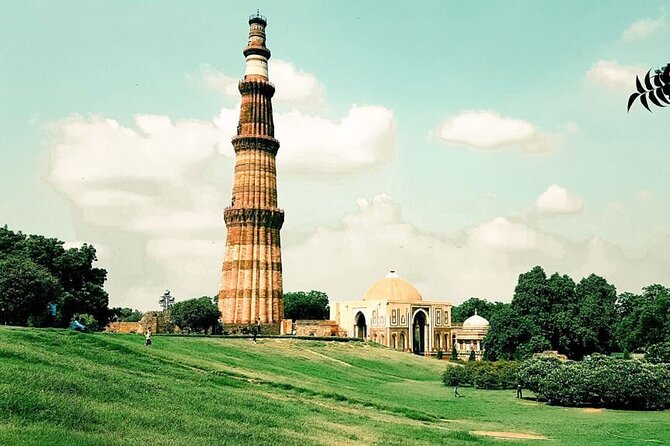
The dedicated visit to Qutub Minar is one of the strongest parts of the Delhi day. You have about an hour at this UNESCO World Heritage Site, whose tall minaret and surrounding remains show the early Islamic architecture of Delhi.
The complex gives you more than a single monument. You can look at carved stonework, older structures, and the way the site reflects changing periods in Delhi’s past. Admission is included, which makes this a better value than the Red Fort drive-by.
Humayun’s Tomb receives another hour and is also included. This grand Mughal tomb is especially useful for understanding the architectural ideas that later appeared in the Taj Mahal. Its formal gardens and symmetrical design offer a calmer counterpoint to Jama Masjid and Chandni Chowk.
These two stops make the first day stronger. Without them, Delhi could feel like a series of quick photo opportunities. With them, you get time inside two major monuments and a clearer sense of how Delhi’s architecture developed.
A few more New Delhi day trips worth putting side by side
- 3-Day Private Luxury Golden Triangle Tour to Agra and Jaipur From New Delhi
★ 5.0 · 424 reviews - 3-Day Luxury Golden Triangle Tour: New Delhi, Agra & Jaipur
★ 5.0 · 246 reviews - Award-Winning 3-Day Private Golden Triangle Tour of India
★ 5.0 · 240 reviews - 3-Day Private Golden Triangle Tour to Agra &Jaipur from New Delhi
★ 5.0 · 116 reviews
The Delhi to Agra drive closes a long first day
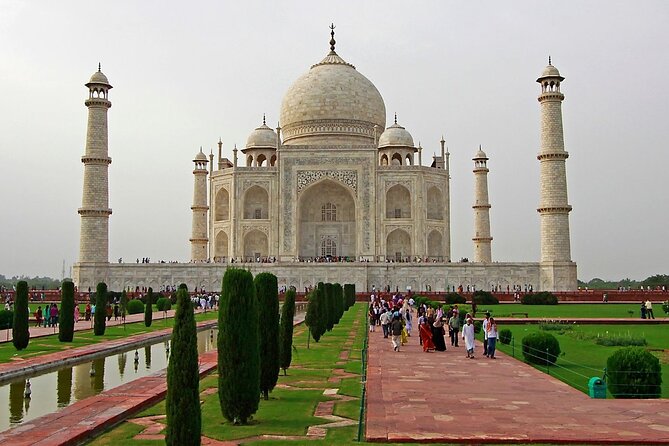
After Delhi sightseeing, you drive to Agra. The listed drive takes about four hours, followed by hotel check-in and an overnight stay.
This is the part of the day that demands realistic expectations. You may begin with an 8:00 a.m. pickup and finish late after a full day of monuments and road travel. The private vehicle helps because you can remain with your own party, but you should still keep the evening simple.
The tour includes breakfast on two mornings, but lunch and dinner are not included. Plan to pay for those meals yourself. Personal expenses are also excluded, so bring money for food, drinks, shopping, and anything outside the stated admissions.
The accommodation deserves a direct question before you pay. Two overnight stays in hotels are scheduled, but the stated inclusions do not clearly explain the hotel category or whether the room cost is included in the $152 price. Ask for the hotel names, room basis, and full lodging terms.
Sunrise at the Taj Mahal is the trip’s high point
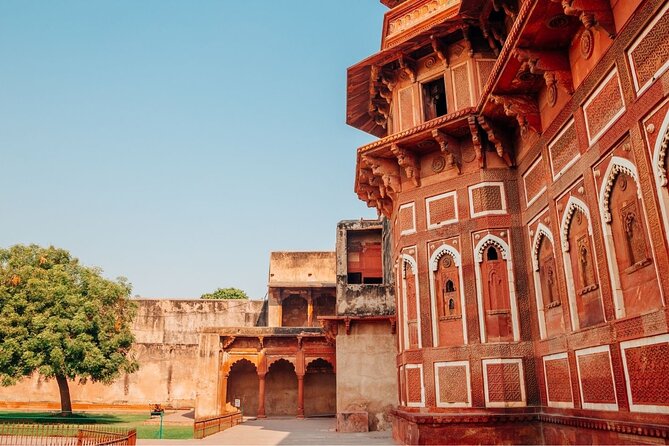
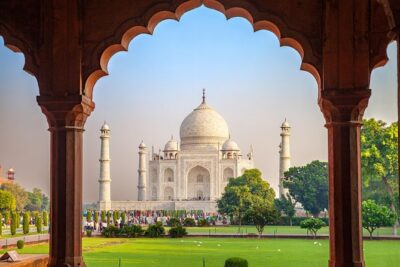
Day two begins with the Taj Mahal at sunrise. You have about two hours at the monument, and admission is included.
The early timing is a smart choice. The monument’s white marble changes with the morning light, and the setting can feel calmer than a midday visit. You also avoid placing the Taj at the end of a long day, when heat and fatigue would take away from the experience.
Use your two hours well. Take time to view the building from different angles, notice the balance of the gardens and reflecting pool, and listen to your guide’s explanation of the monument. The Taj is more satisfying when you pause beyond the standard front-facing photograph.
The early start can be difficult, especially after the previous day. Still, this is one place where getting up early is worth the effort. For many people, the sunrise visit will be the clearest reason to choose this particular schedule.
Agra Fort brings the Mughal story down to earth
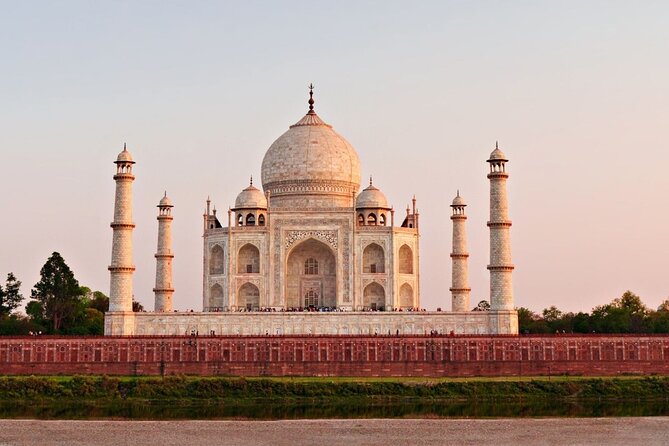
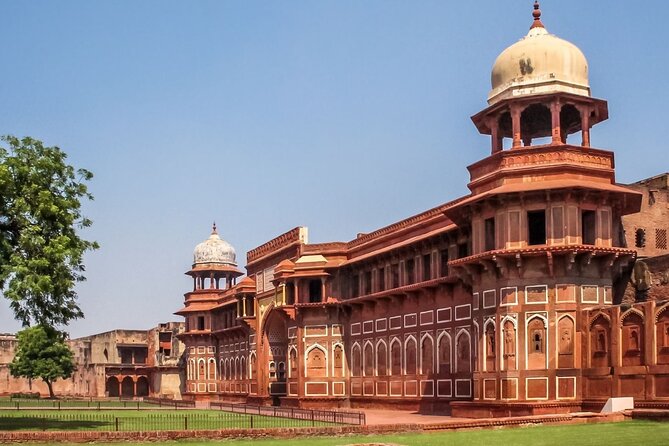
After breakfast, you check out and visit Agra Fort for about an hour. Admission is included.
The fort is not simply a defensive wall. Its courtyards, halls, and elevated position help explain how Mughal rulers lived and governed. From parts of the complex, you can also see the Taj Mahal in the distance, linking the two major Agra sights.
An hour gives you a useful introduction, though not an exhaustive visit. If you like military architecture, palace rooms, or Mughal history, you may wish the stop were longer. The packed route means you must keep moving.
The order works well: the Taj supplies the emotional centerpiece, while Agra Fort gives you a broader understanding of the city’s royal past.
Fatehpur Sikri breaks up the road to Jaipur
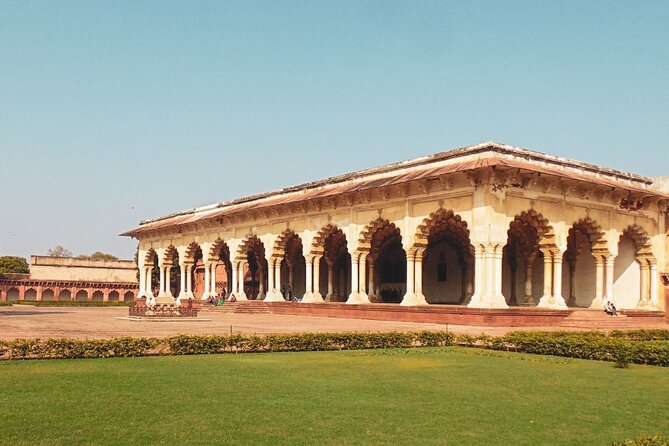
After Agra Fort, the car continues toward Jaipur, with a stop at Fatehpur Sikri. About three hours are assigned to this historic former Mughal capital, and there is no separate admission charge listed.
Fatehpur Sikri is valuable because it feels different from the better-known monuments. You see a planned royal city built under Emperor Akbar, with courtyards, halls, and red sandstone architecture. The site helps you picture how a capital could be created and later abandoned.
Three hours is a generous amount of time compared with some other stops on this tour. That gives you room to examine the buildings instead of rushing through for a photograph.
The tradeoff is another long road day. You visit the Taj at sunrise, Agra Fort after breakfast, Fatehpur Sikri, and then continue to Jaipur. Keep water and personal items in the car, and do not plan a demanding evening after arrival.
On reaching Jaipur, you check into the hotel for the second overnight stay. Again, confirm the hotel details before booking, since the stated inclusions list transport, guides, admissions, and breakfast but do not spell out the accommodation terms.
Jaipur’s Hawa Mahal starts the final morning
The third day begins with Hawa Mahal, the Palace of Wind. You have about 30 minutes here, with admission included.
The five-story facade is famous for its 953 small windows. These openings allowed royal women to observe street life without being seen. The palace blends Rajput and Mughal design, and its delicate front looks especially striking from the street.
Thirty minutes is enough for the main view and a quick interior visit, but not a long architectural study. If you want extra photographs, move quickly and follow your guide’s timing.
Hawa Mahal works well as the opening Jaipur sight because it gives you an immediate picture of the city’s royal identity. The stop is short, but it is not filler.
City Palace shows Jaipur’s royal side
The City Palace receives about two hours and includes admission. This is the most substantial Jaipur stop on the morning schedule.
The complex includes courtyards, gardens, and palace buildings that served as the residence of Jaipur’s Maharaja. It offers a different mood from Hawa Mahal. Instead of a single facade, you move through a larger royal compound with spaces designed for court life and ceremony.
Two hours gives you time to look beyond the most photographed details. Ask your guide to explain how the palace was used, and keep an eye on the contrast between open courtyards and more private palace areas.
This stop can be especially rewarding if you enjoy architecture and royal collections. It also gives you a slower stretch after the fast pace of the first two days.
Jantar Mantar and Albert Hall finish the sightseeing
After lunch, you visit Jantar Mantar, an astronomical observatory built by Maharaja Jai Singh II. About one hour is scheduled, and admission is included.
The large stone instruments may look unusual at first, but they were designed to measure time and track the skies. This stop adds science to a route otherwise dominated by palaces, forts, and tombs. Your guide can help turn the instruments from puzzling shapes into understandable tools.
Albert Hall Museum follows, with about an hour inside. It is one of Rajasthan’s oldest museums and occupies a building that combines Mughal and Rajput architectural ideas. Its collection includes artifacts, giving you a final indoor stop after several large outdoor monuments.
An hour is enough for a selective visit, not every display. Focus on the building and the highlights your guide points out. The museum provides a useful change of pace before the final drive.
The final drive gives you flexible airport options
After sightseeing and shopping, you drive toward Delhi airport or Jaipur airport. The listed transfer takes about four hours, so flight planning matters.
A Jaipur airport drop-off is the simpler ending if your onward flight suits it. A Delhi airport drop-off makes sense if you are continuing from the capital, but the longer road transfer may require a late departure time. Confirm the destination and allow a large buffer before booking a flight.
Pickup is offered from Delhi airport or another Delhi location at the start. The private format also means the route can be more practical for a solo visitor or a small private party than a large group coach.
Past trips have praised Ajay Kumar for safe driving, patience, punctuality, and helpful suggestions. One solo visitor especially valued the sense of comfort and personal care. You should still ask in advance who will drive your car, since a particular driver cannot be guaranteed by the general tour details.
What the $152 price really buys you
At $152 per person, this is strong value if the price applies to the listed private transport, English-speaking guide, entrance fees, taxes, and two breakfasts. You also avoid the work of arranging separate Delhi, Agra, and Jaipur transfers.
The private car is the main value. A cheaper shared option may save money, but the comfort and control of your own air-conditioned vehicle matter on long road sections. The price is especially attractive for two or more people sharing the same private arrangement, though group discounts are offered and should be checked before booking.
The price does not cover lunch, dinner, personal expenses, or clearly explained hotel details. Those costs can change the final total. Get the lodging terms in writing, and ask whether the guide is present at every monument or arranged locally in each city.
Who should book this Golden Triangle tour?
I would recommend it to a first-time visitor who wants the major sights with minimal planning. It suits solo visitors who value a private car and a steady driver, couples who want a short cultural trip, and families that prefer not to share transport.
It also fits anyone with only three days available. You will see a lot, including several UNESCO sites and Jaipur’s main attractions.
I would not choose it if you want long meals, slow market visits, or substantial free time in each city. The schedule is tightly packed, and the road travel takes up a serious part of the experience.
Before booking, confirm three things: the hotel names and costs, the exact airport drop-off, and the driver or guide arrangement. If those details are clear, the tour offers an efficient and comfortable way to connect Delhi, Agra, and Jaipur.
Should you book it?
Book this tour if your priority is maximum sightseeing in three days, with a private air-conditioned car and the Taj Mahal at sunrise. The combination of Delhi’s monuments, Agra’s Mughal landmarks, Fatehpur Sikri, and Jaipur’s palaces gives you a strong first look at northern India.
Skip it if you prefer a slow pace or need guaranteed time inside the Red Fort and government buildings. The best version of this trip depends on accepting long days, confirming the hotel arrangements, and treating the road journeys as part of the route rather than an inconvenience.
FAQ
How long is the Golden Triangle tour?
The tour lasts approximately three days and covers New Delhi, Agra, and Jaipur.
Where does the tour begin?
Pickup is offered from Delhi airport or another location in Delhi. The stated start time is 8:00 a.m.
Is the Taj Mahal visited at sunrise?
Yes. The second day includes a sunrise visit to the Taj Mahal, with about two hours scheduled and admission included.
Is transport private?
Yes. The tour includes private transportation in an air-conditioned vehicle, and only your group participates.
Are meals included?
Two breakfasts are included. Lunch, dinner, and personal expenses are not included.
Can I finish at Jaipur airport?
Yes. The final transfer can take you to Delhi airport or Jaipur airport.
What is the cancellation policy?
You can receive a full refund if you cancel at least three full days before the experience start time. Cancellations or changes made less than three full days in advance are not accepted for a refund.
Newly reviewed around New Delhi
- Private Customized Tour Of Old/New Delhi Spiritual Sites★ 5.0 · 5 reviews
- Yoga and Meditation Classes in Gurgaon★ 4.5 · 8 reviews
- Yoga class in Delhi★ 5.0 · 29 reviews
- Old Town Delhi Walking Tour (2 Hours Guided Tour with Local)★ 4.5 · 22 reviews
- 5 Days Golden Triangle Tour with Ranthambore(Delhi Agra Jaipur Ranthambore Tour)★ 5.0 · 3 reviews
- Wonderful Old & New Delhi sightseeing tour★ 5.0 · 3 reviews
- Hidden Gems of Old Delhi – Walk★ 5.0 · 8 reviews
- Delhi Zoo White Tigers & lions with Old Fort Visit★ 4.5 · 5 reviews
Golden Triangle Tours from Delhi, compared.
3-Days Private Golden Triangle Tour: Delhi, Agra & Jaipur by Car
Read our review →3-Days Private Golden Triangle Tour: Delhi, Agra & Jaipur by Car
Read our review →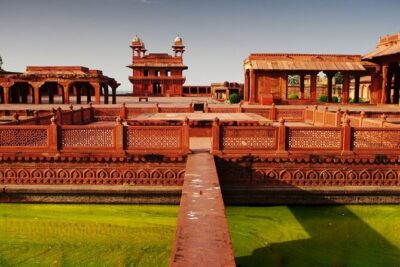
3-Day Delhi, Agra and Jaipur Private Tour – India Golden Triangle
Read our review →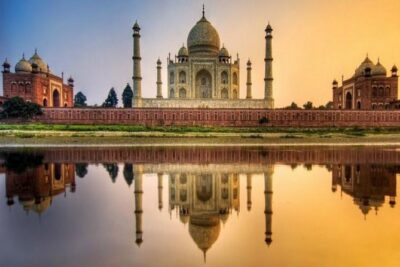
Four-Day Private Luxury Golden Triangle Tour to Agra and Jaipur From New Delhi
Read our review →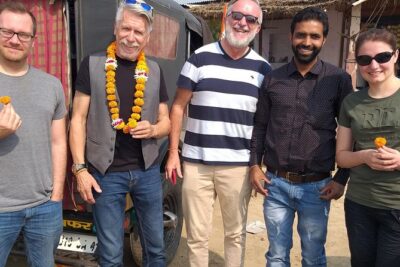
5 Nights 6 Days Private Golden Triangle Tour – Delhi Agra Jaipur
Read our review →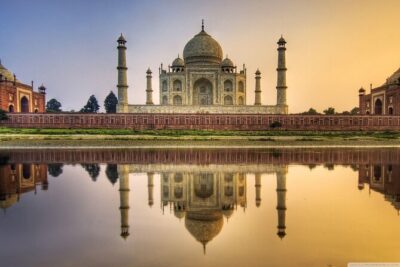

Private Car and Drive for Golden Triangle (4N/5D)
Read our review →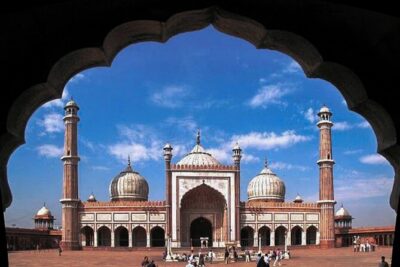
Private Golden Triangle Tour Delhi Agra Jaipur ( Top Rated )
Read our review →Browse the lists this tour appears in