
Reviewed · GOLDEN TRIANGLE TOURS FROM DELHI
3 Days Golden Triangle Tour
The Taj Mahal is the headline, but this three-day route gives you a fast look at three very different Indian cities. You move from Delhi’s Mughal and colonial monuments to Agra’s imperial sights, then finish amid Jaipur’s forts, palaces, and astronomical instruments.
I like the private air-conditioned vehicle and the fact that a guide meets you in each city. I also like the practical package: two hotel nights, breakfast, hotel pickup, and sightseeing are arranged for you. The main drawback is the pace. You cover a lot of ground in only three days, so this is a highlights tour rather than a slow look at northern India.
Key points to know before booking
- The route covers Delhi, Agra, and Jaipur in three days, with major monuments in every city.
- You get a different local guide in each place, including Gaurav Kashyap in Delhi, Abdul Qadir in Agra, and Bipin in Jaipur.
- Private transport keeps the schedule flexible, and hotel pickup and drop-off are included.
- Two nights of accommodation and breakfast are included when you choose the hotel option.
- Monument entry may depend on the option selected, so check carefully before paying.
- Friday is a major planning issue, because the Taj Mahal is closed to visitors that day.
How this Golden Triangle tour works
This is a private three-day tour beginning in New Delhi at about 8:00 am. Your group travels by air-conditioned private vehicle, with sightseeing and transfers arranged between Delhi, Agra, and Jaipur.
The tour includes two nights of accommodation with breakfast if you choose the option that includes hotels. Lunch, dinner, and drinks are not included. The advertised price is $181 per person, though the final value depends on your booking choice, especially whether monument tickets and hotels are included.
At this price, the appeal is convenience. You are not piecing together separate Delhi sightseeing, an Agra transfer, a Jaipur tour, and hotel bookings. The trade-off is that the days are full, and you will spend a fair amount of time on the road.
The format suits a first visit when you want to see the famous sights without arranging every driver, guide, and hotel yourself. It is also useful for a private group with mixed ages. One strong point from the tour experience is the guides’ care with elderly parents, including adjusting help and attention when needed.
More Golden Triangle routes from New Delhi:
- 3-Days Private Golden Triangle Tour: Delhi, Agra & Jaipur by Car
★ 5.0 · 1,107 reviews - 3-Days Private Golden Triangle Tour: Delhi, Agra & Jaipur by Car
★ 5.0 · 1,098 reviews - 3-Day Delhi, Agra and Jaipur Private Tour – India Golden Triangle
★ 5.0 · 812 reviews
Day 1: Delhi’s tombs, towers, and Old City streets
Your first day begins with Delhi’s grand monuments, then shifts into the noise and close quarters of Old Delhi. It is a smart introduction to the capital because you see both formal New Delhi and the older Mughal city.
Humayun’s Tomb
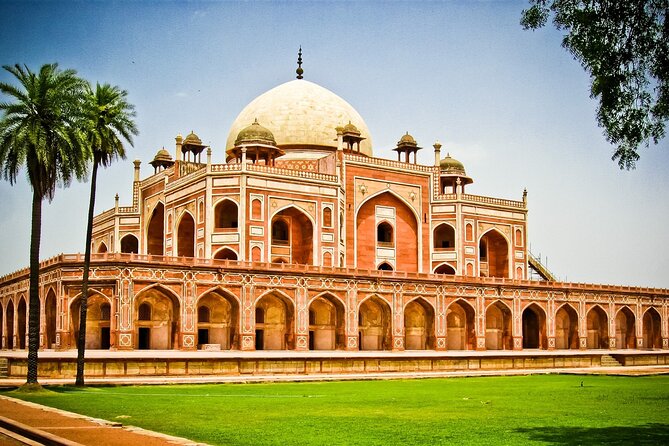
Humayun’s Tomb is one of Delhi’s most important Mughal buildings and a UNESCO World Heritage Site. Its garden setting and red sandstone architecture make it an excellent first stop, especially if you are beginning to understand the design ideas that later reached their grandest form at the Taj Mahal.
You have about an hour here. That is enough for a guided overview and photographs, though not enough for an unhurried study of every detail. The admission fee is not automatically included in every option, so confirm the ticket arrangement when booking.
Qutub Minar
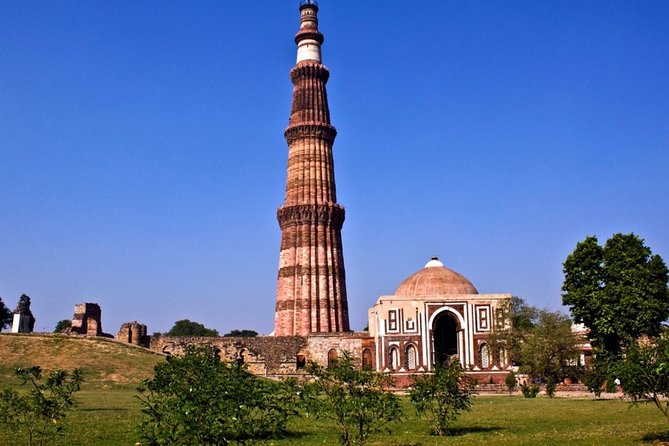
The 73-meter Qutub Minar is one of Delhi’s most recognizable monuments. Built from red sandstone and marble, it is also described as the world’s tallest brick minaret.
The tower is the visual star, but the surrounding complex matters too. Your guide can help explain the site’s role in Delhi’s early Islamic architecture and point out details that are easy to miss when you are focused on the tall tower. Plan on about an hour.
The stop is not only about height. It gives you a different architectural language from Humayun’s Tomb, which makes the morning feel varied rather than repetitive.
A few more New Delhi day trips worth putting side by side
- 3-Day Private Luxury Golden Triangle Tour to Agra and Jaipur From New Delhi
★ 5.0 · 424 reviews - 3-Day Luxury Golden Triangle Tour: New Delhi, Agra & Jaipur
★ 5.0 · 246 reviews - Award-Winning 3-Day Private Golden Triangle Tour of India
★ 5.0 · 240 reviews - 3-Day Private Golden Triangle Tour to Agra &Jaipur from New Delhi
★ 5.0 · 116 reviews
India Gate and Rashtrapati Bhavan
India Gate is a short, 30-minute stop. This memorial in central New Delhi commemorates members of the former British Indian Army who died in war. It was designed by Edwin Lutyens, the architect who helped shape New Delhi’s grand government district.
You also pass or stop at Rashtrapati Bhavan, the President’s House. Its large imperial design reflects the British plan for the capital, and it provides a useful contrast with Delhi’s Mughal buildings.
These are mainly exterior and photo stops. They are valuable for orientation, but they do not offer the same close architectural visit as Humayun’s Tomb or Qutub Minar.
Jama Masjid
Jama Masjid, built between 1650 and 1656 under Mughal emperor Shah Jahan, brings you into the religious and architectural world of Old Delhi. Allow about an hour.
This is a functioning mosque, so respectful clothing and behavior matter. The stop also adds historical depth to the Taj Mahal visit because Shah Jahan was responsible for both famous Mughal projects.
The admission fee is not included in every booking option. Ask what is covered before the tour begins, particularly if your package advertises monument tickets as an optional inclusion.
Chandni Chowk
Chandni Chowk is not a polished sightseeing district. That is the point. The old market area is filled with spice sellers, dried fruit, silver jewelry, and colorful saris. You have about an hour to see the market and take in the atmosphere.
I like this stop because it breaks up the parade of monuments. You get a closer look at daily commerce and the crowded energy of Old Delhi. At the same time, it can feel intense, especially after a long morning. Keep your belongings secure and stay aware of your meeting point with the guide.
Delhi’s first day is full. The value comes from the range: Mughal tombs, a medieval tower, colonial planning, a mosque, and a traditional market. The weakness is that each stop receives only a limited amount of time.
Day 2: The Taj Mahal, Agra Fort, and Fatehpur Sikri
Day two is the emotional center of the trip. Agra’s monuments are among India’s most famous, and the order of stops gives you both the idealized image of Mughal architecture and the political story behind it.
Taj Mahal
You spend about two hours at the Taj Mahal. Built between 1631 and 1653 under Shah Jahan, the white marble mausoleum is the best-known monument in India.
Two hours is a sensible minimum for a first visit. You need time to approach the building, see the marble work, hear the story of its construction, and take photographs from different angles. Your guide can also help you understand why the building feels so carefully balanced rather than simply large.
The Taj Mahal is closed every Friday. This is the most important scheduling detail in the entire tour. Check the calendar before booking and make sure your three-day route does not place the Agra visit on Friday.
The admission fee is not included in every option. If you want the most convenient experience, select the package that specifically includes monument tickets, then verify that the Taj Mahal is covered.
Agra Fort
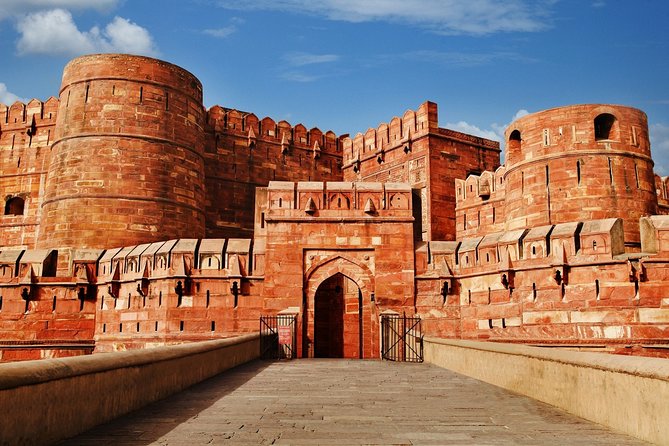
Agra Fort takes about an hour. Akbar built the massive red sandstone fort in the 16th century, and Shah Jahan later added marble features. Its position beside the Yamuna River helped make it both a stronghold and an imperial residence.
This visit gives you the political setting behind the Taj Mahal. The Taj is a mausoleum designed around symmetry and remembrance. Agra Fort is a working seat of power, with defensive walls and royal spaces.
The guide matters here. A large fort can blur into a series of courtyards if you do not know which ruler used which section. A good explanation helps you connect the building to the people and events behind it. The planned visit lasts about an hour, and entry is dependent on the booking option you choose.
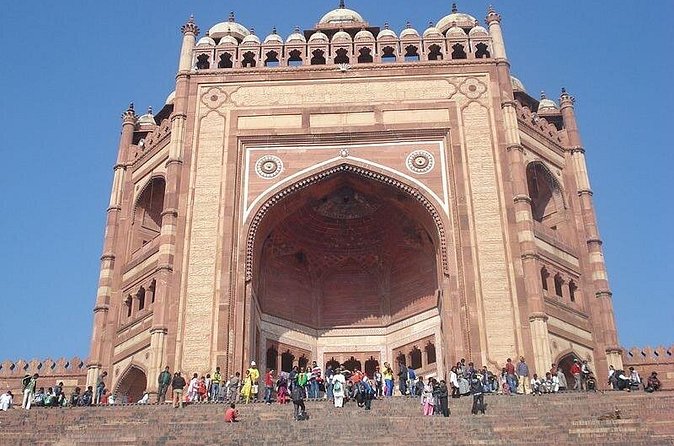
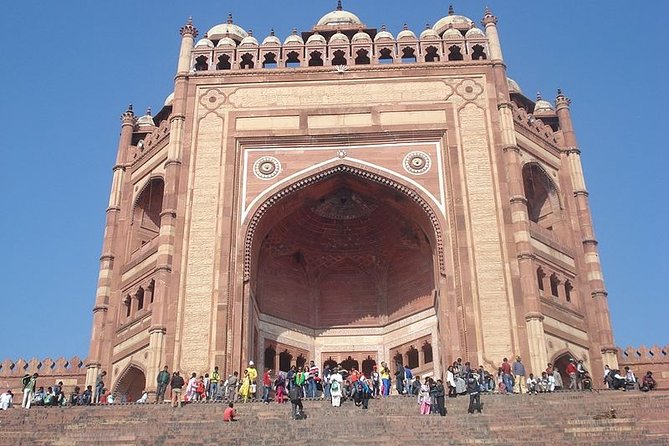
Fatehpur Sikri
Fatehpur Sikri lies about 40 kilometers west of Agra and served as the Mughal capital for a short period between 1572 and 1585 during Akbar’s reign. You have around an hour to see the fortified city.
This is one of the most interesting stops because it shows an imperial capital that was powerful but short-lived. You get a change of scale and setting after the Taj Mahal and Agra Fort. The red sandstone buildings also give the day a strong visual rhythm.
An hour is enough for an introduction, but not for a slow architectural study. If you are fascinated by Mughal buildings, you may wish the schedule allowed more time. Still, the stop earns its place because it adds a different chapter to Agra’s story.
Day two is the most tightly packed section of the tour. You see three major sites, and each has a different purpose: personal memorial, royal fortress, and former capital. The practical benefit is that your private driver handles the transfers. The cost is a long day with little room for wandering on your own.
Day 3: Jaipur forts, palaces, and instruments
Jaipur gives the final day a different mood. The city is associated with Rajasthan’s royal court, painted buildings, and carefully planned streets. The schedule focuses on the main sights rather than on long shopping visits.
Amber Palace
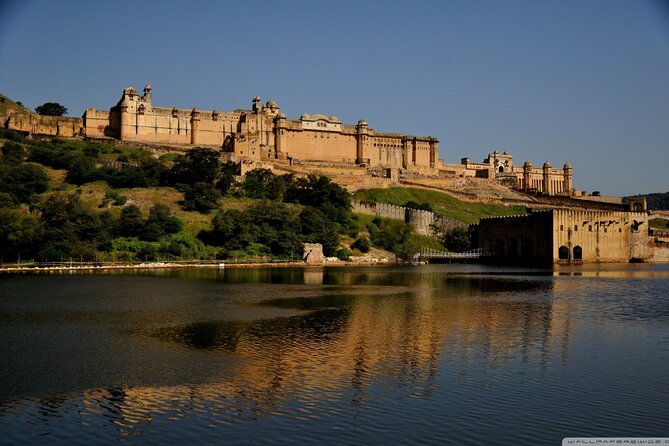
Amber Palace, also called Amer Fort, is about 11 kilometers from Jaipur and was built in 1592 by Raja Man Singh. You have two hours here, making it the longest single monument visit on the third day.
That extra time helps. The fort is large, and you can take in its courtyards, decorative interiors, and elevated setting without rushing through in 30 minutes. The site also explains Jaipur’s earlier political center, before the capital moved to the planned city.
Monument entry is not included in every option. Confirm the ticket package before departure. The stop can involve walking through a large historic complex, so comfortable shoes are a sensible choice, though the supplied tour details do not specify accessibility arrangements.
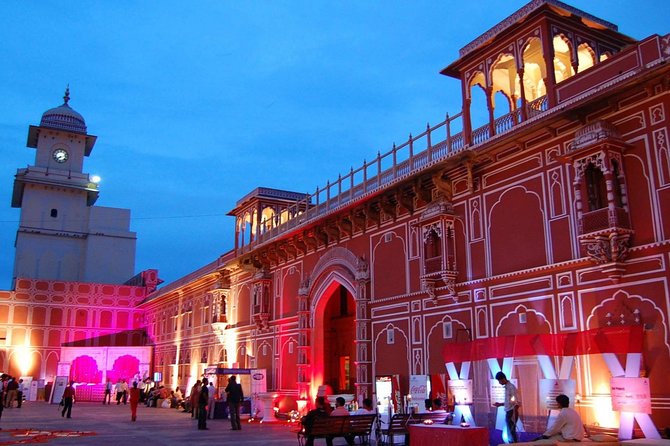
City Palace
City Palace sits in the heart of Jaipur and was the seat of the Maharaja. The complex includes Chandra Mahal, Mubarak Mahal, and other royal buildings.
You have one hour here. That is enough for the main courtyards and an introduction to Jaipur’s court culture, but the complex offers more detail than a rushed visit can cover. Your guide can help you focus on the buildings and objects that best explain how the royal household worked.
The entrance fee depends on the option you select. If you care most about seeing the interiors, check that City Palace admission is included rather than assuming every monument ticket comes with the base price.
Hawa Mahal
Hawa Mahal, or the Palace of Winds, is a 30-minute stop. The five-story facade was built in 1799 by Maharaja Sawai Pratap Singh and is one of Jaipur’s most familiar sights.
This is a short visit, mainly for the exterior and photographs. The honeycomb-like facade was designed with many small openings, giving the building its distinctive appearance. Do not expect a long palace tour in this slot. The time is better understood as a focused look at an important Jaipur landmark.
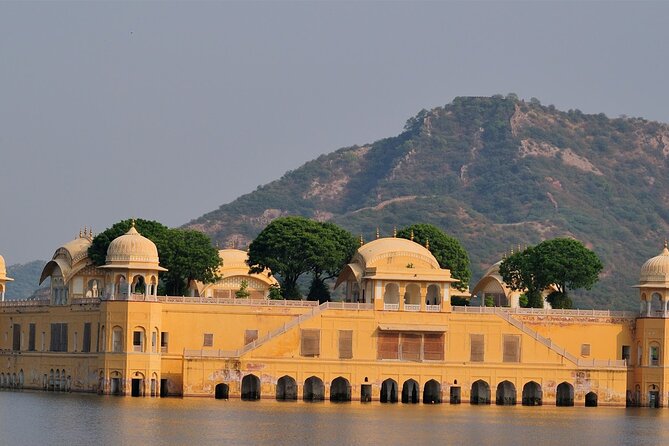
Jal Mahal
Jal Mahal means Water Palace, and the building sits in the middle of Man Sagar Lake. It is about four kilometers from Jaipur on the Amer Jaipur road.
You have around 20 minutes here, so this is a quick viewing stop rather than a full palace visit. Its position in the lake makes it a welcome change after the larger forts and palace compounds. Admission is listed as free.
Jantar Mantar
Jantar Mantar is an astronomical observation site built in the early 18th century. It contains about 20 major fixed instruments, constructed in masonry at monumental scale.
You have one hour here. This is a particularly good stop if you enjoy science, architecture, or unusual historic sites. The instruments were designed to observe and calculate astronomical positions, and their size makes the ideas easier to grasp than a small museum display would.
The admission fee depends on the package you book. A guide can make a major difference because the instruments are not self-explanatory. Without context, you may see large geometric forms. With a clear explanation, you can understand what they were built to measure.
Guides, transport, and the human side of the trip
A guide is provided in each city rather than one person accompanying you through all three days. The named guides are Gaurav Kashyap in Delhi, Abdul Qadir in Agra, and Bipin in Jaipur.
That local arrangement makes sense. Each guide can focus on the monuments and customs of one area, while your driver manages the longer connections. It also means the quality and style may change from day to day. One strong point is the reported care shown to an older couple, with guides making accommodations and responding quickly to questions and concerns.
The private vehicle is one of the tour’s best practical features. You are not waiting for a large group to gather at every stop, and hotel pickup and drop-off remove much of the guesswork. The vehicle is air-conditioned, which matters during long sightseeing days.
The tour is private, meaning only your group participates. That gives you more control than a large coach tour, though the route itself remains ambitious.
Is $181 per person good value?
At $181 per person, the tour can be good value if your chosen package includes the two hotel nights, breakfast, private transport, guides, taxes, and monument admissions. It can be less attractive if you select a lower-cost option and then pay separately for several major entrances.
Read the inclusion line carefully. Accommodation and breakfast are included only with the hotel option. Monument tickets are included only if you choose the option that lists admission tickets. Lunch, dinner, and drinks are not covered.
The value is strongest for someone who wants one organized purchase and a private vehicle. You save the effort of arranging separate city transfers and finding a guide at each major monument. If you already have hotels and transport arranged, booking a full package may offer less benefit.
The tour is also booked, on average, 58 days ahead. That suggests you should plan early, especially if your dates are fixed or you need to avoid Friday at the Taj Mahal.
Who should book this three-day route?
I would recommend it to a first-time visitor who wants the classic Golden Triangle in a short window. It works well for couples, families, and private groups who prefer a driver and guide rather than handling trains, taxis, and monument tickets alone.
It is also a sensible choice for a group that includes older family members. The private format gives the guides more room to adjust their help than a large group tour would.
I would be cautious if you dislike early starts, long drives, or tightly scheduled sightseeing. You will see the major sights, but you will not have much spare time for independent exploring, long meals, or unplanned discoveries.
Cancellation terms are also worth noting before payment. You can receive a full refund when cancelling at least six full days before the start time. A cancellation two to six days ahead receives 50 percent, while cancelling less than two full days ahead is nonrefundable.
Should you book it?
Book this tour if your priority is seeing the Taj Mahal, Agra Fort, Jaipur’s Amber Palace, Delhi’s key monuments, and several other major sights with minimal planning. The private car, local guides, hotel option, and included breakfast make the route easy to manage.
Choose another plan if you want slow mornings, long market visits, or several days in each city. For a short first visit, though, this is a well-focused route with strong guide support and a useful mix of history, architecture, religion, shopping, and everyday city life.
FAQ
How long is the Golden Triangle tour?
The tour lasts approximately three days and includes two nights of accommodation when you choose the hotel option.
Which cities does the tour visit?
It visits New Delhi, Agra, and Jaipur.
What time does the tour start?
The stated start time is 8:00 am.
Is hotel pickup provided?
Yes. Hotel pickup and drop-off are included.
Is the tour private?
Yes. Only your group participates in the activity.
Are hotels and breakfast included?
Two nights of twin-sharing accommodation with breakfast are included if you book the option that includes hotels.
Are monument entrance fees included?
Monument admission tickets are included only if you choose the option that includes them. Check your selected package before booking.
Is the Taj Mahal open every day?
No. The Taj Mahal is closed to all visitors on Fridays.
Are meals included?
Lunch, dinner, and drinks are not included.
Newly reviewed around New Delhi
- Private Customized Tour Of Old/New Delhi Spiritual Sites★ 5.0 · 5 reviews
- Yoga and Meditation Classes in Gurgaon★ 4.5 · 8 reviews
- Yoga class in Delhi★ 5.0 · 29 reviews
- Old Town Delhi Walking Tour (2 Hours Guided Tour with Local)★ 4.5 · 22 reviews
- 5 Days Golden Triangle Tour with Ranthambore(Delhi Agra Jaipur Ranthambore Tour)★ 5.0 · 3 reviews
- Wonderful Old & New Delhi sightseeing tour★ 5.0 · 3 reviews
- Hidden Gems of Old Delhi – Walk★ 5.0 · 8 reviews
- Delhi Zoo White Tigers & lions with Old Fort Visit★ 4.5 · 5 reviews
Golden Triangle Tours from Delhi, compared.

3-Days Private Golden Triangle Tour: Delhi, Agra & Jaipur by Car
Read our review →3-Days Private Golden Triangle Tour: Delhi, Agra & Jaipur by Car
Read our review →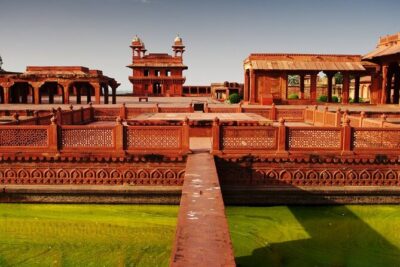
3-Day Delhi, Agra and Jaipur Private Tour – India Golden Triangle
Read our review →
Four-Day Private Luxury Golden Triangle Tour to Agra and Jaipur From New Delhi
Read our review →
5 Nights 6 Days Private Golden Triangle Tour – Delhi Agra Jaipur
Read our review →

Private Car and Drive for Golden Triangle (4N/5D)
Read our review →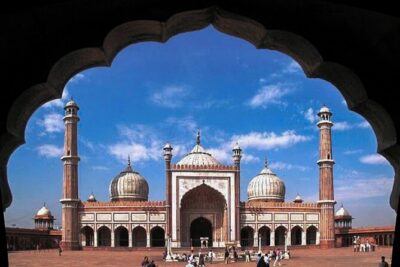
Private Golden Triangle Tour Delhi Agra Jaipur ( Top Rated )
Read our review →Browse the lists this tour appears in