
Reviewed · JAIPUR TOURS FROM DELHI
Golden Triangle Tour – Delhi Agra Jaipur
The best part of this four-day Golden Triangle tour is its pace: you see Delhi’s Mughal landmarks, the Taj Mahal at sunrise, Agra’s great fort, and Jaipur’s royal sights without joining a large coach group. A private car, local guides, breakfast, and hotel stays are included.
I like the small-group format and the chance to adjust the day, especially if you want extra time at the Taj Mahal or prefer to skip a stop. I also like the practical touches: bottled water, snacks, WiFi, first aid, WhatsApp updates, and reserved train seats when rail travel is used.
The main catch is the packed schedule and the extra cost of monument admission. At $250 per person, the tour can be good value, but you should confirm hotel standards, entry fees, and the exact transport plan before paying.
Key points to know before booking
- A sunrise Taj Mahal visit: You reach Agra’s most famous monument before the main crowds and have about two hours with a guide.
- Private transport across three cities: Your group travels in an air-conditioned vehicle, with fuel, tolls, parking, and the driver included.
- Delhi is packed into one long sightseeing day: Qutub Minar, Humayun’s Tomb, Jama Masjid, Chandni Chowk, India Gate, and more are all on the route.
- Jaipur adds forts and astronomy: Amber Fort, City Palace, Hawa Mahal, and Jantar Mantar form the final major sightseeing day.
- Local food is part of the plan: Lunch is arranged at a local family restaurant, with Mughlai food rather than a standard tourist buffet.
- The price needs a careful look: Breakfast and accommodation are included, but monument entry fees and some taxes are not.
Why this Golden Triangle route works
India’s Golden Triangle links New Delhi, Agra, and Jaipur in a compact loop. Each city gives you a different look at northern India: Delhi brings imperial and religious landmarks, Agra focuses on Mughal court culture, and Jaipur offers Rajput palaces, forts, markets, and planned-city architecture.
This tour compresses the route into four days. That saves you from arranging several hotel changes, drivers, tickets, and guides on your own. It also means you will spend substantial time in the vehicle, especially on the Delhi to Agra and Agra to Jaipur legs.
The private format matters here. You are not waiting for 40 or 50 people to finish a photo stop. You can ask to linger at the Taj Mahal, adjust the order of sights, or make a short stop when your group needs one. The trade-off is that a private tour still cannot change the distances between cities.
The company has operated India tours for more than 20 years and uses English-speaking local guides. Multilingual guiding is also offered, though you should request your preferred language before departure. Staff names associated with the operator include Rahman, Raja, and Satish. If one of them is assigned to your booking, confirm who handles driving, guiding, and trip coordination.
More Jaipur trips from New Delhi:
- 3-Days Private Golden Triangle Tour: Delhi, Agra & Jaipur by Car
★ 5.0 · 1,107 reviews - 3-Days Private Golden Triangle Tour: Delhi, Agra & Jaipur by Car
★ 5.0 · 1,098 reviews - 3-Day Delhi, Agra and Jaipur Private Tour – India Golden Triangle
★ 5.0 · 812 reviews
Delhi starts with towers, tombs, and crowded lanes
The Delhi portion covers a lot of ground. It begins with Qutub Minar, a 73-meter sandstone and marble tower linked to Qutub-ud-din Aibak and the early Delhi Sultanate. Allow about an hour here. The monument is more than a tall photo stop, so use your guide to understand the layered buildings and changing architectural styles around it.
Entry is not included, so budget for the ticket separately. The same applies to several major monuments later in the day.
The Lotus Temple provides a sharp change of mood. Its white petal-shaped design was completed in 1986, and the Baháʼí House of Worship welcomes people of all faiths. You get about 30 minutes here, which is enough for the exterior and a short quiet visit if access conditions permit.
India Gate is a quick stop with a different role in Delhi life. It honors soldiers of British India who died in various conflicts, but it is also a popular local meeting place. You get about 30 minutes, and admission is included.
The Parliament House stop is brief, only about five minutes. You will mainly view the circular Sansad Bhavan from outside. It is useful for a quick look at the country’s political center, but do not expect an interior visit or a long explanation.
Old Delhi brings the strongest local atmosphere
Jama Masjid is one of the largest mosques in India, commissioned by Shah Jahan between 1650 and 1656. Its broad courtyard, red sandstone, and marble details make it one of Delhi’s key Mughal buildings. Plan on about an hour.
Dress respectfully, and check current visiting rules with your guide. Admission is not included. The tour description does not promise an interior visit at every time of day, so treat access as subject to local conditions.
Nearby Chandni Chowk gives you the liveliest street experience of the Delhi section. Narrow lanes carry spice sellers, sari shops, silver merchants, sweets, and everyday traffic. You have about an hour here, which is enough for a taste of the area but not enough to cover it fully.
This is one of the places where a private guide helps. You can ask for a short walk through the market rather than being taken straight to a shop. Keep your belongings close and agree on a meeting point before wandering. The tour includes the stop, but purchases and food beyond the planned meal are your responsibility.
Agrasen Ki Baoli is a short 15-minute stop. This protected stepwell measures about 60 meters long and 15 meters wide, and it shows how older Indian communities stored and managed water. It is a compact visit, but a worthwhile change from grand palaces and monuments.
Humayun’s Tomb receives about an hour. Commissioned by Empress Bega Begum for her husband in 1558, it is often linked to the architectural ideas later seen at the Taj Mahal. The symmetrical gardens, high arches, and red sandstone give you useful background before Agra.
The Delhi to Agra road is useful but long
After lunch, you leave Delhi by the Yamuna Expressway. The drive to Agra takes about three hours, followed by hotel check-in and a free evening.
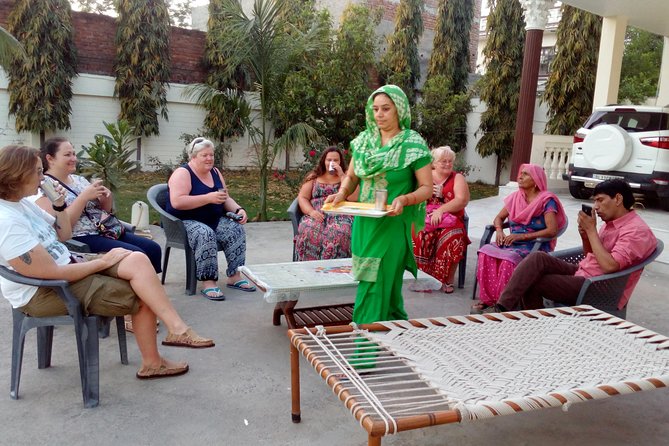
The tour promises Mughlai lunch at a local family restaurant rather than a standard stop built for large tour groups. That is a good chance to try regional food, though the exact restaurant and menu are not specified. Tell the operator about dietary needs before the trip.
The vehicle includes air conditioning, WiFi, water, snacks, and first-aid supplies. Fuel, tolls, parking, and the driver’s services are included. Those details reduce the small costs and delays that can add up during a road trip.
Still, three hours on the road is only an estimate. Traffic, stops, and city entry can change the timing. The evening in Agra is mainly for rest, not a major sightseeing session, so do not book a late independent activity unless you have plenty of room in your schedule.
More Golden Triangle routes from New Delhi:
- Four-Day Private Luxury Golden Triangle Tour to Agra and Jaipur From New Delhi
★ 5.0 · 807 reviews - 5 Nights 6 Days Private Golden Triangle Tour – Delhi Agra Jaipur
★ 5.0 · 574 reviews - 4 Days Golden Triangle Tour
★ 5.0 · 499 reviews - Private Car and Drive for Golden Triangle (4N/5D)
★ 5.0 · 451 reviews
Sunrise at the Taj Mahal is the tour’s centerpiece
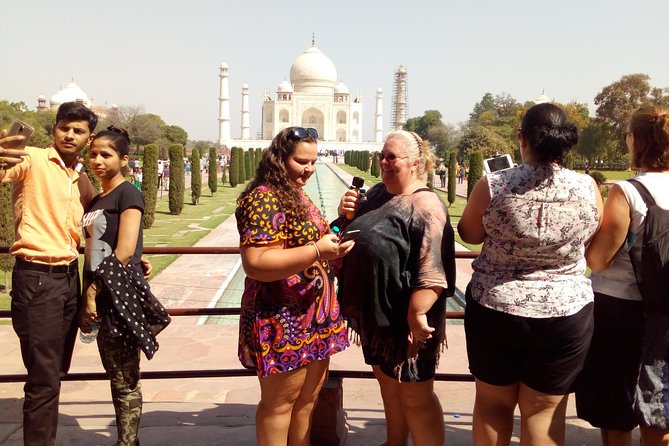
The Taj Mahal visit begins early, with the goal of seeing the monument in softer morning light before the largest crowds arrive. You have about two hours with your guide.
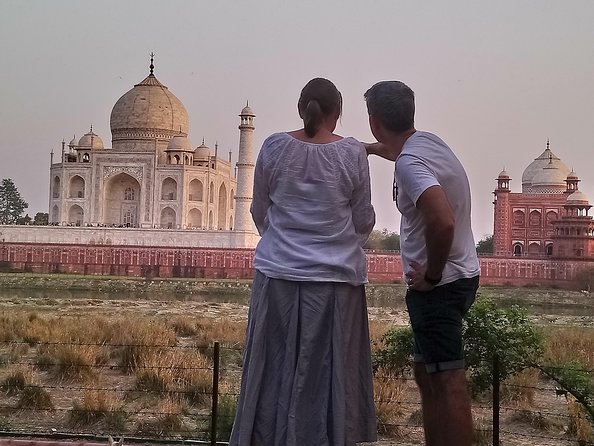
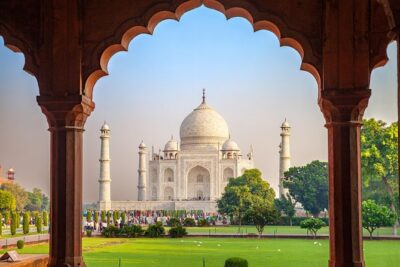
That timing is a real advantage. The white marble changes color as the light rises, and an early arrival usually gives you a calmer first view. Your guide can explain Shah Jahan’s mausoleum, the building’s love story, the gardens, and the marble inlay work.
Entry is not included. The tour also describes a detailed guided visit inside the UNESCO-listed complex, but access rules can vary, so confirm what the current ticket covers. Comfortable shoes matter because the site involves walking, and you should expect security checks.
The Taj Mahal can easily take more than two hours if you want time for photographs and close views of the details. Since the tour allows some customization, ask in advance if you can extend the visit, provided the rest of the day still works.
Agra Fort adds the imperial backstory
Agra Fort follows the Taj Mahal, with about an hour inside its red sandstone walls. This was a royal fortress and palace complex, not simply a defensive structure. Courtyards, balconies, gardens, and audience spaces help explain how Mughal rulers lived and governed.
The fort also gives you a different view of Agra’s imperial world. The Taj Mahal is a tomb built for memory, while Agra Fort shows the working court behind that story. Your guide’s explanations will make the stop much more useful than a quick walk through the gates.
Admission is extra. The schedule allows one hour, which is enough for the main areas but may feel short if you enjoy architecture or want a slower pace.
Itmad-ud-Daula, often called the Baby Taj, takes about 30 minutes. Built from 1622 to 1628, the mausoleum shows the shift from red sandstone toward the white marble and delicate inlay associated with the Taj Mahal. It is smaller and quieter than the Taj, but its fine decoration rewards close attention.
Chand Baori breaks up the road to Jaipur
The route to Jaipur includes Chand Baori at Abhaneri, an enormous stepwell with about 3,500 steps. Built in the eighth or ninth century, it is one of the most striking examples of older water engineering in the region.
You get about 30 minutes here. That is enough to look into the deep geometric well and take photographs, but not enough for a slow visit. Admission is not included.
After Chand Baori, you continue to Jaipur and check into your hotel. The schedule allows about five hours for the transfer and arrival period, with the evening open for rest. That pause is welcome because the next day contains several major sites.
Jaipur’s Amber Fort needs your best energy
Amber Fort is the largest sightseeing stop in Jaipur, with about two hours planned. The hilltop complex served as the capital of the region until 1728 and combines Rajput design with ornate courtyards, palaces, gateways, and decorative work.
This is the place where a guide can add real value. The fort is large, and it is easy to walk past an important courtyard without understanding its purpose. Wear shoes suitable for uneven surfaces and expect some walking.
The tour description does not include a specific elephant ride or jeep transfer to the fort. Do not assume either is part of the package. Ask how your vehicle reaches the entrance and what access arrangements apply on your date.
Jal Mahal is a 30-minute photo stop beside Man Sagar Lake. The palace appears to float on the water, although the building itself is not presented as an interior visit here. It is a pleasant pause after the fort, especially if you want a simple photograph rather than another long museum stop.
Jaipur’s palace quarter packs in art and astronomy
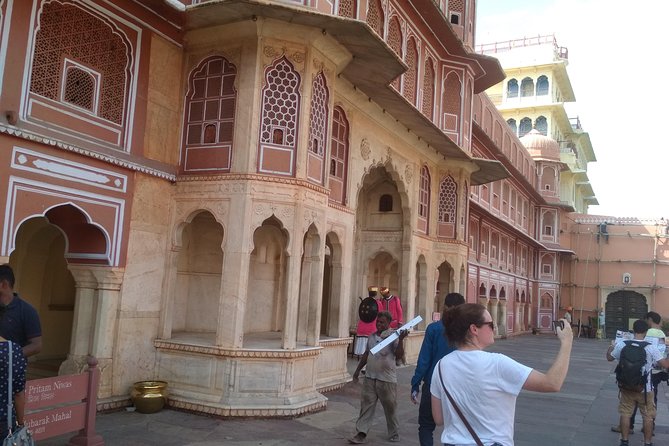
The City Palace receives about an hour. Built in 1721 as the administrative and ceremonial center of Jaipur’s maharajas, it includes courtyards, palace buildings, and royal collections. The planned city around it helps you see Jaipur as more than a series of isolated monuments.
Jantar Mantar is next, with about an hour. This UNESCO-listed site contains 19 large astronomical instruments built in 1734 by Sawai Jai Singh II. The instruments measure time and track celestial positions with the naked eye. A guide is especially useful here because the scale and purpose are not always obvious at first glance.
Hawa Mahal is the final major Jaipur stop, with about 15 minutes. Its five-story pink and red sandstone facade was built in 1799 and is designed with many small openings. The short visit is mainly for viewing and photographs from outside, not a full palace tour.
The order of Jaipur’s stops may change. The useful question is not just what is included, but how much time you actually get inside each site. Confirm that before you book if palace interiors are a top priority.
What $250 per person really covers
At $250 per person, the cost includes an air-conditioned vehicle, driver services, fuel, tolls, parking, accommodation with breakfast, and English-speaking local guides. For a private four-day trip across three cities, that can be fair value, especially for couples or small groups who would otherwise arrange separate cars and guides.
The price does not include monument entry fees. The supplied details also list all fees and taxes as excluded, even though state tax is listed among the included services. That wording needs clarification before payment. Ask for a full cost sheet covering admission, taxes, guide charges, and any train reservations.
The tour is offered with free cancellation up to 24 hours before the start time. Changes or cancellations inside that window are not accepted for a refund. Poor weather can lead to a different date or a full refund, and the experience requires suitable weather.
The tour is private, so only your group participates. Most people can take part, and the route is near public transportation, though the main plan uses private road transport.
Who should choose this trip
I would choose this tour if you want the major sights handled for you and prefer a private car to public transport. It suits first-time visitors who want Delhi, Agra, and Jaipur in one short trip without managing several local bookings.
It also suits couples and families who value flexibility. The ability to adjust sightseeing on the spot is more useful in a private tour than in a fixed coach schedule.
I would hesitate if you dislike early starts, long drives, or fast sightseeing. You also need to be comfortable checking extra costs, since monument admission is not part of the headline price.
The free time is limited. Delhi is particularly full, with nine stops before the drive to Agra. If you want long market walks, museum visits, or unplanned meals, ask the operator to remove lower-priority stops.
Should you book the Delhi, Agra, and Jaipur tour?
Book it if your goal is to see the Golden Triangle’s main landmarks in four days with a private vehicle, local guides, breakfast, hotels, and direct support. The sunrise Taj Mahal visit, small-group format, and flexible schedule are the strongest reasons to choose it.
Before booking, get written answers about hotel names, monument fees, taxes, the exact vehicle, and the day-by-day timing. If those details are clear and you value convenience over a slow pace, $250 per person can be a sensible package price.
If you have five or more days, I would ask for a slower version. Extra time in Agra or Jaipur would make the experience less rushed. For a first look at northern India, though, this route covers the essentials and keeps the planning load low.
FAQ
How long is the Golden Triangle tour?
The tour lasts approximately four days and covers New Delhi, Agra, and Jaipur.
Is the tour private?
Yes. Only your group participates in the activity.
Is hotel accommodation included?
Yes. Accommodation with breakfast is included. The supplied details do not name the hotels, so confirm the properties before booking.
Are monument entry fees included?
No. Entry fees at the monuments are excluded and must be paid separately.
What transport is included?
An air-conditioned vehicle is included, along with fuel, tolls, parking, and the driver’s services. WiFi, water, snacks, and first-aid supplies are also described as available onboard.
Can I cancel for a full refund?
Yes, if you cancel at least 24 hours before the local start time. Cancellations or changes made less than 24 hours before the start are not accepted for a refund.
More Agra Tours from New Delhi
- Same Day Taj Mahal, Agra Fort & Baby Taj Tour from Delhi by Car
★ 5.0 · 4,304 reviews - Full Day Taj Mahal, Agra Fort & Baby Taj Tour from Delhi by Car
★ 5.0 · 3,647 reviews - From Delhi: Taj Mahal & Agra Private Day Trip with Transfers
★ 4.9 · 3,181 reviews - From Delhi: Taj Mahal and Agra Fort Private Sunrise Tour
★ 4.9 · 2,270 reviews
Newly reviewed around New Delhi
- Private Customized Tour Of Old/New Delhi Spiritual Sites★ 5.0 · 5 reviews
- Yoga and Meditation Classes in Gurgaon★ 4.5 · 8 reviews
- Yoga class in Delhi★ 5.0 · 29 reviews
- Old Town Delhi Walking Tour (2 Hours Guided Tour with Local)★ 4.5 · 22 reviews
- 5 Days Golden Triangle Tour with Ranthambore(Delhi Agra Jaipur Ranthambore Tour)★ 5.0 · 3 reviews
- Wonderful Old & New Delhi sightseeing tour★ 5.0 · 3 reviews
- Delhi Zoo White Tigers & lions with Old Fort Visit★ 4.5 · 5 reviews
- Hidden Gems of Old Delhi – Walk★ 5.0 · 8 reviews
Jaipur Tours from Delhi, compared.
3-Days Private Golden Triangle Tour: Delhi, Agra & Jaipur by Car
Read our review →3-Days Private Golden Triangle Tour: Delhi, Agra & Jaipur by Car
Read our review →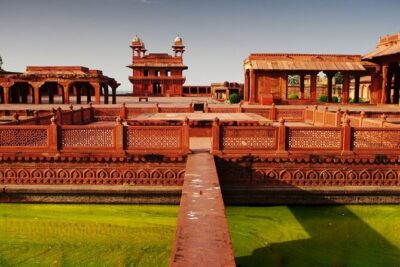
3-Day Delhi, Agra and Jaipur Private Tour – India Golden Triangle
Read our review →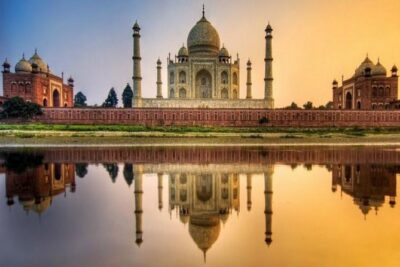
Four-Day Private Luxury Golden Triangle Tour to Agra and Jaipur From New Delhi
Read our review →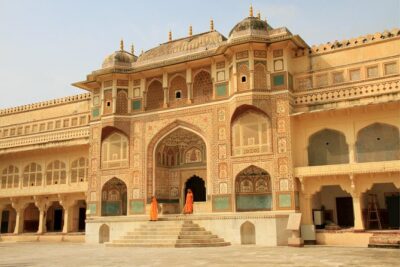
Jaipur Day Trip from Delhi by Car or Train – All Inclusive
Read our review →
Jaipur City Private Day Tour from Delhi by Car – All Inclusive
Read our review →
5 Nights 6 Days Private Golden Triangle Tour – Delhi Agra Jaipur
Read our review →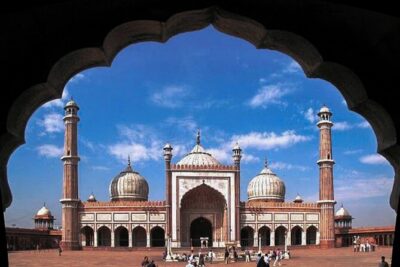
Private Golden Triangle Tour Delhi Agra Jaipur ( Top Rated )
Read our review →Browse the lists this tour appears in