
Reviewed · GOLDEN TRIANGLE TOURS FROM DELHI
Five days Golden Triangle India Tour From Delhi
The Taj Mahal at sunrise is the clear centerpiece of this five-day Golden Triangle tour, but the route gives you much more: Delhi’s grand avenues and Mughal monuments, Agra Fort, Jaipur’s hilltop Amber Palace, and the remarkable Chand Baori stepwell. I like the private format and the fact that the schedule can be adjusted for your group. I also like having an air-conditioned car and four hotel nights included, which saves you from arranging the awkward travel between cities yourself.
The main drawback is the pace. You cover three major cities in five days, with long road journeys and a full sightseeing day in Jaipur. The $210 per-person price is attractive, but monument admission is extra, and the quality of the hotel and guide assigned to you should be confirmed before you book.
Five things to know before booking
- Sunrise at the Taj Mahal: You visit India’s most famous monument early on Day 3, when the light is gentle and the crowds may be easier to manage.
- Private travel only: Your group has its own vehicle and guide rather than joining a large coach party.
- Four hotel nights included: Breakfast is provided each morning, though monument tickets and other personal expenses are not.
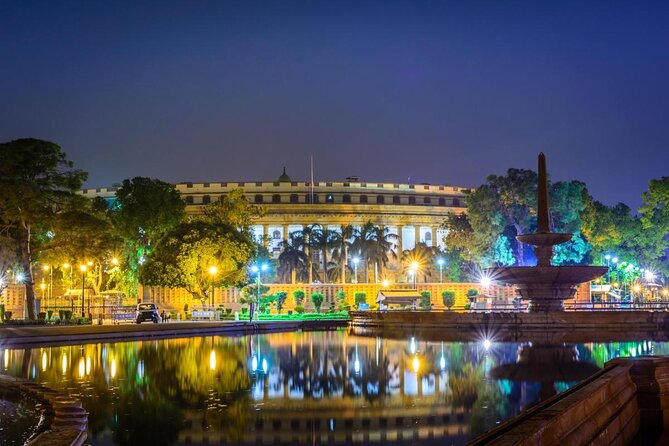
- Delhi gets a full first day: Qutub Minar, Jama Masjid, Lotus Temple, Raj Ghat, India Gate, and several government buildings are all included.
- Jaipur is action-packed: Amber Palace, City Palace, Jal Mahal, Jantar Mantar, and Hawa Mahal fit into one long sightseeing day.
- Guide support matters: Praveen is frequently involved in arrangements, while Rajiv Gupta, Umesh, and Suresh are also named in connection with different tours.
Why this Golden Triangle route works
India’s Golden Triangle connects Delhi, Agra, and Jaipur in a rough triangle, giving first-time visitors a useful introduction to northern India. Each city has a different character. Delhi is the political capital and a mix of old neighborhoods, imperial avenues, and religious buildings. Agra is the Mughal showstopper. Jaipur brings Rajput palaces, pink sandstone, astronomy, and Rajasthan’s distinctive royal style.
I like the route because it avoids backtracking. You begin in Delhi, drive to Agra, continue to Jaipur, then return to Delhi. The car carries you door to door, and the tour includes tolls, taxes, accommodation, and four breakfasts.
The tradeoff is that this is an overview, not a slow cultural stay. Delhi sightseeing is spread across a large city. The Agra to Jaipur drive includes a stop at Abhaneri, and the final drive back to Delhi takes about four to five hours. If you want long market visits, relaxed meals, or time to wander alone, you may find the schedule tight.
More Golden Triangle routes from New Delhi:
- 3-Days Private Golden Triangle Tour: Delhi, Agra & Jaipur by Car
★ 5.0 · 1,107 reviews - 3-Days Private Golden Triangle Tour: Delhi, Agra & Jaipur by Car
★ 5.0 · 1,098 reviews - 3-Day Delhi, Agra and Jaipur Private Tour – India Golden Triangle
★ 5.0 · 812 reviews
Day 1: Delhi from Qutub Minar to Akshardham
The opening day covers a lot of ground. You start at Qutub Minar, the 73-meter tapering tower at the center of the Qutub complex in Mehrauli. Its five levels and changing stonework make it one of Delhi’s most memorable monuments. Allow about an hour, and remember that admission is not included.
From there, the route moves toward Old Delhi and Jama Masjid. Built between 1644 and 1658 under Shah Jahan, this red sandstone and marble mosque rises above the surrounding streets and can hold up to 25,000 people. The visit is scheduled for 45 minutes, enough to see the main structure but not enough for an unhurried look at every detail.
Your guide then takes you to the Lotus Temple, a Bahá’í House of Worship shaped like a white marble flower. It welcomes people of all faiths, and admission is free. The hour here provides a calmer break after the noise and traffic of Old Delhi.
Raj Ghat offers another change of pace. This carefully maintained park contains the simple black marble platform marking the place where Mahatma Gandhi was cremated in 1948. A half-hour is enough for a respectful visit.
The afternoon turns to New Delhi’s ceremonial center. You see Rashtrapati Bhavan, the President of India’s official residence, and the circular Parliament House from outside. The tour description mentions a chance to peek inside the President’s House, but the schedule lists free admission and short visits, so you should confirm exactly what access is available on your date.
India Gate is a straightforward photo stop. The 42-meter arch honors Indian soldiers who died in several early 20th-century conflicts, including the First World War. It is especially useful as a quick lesson in the complicated history of British India and independent India.
The final stop is Swaminarayan Akshardham, an elaborate temple complex completed in 2005. Pale red sandstone carvings show thousands of deities, saints, and mythical figures. The temple is closed on Mondays, so this stop requires advance checking. Admission is listed as free, though site rules and any special displays may differ.
This first day is packed, but it gives you a broad look at Delhi. I would treat it as an orientation day rather than expect a leisurely exploration of each place. Admission to Qutub Minar and Jama Masjid is extra, and other site charges should be checked with the operator.
Day 2: The road to Agra and a quieter Mughal afternoon
The drive to Agra takes about three hours via the Yamuna Expressway. The road section is not sightseeing in itself, but it makes the transfer efficient and lets you avoid arranging a separate train or car.
After checking into your pre-booked hotel, you visit the Tomb of I’timad-ud-Daulah. Often called the Baby Taj, this smaller Mughal mausoleum is sometimes described as a draft for the Taj Mahal. Its jewel-box scale gives you a closer look at delicate decoration than the Taj’s huge grounds allow.
The day ends at a Taj Mahal sunset viewpoint across the river. This is a smart addition. You see the monument from a distance, with the river between you and the main complex, before returning to your hotel. Admission is not included here, and the exact viewing area should be confirmed.
Day 2 is lighter than the others, which is welcome after the Delhi program. Use the evening to rest, since the next morning begins with the tour’s most important visit.
Day 3: Sunrise at the Taj Mahal, then Agra Fort
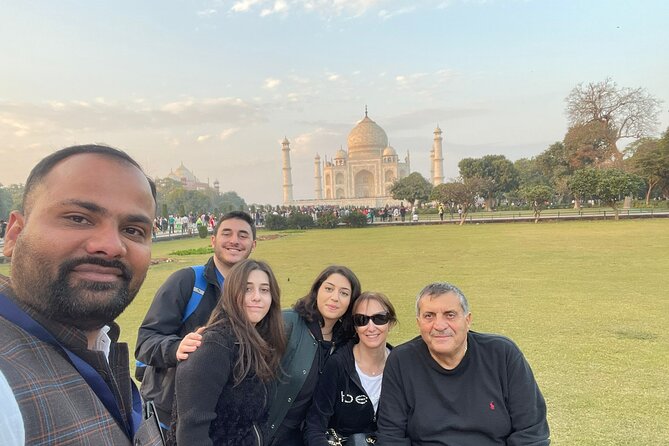
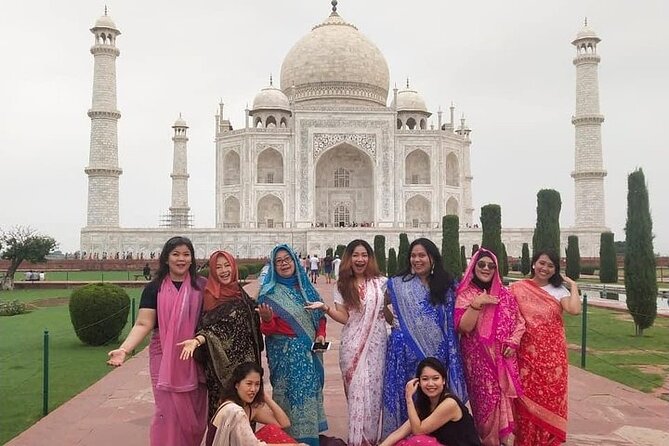
The sunrise visit to the Taj Mahal is the strongest planning choice in the itinerary. The monument was built by Shah Jahan as a memorial to his wife Mumtaz Mahal, who died in 1631 after giving birth to their 14th child. At sunrise, the changing light gives the white marble a softer appearance, and an early start can help you avoid the worst heat and crowds.
You spend about two hours at the Taj Mahal, then return to the hotel for breakfast before checking out. The guide can help with tickets, entry lines, and photographs. Praveen is specifically praised for explaining the building’s history and construction and for finding good photo positions.
The Taj is not a quick tick-box attraction. Give yourself time to notice the symmetry, the inlaid decoration, the changing views from the garden, and the contrast between the massive gateway and the delicate central building. Admission is not included, so add that cost to your budget.
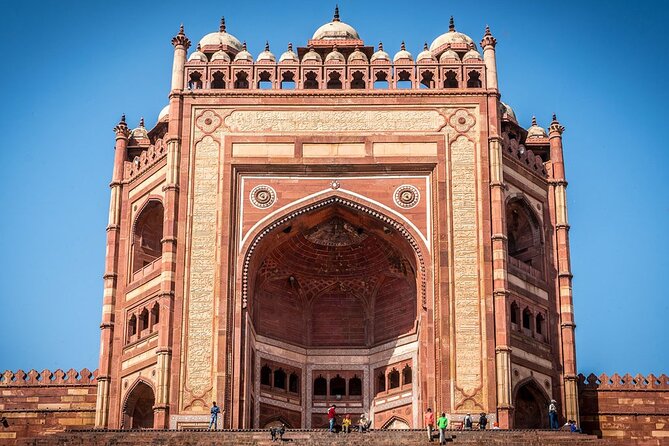
Agra Fort follows. This enormous red sandstone complex was the main residence of the Mughal emperors and includes palaces, balconies, gardens, and courtyards. It also helps you understand Shah Jahan’s life beyond the Taj Mahal. From parts of the fort, you can see the Taj in the distance, linking the two sites in a useful way.
The fort visit is scheduled for 45 minutes. That is enough for a guided overview, but short for a close look at the entire complex. If Mughal architecture is your main interest, ask whether you can adjust the timing.
After Agra, you drive toward Jaipur and stop at Chand Baori in Abhaneri. This huge stepwell was designed to collect rainwater, with rows of geometric stairs dropping toward the water. It is one of the most unusual stops on the route and a good contrast to the imperial monuments.
The nearby Harshat Mata Temple adds a religious site to the visit, though the schedule focuses mainly on the stepwell. After about an hour, you continue to Jaipur, check into your hotel, and rest.
A few more New Delhi day trips worth putting side by side
- Private 5-Day Ranthambhore Tiger Tour from Delhi including the Taj Mahal, Agra and Jaipur
★ 5.0 · 197 reviews - 5-Day Private Luxury Golden Triangle Tour to Agra and Jaipur From New Delhi
★ 5.0 · 142 reviews - Private Golden Triangle Tour 5 Days Delhi Agra Jaipur
★ 5.0 · 92 reviews - Five Day – Private Luxury Golden Triangle Tour to Agra & Jaipur From New Delhi.
★ 5.0 · 67 reviews
Day 4: Jaipur’s forts, palaces, and precision instruments
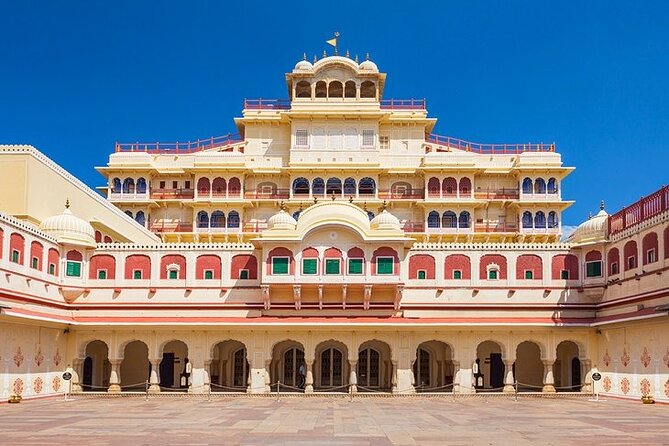
Jaipur’s sightseeing starts at Amber Palace, also known as Amer Fort. Built on a hill about 11 kilometers from Jaipur, it combines defensive walls with courtyards, halls, and decorative palace rooms. The two-hour visit gives you time to see more than the main entrance and understand how the site worked as a royal residence.
Next comes Jaipur City Palace, the former seat of the Maharaja and the Kachwaha Rajput clan. The complex includes Chandra Mahal, Mubarak Mahal, and other buildings. Two hours is a sensible amount of time here, especially if you want to pause for the painted doors, courtyards, textiles, and royal displays.
Jal Mahal is a shorter stop. The palace appears to float in Man Sagar Lake, and the usual visit is mainly for the view and photographs from the shore. You spend about 30 minutes here. Do not expect a full palace tour from this stop.
Jantar Mantar is one of Jaipur’s most distinctive sights. Built in 1734 by Sawai Jai Singh II, it contains 19 large astronomical instruments that allow observations with the naked eye. A guide is useful here because the structures can look abstract until someone explains how they measure time and track celestial positions.
The final main stop is Hawa Mahal, the five-story Palace of Winds. Its pink and red sandstone facade was designed with many small windows, allowing royal women to observe street life without being seen. The tour allows about an hour, followed by lunch at a local restaurant.
This is a full day, and the order may change. You will see the main Jaipur sights, but you will not have much spare time for shopping or wandering. Monument admission is extra at every major Jaipur stop, so ask for an estimate of total ticket costs before departure.
Hotels, cars, guides, and the real value of $210
At $210 per person, this tour offers strong value if you want a private car, four nights of accommodation, four breakfasts, an English-speaking city guide, tolls, and taxes in one package. The price is especially appealing for couples or families who would otherwise need to arrange three hotel stays and several long-distance transfers.
The value depends on the final hotel category and your group size. The supplied details do not name the hotels, so ask for the properties before paying. You should also confirm whether the same guide stays with you throughout or whether local guides meet you in Delhi, Agra, and Jaipur.
That distinction matters. The strongest feedback centers on personal help from Praveen, including fast WhatsApp communication, ticket assistance, itinerary changes, hotel advice, and support for older family members. Rajiv Gupta is also named as a guide who stayed with a group across Delhi, Agra, and Jaipur. Drivers Umesh and Suresh are praised for calm driving and reliable communication.
The private setup is a real advantage. You can ask for changes, take a little more time at a favorite monument, or reduce the pace for older relatives. Do not assume every change is included, though. Confirm extra hotel nights, upgraded rooms, added attractions, and any special transport before the trip.
The package does not include monument entrances. It also does not list lunches, dinners, tips, personal purchases, or special activities. The low headline price is therefore a starting point, not the full cost of the holiday.
Who should book this five-day tour?
I would recommend it to first-time visitors who want the major sights without managing Indian roads, hotel transfers, and monument tickets alone. It also suits families, couples, and small groups who value a private vehicle and direct contact with a coordinator.
The tour may work well for older relatives because the itinerary can be adjusted, and the car reduces the need to change transport repeatedly. Still, the schedule includes stairs, large forts, long walks, early starts, and a great deal of time in the car.
I would be more cautious about booking it if you prefer slow travel. Delhi alone can fill several days, and Jaipur deserves time beyond its headline monuments. The five-day plan gives you a strong first look, but it does not leave much room for unplanned discoveries.
Free cancellation is available if you cancel at least 24 hours before the start time. Changes or cancellations within 24 hours are not accepted for a refund, and cut-off times use local time.
Should you book it?
Book this tour if the Taj Mahal, Agra Fort, Jaipur’s royal sights, and a broad Delhi introduction are your priorities. The combination of private transport, hotel nights, breakfast, and guide support makes the $210 price worth serious consideration, especially for families and small groups.
Before booking, confirm the hotel names, the assigned guide, the vehicle details, the total monument-ticket budget, and whether Akshardham is scheduled on a day when it is open. If you do that homework and accept the fast pace, this is a practical and well-priced way to see the Golden Triangle.
FAQ
How long is the Golden Triangle tour?
The tour lasts five days and includes four nights of accommodation.
Which cities does the tour visit?
It visits New Delhi, Agra, and Jaipur.
Is the Taj Mahal visited at sunrise?
Yes. The Taj Mahal visit is scheduled for sunrise on Day 3.
Is this a private tour?
Yes. Only your group participates in the activity.
Is transportation included?
Yes. An air-conditioned vehicle is provided throughout the tour, along with tolls and taxes.
Are hotel stays included?
Yes. Four nights of accommodation are included, but the specific hotels are not named in the supplied details.
Is breakfast included?
Yes. Four breakfasts are included.
Are monument entrance tickets included?
No. Monument entrance fees are not included in the tour price.
Can the tour be canceled for a full refund?
Yes, if you cancel at least 24 hours before the experience start time. Cancellations within 24 hours are not refundable.
Newly reviewed around New Delhi
- Private Customized Tour Of Old/New Delhi Spiritual Sites★ 5.0 · 5 reviews
- Yoga and Meditation Classes in Gurgaon★ 4.5 · 8 reviews
- Yoga class in Delhi★ 5.0 · 29 reviews
- Wonderful Old & New Delhi sightseeing tour★ 5.0 · 3 reviews
- Old Town Delhi Walking Tour (2 Hours Guided Tour with Local)★ 4.5 · 22 reviews
- 5 Days Golden Triangle Tour with Ranthambore(Delhi Agra Jaipur Ranthambore Tour)★ 5.0 · 3 reviews
- Hidden Gems of Old Delhi – Walk★ 5.0 · 8 reviews
- Delhi Zoo White Tigers & lions with Old Fort Visit★ 4.5 · 5 reviews
Golden Triangle Tours from Delhi, compared.
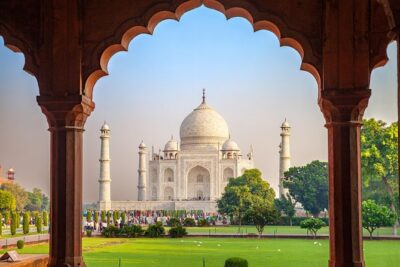
3-Days Private Golden Triangle Tour: Delhi, Agra & Jaipur by Car
Read our review →3-Days Private Golden Triangle Tour: Delhi, Agra & Jaipur by Car
Read our review →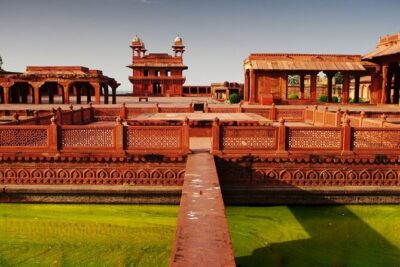
3-Day Delhi, Agra and Jaipur Private Tour – India Golden Triangle
Read our review →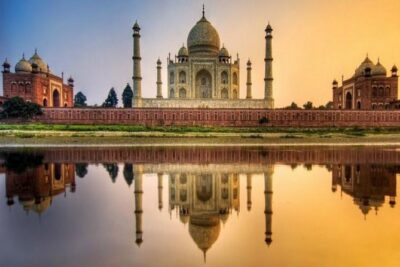
Four-Day Private Luxury Golden Triangle Tour to Agra and Jaipur From New Delhi
Read our review →
5 Nights 6 Days Private Golden Triangle Tour – Delhi Agra Jaipur
Read our review →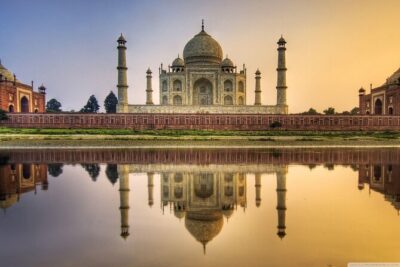

Private Car and Drive for Golden Triangle (4N/5D)
Read our review →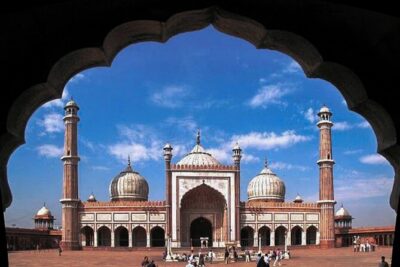
Private Golden Triangle Tour Delhi Agra Jaipur ( Top Rated )
Read our review →Browse the lists this tour appears in