
Reviewed · DELHI FOOD TOURS
Evening Food Tour
Old Delhi is best understood with your feet, your appetite, and a guide who knows which turn to take. This evening tour moves from Connaught Place to Khari Baoli, Chandni Chowk, Jama Masjid, and the food lanes around it. I like the small groups of up to six and the way the tour uses rickshaws, the metro, and walking rather than keeping you inside a vehicle. I also like that food, tea, water, and dinner are included, so you can focus on tasting rather than keeping track of small bills.
The main caution is the setting. Old Delhi is crowded, noisy, and intense, and the walking portions can feel hectic. The route may also change when weather or local conditions require it. That flexibility helped one group enjoy the evening after an incident in the area prompted a guide to adjust the plan, but you should still come ready for an urban adventure rather than a polished restaurant crawl.
Key details before you book
- Three ways to see Delhi: The tour combines metro travel, a rickshaw ride, and walks through Old Delhi.
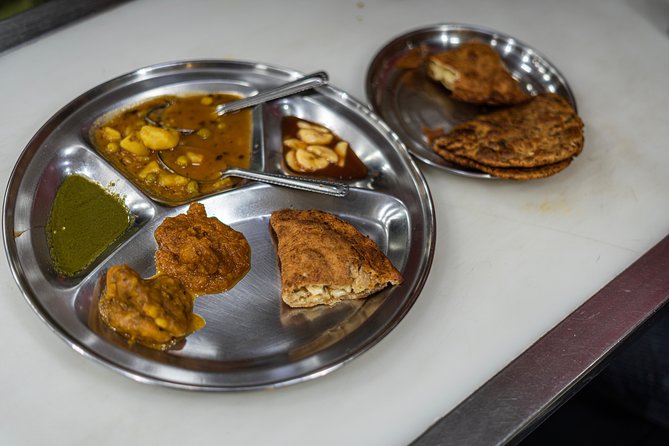
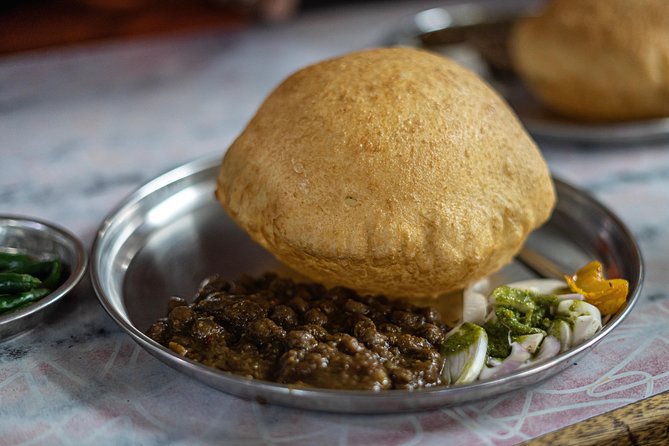
- A full Indian food sampler: Expect chaat, chole bhature, jalebi, samosas, paranthas, sweets, tea, and a Mughlai meal.
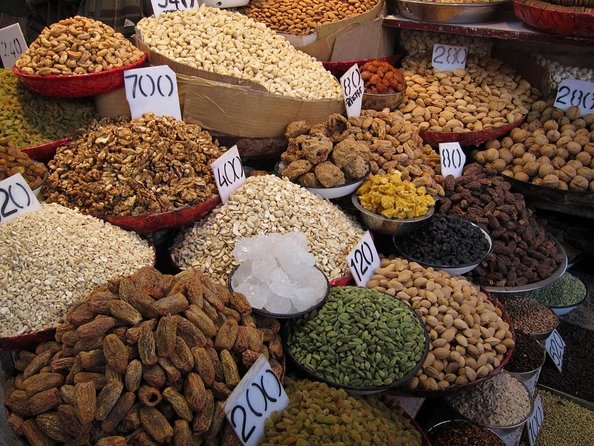
- Khari Baoli stop: You visit South Asia’s largest spice market and learn about the spices used in Indian cooking.
- Guides with local character: Pradeep, Salman, Badal, and Abishek are among the guides associated with the experience.
- Small-group format: Bookings and the tour itself are limited to six people.
- Simple timing: Meet at Inner Circle in Connaught Place at 5:30 pm for about three and a half hours, returning to the same meeting point.
Why this Old Delhi food tour works
Many food tours give you a string of tastings and little else. This one uses food as a way into the city. You are not simply taken from one restaurant to another. You move through market streets, take local transport, pass historic landmarks, and hear how ingredients and cooking traditions fit into Delhi life.
I especially like the range of transport. A rickshaw ride gives you a close view of the streets, while the metro connects the modern city with Old Delhi. Walking then lets you slow down enough to notice the lanes, shopfronts, food stalls, and crowds around Chandni Chowk.
The guide matters a great deal here. Pradeep is described as flexible and well informed about the area, while Salman is known for a friendly, easygoing manner. Badal has been praised for answering questions clearly and helping people try foods they might otherwise skip. The experience is much stronger when the guide explains what you are eating and why a particular place matters.
At $45 per person, this is not the cheapest way to eat in Delhi. It is a fair price if you value a guided route, several tastings, transport, bottled water, tea, and dinner in one package. You also avoid the guesswork of choosing street food on your own. For a first evening in Old Delhi, that guidance can be worth more than the food bill itself.
More food tours in New Delhi:
- The Great Indian Food Tour: Old Delhi Food and Heritage Walk
★ 5.0 · 1,698 reviews - Old Delhi Food, Heritage&Cultural Walk with Rickshaw ride to Masterji Kee Haveli
★ 5.0 · 742 reviews - Old Delhi Street Food Tour
★ 5.0 · 497 reviews
Starting in Connaught Place at 5:30 pm
The meeting point is Inner Circle in Block A, Connaught Place. That gives you a clear starting place in one of New Delhi’s best-known central areas before the tour heads toward the older part of the city.
The activity lasts about three hours and 30 minutes, so expect to finish around 9 pm, though the exact end can depend on the pace and conditions. The tour returns to the meeting point rather than leaving you in Old Delhi at night. That is a useful detail if you are arranging a taxi, planning dinner afterward, or staying near Connaught Place.
The group limit is six people. That size suits a food tour in narrow lanes, where a large group would be difficult to keep together. It also gives you a better chance to ask questions and tell the guide about your interests. Since the food is shared across several stops, a small group should also make the tastings easier to manage.
Khari Baoli and the language of Indian spices
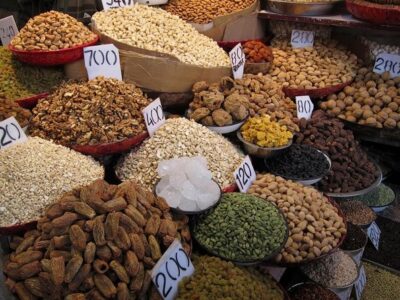
The first named stop is Khari Baoli, reached by rickshaw. It is presented as South Asia’s largest spice market, and the focus here is learning about the spices used in Indian cooking.
This is a smart opening. Before you start eating, you get a basic sense of the ingredients that shape the food ahead. A guide can connect the smells and colors of the market with the dishes you later taste, making the meal more than a collection of unfamiliar names.
The rickshaw ride also sets the tone. You see Old Delhi at street level, with the driver threading through the city rather than viewing it from a tour bus. The ride is one of the most local parts of the evening, though you should expect traffic, tight spaces, and plenty of street noise.
Chandni Chowk, where food and movement collide
The tour then reaches Chandni Chowk, one of Old Delhi’s best-known areas. The stop itself is short, but the setting is important. This is where you begin to feel the scale and energy of the old city, with food shops, pedestrians, transport, and historic streets sharing limited space.
The tour promises several safe food options, which is helpful if you are cautious about eating in a busy market area. Your guide can direct you toward the foods included in the tour and explain how to approach them. That takes away some of the uncertainty that comes with choosing a stall on your own.
You may also find this part of the evening more intense than expected. Old Delhi is not arranged for easy sightseeing. Keep your belongings secure, stay close to the guide, and wear shoes suited to walking. The tour is open to most people, but the setting rewards patience and a willingness to accept some disorder.
More evening tours in New Delhi:
- Night View of Delhi Tour – 4 Hrs
★ 5.0 · 197 reviews - Private Golden Triangle Tour 3 Night/4 Days – All Inclusive
★ 5.0 · 185 reviews - Old Delhi Night Food Tour – Kitchens & Local Stories
★ 5.0 · 85 reviews - Akshardham Evening & Morning tour exhibition water fountain Show
★ 5.0 · 49 reviews
Nai Sarak and the story behind the food
A stop at 2584 to 2585 on Nai Sarak adds a cultural and educational element. The stated purpose is to learn more about the ideas behind India’s cuisine, rather than simply eating the next item.
This is where the guide’s commentary can make a real difference. Indian food varies widely by region, religion, family, and cooking method. A short explanation of those influences helps you understand why breads, sweets, curries, and snacks appear in such different forms across one city.
The stop is listed as brief, so do not expect a long lecture or a formal cooking lesson. Think of it as useful context woven into a moving evening. You get enough background to recognize patterns without losing the pace of the food tour.
Jalebi, samosas, and the sweet side of Old Delhi
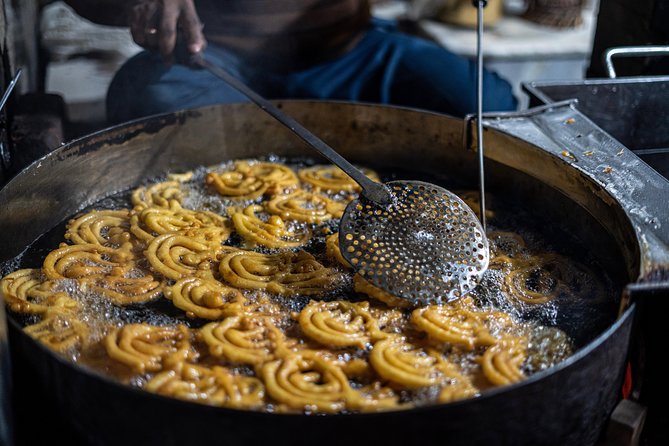
At Old Famous Jalebi Wala, you try crisp jalebis and fresh hot samosas. Jalebi is a coiled sweet with a crisp texture and syrupy finish, while samosas offer a savory contrast. Together, they show how Indian street food can move quickly between sweet and salty.
This is one of the more focused food stops, and it gives you a clear sense of why timing matters. Jalebi is best known for its crisp texture, and a hot serving is a different experience from one that has been sitting for a while. The samosa adds something more substantial before the tour continues.
The food portions are not specified, so you should think of the evening as a sequence of tastings rather than one large meal at every stop. You will sample many items, but the amount of each dish may vary. That format is ideal if you like trying several foods, less so if you want a single relaxed dinner with plenty of time at each table.
A view of Jama Masjid from outside
The route includes a look at Jama Masjid from the outside. This is not presented as a full mosque visit, so you should not book the tour expecting an interior tour or extended architectural stop.
Still, the location adds useful context. Jama Masjid is closely tied to the Old Delhi food area, and seeing it from outside helps place the nearby lanes in their historic setting. The guide can connect the landmark with the surrounding markets and the Mughlai food tradition that follows.
This brief pause also gives the evening a change of rhythm. After the noise and movement of the food streets, you get a moment to look up and understand where you are. Keep your expectations realistic: the emphasis remains on food and local streets, not formal sightseeing.
Paranthe Wali Gali and Delhi’s stuffed breads
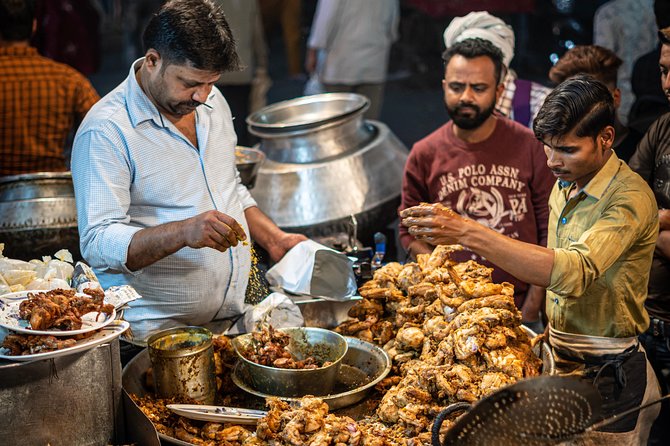
Paranthe Wali Gali is devoted to paranthas, a type of Indian flatbread that can be filled or prepared in different styles. The tour includes different stuffed breads here, giving you another useful comparison between dishes.
This stop is valuable because bread is central to the meal, not just a side item. You can compare the texture and fillings of the paranthas with the fried snacks and sweets tasted earlier. It also shows how one narrow food lane can become known for a particular specialty.
Again, the pace is quick. You will not have unlimited time to sit and work through a long menu. The advantage is variety, while the tradeoff is that the evening can feel like a food march. If you prefer slow dining, this may not be your ideal format.
Karim’s and a proper Mughlai finish
The final major food stop is Karim’s near Jama Masjid, an Old Delhi institution serving Mughlai cuisine for more than a century. The meal is described around rich curries, tender kebabs, and traditional flavors.
This gives the tour a useful finish. After snacks, sweets, and breads, you get a more substantial dinner with the cooking style most closely associated with this part of Delhi. Mughlai food is known for dishes that use careful seasoning, sauces, and grilled meats, though the exact items served are not specified.
Karim’s is also an important part of the neighborhood’s food identity. The stop is not just about filling you up at the end of the evening. It shows how Old Delhi’s food culture includes both quick street snacks and established eateries with a long connection to the area.
The listed time here is about 20 minutes. That is enough for a focused meal stop, but it is not an extended restaurant sitting. Dinner is included in the price, along with the earlier tastings, tea, and bottled water.
What the guides add to the evening
Food is the reason to book, but the guide is what shapes the experience. The best use of a guide here is practical: choosing places, explaining unfamiliar foods, managing the route, and helping you feel comfortable in a crowded part of the city.
Pradeep has been associated with adjusting the route when conditions changed, which is an important quality in Old Delhi. Salman is described as engaging and personable, with a way of making the walk feel like an outing with a local friend. Badal has been praised for his clear communication and relaxed approach, especially when introducing foods you might not try without help.
Abishek has also guided families through Chandni Chowk with Salman. The tour can suit families, but parents should consider the late start, the three-and-a-half-hour length, the crowds, and the amount of walking. The fact that a family with children aged six and four completed part of the experience suggests flexibility, but it does not remove the need to judge your own children’s energy and comfort.
Is $45 a good value?
The price includes all tastings, dinner, tea, bottled water, a professional guide, the metro, and the rickshaw ride. That is a strong bundle for someone who wants both food and a guided introduction to Old Delhi.
You could spend less by eating independently. But you would then need to choose where to go, pay for each item, find your way through the streets, and decide which foods are a good fit. The tour’s value lies in the route and the local judgment as much as in the dishes.
I would consider the price worthwhile for a first visit, especially if you have only one evening in Delhi. It is less compelling for someone who already knows Old Delhi well or prefers to make an unplanned food crawl at their own pace.
The tour is free to cancel up to 24 hours before the start time. Changes or cancellations inside that window are not accepted for a refund, and the cut-off follows local time.
Who should book this experience?
You should consider booking if you want a guided first taste of Old Delhi, enjoy trying several kinds of food, and are comfortable moving through crowded streets. It is also a good fit if you want local transport included and prefer a small group over a large coach tour.
It may not suit you if you need a quiet, slow dinner, dislike street food, or want detailed interior visits to Delhi landmarks. The route is active and the setting can feel overwhelming, even though most people can participate.
The tour is especially useful for a short Delhi stay. In one evening, you get spices at Khari Baoli, market streets around Chandni Chowk, a view of Jama Masjid, paranthas, sweets, and a Mughlai meal. That is a lot of city and food in a compact window.
Should you book it?
Book this tour if you want your Old Delhi evening to have structure, local guidance, and plenty of tasting stops. The small group, included transport, flexible guides such as Pradeep, Salman, and Badal, and broad food selection make it a practical introduction to the area.
Skip it if your idea of dinner is a long, calm restaurant meal or if crowded streets are likely to spoil the evening. For everyone else, $45 buys more than food. It buys a guided route through one of Delhi’s most demanding and rewarding neighborhoods, with enough history and local context to make the flavors easier to understand.
FAQ
Where does the evening food tour start?
The tour starts at Inner Circle, Block A, Connaught Place, New Delhi, at 5:30 pm.
Where does the tour end?
The activity ends back at the meeting point in Connaught Place.
How long does the tour last?
The tour lasts approximately three hours and 30 minutes.
What types of transport are included?
The experience includes metro travel, a rickshaw ride, and walking through Old Delhi.
What food and drinks are included?
All food tastings and dinner are included, along with tea and bottled water. Foods listed for the route include chaat, chole bhature, Indian sweets, jalebi, samosas, paranthas, and Mughlai dishes.
How many people can join the tour?
The tour has a maximum of six participants, and each booking can include no more than six people.
Can I cancel for a full refund?
Yes. You can cancel at least 24 hours before the local start time for a full refund. Cancellations or changes made less than 24 hours before the start are not accepted for a refund.
Newly reviewed around New Delhi
- Private Customized Tour Of Old/New Delhi Spiritual Sites★ 5.0 · 5 reviews
- Yoga and Meditation Classes in Gurgaon★ 4.5 · 8 reviews
- Yoga class in Delhi★ 5.0 · 29 reviews
- Old Town Delhi Walking Tour (2 Hours Guided Tour with Local)★ 4.5 · 22 reviews
- 5 Days Golden Triangle Tour with Ranthambore(Delhi Agra Jaipur Ranthambore Tour)★ 5.0 · 3 reviews
- Wonderful Old & New Delhi sightseeing tour★ 5.0 · 3 reviews
- Hidden Gems of Old Delhi – Walk★ 5.0 · 8 reviews
- Delhi Zoo White Tigers & lions with Old Fort Visit★ 4.5 · 5 reviews
Delhi Food Tours, compared.
The Great Indian Food Tour: Old Delhi Food and Heritage Walk
Read our review →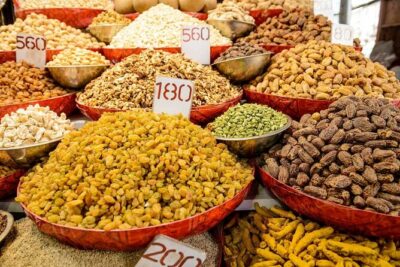
Old Delhi Food, Heritage&Cultural Walk with Rickshaw ride to Masterji Kee Haveli
Read our review →
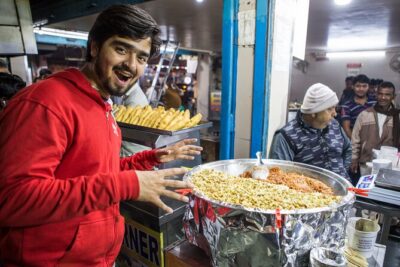
Delhi Food Walk: Rickshaw Ride, Street Eats & Market Tour
Read our review →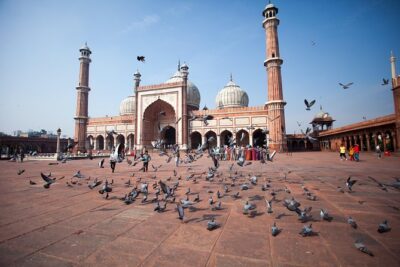
Old Delhi Street Food Tour – Explore Spices in Chandni Chowk
Read our review →
Old Delhi Food-Spice Market-Temples Tour Soon Featured on NETFLIX
Read our review →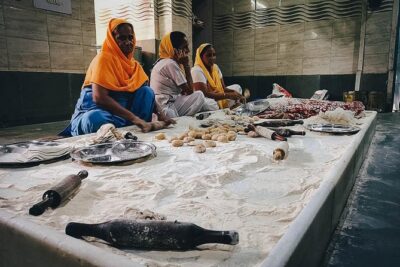
Chandni Chowk Delhi Food Tour with 15+ Tastings
Read our review →
Browse the lists this tour appears in