
Reviewed · NEW DELHI CITY TOURS
Old and New Delhi City tour
Delhi is easiest to understand when you see its two very different halves in one day. This private tour moves from Jama Masjid and Chandni Chowk to Humayun’s Tomb, Qutub Minar, and Lotus Temple, with a rickshaw ride and a guided walk through Asia’s largest spice market.
I like the private car and flexible guide, since Delhi’s distances and traffic can make independent sightseeing tiring. I also like that the route includes daily life, not just grand monuments: a market ride, spice stalls, and Old Delhi lanes.
The main drawback is the pace. Eight hours covers a lot of ground, but the Red Fort is viewed only from outside, and the long list of stops leaves limited time for lingering. Lunch is also at your own expense.
Key points at a glance
- A true Old Delhi to New Delhi route: The day connects Mughal landmarks, crowded markets, government buildings, and modern religious architecture.
- Rickshaw ride through Chandni Chowk: You get a practical way to experience the narrow market streets without trying to manage them alone.
- Khari Baoli spice market walk: A guide helps explain one of Delhi’s oldest commercial areas and its role as a major spice center.
- Private transportation from a wide area: Pickup and drop-off are offered from Delhi, Gurugram, Noida, Faridabad, or the airport.
- Ravi and Rabi Nawin are named guide options: The available feedback highlights clear historical explanations, friendly service, and the ability to adjust the day to personal interests.
- $90 includes major practical costs: The price covers a private air-conditioned car, guide, bottled water, rickshaw ride, camera fees, and monument entry under the all-inclusive option.
Why this route works for a first day in Delhi
Delhi can feel like several cities joined by long roads. Old Delhi is dense, noisy, and full of activity, while New Delhi has broad avenues, formal government buildings, and carefully planned monuments. Seeing both in one day gives you a useful first picture of the capital.
I like the order of this tour. You begin in Old Delhi, where the streets are at their most intense, then move toward the more spacious Mughal garden tombs and the major sights of New Delhi. The route is not a slow museum tour. It is a broad introduction, with short visits and several photo stops.
The private format matters here. You travel with only your own group, rather than waiting for a large bus to fill seats or stopping at places that do not interest you. The guide can explain the sites in English or Hindi, and the feedback connected with guides Ravi and Rabi Nawin points to a personal style rather than a fixed speech.
You should still expect traffic and a full day. The stated duration is about eight hours, beginning around 9 a.m. and ending in the evening. That is enough time for the main sights, but not enough for every interior, market stall, and monument garden.
More New Delhi city tours:
- Old & New Delhi City Tour – Half or Full Day Options Available
★ 5.0 · 4,811 reviews - Old & New Delhi Private Tour – Half or Full Day (Rated Excellent)
★ 5.0 · 2,226 reviews - Old & New Delhi Full or Half Day Sightseeing Tour
★ 5.0 · 1,900 reviews
Jama Masjid and the first look at Old Delhi
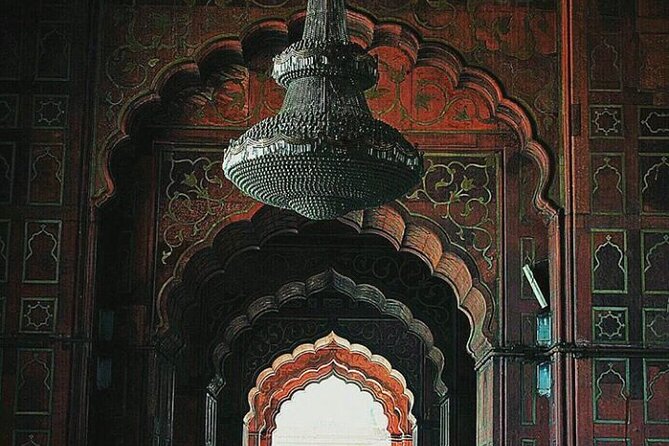
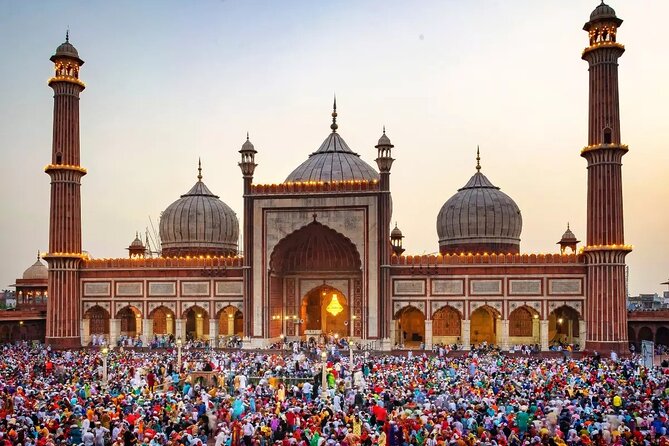
The morning starts with pickup at your chosen location in Delhi, Gurugram, or Noida. Airport pickup is also offered. From there, the car takes you to Old Delhi and Jama Masjid, one of India’s largest mosques.
Jama Masjid was built by Mughal Emperor Shah Jahan between 1644 and 1656. Your visit is scheduled for about an hour, which gives the guide time to explain the mosque’s place in Mughal Delhi and lets you take in the scale of the courtyard and structure.
This is an important opening stop because it puts you right into the older city. You are not beginning with a polished boulevard or a quiet garden. You are starting with a major religious building surrounded by the movement of Old Delhi.
The tour includes admission, though you should remember that dress and visitor rules can apply at religious sites. The supplied details do not specify exact clothing requirements or photography rules, so listen to your guide before taking pictures inside or around the mosque.
Chandni Chowk by rickshaw
After Jama Masjid, you move into Chandni Chowk, a market area with about 400 years of commercial life. The narrow streets are a poor match for a standard sightseeing car, which is why the included rickshaw ride makes sense.
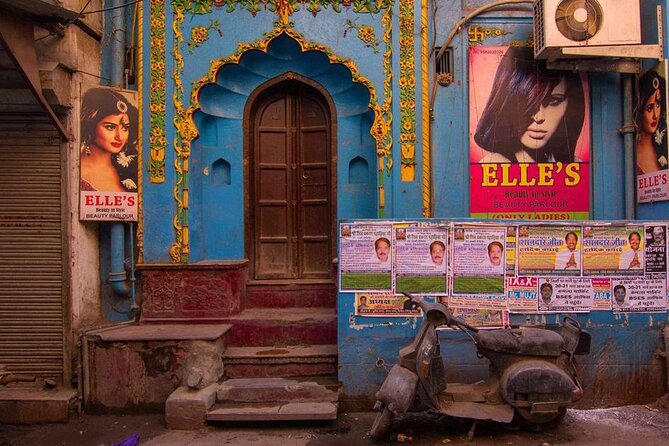
I like this part of the day because it is less formal than the major monuments. You see the working side of Delhi: shops, movement, crowded lanes, and the practical rhythm of a market district. The ride also saves you from trying to find your own way through a complicated area.
Your scheduled time is about an hour. That does not mean you will inspect every lane. Instead, you get a guided taste of the district and a way to reach places that can be awkward to approach independently.
Keep your expectations realistic. Chandni Chowk is not a quiet heritage quarter. It is active and crowded, and the experience can feel intense. If you prefer calm walks and long monument visits, this section may be the hardest part of the day. If you want to see ordinary city life, it is one of the tour’s strongest features.
Khari Baoli and the smell of Delhi’s spice trade
The next stop is Khari Baoli, described as Asia’s largest spice market. Its origins reach back to 1650, and the market is tied to the Mughal period. You spend about an hour here on a guided walking tour.
This stop adds something that a standard monument circuit often misses. You are not only looking at old buildings. You are seeing a commercial tradition that still shapes the city. The guide can give the market context while you walk among the spice trade and surrounding activity.
The value of a guide is especially clear in a place like this. A visitor walking alone may see bags, shops, and busy passages without understanding what the area means. A guide can point out the market’s age and explain its connection to Delhi’s past.
As with Chandni Chowk, this is a working market rather than a carefully arranged attraction. Watch your footing and keep your belongings secure in crowded areas. The tour provides bottled water, which is useful during a full morning on foot.
Same starting point, a completely different day out:
- Same Day Taj Mahal, Agra Fort & Baby Taj Tour from Delhi by Car
★ 5.0 · 4,304 reviews - Taj Mahal Day Tour from Delhi by Superfast Train – TOP RATED TOUR
★ 5.0 · 4,166 reviews - Full Day Taj Mahal, Agra Fort & Baby Taj Tour from Delhi by Car
★ 5.0 · 3,647 reviews - From Delhi: Taj Mahal & Agra Private Day Trip with Transfers
★ 4.9 · 3,181 reviews
The Red Fort viewed from outside
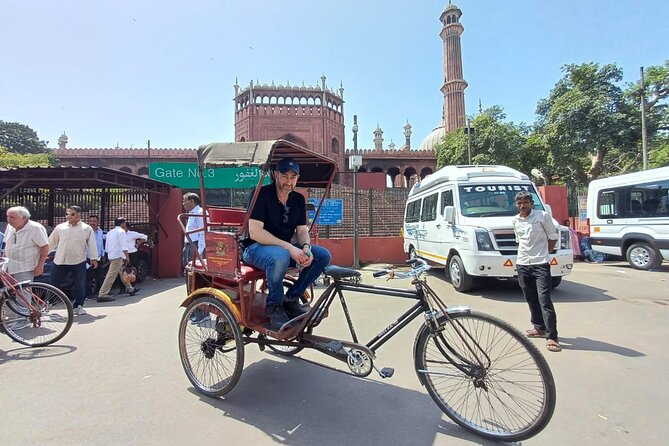
The Red Fort is included as an exterior stop. Much of the building is occupied by the Indian Army, so the tour does not take you through the full interior. You stop for photographs and hear about the fort from your guide.
That distinction matters. If entering the Red Fort is a top priority, this tour will not fully meet that goal. You should think of the stop as a chance to see the fort’s exterior and connect it with the Mughal landmarks you have already visited.
Still, it fits the morning well. The Red Fort helps explain the power and scale of Old Delhi, even from outside. Since the route already includes Jama Masjid, Chandni Chowk, and Khari Baoli, the exterior stop gives you another piece of the same historic district without adding a long interior visit.
Lunch and the move toward New Delhi
After Old Delhi, you have a lunch break before continuing. Meals and drinks are not included, so you should budget separately. The tour details do not name a particular restaurant or set menu, which gives the day some flexibility but also means the food arrangements are not part of the package.
This break is welcome. The morning includes a mosque, a rickshaw ride, and a market walk, so you will appreciate time to sit before the afternoon monuments. I would use lunch as a chance to tell the guide what matters most for the rest of the day. The guide feedback highlights flexibility, including adjusting plans to suit personal interests and energy levels.
The air-conditioned private car is valuable at this point. Delhi’s sights are spread out, and moving between Old and New Delhi by public transport would add work and uncertainty to an already full schedule.
Humayun’s Tomb and Mughal garden design
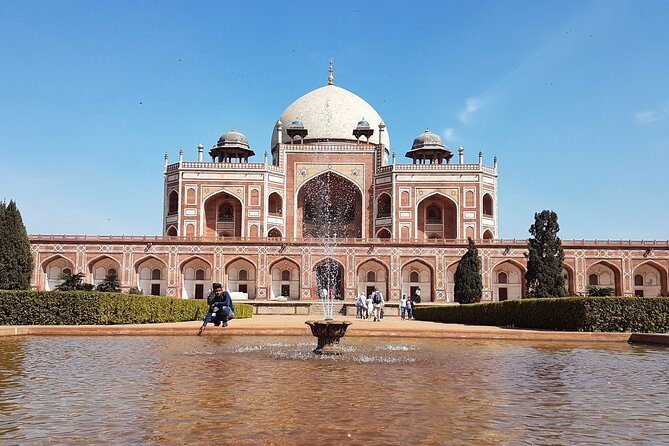
The first major New Delhi stop is Humayun’s Tomb, with about an hour scheduled. This is the point where the day shifts from crowded market streets to a more formal monument setting.
Humayun’s Tomb is the garden tomb of the Mughal emperor Humayun. Its design gives you a different experience from Jama Masjid and the Red Fort exterior. Instead of seeing a religious building or a fortified complex, you see a planned tomb garden where architecture and open space work together.
An hour is enough to appreciate the main structure and hear the historical explanation, though it is not a leisurely garden visit. If you enjoy architectural details, tell your guide early in the day. A private tour gives you a better chance of shaping the commentary around what interests you, whether that is Mughal rulers, building design, or Delhi’s changing identity.
India Gate, Parliament House, and President Palace
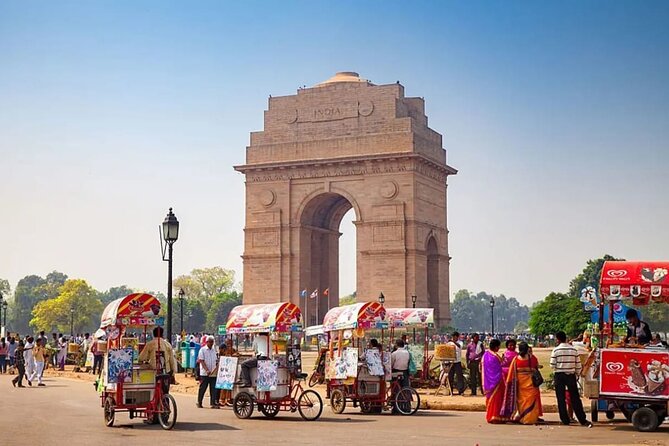
After Humayun’s Tomb, the car passes India Gate, the First World War memorial. You stop for photographs while the guide explains its background.
This is a photo stop rather than a long indoor visit. That makes sense in a route covering so many monuments, but you should not expect a museum-style exploration of India Gate. The same approach applies to Parliament House and President Palace. You drive past both, stop for pictures, and continue after the guide gives context.
These buildings show the planned, official side of New Delhi. Their broad surroundings contrast sharply with Chandni Chowk’s narrow lanes. That contrast is one of the best reasons to take a combined Old and New Delhi tour rather than book only a monument circuit in one part of the city.
The guide’s role is important here because the buildings can be easy to treat as simple photo backgrounds. Historical context helps connect them to India’s political life and to the design of New Delhi.
Qutub Minar, the day’s grand vertical sight
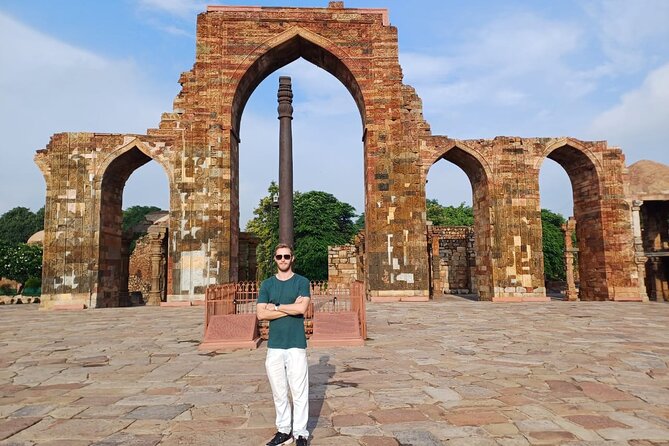
Qutub Minar receives about an hour and is one of the tour’s main monument visits. The minaret reaches 72.5 meters and forms part of the Qutub complex.
After a morning of markets and a stop at Humayun’s Tomb, Qutub Minar gives the day another strong visual change. Its height is impressive, and the complex offers a chance to examine older stonework and architectural details at closer range.
The tour includes monument entrance fees under the all-inclusive option. Because the supplied details distinguish between an all-inclusive option and other arrangements, check the exact package you select before booking. The car, guide, rickshaw ride, bottled water, camera fees, and listed monument entries are intended to reduce small extra charges, but the price structure should still be clear at checkout.
An hour is a sensible minimum. It lets you see the tower and complex without making the final stop feel rushed. If Qutub Minar is your main reason for visiting Delhi, a dedicated visit could give you more time, but this tour places it alongside a much wider city program.
Lotus Temple as the final stop
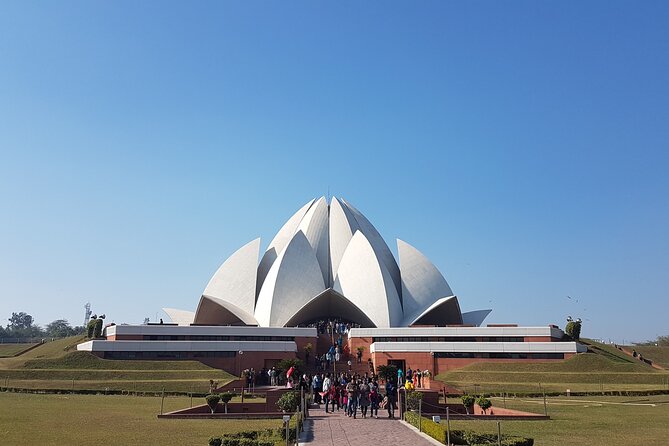
The final monument is Lotus Temple, a Bahá’í House of Worship built in December 1986. Its white marble flower form makes it unlike the Mughal sites earlier in the day.
The temple gives you a quiet architectural finish after the scale of Qutub Minar and the formal government stops. The schedule allows about an hour, and admission is listed as free.
Because it is a house of worship, the visit is not simply about taking photographs. The guide can explain the building’s religious setting and design, while you take time to observe the structure and its surroundings. Exact visitor procedures are not provided, so follow instructions at the site.
Ending here also gives the day a useful time range. You have moved from medieval and Mughal Delhi through colonial-era government planning to a modern religious building. That broad span is more valuable than seeing several similar monuments in one long sequence.
What $90 buys you
At $90 per person, this is not the cheapest way to see Delhi. It can be good value if you are traveling with others and want a private car, guide, pickup, drop-off, rickshaw ride, and several entry fees arranged in one day.
The strongest value comes from saved time and reduced effort. Delhi’s sights are far apart, and the tour handles the driving between Old Delhi, Humayun’s Tomb, India Gate, Qutub Minar, and Lotus Temple. You also receive a guide who can connect the sites instead of leaving you to piece the story together.
The price is less attractive if you want only one or two monuments, prefer long independent visits, or already have transportation. It also does not cover meals or drinks, and the Red Fort visit is exterior only.
Since the tour is private, the per-person cost makes more sense for a small group than for someone traveling alone. The key question is not simply the price. Ask yourself how much you value having a driver, a local guide, and a plan for a difficult city to cross.
Guide style and the private format
The strongest personal praise connected with this experience centers on the guides’ friendliness, historical explanations, and flexibility. Ravi is described as able to answer questions and shape the day around personal interests. Rabi Nawin is also noted for clear explanations and an individualized approach.
Guide assignments can vary, so you should not assume a specific person unless your booking confirms it. Still, the tour is designed around a live guide rather than an audio recording or a fixed bus commentary. You can ask questions, request more time where practical, and explain if you want less shopping or more architecture.
Most people can participate, and only your group joins the activity. The tour is not presented as a strenuous trek, but you should expect walking at Jama Masjid, Chandni Chowk, Khari Baoli, Humayun’s Tomb, Qutub Minar, and Lotus Temple, along with getting in and out of the car several times.
Free cancellation is available up to 24 hours before the start time. Cancellations made less than 24 hours before the tour are not refunded, and changes inside that window are not accepted.
Who should book this Delhi tour?
I would choose this tour for a first visit when you want to see Delhi’s major contrasts in one day without arranging several rides yourself. It suits couples, families, and small groups that value a private vehicle and the ability to speak directly with a guide.
It also suits anyone who wants more than polished monuments. The rickshaw ride and Khari Baoli walk bring you into the working city, while Humayun’s Tomb, Qutub Minar, and Lotus Temple provide the major architectural stops.
I would choose something else if the Red Fort interior is essential, if you want a slow visit at each monument, or if you dislike crowded markets. The schedule is broad by design. You get range, context, and convenience, but not a deep visit to every site.
For most first-time visitors, that tradeoff is sensible. You see Old Delhi’s religious and commercial core, New Delhi’s memorials and official buildings, and several major monuments in one organized day. Book it if that combination matters more to you than setting your own slow pace.
FAQ
How long does the Old and New Delhi tour last?
The tour lasts approximately eight hours, beginning around 9 a.m. and ending in the evening.
Is hotel pickup included?
Yes. Pickup and drop-off are offered from hotels or other selected locations in Delhi, Gurugram, Noida, and Faridabad. Airport pickup and drop-off are also offered.
Is this a private tour?
Yes. Only your own group participates in the private activity.
Is transportation included?
Yes. The tour includes a private air-conditioned car with a driver for transportation between the sights.
Is a guide included?
Yes. A personalized live tour guide is included. Guides associated with the experience include Ravi and Rabi Nawin, though the assigned guide may vary.
Is the rickshaw ride included?
Yes. A rickshaw ride through Chandni Chowk is included.
Is lunch included?
No. Meals and drinks are not included, so lunch during the break is paid separately.
Can I enter the Red Fort?
The tour visits the Red Fort from outside for photographs and explanation. The details state that much of the building is occupied by the Indian Army, so an interior visit is not included.
Are monument admission fees included?
Monument entrance fees are included with the all-inclusive option. Bottled water and camera fees are also listed as included.
What is the cancellation policy?
You can cancel for a full refund up to 24 hours before the experience begins. Cancellations or changes made less than 24 hours before the start time are not accepted for a refund.
Newly reviewed around New Delhi
- Private Customized Tour Of Old/New Delhi Spiritual Sites★ 5.0 · 5 reviews
- Yoga and Meditation Classes in Gurgaon★ 4.5 · 8 reviews
- Yoga class in Delhi★ 5.0 · 29 reviews
- 5 Days Golden Triangle Tour with Ranthambore(Delhi Agra Jaipur Ranthambore Tour)★ 5.0 · 3 reviews
- Wonderful Old & New Delhi sightseeing tour★ 5.0 · 3 reviews
- Old Town Delhi Walking Tour (2 Hours Guided Tour with Local)★ 4.5 · 22 reviews
- Hidden Gems of Old Delhi – Walk★ 5.0 · 8 reviews
- Delhi Zoo White Tigers & lions with Old Fort Visit★ 4.5 · 5 reviews
New Delhi City Tours, compared.

Old & New Delhi City Tour – Half or Full Day Options Available
Read our review →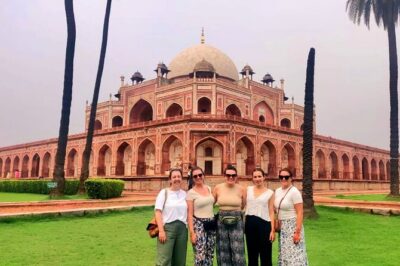
Old & New Delhi Private Tour – Half or Full Day (Rated Excellent)
Read our review →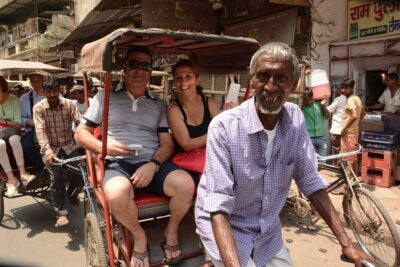
Old & New Delhi Full or Half Day Sightseeing Tour
Read our review →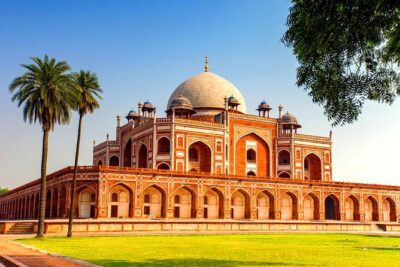
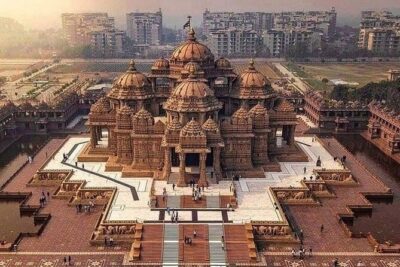
Old & New Delhi Private City Tour – Traveler’s Choice (Top Rated)
Read our review →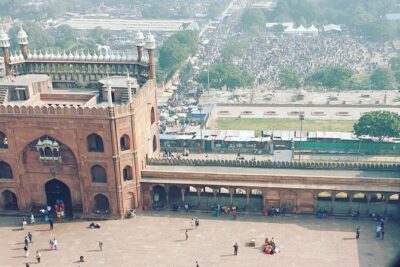

Private Old and New Delhi City Full Day or Half Day Tour
Read our review →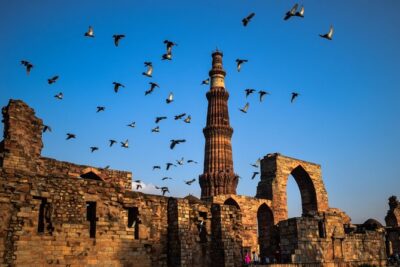
Old and New Delhi Full Day or Half Day Tour – Best of Delhi City
Read our review →Browse the lists this tour appears in