
Reviewed · DELHI ART & CULTURE TOURS
5-Day Golden Triangle Tour with Cultural Heritage-Taj & More
The Taj Mahal is the headline, but this five-day private Golden Triangle tour gives you the wider story: Delhi’s religious and imperial past, Agra’s Mughal power, and Jaipur’s Rajput court life. I especially like the private car and door-to-door pickup, plus the chance to see less polished places such as Khari Baoli spice market and Chokhi Dhani.
I also like the strong guide focus. Aman, Raj, and Mehraj are named in the feedback, with repeated praise for clear history lessons, patience, and attention to detail. The main drawback is the pace: Delhi, Agra, Fatehpur Sikri, and Jaipur cover a lot of ground in five days, and accommodation and meals are not included, so you must arrange those separately.
Key points to know before booking
- The Taj Mahal gets a full two-hour visit, giving you time to see the monument rather than just photograph it from outside.
- Private air-conditioned transport means your group can travel at its own pace without sharing a vehicle with strangers.
- Delhi includes both major monuments and everyday city life, from Humayun’s Tomb and India Gate to Gurudwara Bangla Sahib and Khari Baoli.
- Jaipur’s sights cover several sides of the city, including forts, royal apartments, astronomy, architecture, and a cultural dinner-style evening at Chokhi Dhani.
- Guiding is a major strength, with Aman, Raj, and Mehraj praised for patient explanations and local history.
- The $325 price is strongest for visitors who value convenience, since meals, hotels, and tips still come out of your pocket.
Why this Golden Triangle route works
India’s Golden Triangle links New Delhi, Agra, and Jaipur in a compact loop. The appeal is variety. In a few days, you move from Sikh devotion and Mughal tombs to marble mausoleums, red sandstone palaces, Rajput forts, and an 18th-century observatory.
This is a private tour, so only your own group participates. That matters in India, where a flexible pause can make a big difference. You can spend more time asking about a carving, pause for water, or adjust the rhythm with your guide rather than follow a large group.
The vehicle is air-conditioned, and bottled mineral water and light snacks are provided in the car. Those are small inclusions, but useful ones on long road days. All fees and taxes are included, and admission is specifically included at many of the listed sights.
The route is not a slow cultural retreat. It is a sightseeing sweep. You will spend several hours on the road, and the schedule gives some sights only 15 or 30 minutes. I would choose this trip if you want to see the classic landmarks efficiently, not if you want several unplanned afternoons in each city.
More art and culture tours in New Delhi:
- Old Delhi Food, Heritage&Cultural Walk with Rickshaw ride to Masterji Kee Haveli
★ 5.0 · 742 reviews - Old Delhi Walking Tour: Food, Culture & Spice Bazaars
★ 5.0 · 94 reviews - Full Day Old Delhi Food, Heritage, Cultural experience&visit Masterji Kee Haveli
★ 5.0 · 62 reviews
Delhi begins with faith, food, and imperial design
The first day brings together several very different faces of Delhi.
At Gurudwara Bangla Sahib, you get a calm introduction to Sikh tradition in the middle of the capital. The visit is scheduled for about 30 minutes. It is a place associated with Guru Har Krishan and with compassion and service. Dress and behavior should be respectful, and your guide can help explain what you are seeing.
Then comes Khari Baoli, Asia’s largest spice market. The 30-minute stop is short, but it gives you a taste of old Delhi through scent, color, and commerce. Saffron, cardamom, dried chilies, and other spices fill the market. This is not a quiet museum visit. It is a working bazaar, so keep your belongings close and stay aware of movement around you.
India Gate offers a quick photo and history stop. The 15-minute visit focuses on the war memorial honoring Indian soldiers who died in World War I. It is brief by design, so do not expect a long interpretive visit.
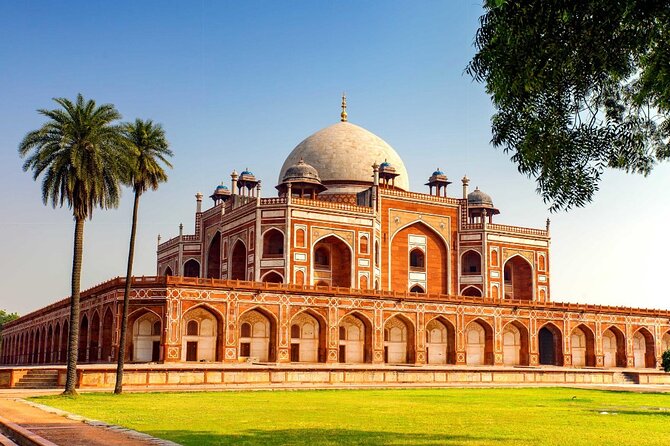
The day’s most substantial Delhi monument is Humayun’s Tomb, with one hour allotted. This UNESCO World Heritage site is one of the major early Mughal buildings in India. Its Persian and Mughal design, formal gardens, and red sandstone and marble work prepare you for the Taj Mahal’s later architectural style. I consider this one of the most useful stops in Delhi because it gives you visual context before Agra.
The Lotus Temple adds a different note. Its flower-shaped form is dedicated to peace and open to people of all faiths. The visit lasts about 30 minutes and is more about quiet, shape, and shared worship than imperial history.
The day ends in Agra, with about four hours allocated to the city. Because the full schedule includes Delhi and the transfer toward Agra, you should expect a long opening day. That is the tradeoff for reaching Agra early in the trip.
The Taj Mahal and Agra Fort tell two sides of Mughal power
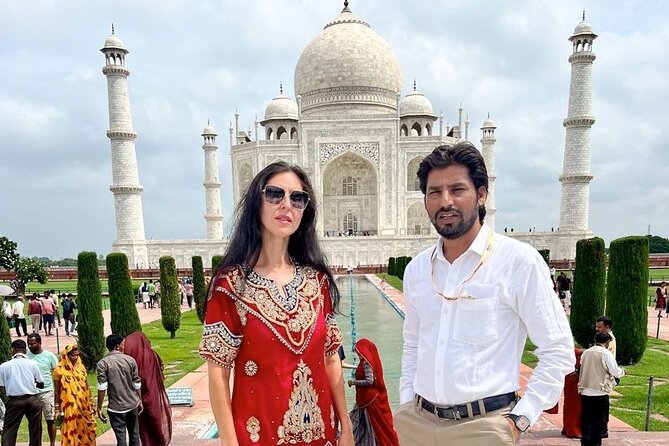
The Taj Mahal receives two hours, which is appropriate. The monument is famous for its white marble, but a good visit is not only about the front photograph. Look at the symmetry, the inlaid stone work, the changing appearance of the marble, and the way the building was planned as a complete setting.
The Taj Mahal is a mausoleum built by Emperor Shah Jahan for his wife Mumtaz Mahal. That story of love is central, but the building also represents imperial wealth, skilled craftsmanship, and the Mughal taste for balanced design. Your guide can give the monument a human and political setting instead of leaving you with only a postcard image.
Agra Fort follows with one hour. The red sandstone complex shows the Mughal court from a more defensive and political angle. Its walls, courtyards, and royal spaces help explain how emperors governed, lived, and displayed authority.
I like the pairing of these two stops. The Taj Mahal is refined and intimate in feeling, while Agra Fort is heavier and more imposing. One recalls a personal loss. The other explains the machinery of empire.
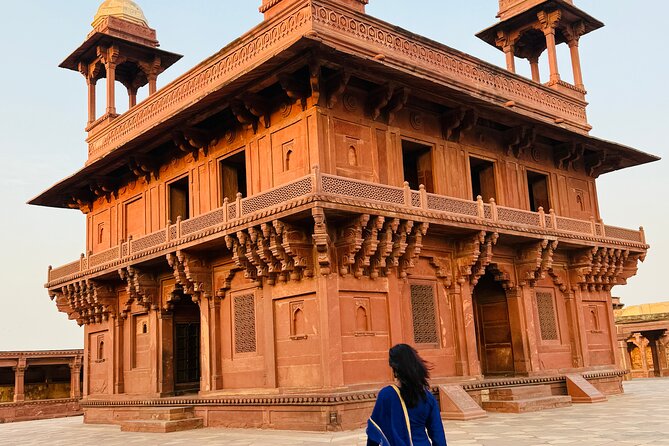
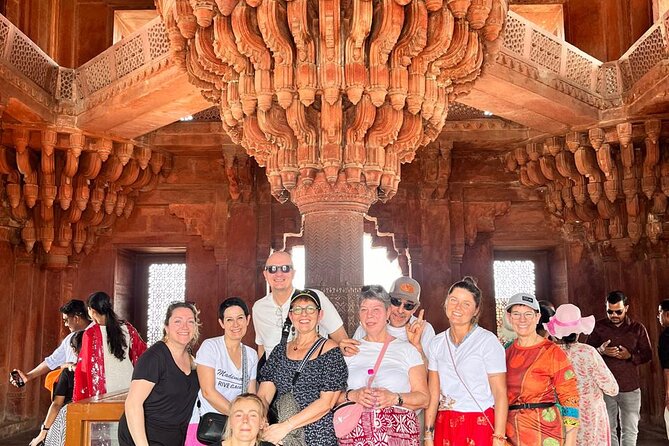
The schedule then moves to Fatehpur Sikri for two hours. Emperor Akbar’s planned city is built in red sandstone and includes courtyards, arches, and spaces tied to power, faith, and court life. It can feel very different from the Taj Mahal because the mood is less polished and more architectural. You are walking through a former imperial center rather than visiting one single monument.
Several guides named in the feedback are associated with particularly strong explanations here. Raj is praised for answering questions patiently and making the history easy to follow. That matters at Fatehpur Sikri, where a guide can help you understand why the buildings were placed as they were.
The day ends in Jaipur, with roughly four hours allocated to the city. Again, this is a full day. The route is rewarding, but you should expect a fairly structured schedule rather than an easygoing pace.
Jaipur’s forts and lake views show Rajput ambition
Jaigarh Fort is the first major Jaipur stop on day three, with two hours to explore. Built in 1726 by Maharaja Jai Singh II on Cheel ka Teela, or Hill of Eagles, the fort was designed to protect the royal treasury. Its main interest is military planning and the high position above Jaipur.
I would give this visit your attention if you enjoy forts more than palace interiors. The setting helps you understand defense, surveillance, and royal wealth. The tour description does not promise a particular cannon or special exhibit, so the main value here is the fort’s structure and connection to Jaipur’s ruling family.
Jal Mahal is a much shorter stop, just 15 minutes. The palace appears to float in Man Sagar Lake, with hills in the distance. You will likely view it from the outside rather than spend a long period inside. It is a scenic pause and a useful break between larger monuments, but its brief timing means you should keep your expectations modest.
The three-hour visit to Chokhi Dhani brings a different kind of cultural experience. It presents a village-style setting with folk dances, puppet shows, fire performances, bazaar-style shops, and other elements of Rajasthani entertainment. This is more staged than the old markets and monuments earlier in the trip, but it can still be enjoyable if you want an evening built around performance and local themes.
I would treat Chokhi Dhani as a cultural show, not as an untouched village visit. That distinction helps you decide if it suits your interests. Families and first-time visitors may enjoy the variety, while those seeking quiet historical sites may prefer more time at Jaipur’s forts and palaces.
More Golden Triangle routes from New Delhi:
- 3-Days Private Golden Triangle Tour: Delhi, Agra & Jaipur by Car
★ 5.0 · 1,107 reviews - 3-Days Private Golden Triangle Tour: Delhi, Agra & Jaipur by Car
★ 5.0 · 1,098 reviews - 3-Day Delhi, Agra and Jaipur Private Tour – India Golden Triangle
★ 5.0 · 812 reviews - Four-Day Private Luxury Golden Triangle Tour to Agra and Jaipur From New Delhi
★ 5.0 · 807 reviews
Jaipur’s City Palace, Jantar Mantar, and Hawa Mahal
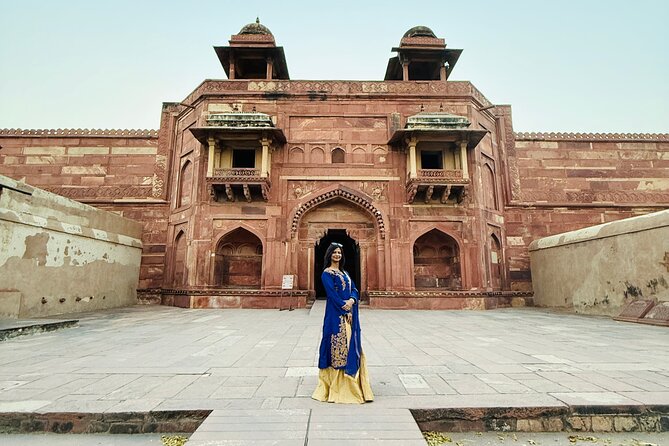
Day four concentrates on central Jaipur and gives you a clearer look at the city’s royal and scientific achievements.
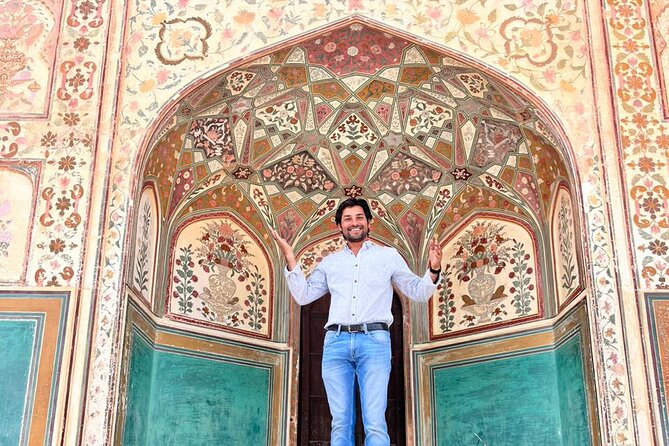
The City Palace receives one hour. Founded under Maharaja Sawai Jai Singh II in the early 18th century, it combines courtyards, royal rooms, and decorative details tied to Jaipur’s ruling family. The visit is short, so focus on the main architectural features and listen closely when your guide explains how the palace functioned.
Jantar Mantar is one of the most unusual stops in the city. This UNESCO World Heritage observatory was built by Sawai Jai Singh II and contains large astronomical instruments designed to measure time and track celestial positions. You do not need to be an astronomy expert to appreciate it. The scale of the instruments makes science visible and architectural.
I like this stop because it broadens the Jaipur story. The city was not only about palaces, jewels, and ceremony. Its rulers also invested in mathematics and astronomy. The one-hour visit should be enough for an introduction, especially with a guide who can explain what each instrument was meant to do.
Hawa Mahal, or the Palace of Wind, receives 45 minutes. Its honeycomb façade and many small windows are among Jaipur’s most recognizable sights. Built in 1799 as an extension of the City Palace, it allowed royal women to observe public life without being seen from the street.
The exterior is the main visual reward, and the short visit reflects that. Have your camera ready, but also listen for the social story behind the windows. The building is attractive because it solves a practical problem through design.
How much value do you get for $325?
At $325 per person, this tour is not simply a sightseeing ticket. You are paying for a private vehicle, air conditioning, door-to-door service from your Delhi accommodation, guiding, refreshments in the car, selected admissions, and the coordination of a five-day route.
That can be good value if you are visiting India for the first time and do not want to arrange each transfer and monument separately. The private format is especially useful for families or small groups who want shared transport and a guide focused on their questions.
The price does not include accommodation, meals, beverages beyond the in-car refreshments, or gratuities. Those costs can change your final budget considerably. You should also clarify your preferred hotels and meal plans before booking, since the tour itself does not provide them.
I would compare this experience with the cost of hiring transport and guides city by city. If you prefer to make every decision yourself, a package may feel restrictive. If you value having the route organized and a guide available at major sites, the price is easier to justify.
What the guide and vehicle add to the experience
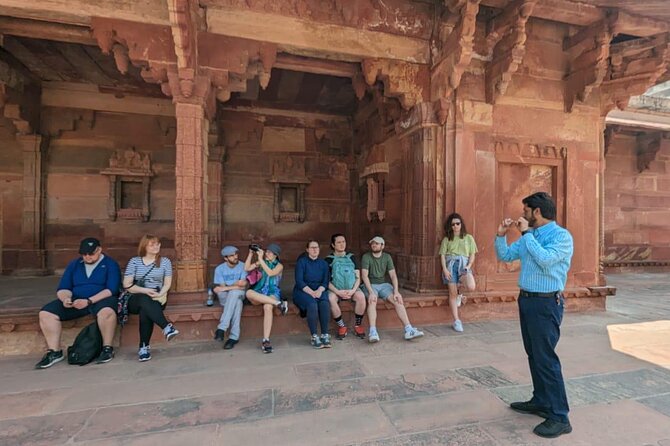
The strongest praise centers on the guides. Aman is described as attentive, entertaining, and well informed. Raj receives specific praise for patient answers at Fatehpur Sikri, while Mehraj is described as an excellent source of information about India.
Those comments point to the part of the trip that can make or break a Golden Triangle visit. The monuments are impressive on their own, but the right explanation helps you connect a tomb to Mughal design, a fort to royal politics, and an observatory to Jaipur’s scientific interests.
The clean, air-conditioned car is another practical plus. You will be moving between three cities, and a private vehicle gives your group a place to rest between stops. Bottled water and light snacks reduce the need to search for refreshments during every transfer.
Still, do not mistake private transport for a relaxed schedule. The route remains ambitious. Ask your guide early about the day’s timing, meal breaks, and the amount of walking at each site.
Who should book this five-day tour?
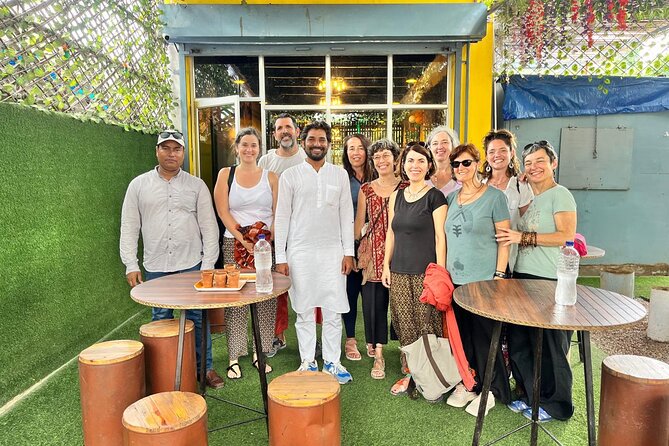
I would recommend it to first-time visitors who want the classic Delhi, Agra, and Jaipur route with a guide and private transport. It also suits families, couples, and small groups who prefer not to share a vehicle.
You should be comfortable with full sightseeing days and road transfers. The itinerary includes several quick stops, and some days combine major monuments with long travel. If you want slow mornings, long market visits, or time to wander without a schedule, this may feel too tightly packed.
The tour is also a good fit if architecture and history are your main interests. Humayun’s Tomb, the Taj Mahal, Agra Fort, Fatehpur Sikri, Jaigarh Fort, City Palace, and Jantar Mantar create a strong sequence of Mughal and Rajput sites.
You can cancel for a full refund if you do so at least 24 hours before the start time. Cancellations within 24 hours are not refunded, and changes within that period are not accepted.
Should you book it?
Book this tour if you want the major Golden Triangle sights covered in five days, with private transport, in-car refreshments, and a guide who can explain what you are seeing. The Taj Mahal, Fatehpur Sikri, and Jaipur’s forts and observatory give the route real range.
Think twice if you want hotels and meals included, or if you prefer an unstructured trip. For everyone else, the $325 cost offers a practical way to connect three major Indian cities without handling every transfer yourself. The most important step is to confirm accommodation, meal arrangements, and your guide schedule before you set off.
FAQ
Is this a private tour?
Yes. Only your group participates, and the tour uses private air-conditioned transportation.
How long does the tour last?
The tour lasts approximately five days.
Where does the tour begin?
Pickup is offered from your Delhi accommodation.
Can I finish at Jaipur Airport?
Yes. On day five, you can return to Delhi or arrange a convenient drop-off at Jaipur Airport.
Are hotels included?
No. Accommodation is not included in the tour price.
Are meals included?
No. Meals and beverages are not included. Bottled mineral water and light snacks are provided in the vehicle.
What is the cancellation policy?
You receive a full refund if you cancel at least 24 hours before the experience start time. Cancellations or changes made within 24 hours are not accepted for a refund.
More 5-Day Experiences in New Delhi
- Private 5-Day Ranthambhore Tiger Tour from Delhi including the Taj Mahal, Agra and Jaipur
★ 5.0 · 197 reviews - 5-Day Private Luxury Golden Triangle Tour to Agra and Jaipur From New Delhi
★ 5.0 · 142 reviews - Private Golden Triangle Tour 5 Days Delhi Agra Jaipur
★ 5.0 · 92 reviews - Five Day – Private Luxury Golden Triangle Tour to Agra & Jaipur From New Delhi.
★ 5.0 · 67 reviews
More Historic Sites around New Delhi
- The Great Indian Food Tour: Old Delhi Food and Heritage Walk
★ 5.0 · 1,698 reviews - Old Delhi Heritage Walking Tour
★ 5.0 · 247 reviews - 3-hour Old Delhi Heritage Walking tour with Rickshaw Ride
★ 5.0 · 240 reviews - Gandhi Delhi Private History Adventure Tour
★ 5.0 · 127 reviews
Newly reviewed around New Delhi
- Private Customized Tour Of Old/New Delhi Spiritual Sites★ 5.0 · 5 reviews
- Yoga and Meditation Classes in Gurgaon★ 4.5 · 8 reviews
- Yoga class in Delhi★ 5.0 · 29 reviews
- Old Town Delhi Walking Tour (2 Hours Guided Tour with Local)★ 4.5 · 22 reviews
- 5 Days Golden Triangle Tour with Ranthambore(Delhi Agra Jaipur Ranthambore Tour)★ 5.0 · 3 reviews
- Wonderful Old & New Delhi sightseeing tour★ 5.0 · 3 reviews
- Hidden Gems of Old Delhi – Walk★ 5.0 · 8 reviews
- Delhi Zoo White Tigers & lions with Old Fort Visit★ 4.5 · 5 reviews
Delhi Art & Culture Tours, compared.

Old Delhi Food, Heritage&Cultural Walk with Rickshaw ride to Masterji Kee Haveli
Read our review →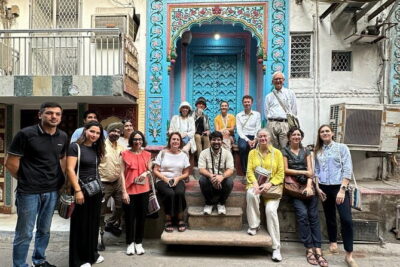
Old Delhi Walking Tour: Food, Culture & Spice Bazaars
Read our review →
Full Day Old Delhi Food, Heritage, Cultural experience&visit Masterji Kee Haveli
Read our review →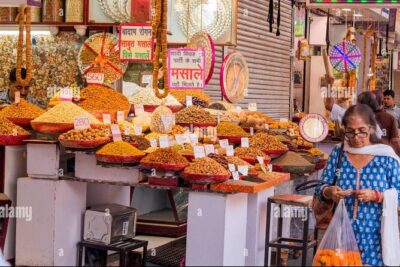
Old Delhi Cultural, Temples, Heritage Walking Street Food Tour
Read our review →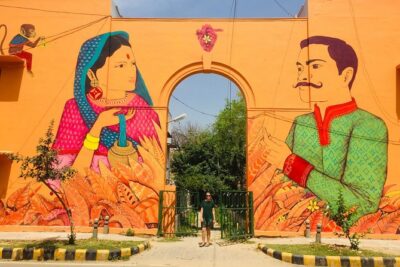
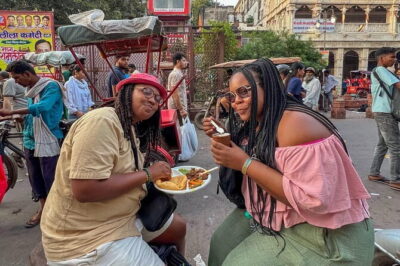
Old and New Delhi Delights Food, Culture and Heritage Tour
Read our review →
Delhi Street Art Walk in Lodhi Art District with Chai & Food
Read our review →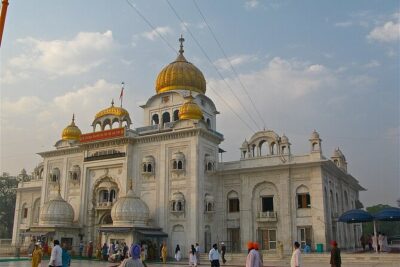
Old Delhi Temples, Cultural, Heritage Walking Street Food Tour
Read our review →Browse the lists this tour appears in