
Reviewed · NEW DELHI
Himalayas: 11 Day Motorbike Expedition To Ladakh (North India)
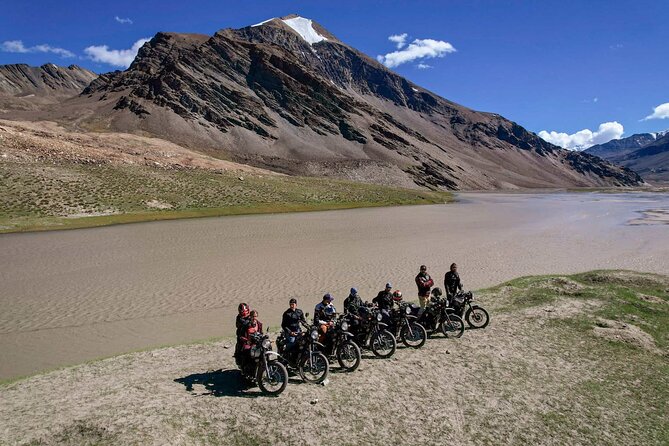
Ladakh is best seen from the seat of a motorbike, not through a bus window. This 11-day expedition takes you from the Manali region to Leh, then out toward Nubra Valley, Pangong Lake, and Hanle, with high passes and remote roads filling the middle of the trip.
I like the backup vehicle, mechanic, oxygen cylinder, and first aid box, since mountain roads can turn a small problem into a serious one. I also like the fixed route, included lodging, breakfasts, and dinners, which remove much of the work from planning a trip across a difficult region.
The main caution is the pace. Several days call for six to ten hours of riding, and the itinerary contains a few confusing route details, including the stated start and end points and the Day 10 schedule. Confirm the exact plan before paying.
Key points to know before you book
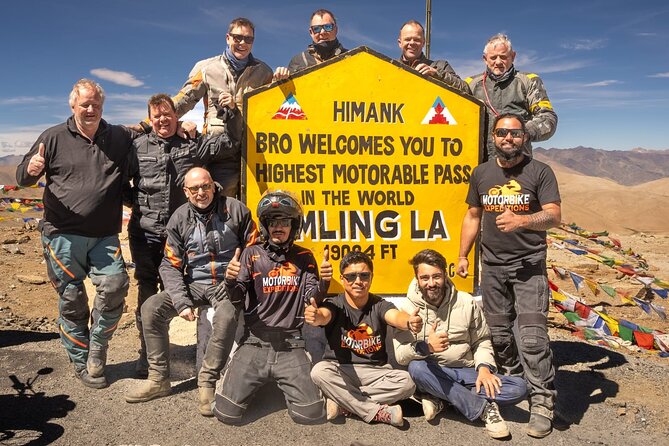
- Ride the world’s highest roads: The route includes Khardung La and Umling La, with high-altitude stops for photographs.
- Support follows you: A backup vehicle carries luggage and a mechanic from Day 3 through Day 10.
- Expect demanding distances: The Padum to Lamayuru day is listed at 332 kilometers and nine to ten hours.
- Sleep in remote places: Overnight stops include Jispa, Hunder, Merak beside Pangong Lake, Hanle, and Leh.
- Meals are partly covered: Ten breakfasts and nine dinners are included, while lunches and drinks are generally your responsibility.
- Check the routing carefully: The meeting point is listed as Leh, while Day 1 describes an overnight Volvo bus from Delhi or Chandigarh.
What this Ladakh motorbike trip is really like
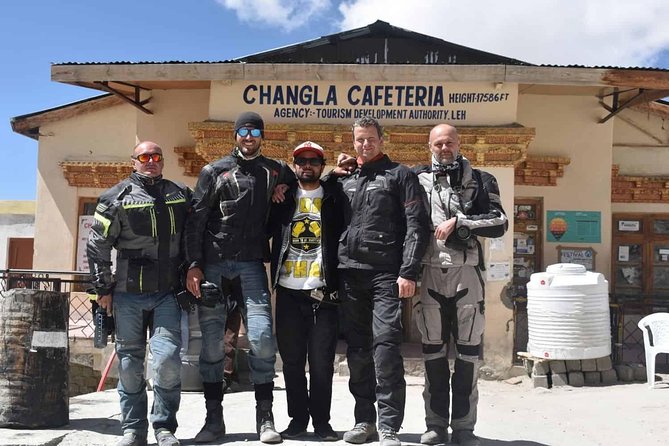
This is not a relaxed sightseeing holiday with a few short rides. It is a serious road journey across the Himalayas, built around long distances, thin air, rough conditions, and dramatic changes in scenery.
You get the benefit of a prepared route and local support without having to organize permits, fuel planning, lodging, and mechanical backup on your own. That matters in Ladakh, where a puncture, road closure, or vehicle fault can affect an entire day.
The experience suits a rider who wants the freedom of a motorcycle but prefers some practical structure around it. You are not simply handed a bike and sent off alone. An English-speaking road captain leads the group, a support vehicle carries luggage and a mechanic, and extra fuel is available for the backup vehicle.
The tradeoff is limited flexibility. This is a private activity for your own group, but the daily distances and overnight stops are already set. If you want to linger beside Pangong Lake or change direction after breakfast, this is not the easiest format.
Other New Delhi trips people book alongside this one:
- Old & New Delhi City Tour – Half or Full Day Options Available
★ 5.0 · 4,811 reviews - Same Day Taj Mahal, Agra Fort & Baby Taj Tour from Delhi by Car
★ 5.0 · 4,304 reviews - Taj Mahal Day Tour from Delhi by Superfast Train – TOP RATED TOUR
★ 5.0 · 4,166 reviews
Delhi, Chandigarh, and the first night on the road
Day 1 begins with an overnight Volvo bus to Manali from Delhi or Chandigarh. This is an important detail because the activity information also gives Leh as the start and end point. Those two descriptions do not fully match.
Before booking, ask the operator exactly where you must arrive, whether the bus transfer is included, and how the schedule connects with the Leh meeting point. One useful piece of advice is to arrive in the Bhuntar area a day early if your travel plans allow it. That gives you a buffer if a flight, road transfer, or overnight bus runs late.
Day 2 brings a welcome at Bhuntar, followed by transfer to the hotel and time to rest. This is sensible preparation for the riding ahead. You should use the time to sort your luggage, check your riding gear, and ask the road captain about the next day’s start time.
The trip uses twin-share accommodation. That keeps the price down, but it also means you should be comfortable sharing a room. The maximum suggested baggage size is 60 liters, and you are expected to move your own luggage between the support vehicle and each accommodation.
Bhuntar to Jispa, through Manali and the Atal Tunnel
The first riding day starts after breakfast in Bhuntar. The route passes through Manali, where you stop for photographs, then continues to the Atal Tunnel beneath Rohtang Pass.
Manali is a familiar Himalayan resort town, but here it works mainly as a gateway to the high country. The Atal Tunnel is a notable piece of road engineering, and the short photo stop gives you a chance to see the route’s shift from developed mountain town to more remote terrain.
At Sissu, you get a longer stop of about an hour. The village is associated with rural life in the Lahaul region, so this is one of the better chances to pause rather than simply collect a pass photograph.
Tandi is the fuel stop. It is more than a routine break because fuel planning matters on this route. Fill up when the opportunity comes, even if the motorcycle is not yet close to empty.
The night is in Jispa. After the earlier stops, this is likely to feel like a proper road day, with the ride itself taking more attention than sightseeing. Dinner is included, and breakfast is included the next morning.
Darcha and Shinkula Pass
Day 4 includes a short stop at Darcha to handle document details. The operator handles the process, so you are not expected to present anything yourself at the stated checkpoint.
The major point of the day is Shinkula Pass. The stop is planned for photographs and views, but the pass should also remind you that the trip is built around changing road conditions. A high pass can bring cold, wind, delays, and a slower pace, even when the schedule looks neat on paper.
You should keep warm layers, gloves, water, and personal medication easy to reach. Do not bury them in the support vehicle. A day on a motorcycle makes small comforts important, especially when you are stopping at exposed mountain roads.
The supplied itinerary then moves toward Padum and Lamayuru. This portion needs clarification because the Day 4 description does not give a full overnight plan, while Day 5 describes a 332-kilometer ride from Padum to Lamayuru. Ask where you sleep on the night before that long run.
Same starting point, a completely different day out:
- Full Day Taj Mahal, Agra Fort & Baby Taj Tour from Delhi by Car
★ 5.0 · 3,647 reviews - From Delhi: Taj Mahal & Agra Private Day Trip with Transfers
★ 4.9 · 3,181 reviews - Taj Mahal Tour from Delhi by Express Train (Viator Award Winner)
★ 5.0 · 2,849 reviews - All Inclusive Private Taj Mahal Luxury Tour from Delhi by Car
★ 5.0 · 2,564 reviews
The 332-kilometer push to Lamayuru
The Padum to Lamayuru day is the toughest entry in the schedule. At 332 kilometers and nine to ten hours, it is a full riding day with little room for delays.
A route like this can be rewarding because you cover a large section of remote country in one push. It can also be tiring, particularly if road surfaces are slow or if altitude affects you. The trip is intended for people with moderate physical fitness, but that phrase should not be mistaken for an easy vacation.
The itinerary refers to Singga La at 5,009 meters, with a 30-minute stop for views and photographs. At that height, your body may react differently than it did at lower stops. Walk slowly, avoid unnecessary exertion, and tell the road captain if you feel unwell.
Lamayuru is the gateway to the next stage. The route from Lamayuru to Leh is much shorter, listed at 127 kilometers and three to four hours, depending on road conditions and photo stops.
Reaching Leh and taking a proper break
Day 6 brings you into Leh after the ride from Lamayuru. The schedule allows roughly three hours at Leh Market, which gives you time to rest, browse, or buy practical supplies.
Leh is also associated with sights such as Magnetic Hill, Pathar Sahib Gurudwara, Shanti Stupa, and Leh Palace. The itinerary mentions these places as part of Leh exploration, but it does not clearly state that admission or guided visits to each one are included. Ask before assuming you will visit all of them.
This stop matters because the next section is not easier. A night in Leh gives you a chance to wash clothes, repack your 60-liter bag, and prepare for the Nubra and Pangong legs. Personal laundry is not included, so plan to pay separately if needed.
Khardung La and the overnight in Hunder
Day 7 heads toward Nubra Valley over Khardung La, listed at about 18,000 feet. The stop is short, about 15 minutes for photographs and video, followed by a tea break at Khardung.
The pass is one of the signature moments of the expedition. You get the satisfaction of reaching a famous high road without having to arrange the route or support system yourself. The short stop also makes sense. At high altitude, standing around for too long can be uncomfortable.
Diskit Gompa gets about an hour. This is one of the more substantial cultural stops on the trip, rather than just a viewpoint. Lunch follows in Nubra Valley, then you continue to Hunder for the night.
Hunder is listed as a 13-hour overnight stop, which simply means you have the night there before the next departure. The schedule does not detail the accommodation standard, so keep expectations practical. Remote lodging can be basic, and the included meals are the useful part of the package.
Shyok River roads and Pangong Lake
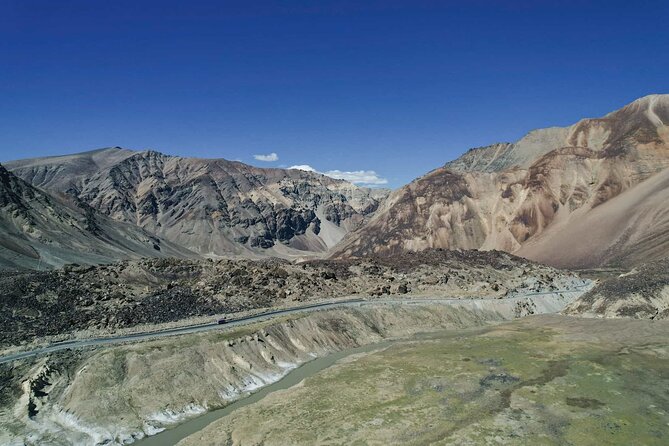
Day 8 covers about 180 kilometers to Pangong Lake, with six to seven hours of riding. The route follows the Shyok River, giving you a long stretch of mountain scenery rather than a string of formal attractions.
Agham is a tea stop, and Durbuk is the lunch stop. These breaks help divide the day, but lunch is not listed among the included meals, so budget for it separately.
Pangong Tso receives about an hour for photographs and video. The lake is one of the trip’s major visual rewards, but you should remember that the stop is short compared with the riding time needed to reach it.
The night is in Merak, beside Pangong Lake. This is a particularly appealing part of the route because you do not simply visit the lake and leave. You sleep nearby, giving you more time to experience the remote setting. The accommodation remains twin-share, and the information provided does not promise a high level of comfort.
Chushul, Nyoma, and Hanle
Day 9 continues toward Hanle for about 150 kilometers. Chushul is the first photo stop, followed by tea at Mahe and lunch at Nyoma.
These stops make the day more manageable, but the route is still remote. Carry personal snacks and water where you can reach them. The included breakfasts and dinners cover much of the basic food plan, but lunch, table drinks, and personal purchases are excluded.
Hanle is the overnight stop. The schedule gives you about 13 hours there before the next part of the journey. Hanle is valuable here as a remote base, but the supplied details do not promise a separate observatory visit or other specific attraction. Book this trip for the road experience, not for an assumed list of side tours.
Umling La and the confusing final riding day
Day 10 is the least clear part of the program. It lists Umling La for photographs and video, then Hanle for lunch, followed by Leh for the night. It also describes returning from Nubra, which does not fit neatly with the Hanle routing from the previous day.
Umling La is promoted as the world’s highest motorable road. That claim is one of the major draws for riders who want a high-altitude milestone. The planned stop is only about 15 minutes, so the achievement is more about reaching the road than spending a full day at the top.
Because the schedule contains conflicting references to Nubra, Hanle, and Leh, you should request a day-by-day route in writing. Confirm the actual road order, the distance, the accommodation, and whether the stated visit to Umling La is dependent on permits or road conditions.
The final overnight is in Leh, followed by a farewell and an overnight journey back toward the national capital on Day 11. Again, confirm whether this transfer is to Delhi, Chandigarh, or another point. The description says the overnight trip takes about 12 hours.
What the $2,004.76 price includes
At $2,004.76 per person, the cost is not just for motorcycle rental. It covers the support structure that makes a remote expedition more manageable.
Included services are:
- Environmental and permit fees
- Twin-share accommodation
- An English-speaking road captain
- A backup vehicle carrying luggage and a mechanic from Day 3 to Day 10
- Extra fuel for the backup vehicle
- A first aid box and oxygen cylinder
- Selected spare parts and fluids
- Ten breakfasts
- Nine dinners
The spare-parts list includes front and rear tubes, spark plugs, clutch and brake wires, clutch and disc brake pads, engine oil, and a clutch plate. That is a strong practical inclusion for a route where repair access may be limited.
The price does not include insurance, airfare, rail travel outside the stated transfers, lunches, drinks, tips, laundry, telephone use, or accidental damage. You may hire knee pads and elbow guards for an extra Rs. 750, listed as about $11 for the trip.
You also pay for accidental damage to the motorcycle, towing or transfer after a drop, and costs caused by weather, road closures, breakdowns, union issues, or itinerary changes outside the operator’s control. Those exclusions are important. Arrange suitable medical, accidental, and theft insurance before you ride.
Who should book this expedition?
You should consider it if you already enjoy long motorcycle days, want high mountain roads without planning every permit and hotel, and can accept basic twin-share accommodation.
It is a good fit for someone who values support. A mechanic, backup vehicle, oxygen, first aid supplies, and extra fuel reduce some of the risk and stress that come with remote riding.
It is less suitable if you want short daily rides, guaranteed comfort, a fully clear sightseeing schedule, or the freedom to alter the route. It is also not a sensible choice without insurance or if you are uncomfortable riding for most of a day.
The activity has a 5 out of 5 rating from 84 reviews and is recommended by 99 percent of its rating base. One especially useful booking tip is to reach Bhuntar a day early, which gives you protection against travel delays before the riding begins. The operator also offers free cancellation up to 24 hours before the start time, while bad-weather or minimum-participant cancellations are handled with a different date or full refund.
Should you book it?
Book this trip if the motorcycle is the main reason you want Ladakh, and if Khardung La, Pangong Lake, Hanle, and Umling La sound worth long, tiring days in the saddle.
I would not book until the operator confirms the meeting point, the Delhi or Chandigarh transfer, the Padum overnight, and the exact Day 10 routing. Once those details are clear, the package offers a useful balance of independence and support. You get the excitement of riding your own route through the Himalayas, without having to solve every fuel, permit, lodging, and mechanical problem alone.
FAQ
Where does the motorbike expedition start and finish?
The meeting information gives Leh 194101 as both the start and end point. The itinerary also describes an overnight Volvo bus from Delhi or Chandigarh on Day 1 and a return overnight journey on Day 11, so confirm the exact transfer arrangement before booking.
How long is the experience?
The expedition lasts approximately 11 days.
Is the tour private?
Yes. It is described as a private activity for your own group.
What kind of accommodation is included?
Accommodation is included on a twin-sharing basis. The supplied information does not specify the exact standard of each property.
Are meals included?
Ten breakfasts and nine dinners are included. Personal expenses, table drinks, and other meals such as lunch are not included.
Is a mechanic provided?
Yes. A backup vehicle carrying luggage and a mechanic operates from Day 3 through Day 10.
Is emergency equipment included?
The package includes a first aid box and an oxygen cylinder.
Is fuel included?
Extra fuel is included for the backup vehicle. The information does not state that all fuel for the rider’s motorcycle is included.
What baggage limit should I follow?
The advisable maximum baggage size is 60 liters. You must carry your luggage to the backup vehicle and into the accommodation.
Is insurance included?
No. Medical, accidental, and theft insurance are not included. You are also responsible for certain costs related to accidental motorcycle damage, towing, and itinerary changes caused by conditions outside the operator’s control.
Newly reviewed around New Delhi
- Private Customized Tour Of Old/New Delhi Spiritual Sites★ 5.0 · 5 reviews
- Yoga and Meditation Classes in Gurgaon★ 4.5 · 8 reviews
- Yoga class in Delhi★ 5.0 · 29 reviews
- Old Town Delhi Walking Tour (2 Hours Guided Tour with Local)★ 4.5 · 22 reviews
- 5 Days Golden Triangle Tour with Ranthambore(Delhi Agra Jaipur Ranthambore Tour)★ 5.0 · 3 reviews
- Wonderful Old & New Delhi sightseeing tour★ 5.0 · 3 reviews
- Delhi Zoo White Tigers & lions with Old Fort Visit★ 4.5 · 5 reviews
- Hidden Gems of Old Delhi – Walk★ 5.0 · 8 reviews