
Reviewed · DELHI STREET FOOD TOURS
Sanjay Colony Slum & Old delhi Street Food Tasting tour
Delhi can feel like several cities stitched together, and this tour makes that contrast its main event. You begin in Sanjay Colony, a 25-acre community near the Lotus Temple, then move to Old Delhi for food, spices, a Metro ride, and a rickshaw trip through Chandni Chowk. I like the direct look at working neighbourhood life, and I like that the day includes ordinary transport instead of keeping you behind a tour-van window.
The strongest part is the mix of local industry and street food: garment recycling, stitching units, and workshops first, then chole bhature, dahi bhalla, parathas, lassi, jalebis, and perhaps chicken kebabs near Jama Masjid. The main consideration is that Sanjay Colony is a residential community, not a staged attraction. Photography is not allowed there, and you should be ready to walk, eat from street vendors, and follow your guide’s lead in crowded lanes.
Key points before you book
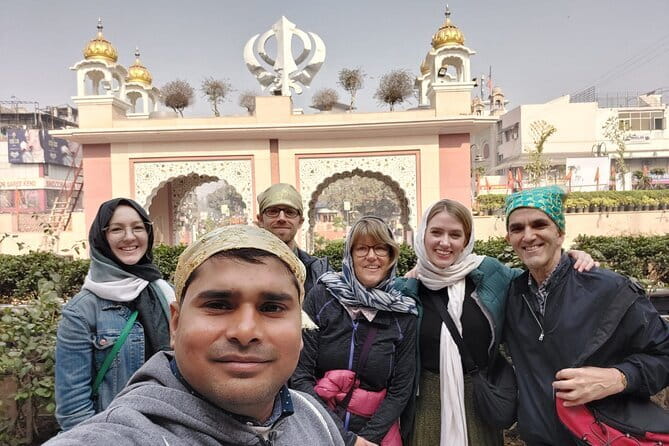
- Sanjay Colony offers a close look at working Delhi: See garment recycling, stitching units, and small local workshops in a 25-acre community near the Lotus Temple and ISKCON Temple.
- The food stops cover Delhi classics: Expect chole bhature, dahi bhalla, aloo chaat, parathas, lassi, jalebis, and other local favourites.
- Guide Vijay gives the day a personal touch: He is described as flexible, friendly, and able to shape outings around your interests.
- You use Delhi as locals do: The route includes travel by Metro and a rickshaw ride through Chandni Chowk.
- Khari Baoli adds a sensory finish: Asia’s largest spice market brings sacks of spices, herbs, teas, and dried fruit into the picture.
- It is a small-group experience: The maximum group size is 15, which matters in narrow lanes and busy food areas.
Why this six-hour Delhi day feels different
Many Delhi tours divide the city into monuments: a fort here, a tomb there, then a quick photo stop. This experience takes another route. It puts daily work, community life, food, and public transport at the centre.
I see the value in that choice. Sanjay Colony helps you understand how families and small businesses fit into modern Delhi. Old Delhi then shows a very different rhythm, with food stalls, spice shops, narrow lanes, and historic market streets. You are not simply looking at Delhi. You are watching people make a living in it.
The tour costs $67.94 per person. That is not the cheapest way to eat in Delhi, since street food itself can cost very little. The price pays for the guide’s time, the planning, the movement between two parts of the city, and the interpretation that connects them. It also includes a wide range of tastes and activities in roughly six hours.
The value is strongest if you want context and company. If you only want to find cheap snacks, you can spend far less on your own. If you want a guide to help you approach unfamiliar food, handle the route, and explain the city as you go, the price is easier to justify.
More community tours in New Delhi:
- Sanjay Colony Slum Tour
★ 5.0 · 498 reviews - New Delhi Slum Walking Tour
★ 5.0 · 360 reviews - Sanjay Colony Slum Tour with Local Guide
★ 5.0 · 160 reviews
Starting at Harkesh Nagar and entering Sanjay Colony
The meeting point is Gate 2 at Harkesh Nagar Okhla Metro Station in New Delhi. You return to this same point at the end, so plan your day around that station rather than assuming the tour finishes in Old Delhi.
The first part takes place in Sanjay Colony, near the Lotus Temple and ISKCON Temple. The community covers about 25 acres and is described as close-knit, with hardworking families and small industries operating within it. You can expect about two hours of walking through the neighbourhood, with the full stop listed as roughly three hours.
The difference between those two timings is worth noting. Walking and seeing the area may take around two hours, while meeting, orientation, and moving through the stop can make the total closer to three. Wear shoes that can handle uneven streets and a long day on foot.
This is not a polished sightseeing zone. You may see garment recycling, stitching units, and local workshops where work is part of the neighbourhood rather than something arranged for visitors. That gives the stop its value, but it also calls for good manners. Listen more than you photograph, stay with the guide, and avoid treating homes or workplaces as displays.
Photography is not allowed inside Sanjay Colony. That rule is clear and important. Put the camera away and pay attention to the people, sounds, and working details that you would otherwise try to collect as images.
Community life, a temple, and a mosque
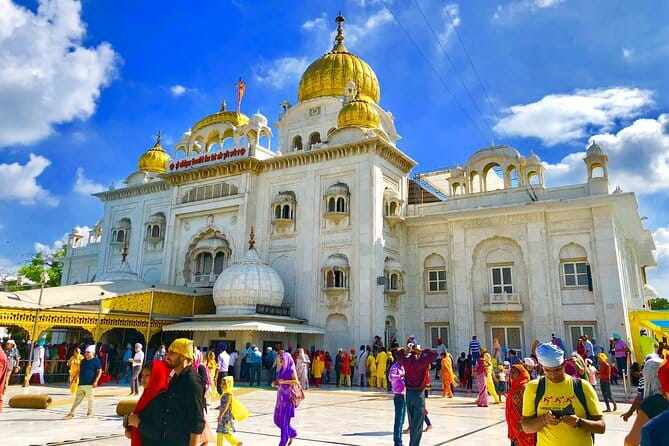
A particularly useful part of the visit is the chance to visit both a temple and a mosque. That gives the community more depth than a simple walk past workshops. You see places of worship alongside workspaces and homes, all within the same local setting.
The best approach is to let the guide set the pace and explain what is appropriate. Dress and behaviour should be respectful, and you should not expect every interior or moment to be available for casual viewing. The point is to learn how the neighbourhood functions, not to turn a private community into a show.
Guide Vijay is the name most closely associated with this experience. His role matters here. A good guide can explain what you are seeing without reducing Sanjay Colony to poverty or presenting it as a curiosity. Vijay is also described as someone who adjusts outings to personal interests and knows Delhi and other parts of India well.
That flexibility may be useful if you have questions about work, religion, food, or daily life. Still, the exact shape of the walk can depend on local conditions and the pace of the group. A maximum of 15 people keeps the group manageable, but it is not a private tour.
Taking the Metro from South Delhi to Old Delhi
After Sanjay Colony, you travel with the guide by Delhi Metro toward Old Delhi. This is one of the tour’s practical pleasures. Instead of treating Delhi as a set of disconnected sights, you watch the city change as you move through it.
The Metro also helps explain the scale of New Delhi. You start in a residential and industrial community, then arrive in one of the city’s oldest commercial areas. The change is not just visual. It is a shift in pace, street life, food, and the way people use public space.
The tour information does not specify the exact Metro route, travel time, or whether fares are included separately, so ask the operator if you need a precise cost breakdown. The important point is that Metro travel forms part of the guided experience.
More street food walks in New Delhi:
- Old Delhi Street Food Tour
★ 5.0 · 497 reviews - Old Delhi Street Food Tour – Explore Spices in Chandni Chowk
★ 5.0 · 334 reviews - Old Delhi Street Food and Spice Market Tour
★ 5.0 · 81 reviews - Old Delhi Cultural, Temples, Heritage Walking Street Food Tour
★ 5.0 · 57 reviews
Chandni Chowk, where the food becomes the main attraction
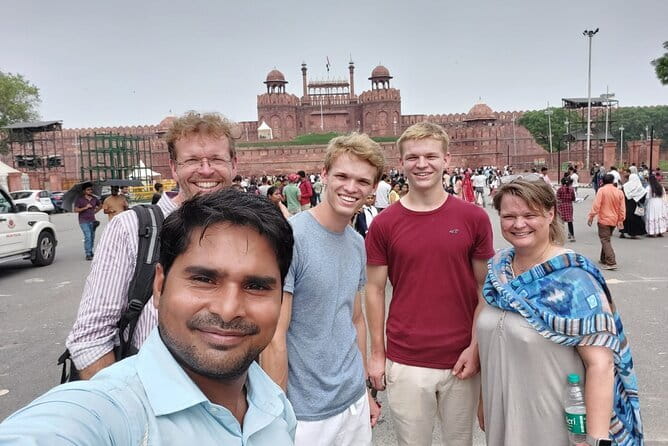
Chandni Chowk is scheduled for about 90 minutes, although the full food portion and surrounding movement may make the day feel longer. This is Old Delhi’s famous food centre, filled with narrow lanes, market activity, and long-running vendors.
The food list is generous:
- Chole bhature
- Dahi bhalla
- Aloo chaat
- Parathas
- Lassi
- Jalebis
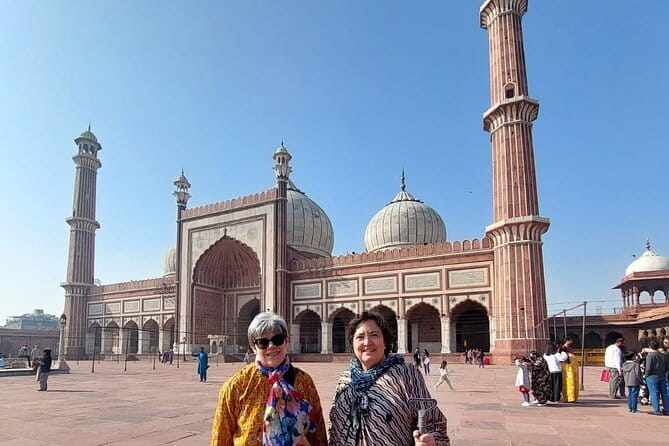
- Chicken kebabs near Jama Masjid
- Other local street foods selected by the guide
Chole bhature gives you a hearty start, with spiced chickpeas and fried bread. Dahi bhalla brings a cooler, softer contrast, while aloo chaat adds potato, spice, and tang. Parathas offer another filling option, and lassi gives you a rich drink between stops.
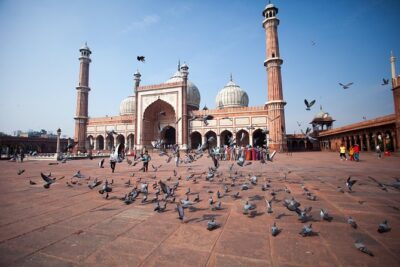
Save room for jalebis. These bright, syrupy sweets are best treated as a small finish rather than a full dessert course. If you eat meat, chicken kebabs in the lanes near Jama Masjid add a savoury stop to the vegetarian-heavy list.
I like this format because you do not have to guess what to order at every stall. The guide can direct you to trusted vendors and help you move from one taste to the next. The tradeoff is that street food is not a controlled restaurant meal. If you have dietary restrictions, allergies, or a sensitive stomach, tell the guide before eating and be clear about what you can manage.
The experience is also better if you think of each portion as a sample. Delhi food can be rich, fried, spicy, sweet, and filling. Trying a little at several places gives you a wider picture than sitting down to one large meal.
A rickshaw ride through Chandni Chowk
The rickshaw ride adds movement and comic relief to the Old Delhi section. Chandni Chowk’s lanes can feel overwhelming on foot, especially when you are also trying to watch traffic, stalls, signs, and people. From a rickshaw, you get a short moving view of the market streets while your guide handles the route.
Do not expect a quiet sightseeing ride. The charm is in the bustle, close traffic, and constant activity. Keep your belongings secure and follow the guide’s instructions when getting in and out.
This is one place where a small group helps. With up to 15 people, the guide still has to keep everyone together, but the group is less cumbersome than a large coach party. Expect pauses and regrouping rather than a perfectly smooth ride.
Khari Baoli and Asia’s largest spice market
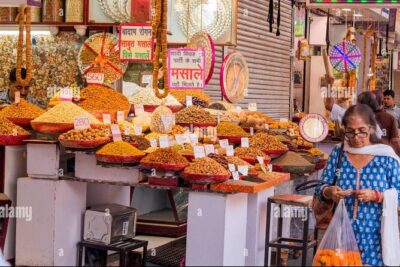
The final major stop is Khari Baoli, listed at about 90 minutes. It is Asia’s largest spice market, with lanes filled with spices, herbs, teas, and dried fruit.
This is more than a quick shop window. The colours and aromas make Khari Baoli a strong contrast to Sanjay Colony and Chandni Chowk. You see goods sold in bulk and a market built around trade rather than tourism. The experience works best when you slow down enough to notice the variety of products and the scale of the operation.
The market can be intense for the senses. Strong smells, close lanes, and heavy foot traffic are part of the setting. If you prefer calm, spacious attractions, this may be tiring. If you enjoy markets where the goods are the main story, it is one of the day’s most memorable stops.
Khari Baoli also gives the food tour some useful context. Earlier, you taste finished dishes. Here, you encounter the spices, dried ingredients, and market trade that help shape Delhi’s cooking. The connection is not presented as a formal cooking lesson, but the sequence makes sense.
What the guide adds to the day
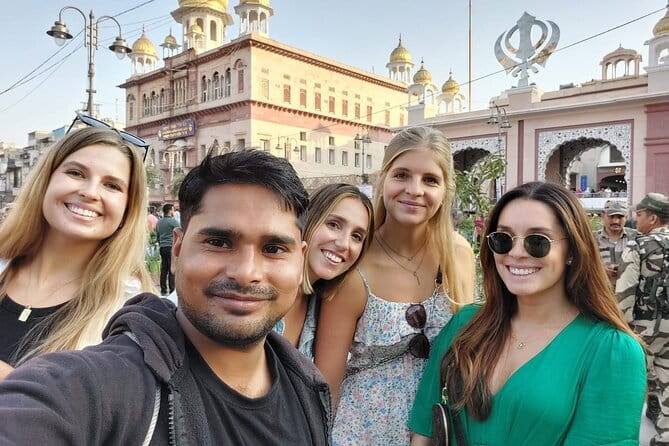
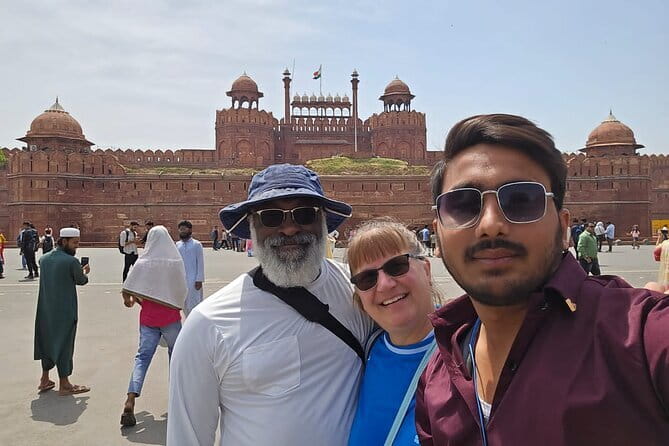
The guide is central to this experience. Vijay is repeatedly described as warm, helpful, flexible, and willing to tailor an outing to personal interests. He is also said to know many people and places around India, which may be useful if you want broader suggestions beyond this day.
More important, he is described as avoiding pressure to buy from other businesses. That matters in market areas. You want help understanding what you see, not a series of forced shopping stops.
The guide also has to handle two very different types of touring. Sanjay Colony calls for sensitivity and restraint. Old Delhi calls for timing, food judgment, navigation, and a sense of humour. The strongest version of the tour will connect those two settings without treating either one as a backdrop.
Since the group can reach 15 people, the experience may not feel as personal as a private walk. Still, the small maximum is reasonable for crowded lanes and a community visit. If you want specific food preferences or have questions about the social side of the tour, raise them at the start.
Who should book this experience?
I would choose this tour if you want to see Delhi beyond its major monuments and are comfortable with an active, sensory day. It suits first-time visitors who want a guide to make Old Delhi easier to navigate, as well as repeat visitors looking for a more local focus.
It is a good fit for people who enjoy:
- Guided neighbourhood walks
- Street food in small portions
- Public transport and rickshaw rides
- Markets, workshops, and everyday commerce
- Direct conversations about city life
- A mix of religious, residential, and commercial settings
It is less suited to you if you want a relaxed day with little walking, quiet restaurants, or unrestricted photography. The no-camera rule in Sanjay Colony is firm, and the food and market sections take place in active public areas rather than controlled attractions.
The tour requires good weather. If poor weather cancels it, you can choose another date or receive a full refund. You can also cancel up to 24 hours before the start for a full refund. Within 24 hours, refunds are not available, and changes are not accepted.
Should you book the Sanjay Colony and Old Delhi tour?
Book it if the idea of connecting working Delhi with eating Delhi appeals to you. The community visit, Metro journey, street food, rickshaw ride, and spice market create a fuller picture than a standard monument loop.
At $67.94, it is priced as a guided cultural day rather than a cheap food crawl. You pay for structure, local direction, and access to places that can be hard to understand on your own. Go with an open mind, a modest appetite at each stop, respectful behaviour in Sanjay Colony, and comfortable walking shoes. That is when this tour earns its price.
FAQ
Where does the tour start?
It starts at Gate 2 of Harkesh Nagar Okhla Metro Station, at Harkesh Nagar, Okhla, New Delhi.
Where does the tour finish?
The experience ends back at the same meeting point.
How long does the tour last?
The total duration is approximately six hours.
How large is the group?
The maximum group size is 15 people.
Is photography allowed in Sanjay Colony?
No. Photography is not allowed inside Sanjay Colony.
Which foods are included?
The food selection can include chole bhature, dahi bhalla, aloo chaat, parathas, lassi, jalebis, and other local favourites. Chicken kebabs may also be available near Jama Masjid.
Does the tour visit Khari Baoli?
Yes. The tour includes Khari Baoli, Asia’s largest spice market, for approximately 90 minutes.
Does the tour use public transport?
Yes. You travel with the guide by Delhi Metro and also take a rickshaw ride through Chandni Chowk.
Can most people participate?
Yes. Most people can participate in the activity.
What is the cancellation policy?
You can cancel at least 24 hours before the start time for a full refund. Cancellations or changes made within 24 hours are not accepted and are not refundable. If poor weather causes the tour to be canceled, you can receive a full refund or choose another date.
More Old Delhi Tours
- Old Delhi Bike Tour
★ 5.0 · 616 reviews - Breakfast Walk in Old Delhi
★ 5.0 · 449 reviews - New Delhi and Old Delhi Private Tour 4-8 Hours – Customizable
★ 5.0 · 342 reviews - Delhi By Cycle & Old Delhi
★ 5.0 · 329 reviews
More Food Tours in New Delhi
- The Great Indian Food Tour: Old Delhi Food and Heritage Walk
★ 5.0 · 1,698 reviews - Old Delhi Food, Heritage&Cultural Walk with Rickshaw ride to Masterji Kee Haveli
★ 5.0 · 742 reviews - Delhi Food Walk: Rickshaw Ride, Street Eats & Market Tour
★ 5.0 · 401 reviews - Old Delhi Food-Spice Market-Temples Tour Soon Featured on NETFLIX
★ 5.0 · 304 reviews
Newly reviewed around New Delhi
- Private Customized Tour Of Old/New Delhi Spiritual Sites★ 5.0 · 5 reviews
- Yoga and Meditation Classes in Gurgaon★ 4.5 · 8 reviews
- Yoga class in Delhi★ 5.0 · 29 reviews
- Old Town Delhi Walking Tour (2 Hours Guided Tour with Local)★ 4.5 · 22 reviews
- 5 Days Golden Triangle Tour with Ranthambore(Delhi Agra Jaipur Ranthambore Tour)★ 5.0 · 3 reviews
- Wonderful Old & New Delhi sightseeing tour★ 5.0 · 3 reviews
- Hidden Gems of Old Delhi – Walk★ 5.0 · 8 reviews
- Delhi Zoo White Tigers & lions with Old Fort Visit★ 4.5 · 5 reviews
Delhi Street Food Tours, compared.
Old Delhi Street Food Tour – Explore Spices in Chandni Chowk
Read our review →
Old Delhi Cultural, Temples, Heritage Walking Street Food Tour
Read our review →
Customized Half Day and Full Day Delhi Shopping, Street Food Tour
Read our review →
Delhi City Tour: Old Delhi, Markets, Monuments & Street Food Walk
Read our review →
Old Delhi Temples, Cultural, Heritage Walking Street Food Tour
Read our review →
Street Food Crawl (2 Hours Guided Food Tasting Tour)
Read our review →Browse the lists this tour appears in