
Reviewed · GOLDEN TRIANGLE TOURS FROM DELHI
India Golden Triangle Tour 03 Nights 04 Days with Accommodation
The Taj Mahal is the star, but this four-day private circuit gives you much more: Delhi’s grand avenues and Mughal monuments, Agra’s great fort, and Jaipur’s hilltop Amber Palace and pink sandstone palaces. You cover a lot of ground, with a driver handling the long road trips.
I like the private format, which lets your group move at its own pace, and the practical bundle of hotels, breakfasts, bottled water, guide service, and pickup. Drivers such as Dinesh and Shaymo Singh have earned especially warm praise for safe driving, clean cars, and helpful local pointers. The main drawback is the pace: three cities in four days means early starts, long drives, and little free time.
Key points to know before booking
- Three major cities in four days: Delhi, Agra, and Jaipur fit into one tightly planned north India circuit.
- Private car and guide: Only your group takes part, with an English-speaking guide and driver.
- The Taj Mahal comes early: You visit Agra’s great monument on the morning of Day 2.
- Hotels and breakfasts included: Three nights and three breakfasts are part of the package.
- Monument tickets cost extra: Admission fees are not included, so budget separately for the sights.
- Flexible end point: After breakfast on Day 4, you can be dropped at a location in Delhi or Jaipur.
A fast, practical route through India’s Golden Triangle
At $460 per person, this trip offers a useful amount of help for the price. You are paying for a private vehicle, a driver, an English-speaking guide, three nights of accommodation, breakfasts, airport or location pickup, bottled water, and assistance with busy sights.
The value depends on what you want from India. If you prefer to arrange every train, taxi, hotel, and guide yourself, an independent trip may cost less. If you want the major sights connected without handling India’s long road journeys, this package saves time and mental effort.
The phrase skip the line needs a little care. The tour includes guaranteed access intended to avoid long queues, but monument admission itself is not included. Set aside extra money for Qutub Minar, Jama Masjid, the Taj Mahal, Agra Fort, Amber Palace, Hawa Mahal, City Palace, and Jantar Mantar. The precise ticket cost is not supplied, so ask for the current total before departure.
The car size is also worth confirming. For one to three people, the operator explains that a sedan is supplied, with four passenger seats plus the driver. That is different from expecting a seven-seat vehicle, especially when a guide is also present. A sedan can work well for a small group, but luggage and four adults may make the long drives less comfortable.
More Golden Triangle routes from New Delhi:
- 3-Days Private Golden Triangle Tour: Delhi, Agra & Jaipur by Car
★ 5.0 · 1,107 reviews - 3-Days Private Golden Triangle Tour: Delhi, Agra & Jaipur by Car
★ 5.0 · 1,098 reviews - 3-Day Delhi, Agra and Jaipur Private Tour – India Golden Triangle
★ 5.0 · 812 reviews
Day 1: Delhi monuments before the road to Agra
The tour begins with pickup from Delhi airport or another Delhi location. The first day is packed with major landmarks, followed by a roughly three-hour drive to Agra. The Delhi sightseeing portion is listed at about five hours, so you should expect a full day rather than a relaxed introduction.
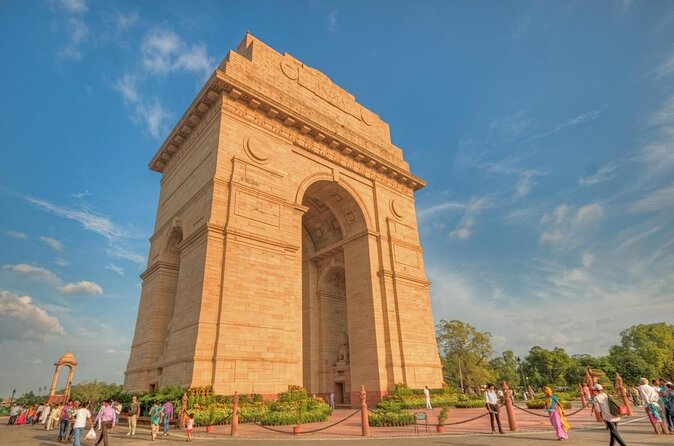
India Gate is a quick, worthwhile stop. This broad war memorial sits on New Delhi’s ceremonial axis and gives you a sense of the capital’s formal design. Allow about 30 minutes. It is an exterior visit, so you do not need to plan it as a museum stop.
You then pass Parliament House, also called Sansad Bhavan. The building is important to India’s modern government, but the admission ticket is not included, and the stop is listed at about 30 minutes. Treat it mainly as a photo and orientation stop unless your guide confirms interior access.
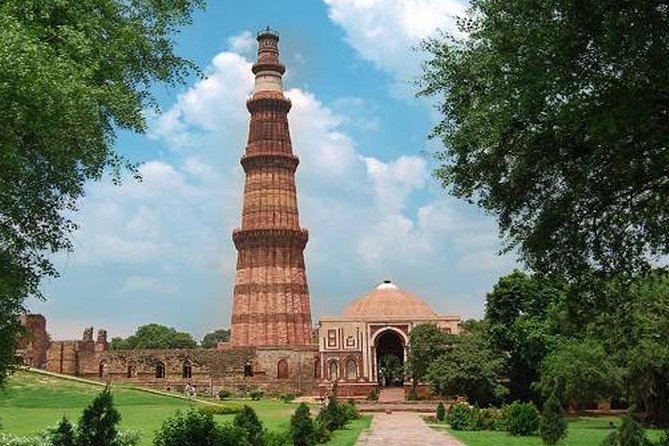
Qutub Minar deserves more time. The tower rises from the Qutab complex, a UNESCO World Heritage site in the Mehrauli area. You have about an hour here, enough to see the minaret and surrounding ruins, but not enough for a slow archaeological study. The ticket is extra.
Jama Masjid adds a very different note. Built by Mughal emperor Shah Jahan between 1650 and 1656, it is one of India’s largest mosques. Plan on about an hour. Modest clothing is sensible at a religious site, and access rules can vary. The admission cost is not included.
The Lotus Temple rounds out the Delhi stops. Its white, flower-shaped design belongs to a Bahá’í House of Worship, and it is open to people of every faith. The visit lasts around 30 minutes and is listed as free. The contrast is useful: in one day, you move from imperial India to modern government, Mughal architecture, and a contemporary place of worship.
There is a catch. The day includes several stops that are spread across Delhi, then a road trip to Agra. Traffic can affect the schedule, and the description contains slightly different time references for the Delhi portion. Keep your expectations practical. You will see the headline sights, but this is not a slow, neighborhood-by-neighborhood exploration.
You spend the night in Agra. That overnight is important because it puts you near the Taj Mahal for the next morning rather than sending you from Delhi before dawn.
Day 2: The Taj Mahal and Agra Fort
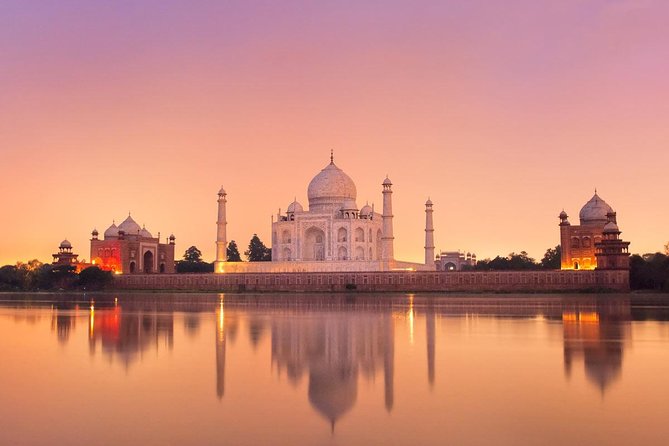
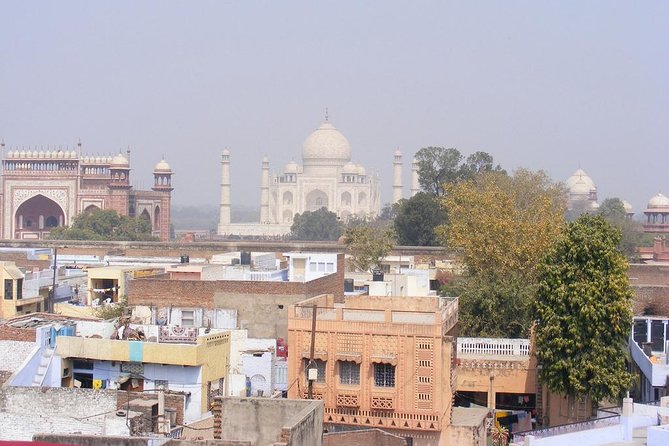
After breakfast and checkout, you visit the Taj Mahal. The planned visit lasts about three hours, which gives you time to approach the monument, see its gardens and exterior, and take photographs. The mausoleum was built by Shah Jahan for Mumtaz Mahal, and its pale marble changes character with the light.
The Taj is the one place where the fast schedule still gives you a reasonable amount of time. Listen carefully to the guide, but protect a few quiet minutes for yourself. The building is famous for good reason, yet it is easy to spend the whole visit rushing from one photo point to another.
Admission is extra. Ask your guide how the skip-the-line arrangement works on your date and what the ticket covers. The tour supplies access assistance, but the cost of the monument is specifically excluded.
Agra Fort follows, with about an hour planned. This is not just a defensive wall. It was the main residence of Mughal emperors until the capital moved from Agra to Delhi in 1638. Inside, you see areas such as the Pearl Mosque and the halls of public and private audience.
I like the pairing of the Taj Mahal and Agra Fort. The Taj shows Mughal refinement and personal devotion. The fort gives you the political setting behind that world. One is delicate and symmetrical; the other is massive, layered, and built for power.
After the Agra sights, you drive roughly four hours to Jaipur. This is one of the longest road sections, so the day may feel tiring after the Taj Mahal. On arrival, you check into the Jaipur hotel and have the evening to rest. The package includes the hotel night, but hotel category and room details should be confirmed when booking. One experience specifically refers to a four-star hotel option, so do not assume that category applies to every booking.
Day 3: Jaipur forts, palaces, and astronomy
Jaipur gets a full sightseeing day. The city is known for pink and red sandstone buildings, royal residences, and planned streets. You begin at Amber Palace, also called Amer Fort, about 11 kilometers from Jaipur.
Allow roughly two hours here. The fort sits high on a hill and is the biggest sight of the day. Its position gives you broad views, while its courtyards and palace spaces show how Rajput rulers combined defense with ceremony. The uphill setting also means you should expect walking and some uneven surfaces.
Next comes Hawa Mahal, the Palace of Wind. This red and pink sandstone facade was built in 1799 by Maharaja Sawai Pratap Singh and extends from the City Palace toward the former women’s quarters. The planned stop is only 30 minutes, so you will likely view and photograph the famous exterior rather than spend a long time inside.
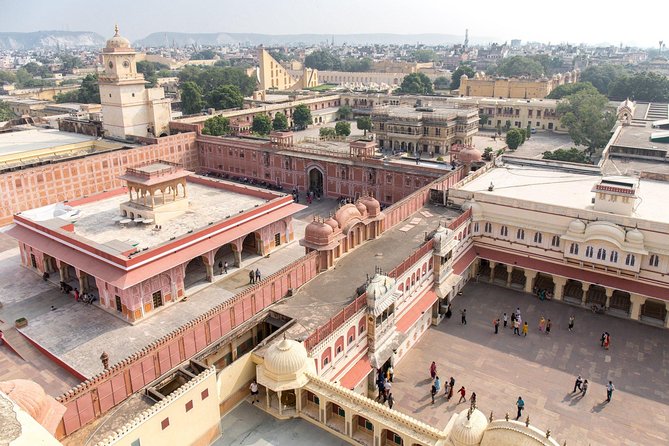
The City Palace gives you a fuller look at Jaipur’s royal center. The complex includes Chandra Mahal, Mubarak Mahal, and other buildings. It was the seat of the Maharaja of Jaipur, head of the Kachwaha Rajput clan. One hour is enough for a focused visit, though the admission fee is extra.
Jantar Mantar is a good reminder that Jaipur’s attractions are not only about royal decoration. This collection of 19 large astronomical instruments was completed in 1734 by Sawai Jai Singh II. It includes the world’s largest stone sundial and has UNESCO World Heritage status.
You have about an hour here. A guide makes a real difference because the instruments are easier to appreciate when you understand what they measure. Without explanation, some can look like oversized stone sculpture.
Jal Mahal closes the sightseeing day with a short stop at Man Sagar Lake. The palace sits in the water and was renovated and enlarged in the 18th century by Maharaja Jai Singh II of Amber. The planned visit is 30 minutes, mainly for views and photographs. Admission is not included.
The Jaipur schedule is full but sensibly grouped. Amber Palace takes the morning, while Hawa Mahal, City Palace, and Jantar Mantar are close to one another. Even so, you should not expect a free afternoon for shopping, cafés, or wandering the old city. The package is designed for major sights, not open-ended exploration.
Same starting point, a completely different day out:
- Old & New Delhi City Tour – Half or Full Day Options Available
★ 5.0 · 4,811 reviews - Same Day Taj Mahal, Agra Fort & Baby Taj Tour from Delhi by Car
★ 5.0 · 4,304 reviews - Taj Mahal Day Tour from Delhi by Superfast Train – TOP RATED TOUR
★ 5.0 · 4,166 reviews - Full Day Taj Mahal, Agra Fort & Baby Taj Tour from Delhi by Car
★ 5.0 · 3,647 reviews
The guide and driver make the difference
A private tour is only as good as the people operating it. The strongest part of this experience is the personal service attached to the car. Dinesh is specifically praised for taking good care of the group, keeping the vehicle clean, and helping make the route enjoyable. Shaymo Singh is also singled out for handling Delhi, Agra, and Jaipur’s difficult roads and sharing information about places passed along the way.
Deepak is mentioned for helping with excellent Taj Mahal photographs. That detail matters because the monument is crowded and the best photo locations are not always obvious. Still, guide and driver assignments can vary, so treat these names as examples rather than a guarantee.
The private setup means only your group participates. You can ask for a short pause, clarify a historical point, or adjust the rhythm within the fixed route. You also avoid the awkwardness of coordinating with a large coach group.
There is one practical warning. A driver may suggest restaurants during the road sections, and one booking raised concerns about expensive meal stops. You should ask about restaurant choices and prices before ordering. The supplied package includes breakfasts, not lunch or dinner, so meals outside the hotel are your responsibility.
What the accommodation and inclusions really cover
Three hotel nights and three breakfasts are included. Nights are spent in Agra after Delhi, then Jaipur on the second and third evenings. Breakfast helps you start the early sightseeing days without finding a restaurant before departure.
Two bottles of mineral water per day are also included. That is a small but useful touch during long drives and hot sightseeing days. Bring your own additional water if needed.
Pickup is offered from Delhi airport and other Delhi locations. On Day 4, after breakfast, you are dropped at your location in Delhi or Jaipur. This is helpful if your next hotel or flight fits those endpoints, but check the timing carefully before booking a same-day flight.
The tour is marked suitable for most people, but the schedule involves substantial time in a vehicle, walking at forts and monuments, and climbing or uneven ground at some sites. The data does not provide a detailed accessibility plan, so ask the operator specific questions if mobility support is important to you.
Free cancellation is available if you cancel at least 24 hours before the start time. Cancellations inside that window are not refunded, and late changes are not accepted.
Who should book this four-day circuit?
I would choose this tour if you have limited time and want the three headline cities connected by one private service. It suits first-time visitors who would rather focus on monuments than manage intercity transport, hotel bookings, and local guides.
It also works well for a small family or friend group. The private vehicle avoids a large coach, and the driver can help with the practical parts of a demanding route. The strong feedback for Dinesh, Shaymo Singh, and Deepak points to the kind of support that can make a short trip easier.
I would hesitate if you want long stays in each city, local markets, relaxed meals, or time away from the main sights. Delhi alone can fill several days, and Jaipur deserves more time if you want to explore beyond its palaces.
Should you book it?
Book this trip if your priority is efficient sightseeing and a private car with hotel and guide support. The $460 price is reasonable for the package, especially when three hotel nights and private transport are included, but you must add monument tickets, lunch, dinner, and any optional hotel upgrade.
Before paying, confirm the sedan size, hotel category, exact guide arrangements, monument ticket costs, and restaurant plan. If you accept the quick pace, this is a practical way to see the Golden Triangle’s essential sights. If you want India to unfold slowly, add extra nights in Delhi, Agra, or Jaipur rather than trying to stretch this four-day route.
FAQ
What cities does the tour visit?
The tour visits New Delhi, Agra, and Jaipur. It begins with Delhi sightseeing, continues to Agra for the Taj Mahal and Agra Fort, and finishes with Jaipur’s forts, palaces, and astronomical observatory.
How long does the tour last?
The experience lasts four days and includes three nights of accommodation.
Is the tour private?
Yes. Only your group participates, with private transportation and an English-speaking guide.
Are hotel stays and breakfast included?
Yes. Three nights of hotel accommodation and three breakfasts are included.
Are monument entrance fees included?
No. Monument fees are excluded, so you must pay separately for the listed attractions.
Where can I be dropped off on Day 4?
After breakfast, drop-off is available at your location in Delhi or Jaipur.
Newly reviewed around New Delhi
- Private Customized Tour Of Old/New Delhi Spiritual Sites★ 5.0 · 5 reviews
- Yoga and Meditation Classes in Gurgaon★ 4.5 · 8 reviews
- Yoga class in Delhi★ 5.0 · 29 reviews
- Old Town Delhi Walking Tour (2 Hours Guided Tour with Local)★ 4.5 · 22 reviews
- 5 Days Golden Triangle Tour with Ranthambore(Delhi Agra Jaipur Ranthambore Tour)★ 5.0 · 3 reviews
- Wonderful Old & New Delhi sightseeing tour★ 5.0 · 3 reviews
- Delhi Zoo White Tigers & lions with Old Fort Visit★ 4.5 · 5 reviews
- Hidden Gems of Old Delhi – Walk★ 5.0 · 8 reviews
Golden Triangle Tours from Delhi, compared.
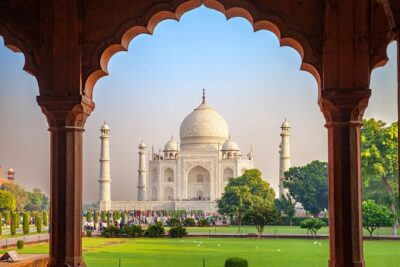
3-Days Private Golden Triangle Tour: Delhi, Agra & Jaipur by Car
Read our review →3-Days Private Golden Triangle Tour: Delhi, Agra & Jaipur by Car
Read our review →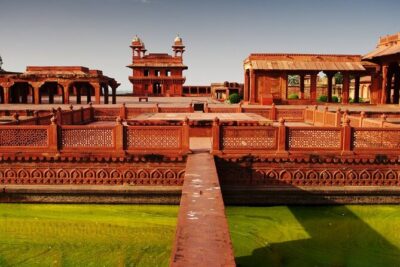
3-Day Delhi, Agra and Jaipur Private Tour – India Golden Triangle
Read our review →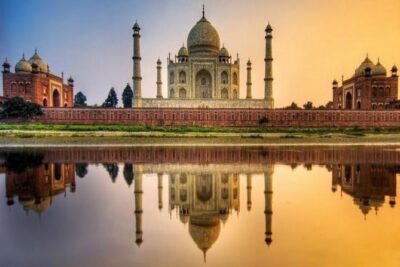
Four-Day Private Luxury Golden Triangle Tour to Agra and Jaipur From New Delhi
Read our review →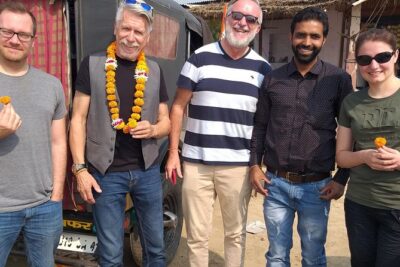
5 Nights 6 Days Private Golden Triangle Tour – Delhi Agra Jaipur
Read our review →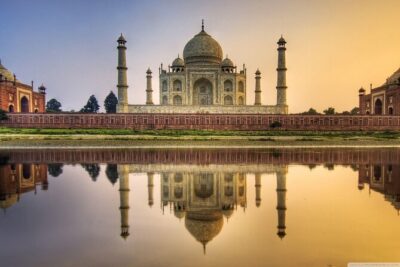
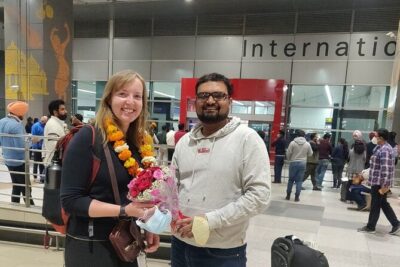
Private Car and Drive for Golden Triangle (4N/5D)
Read our review →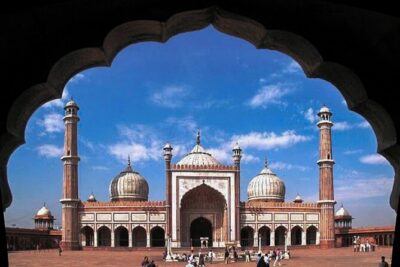
Private Golden Triangle Tour Delhi Agra Jaipur ( Top Rated )
Read our review →Browse the lists this tour appears in