
Reviewed · NEW DELHI CITY TOURS
Gandhi Delhi Private History Adventure Tour
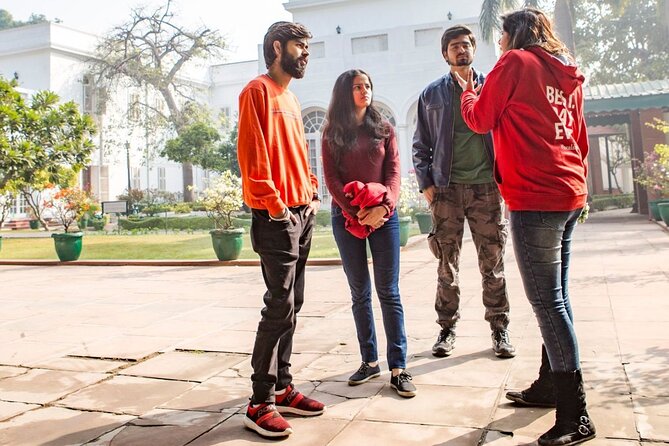
Gandhi’s Delhi is best understood through places, not just dates. This private tour takes you to Gandhi Smriti, where he spent his final days and was assassinated, then to the museum and memorial that preserve his work and memory.
I like the intimate format and the chance to ask questions as you go. I also like the simple route: one house, one museum, and one memorial, with private transport between them. The main drawback is that the tour may feel short if you want a full study of Gandhi’s politics, and one reported departure ran late and finished well before the expected time.
Key points to know before booking
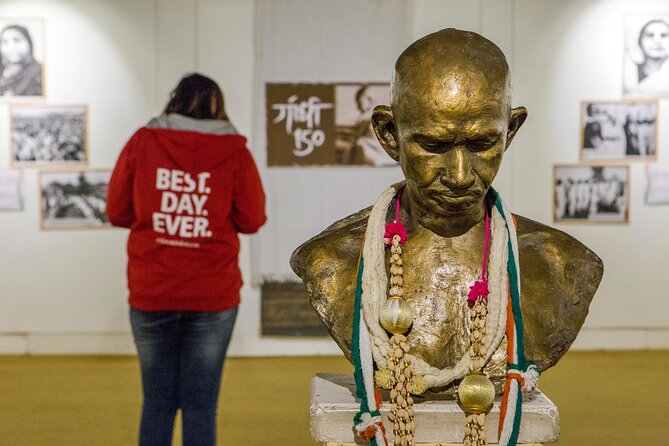
- Gandhi Smriti is the emotional center: See Gandhi’s preserved room, final walking path, and multimedia displays at the former Birla House.
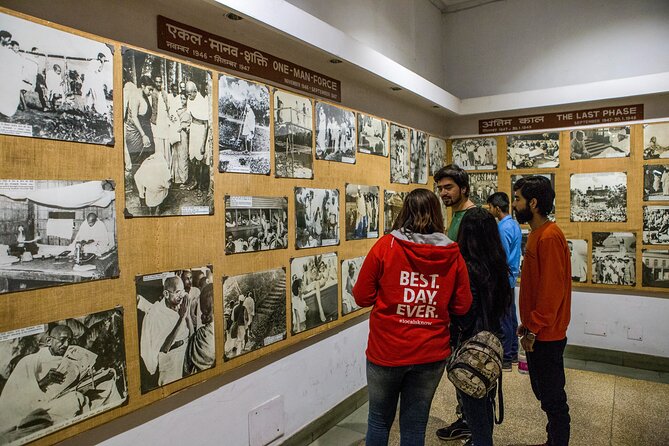
- The National Gandhi Museum is compact but useful: Books, manuscripts, journals, photographs, and personal objects help fill in the story.
- Raj Ghat adds quiet reflection: The memorial marks the site of Gandhi’s cremation and carries his final words, Hey Ram.
- Private transport keeps the afternoon easy: Pickup is offered from centrally located Delhi hotels, with a guide and vehicle for your group.
- The tour is built around Gandhi’s ideas: Expect discussion of nonviolent protest, equality, justice, and his role in India’s independence movement.
- Allow about four hours, with some flexibility: The listed visit times are short, and traffic or a late pickup can affect the day.
Why Gandhi’s Delhi is worth an afternoon
Delhi can feel like a city of grand forts, crowded roads, government buildings, and large historical themes. Gandhi’s story gives you a more personal route through it. Instead of seeing only monuments, you visit rooms, objects, paths, and memorial spaces tied to one man’s daily life and death.
That matters because Gandhi is often reduced to a few familiar images: a walking stick, round spectacles, a spinning wheel, and the idea of nonviolent resistance. At these sites, you get a closer look at the person behind the symbol. You can consider his discipline, religious thinking, political methods, and difficult place in modern Indian history.
The tour costs about $40.03 per person. For that price, you are paying mainly for private transport, a local English-speaking guide, and a focused route through three Gandhi sites. The admission tickets are included, which keeps the afternoon simple.
I see the value most clearly if you have only a few days in Delhi or if you prefer a guide to connect the displays. If you already know Gandhi’s life well, the museums may feel brief. In that case, the private format still helps because you can ask for more context rather than follow a fixed group lecture.
More New Delhi city tours:
- Old & New Delhi City Tour – Half or Full Day Options Available
★ 5.0 · 4,811 reviews - Old & New Delhi Private Tour – Half or Full Day (Rated Excellent)
★ 5.0 · 2,226 reviews - Old & New Delhi Full or Half Day Sightseeing Tour
★ 5.0 · 1,900 reviews
Gandhi Smriti, the house where his life ended
The first stop is Gandhi Smriti, formerly Birla House. Gandhi lived here during the final period of his life, and he was assassinated on the grounds in January 1948 while walking to his evening prayer meeting.
This is the most personal stop of the afternoon. You can see the room he used and walk across the grounds along the route associated with his final moments. The space is not grand in the way Delhi’s imperial buildings are grand. Its power comes from its ordinary scale. You are looking at a home, a room, and a path connected to a major turning point in India’s history.
A multimedia museum adds background through displays and artifacts from Gandhi’s life. The listed visit lasts about 40 minutes, including admission. That is enough time for a guided introduction and a focused look at the main exhibits, but not enough for a slow reading of every panel.
I would give this stop your full attention. The physical setting helps make Gandhi’s final days easier to understand, while the displays provide a starting point for his larger story. Ask your guide about the routine of his evening walk, his work for social equality, and the political tensions of the period. A good guide can turn a solemn site into a thoughtful history lesson rather than a quick photo stop.
One practical point: modest clothing is recommended. Cover your shoulders and knees, and choose loose, light clothing suited to Delhi’s heat. This is respectful at memorial sites and more comfortable than tight or heavy clothes.
The National Gandhi Museum and its paper trail
The National Gandhi Museum is the tour’s main stop for documents and research material. It holds books, manuscripts, journals, photographs, and other items connected with Gandhi’s life, philosophy, and work.
The listed time here is about 20 minutes. That is the clearest limitation in the schedule. A museum built around documents rewards patience, and you may want longer than 20 minutes to read, compare photographs, and make sense of the different periods of Gandhi’s life.
Still, the stop serves an important purpose. Gandhi Smriti gives you a place and a final chapter. The National Gandhi Museum gives you evidence of the wider life: his writing, campaigns, relationships, and ideas. Together, the two stops prevent the tour from becoming only a memorial visit.
I would use the museum time to look for items that show Gandhi as a working political figure, not simply a saintly national icon. His methods involved organizing, writing, public protest, and difficult negotiations. The museum can help you connect those activities with the principles discussed by your guide.
The quality of the afternoon depends heavily on the guide here. Several guides connected with this experience have been praised for being friendly and informative, including Abhi, Indira, and Audesh C. Mishra. Those names do not guarantee who will lead your departure, but they show the kind of guide you should hope for: someone who explains the objects and welcomes questions.
There is also a less positive possibility. One account described a guide who offered only a very basic explanation and had a strong accent that made communication hard. That is not a reason to reject the tour, but it is a reminder to speak up if you need a point repeated or explained in another way.
Raj Ghat, a quiet memorial beside the Yamuna
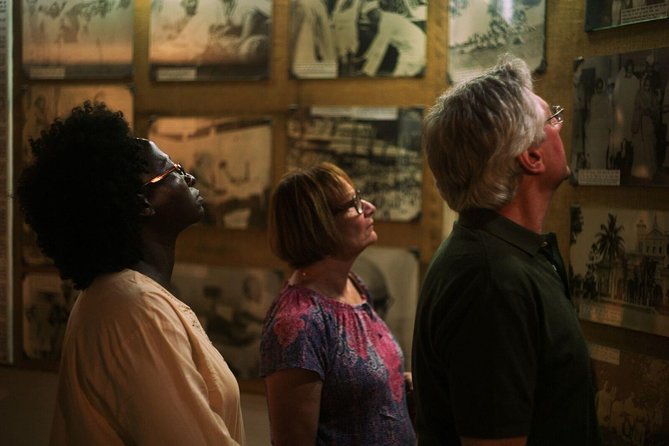
The final Gandhi site is Raj Ghat, where Gandhi was cremated after his assassination. The memorial sits in a green garden on the west bank of the Yamuna River and is marked with the words Hey Ram, traditionally understood as Gandhi’s final utterance.
The listed visit lasts about 20 minutes. Raj Ghat is less about objects and more about atmosphere. After the house and museum, this open memorial gives you space to pause and consider the scale of Gandhi’s public influence and the shock of his death.
Other Indian leaders were also cremated in this area at different times, so the site places Gandhi within the story of independent India rather than treating him as an isolated figure. Your guide can help explain why Raj Ghat remains important in civic and national memory.
You should not expect a long guided walk through a large complex. The stop is short, and the experience is deliberately simple. That can be a strength if you want a calm end to the tour. It can feel thin if you hoped for extensive detail about post-independence India.
More historic sites around New Delhi:
- The Great Indian Food Tour: Old Delhi Food and Heritage Walk
★ 5.0 · 1,698 reviews - Old Delhi Food, Heritage&Cultural Walk with Rickshaw ride to Masterji Kee Haveli
★ 5.0 · 742 reviews - Old Delhi Heritage Walking Tour
★ 5.0 · 247 reviews - 3-hour Old Delhi Heritage Walking tour with Rickshaw Ride
★ 5.0 · 240 reviews
What the private format changes
This is described as a private activity, so only your party joins. The stated maximum is 12 people, which makes it suitable for a family, couple, or small group that wants more control than a large coach tour allows.
Private does not mean the day is fully custom-built. The route centers on Gandhi Smriti, the National Gandhi Museum, and Raj Ghat. The timing at each place is also fairly set. The benefit is that your guide can adjust the conversation, answer questions, and sometimes give you a little extra time if the schedule allows.
One guide, Audesh C. Mishra, was specifically praised for allowing extra time when the group wanted to stay longer. That kind of flexibility is valuable at Gandhi Smriti, where you may want to pause rather than rush through the final room and walking path.
Hotel pickup is offered from centrally located hotels in Delhi. Private transport matters here because the three locations are separated by city roads, and public transport would add planning and waiting time. At the end, you can continue exploring on your own or ask the guide to help arrange a taxi back to your hotel.
The start time is listed as 1:00 p.m. That makes this a useful afternoon plan, especially if you want a slower morning. It also means you should keep some room in your schedule. One reported experience began 1.5 hours late and lasted about three hours rather than the expected longer period. Confirm your pickup details and keep the operator’s contact information handy.
How much history fits into four hours
The tour is advertised at about four hours, but the three listed stop times total only 80 minutes. The rest is used for driving, pickup, transitions, and guide commentary.
That timing gives you an introduction, not a full academic treatment. You will learn about Gandhi’s final days, see the main memorial sites, and discuss his ideas about nonviolent protest, equality, and justice. You will not have enough time to read every document at the museum or explore every question surrounding his political legacy.
I think the schedule works best if you prepare a little before you go. Even a basic understanding of Gandhi’s campaigns will make the objects and places easier to follow. If you arrive with specific questions, the private setting gives you a better chance to get useful answers.
The subject also deserves some nuance. Gandhi is honored as the Father of the Nation, but his life and ideas include debates that a short tour may only touch on. The experience is strongest when the guide treats him as a complex historical figure rather than a flawless symbol.
Who will get the most from this tour
I would recommend this experience to first-time visitors who want a meaningful half-day away from Delhi’s usual headline sights. It suits anyone interested in modern Indian history, independence movements, civil rights, peace studies, or political philosophy.
Families can also use it well. Children under six may join free of charge, though you need to mention them when booking. The three stops are manageable, and the subject offers a clear way to talk about fairness, courage, protest, and public service.
The tour is less suited to someone seeking a broad survey of Delhi. You will not visit the city’s forts, markets, mosques, or major imperial buildings. It is also not ideal if you dislike museums or memorial sites. Much of the value comes from listening, looking closely, and thinking about the past.
The English-speaking guide is a key part of the experience. Past guides have included Abhi, Indira, and Audesh C. Mishra, along with a driver named Sonny on one departure. Accounts describe these guides and drivers as friendly and professional, while one poor experience points to the importance of communication quality. If your guide speaks too quickly or gives thin explanations, ask direct questions and request more detail.
Practical details that affect your day
Admission to Gandhi Smriti, the National Gandhi Museum, and Raj Ghat is included. Food and drinks are not, and gratuities for the guide are separate. Plan to eat before or after the tour rather than expecting a meal during the afternoon.
The tour is listed as suitable for most people and is near public transportation, though the included hotel pickup and private vehicle make that less important for the main group. Dress conservatively, with shoulders and knees covered. Light, loose clothing is the sensible choice in Delhi’s hot weather.
The tour is described as carbon neutral and is operated by a B Corp certified company. That will not change what you see at the three sites, but it may matter if you want your booking to reflect a stated effort to use tourism for social and environmental good.
Free cancellation is available if you cancel at least 24 hours before the local start time. Changes or cancellations inside that window are not accepted for a refund.
Should you book Gandhi’s Delhi?
Book it if you want a focused, personal look at Gandhi’s final home, his documentary legacy, and the place where he was cremated. The route is easy to understand, the private vehicle saves time, and the guide can add meaning that a self-guided visit may lack.
I would be cautious if your schedule is tight or if you need a precise finish time. The listed duration is approximate, and one account reported a late start and a shorter day. Confirm the pickup carefully and avoid placing an important flight or appointment immediately afterward.
At about $40.03 per person, this is a fair buy for a private half-day introduction, especially for a small group. You are paying for context and convenience more than admission fees. If Gandhi’s life interests you, the three stops create a thoughtful afternoon. If you want grand architecture or a broad tour of Delhi, spend your money elsewhere.
FAQ
How long does the Gandhi Delhi Private History Adventure Tour last?
The tour lasts approximately four hours. The listed visit times are about 40 minutes at Gandhi Smriti, 20 minutes at the National Gandhi Museum, and 20 minutes at Raj Ghat, with the remaining time used for transport and guiding.
What time does the tour start?
The stated start time is 1:00 p.m.
Is hotel pickup included?
Yes. Pickup with private transportation is included from centrally located hotels in Delhi.
Which places are visited?
The tour visits Gandhi Smriti, the National Gandhi Museum, and Raj Ghat.
Is this a private tour?
Yes. Only your group participates. The stated maximum group size is 12 people.
Is the tour suitable for children?
Yes. The experience is child-friendly, and children under six may join free of charge. You should notify the operator when booking if you are bringing a child under six.
What is included in the price?
The price includes visits to the three Gandhi sites, admission tickets, private transportation from a centrally located Delhi hotel, and an English-speaking local guide. Food, drinks, and guide gratuities are not included.
Newly reviewed around New Delhi
- Private Customized Tour Of Old/New Delhi Spiritual Sites★ 5.0 · 5 reviews
- Yoga and Meditation Classes in Gurgaon★ 4.5 · 8 reviews
- Yoga class in Delhi★ 5.0 · 29 reviews
- Old Town Delhi Walking Tour (2 Hours Guided Tour with Local)★ 4.5 · 22 reviews
- 5 Days Golden Triangle Tour with Ranthambore(Delhi Agra Jaipur Ranthambore Tour)★ 5.0 · 3 reviews
- Wonderful Old & New Delhi sightseeing tour★ 5.0 · 3 reviews
- Hidden Gems of Old Delhi – Walk★ 5.0 · 8 reviews
- Delhi Zoo White Tigers & lions with Old Fort Visit★ 4.5 · 5 reviews
New Delhi City Tours, compared.

Old & New Delhi City Tour – Half or Full Day Options Available
Read our review →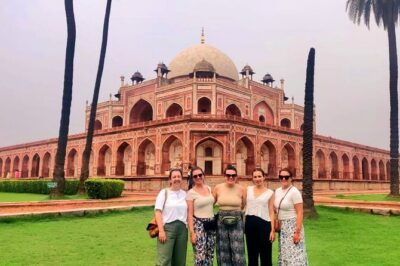
Old & New Delhi Private Tour – Half or Full Day (Rated Excellent)
Read our review →
Old & New Delhi Full or Half Day Sightseeing Tour
Read our review →
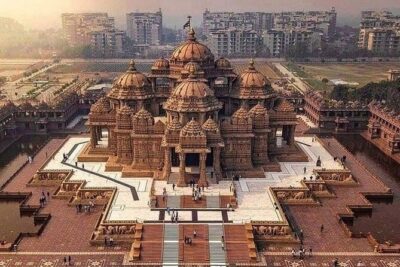
Old & New Delhi Private City Tour – Traveler’s Choice (Top Rated)
Read our review →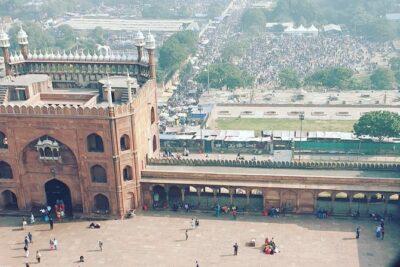

Private Old and New Delhi City Full Day or Half Day Tour
Read our review →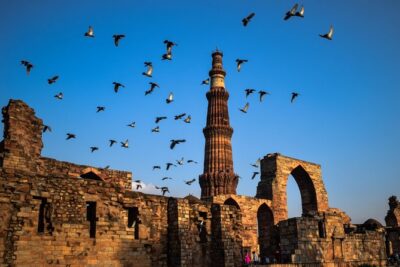
Old and New Delhi Full Day or Half Day Tour – Best of Delhi City
Read our review →Browse the lists this tour appears in