
Reviewed · DELHI COOKING CLASSES
Five Course Cooking Class & Meal
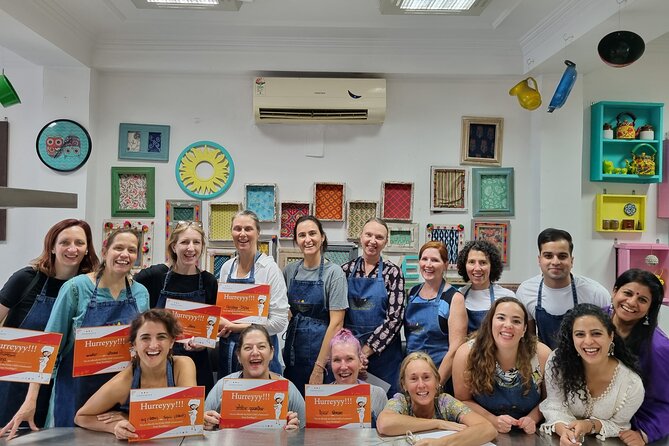
Indian food makes far more sense once you see what happens before the first bite. At Tastesutra, you work through spices, ingredients, mixing, timing, and cooking methods, then sit down to eat the meal you prepared. The class is held near Lajpat Nagar Metro Station, making it a practical break from Delhi sightseeing.
I like the way this class puts you to work instead of leaving you to watch a chef from across the room. I also like the useful menu: chicken, paneer, lentils, seasonal vegetables, rice, breads, dessert, and a drink give you a broad look at North Indian home cooking. The main consideration is time. Three hours goes quickly when you are preparing several dishes, so this is an active workshop rather than a slow, leisurely lunch.
Five useful things to know before booking
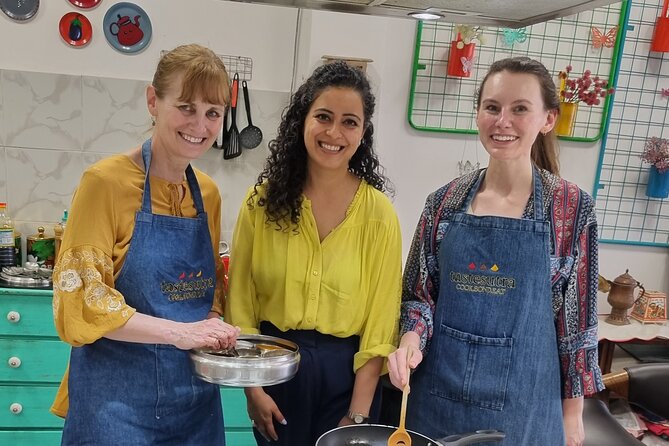
- You cook every step: The class covers spice combinations, ingredient preparation, cooking order, and serving, rather than offering only a demonstration.
- The menu covers a full Indian meal: Expect chicken, paneer, lentils, a seasonal vegetable, rice, breads, dessert, and one beverage.
- The setting is easy to reach: Tastesutra is on the first floor of A-20 in Lajpat Nagar II, close to Lajpat Nagar Metro Station.
- The class can suit different diets: Vegetarian, vegan, and gluten-free choices are available if you state your needs when booking.
- Recipes help after your return: Recipes are sent by email afterward, so you can try the dishes in your own kitchen.
- It is private for your booking: Only your group participates, with a minimum of two people and a maximum of 20.
What the three-hour Tastesutra class is really about
This is not simply a meal with a little cooking added. The food is the lesson. You get an introduction to Indian spices and ingredients, then handle the ingredients yourself as the dishes take shape.
That matters because Indian cooking often depends on order and proportion. The same spice can taste very different depending on when it goes into the pan, how it is combined, and how much is used. The class focuses on those practical details, including when to add spices and how different ratios change the final flavor.
The workshop also gives you a look at Indian food culture beyond a restaurant menu. The teaching can include traditional cooking customs, eating customs, table manners, family life, and the place of spices in everyday meals. That cultural background makes the food easier to understand and easier to recreate.
The format is especially useful if you have only a short stay in Delhi. In about three hours, you get instruction, hands-on preparation, a substantial lunch, and a set of recipes to use later. You are not spending the whole day away from the city, but you still get more than a quick market snack or restaurant meal.
More cooking classes in New Delhi:
- Veg and Non veg : Private Cooking Class in Delhi home (7 meal)
★ 5.0 · 226 reviews - Indian Cooking Class in an Authentic Local Home – Learn 6 Dishes
★ 5.0 · 195 reviews - New Delhi: Indian Cooking Class in a Local Home
★ 5.0 · 65 reviews
Getting to A-20 in Lajpat Nagar
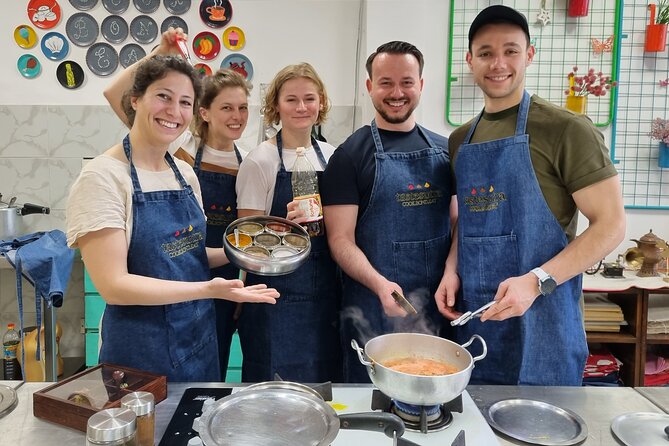
Tastesutra Cooking Studio is located at First Floor, A-20, near Lajpat Nagar Metro Station, Block A, Lajpat Nagar II, New Delhi. The location is close to public transportation, and Lajpat Nagar Metro Station is the key landmark to use when planning your arrival.
The studio is accessible by all kinds of public transportation. Since the exact route from your hotel will depend on where you are staying, allow enough time to find the building and reach the first-floor studio without rushing. A mobile ticket is provided, and booking confirmation is received at the time of booking.
The neighborhood location also works well for a cooking class because it keeps the experience tied to an ordinary Delhi area rather than isolating it in a hotel dining room. You begin and finish at the same place, so there is no complicated transfer between a meeting point and a separate kitchen.
Learning spices before you cook
The spice introduction is one of the most useful parts of the experience. Instead of treating Indian seasoning as a mysterious list of ingredients, the instructor explains how spices work together and how their proportions affect the taste.
You can expect to learn about ingredients used in Indian cooking and the ways they are combined. The class also covers when spices should be added during cooking. That timing is a small detail, but it is often the difference between a dish that tastes rounded and one that tastes harsh or unfinished.
Several instructors associated with the class include Sonal, Sonam, Anchal, and Alchan, though the specific teacher for your booking may vary. The teaching style described in the experience is warm, clear, and hands-on. Some sessions can also be offered bilingually, which may help if you are more comfortable learning in another language.
The class is a good fit for cooks at different levels. Beginners can follow the step-by-step process, while experienced home cooks may appreciate the explanation of spice ratios, traditional methods, and ingredient combinations. You do not need to arrive with advanced knife skills or an existing understanding of Indian cuisine.
Preparing the chicken, paneer, and vegetable dishes
The menu gives you a useful cross-section of Indian cooking. A chicken dish provides one main preparation, while paneer offers a vegetarian protein with a different texture and cooking style. Lentils and a seasonal vegetable add two everyday staples that are common in home kitchens.
The menu can change with the season or the needs of the group, so you should not treat the listed dishes as a fixed restaurant menu. The important point is the range. You work with a meat dish, a paneer dish, lentils, and vegetables rather than spending the whole session on one curry.
The class also allows control over chili levels. That is a welcome feature if you enjoy spice but do not want every dish to be hot. The focus is on flavor and balance, so you can learn how the food tastes without being overwhelmed by heat.
Vegetarian options are available, and vegan and gluten-free requirements can also be accommodated when stated at booking. If you have allergies or strict dietary needs, give the details before the class rather than waiting until you arrive. The more specific you are, the easier it is for the team to plan the meal.
Same starting point, a completely different day out:
- Old & New Delhi City Tour – Half or Full Day Options Available
★ 5.0 · 4,811 reviews - Same Day Taj Mahal, Agra Fort & Baby Taj Tour from Delhi by Car
★ 5.0 · 4,304 reviews - Taj Mahal Day Tour from Delhi by Superfast Train – TOP RATED TOUR
★ 5.0 · 4,166 reviews - Full Day Taj Mahal, Agra Fort & Baby Taj Tour from Delhi by Car
★ 5.0 · 3,647 reviews
Rice, breads, dessert, and the final meal
Rice and breads round out the meal. Preparing bread is a particularly useful part of the session because it adds a practical skill that many visitors may not attempt at home without instruction. The class can include multiple types of bread, depending on the menu and the session.
Dessert completes the five-course format, and the meal is served after the cooking work is done. One beverage is included, along with lunch. The drink may be part of the cooking and dining experience, and instructors have received praise for preparing chai and other refreshments.
The final meal is not an extra stop at a restaurant. You eat the food made during the workshop, which gives the lunch a clear purpose. You can taste how the spice choices, cooking order, and preparation methods came together.
This is also where the pace of the class becomes clear. By the end, you have handled several dishes, breads, rice, and dessert. If you prefer a quiet lunch with little activity, this may feel busy. If you like learning by doing, the full menu makes the three hours feel worthwhile.
Why the cultural details add real value
A cooking class can become a forgettable recipe demonstration if it never explains why the food is prepared in a certain way. Tastesutra adds context through discussion of Indian cooking traditions and daily customs.
You may learn about traditional eating habits, table manners, family life, and the difference between restaurant cooking and food prepared at home. That distinction is useful. Restaurant versions often use more oil, more chili, or different shortcuts, while the class presents cooking methods that can be adapted for a home kitchen.
The cultural discussion also helps you read a menu after the class. You gain a better sense of how lentils, paneer, breads, vegetables, and spice blends fit together in a meal. Instead of memorizing isolated recipes, you begin to see the logic of a complete Indian table.
Several instructors also explain the health qualities associated with spices and the benefits of preparing food from basic ingredients. These points should not be treated as medical advice, but they can add practical context to the ingredients you are using.
Class size, privacy, and teaching style
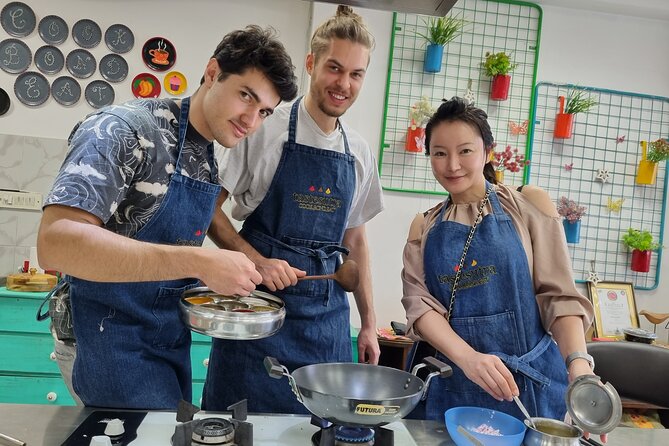
The activity is described as a private tour, meaning only your group participates. A booking requires at least two people and can include up to 20. That range matters. A couple or small family can expect a more personal setting, while a larger booking may feel more like a group workshop.
The private format is useful for families, couples, friends, or small work groups. You can ask questions without competing with a large public class, and dietary preferences can be discussed in advance. Families may also appreciate that the class is structured around participation rather than a formal lecture.
The instructors are repeatedly described as friendly, patient, and clear in their explanations. The kitchen is kept clean, and the setup is professional. Those details matter in a food activity, especially when you are handling several raw and cooked ingredients in a short period.
Teaching styles may vary by instructor. Sonal, Sonam, Anchal, and Alchan are names connected with sessions, and each may bring a slightly different approach. The central format remains the same: learn the ingredients, prepare the food, eat together, and leave with recipes.
Is the $60.82 price good value?
At $60.82 per person, the price is not the cheapest way to eat lunch in Delhi. You can find a low-cost meal for much less. That is not the right comparison, though.
Here you are paying for roughly three hours of instruction, hands-on preparation, lunch, a beverage, the use of the cooking space, and recipes that can be used after your trip. You also get several types of food in one session rather than a single main dish.
I consider the price reasonable for anyone who genuinely wants to learn Indian cooking. It becomes better value if you cook at home after the trip, since the experience continues through the recipes and techniques. It is less compelling if you only want to eat and have no interest in preparing food.
The class also saves you from arranging several separate activities. You get food, cultural background, and a local experience in one stop. Since the location is near public transportation and the activity returns to the meeting point, it is easy to fit into a sightseeing day.
Who should book this cooking class?
I would choose this class for food-focused visitors, first-time cooks, families, couples, and anyone who wants a practical Delhi activity away from the usual monuments. It is also a smart choice if you have already seen several major sights and want an experience based on everyday life.
It suits people who want to ask questions and take part. You should enjoy chopping, mixing, stirring, shaping, and tasting. The class is not designed for someone who wants to sit back while an instructor prepares everything.
Vegetarians should feel comfortable booking, provided they specify their needs. Vegan and gluten-free requests are also possible with advance notice. The class can be especially helpful for people who want to reduce chili or understand how to build flavor without relying on heat.
I would think twice if your schedule is extremely tight. The experience lasts about three hours, and the cooking itself is the main event. You should also be ready to meet the minimum booking requirement of two people.
Free cancellation is available if you cancel at least 24 hours before the local start time. Cancellations within 24 hours are not refunded, and late changes are not accepted.
Should you book Tastesutra?
Book it if you want to bring part of Delhi home with you. The strongest reason to choose Tastesutra is the combination of full-meal cooking, spice instruction, cultural context, and recipes you can use later.
The class is especially valuable for visitors who have wondered why Indian food tastes different at home than it does in India. You learn about proportions, timing, and traditional preparation while making chicken, paneer, lentils, vegetables, rice, breads, and dessert.
Skip it if you want a purely passive food tour or a quick lunch. This is a working class, and three hours of preparation is part of the appeal. For most food-minded visitors, the hands-on format and the chance to repeat the dishes at home make the $60.82 cost a fair trade.
FAQ
Where does the cooking class take place?
The class takes place at Tastesutra Cooking Studio, First Floor, A-20, Block A, Lajpat Nagar II, New Delhi, near Lajpat Nagar Metro Station.
How long does the experience last?
The cooking class and meal last approximately three hours.
What food is included?
The five-course cooking experience includes one beverage, a chicken dish, a paneer dish, lentils, a seasonal vegetable, rice, breads, and dessert. Lunch is included.
Are vegetarian, vegan, or gluten-free options available?
Yes. Vegetarian, vegan, and gluten-free options are available. State your dietary requirements when booking.
How many people are required to book?
A minimum of two people is required per booking. The maximum is 20 people.
Is the activity private?
Yes. Only your group participates in the private activity.
Can I cancel for a full refund?
Yes, if you cancel at least 24 hours before the experience start time. Cancellations made less than 24 hours before the start time are not refunded.
More Hands-On Workshops in New Delhi
- 5 Senses Tour – Old + New Delhi, Workshops, Lunch all inclusive
★ 5.0 · 386 reviews - Local Market Tour & Five Course Meal Class
★ 5.0 · 62 reviews - Spice Knight (Cooking Class -> Meal -> Local Market walk)
★ 5.0 · 59 reviews - Vegetarian : Private Cooking Class in Delhi home ( Learn 7 meal)
★ 5.0 · 58 reviews
Newly reviewed around New Delhi
- Private Customized Tour Of Old/New Delhi Spiritual Sites★ 5.0 · 5 reviews
- Yoga and Meditation Classes in Gurgaon★ 4.5 · 8 reviews
- Yoga class in Delhi★ 5.0 · 29 reviews
- Old Town Delhi Walking Tour (2 Hours Guided Tour with Local)★ 4.5 · 22 reviews
- 5 Days Golden Triangle Tour with Ranthambore(Delhi Agra Jaipur Ranthambore Tour)★ 5.0 · 3 reviews
- Wonderful Old & New Delhi sightseeing tour★ 5.0 · 3 reviews
- Hidden Gems of Old Delhi – Walk★ 5.0 · 8 reviews
- Delhi Zoo White Tigers & lions with Old Fort Visit★ 4.5 · 5 reviews
Delhi Cooking Classes, compared.
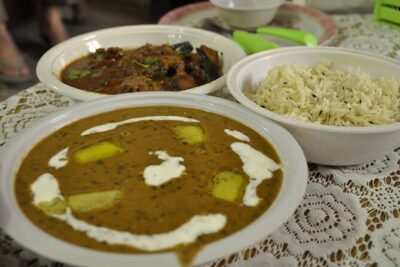
Veg and Non veg : Private Cooking Class in Delhi home (7 meal)
Read our review →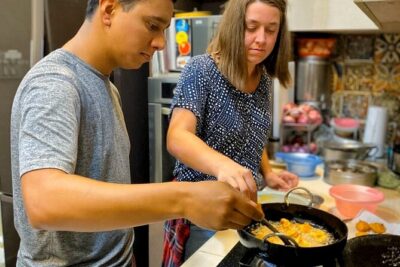
Indian Cooking Class in an Authentic Local Home – Learn 6 Dishes
Read our review →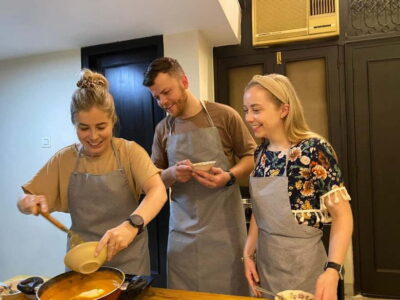
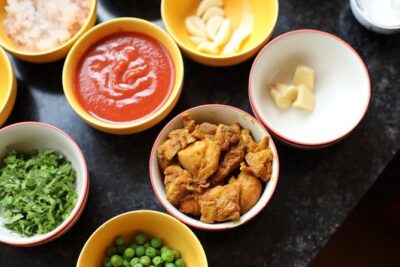
Spice Knight (Cooking Class -> Meal -> Local Market walk)
Read our review →
Vegetarian : Private Cooking Class in Delhi home ( Learn 7 meal)
Read our review →
Food Tour With Cooking Class in Local Village from Delhi
Read our review →
2 Days Private Delhi Tour with Best Cooking Class
Read our review →Browse the lists this tour appears in