
Reviewed · GOLDEN TRIANGLE TOURS FROM DELHI
8 Days Tour of Essential India & Classic Nepal – Golden Triangle with Kathmandu
The Taj Mahal at sunrise is the emotional center of this eight-day India and Nepal journey, but the route gives you much more: Mughal monuments in Delhi and Agra, Rajput palaces in Jaipur, and Kathmandu Valley temples. I especially like the private, chauffeured vehicle and the way the tour includes both major sights and smaller stops such as Chand Baori and Patrika Gate. The included Jaipur to Kathmandu flight also saves you a punishing overland crossing.
Two things deserve a close look before you book. The schedule is packed, with early mornings and several long transfers, and the listed meeting information is not fully consistent: the sightseeing begins in Delhi, while the meeting-point text says Kathmandu. Confirm your arrival plan, hotel package, and start city directly with Expert Tours & Travels before paying.
Key points to know before booking
- Sunrise at the Taj Mahal: You visit one of the world’s most famous monuments early, when the light is softer and the grounds are generally more comfortable.
- Private transportation throughout India: Your group gets a chauffeured, air-conditioned vehicle, bottled water, and included road transfers rather than shared tourist transport.
- A useful mix of grand and local sights: Chandni Chowk, Chand Baori, Galtaji, singing bowls, and Nepali Chulo add texture to the major monuments.
- Jaipur to Kathmandu by air: The flight connects through Delhi and is included, but check the 20-kilogram checked-bag limit.
- Seven nights and many entry fees included: The package can simplify budgeting, though hotel inclusion depends on the option you choose.
- A strong fit for first-time visitors: Guides handle the route, site entries, airport transfers, and most practical details across two countries.
What this India and Nepal route really covers
This is not a slow cultural retreat. It is a fast, private introduction to four major South Asian cities, with Delhi, Agra, Jaipur, and Kathmandu each offering a different chapter.
You begin among Mughal and British-era landmarks in Delhi, continue to Agra for the Taj Mahal, then head to Jaipur for forts, palaces, and astronomical instruments. A flight takes you to Kathmandu, where three days cover Buddhist stupas, Hindu temples, medieval palace squares, and a Himalayan viewpoint.
At $1,796 per person, the value depends on what you want from a trip. You are paying for private transport, guides, seven hotel nights if you select the hotel option, seven breakfasts, dinner, monument entry fees, bottled water, and the Jaipur to Kathmandu flight. Purchased separately, those pieces would require plenty of planning, especially across two countries.
The tradeoff is time. You get a broad look at India and Nepal, not long stays in each place. I would choose this route if you want the famous sights handled efficiently and prefer support with the road transfers, airport connection, and local guides.
More Golden Triangle routes from New Delhi:
- 3-Days Private Golden Triangle Tour: Delhi, Agra & Jaipur by Car
★ 5.0 · 1,107 reviews - 3-Days Private Golden Triangle Tour: Delhi, Agra & Jaipur by Car
★ 5.0 · 1,098 reviews - 3-Day Delhi, Agra and Jaipur Private Tour – India Golden Triangle
★ 5.0 · 812 reviews
Day 1: Old Delhi, New Delhi, and Qutub Minar
Your first full day starts at 8 a.m. with pickup in Delhi, Gurugram, or Noida. Humayun’s Tomb is a smart opening stop. Its formal gardens and red sandstone architecture help you understand the Mughal style before you see the Taj Mahal.
From there, the route moves into Old Delhi. The Red Fort recalls the period when Mughal rulers controlled much of northern India, while Jama Masjid gives you a look at one of the country’s largest mosques. Both are included, and each receives about 45 minutes in the schedule.
Chandni Chowk supplies the street-level contrast. You pass through a market known for spices, dried fruit, silver jewelry, and colorful saris. This is one of the better choices on the route because it connects grand imperial buildings with daily commerce. Keep your expectations practical: the market visit is short, and the surrounding streets can feel intense.
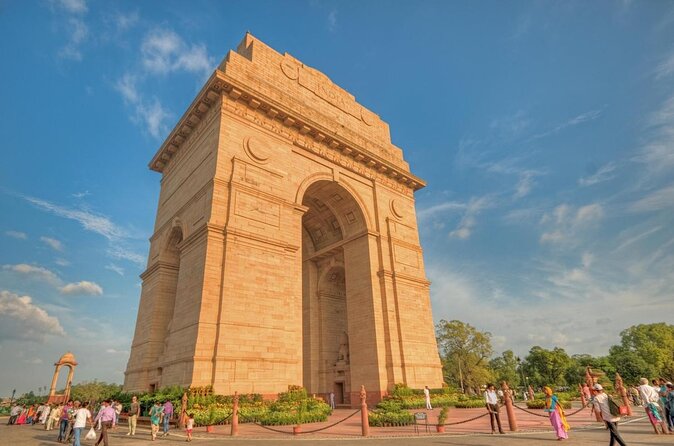
After lunch, Gurudwara Bangla Sahib introduces Sikh worship and community life. The white temple is a calm pause in a busy day. India Gate follows as a brief photo stop, then you drive past the President’s House and parliamentary buildings in New Delhi.
The final major sight is Qutub Minar, a 73-meter UNESCO-listed minaret built in the 12th century. Allow 90 minutes here. Day 1 covers a lot, so expect a full day on your feet, with traffic adding uncertainty to the schedule.
Day 2: Akshardham and the road to Agra
Akshardham Temple opens the morning. It is one of the largest Hindu temples in the world and belongs to the Swaminarayan sect. The visit lasts about an hour and offers a very different style from the Mughal monuments of the previous day.
The temple is closed on Mondays. If your schedule places it there, the tour plan says the visit will be moved to the prior day. Confirm the adjustment rather than assuming every stop will occur in the printed order.
You then continue to Agra, the former Mughal capital on the Yamuna River. Agra Fort is a major highlight, not just a warm-up for the Taj Mahal. Its walls and palaces show how royal power worked in practice, and the one-hour visit gives you useful context for the monument you see the next morning.
Mehtab Bagh sits across the river from the Taj Mahal. The garden is aligned with the monument and is intended to provide a different view, particularly around sunrise or sunset. It is a worthwhile addition because you see the Taj from a distance rather than only from its main entrance.
The exact road time from Delhi depends heavily on traffic. Your private vehicle makes the transfer easier, but it does not make Indian traffic disappear. Keep the day flexible and avoid scheduling an independent evening commitment in Agra.
Day 3: The Taj Mahal, Fatehpur Sikri, and Chand Baori
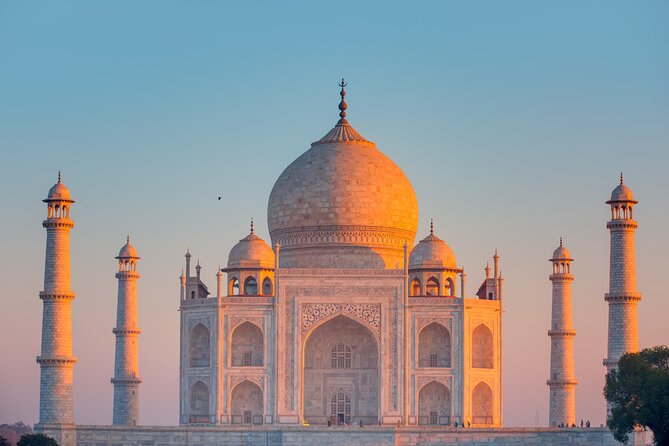
The Taj Mahal visit begins early, with tea or coffee available at the hotel before you leave. The sunrise timing is one of the strongest parts of the entire program. Light, weather, and crowd conditions can change, so the sunrise experience is not guaranteed to look the same every day.
You have about two hours at the Taj Mahal. That is enough time to see the main building, gardens, and surrounding complex with a guide, though photography and security procedures can take part of your visit. The monument is closed every Friday. If your scheduled visit falls on Friday, the plan calls for visiting a day earlier.
After returning to the hotel for breakfast and checkout, you drive toward Jaipur. Fatehpur Sikri provides the first major stop. This former Mughal city, now a UNESCO World Heritage Site, has an impressive scale and a striking mix of religious and court architecture. The entry fee is listed as free, while the return battery bus or golf cart is included.
Chand Baori at Abhaneri is a more unusual stop. This enormous stepwell reveals how architecture once helped manage water in a dry region. A local guide explains the function of baoris, making the visit more than a quick photo break.
You reach Jaipur by early evening and visit Birla Mandir, a white marble Hindu temple at the base of Moti Dungri hill. It is a gentle end to a long day, although the combination of an early Taj Mahal start and several road stops can leave you tired.
Same starting point, a completely different day out:
- Old & New Delhi City Tour – Half or Full Day Options Available
★ 5.0 · 4,811 reviews - Same Day Taj Mahal, Agra Fort & Baby Taj Tour from Delhi by Car
★ 5.0 · 4,304 reviews - Taj Mahal Day Tour from Delhi by Superfast Train – TOP RATED TOUR
★ 5.0 · 4,166 reviews - Full Day Taj Mahal, Agra Fort & Baby Taj Tour from Delhi by Car
★ 5.0 · 3,647 reviews
Day 4: Jaipur’s forts, palaces, and precise astronomy
Jaipur’s main sightseeing day starts at 8 a.m. with Amber Fort, outside the city. The three-hour visit gives you time to see the courtyards, royal spaces, and hill setting. A jeep ride to and from the fort is included if you do not want to walk up.
Jal Mahal is a short photo stop at a palace set in Man Sagar Lake. You do not get a long interior visit here, so think of it as a scenic pause rather than a full attraction.
Hawa Mahal receives about 20 minutes. Its famous facade has 953 small windows, designed to allow royal women to observe street life without being seen. The stop is brief, but the building is one of Jaipur’s essential images.
At City Palace, you spend about 90 minutes among Rajasthani and Mughal design. The complex remains associated with Jaipur’s royal family, and the visit helps explain why Jaipur is known as the Pink City and a former royal center.
Jantar Mantar is perhaps the most rewarding stop for visitors who enjoy seeing how older societies solved practical problems. Its stone instruments measured time and the position of celestial bodies. The observatory is a UNESCO World Heritage Site and receives 45 minutes.
Patrika Gate closes the day with painted arches showing monuments and Rajasthani themes. It is a newer, highly photogenic structure, so it offers a change of pace after the older fort and palace sites.
Day 5: Galtaji and the flight to Kathmandu
Galtaji Temple begins the transition from Jaipur to Nepal. Set among hills and a gorge, the temple complex has a different feel from the city’s formal palaces. The one-hour visit is included without a separate entry charge.
Afterward, you transfer to Jaipur airport for the scheduled commercial flight to Kathmandu via Delhi. The flight portion is included, but the listed duration of about five hours should be treated as an estimate. You also need to watch the checked-baggage rule, which allows 20 kilograms.
Arrival day in Kathmandu includes airport pickup, hotel transfer, a briefing, and time in Thamel. The one-and-a-half-hour Thamel visit is a useful first look at Kathmandu’s central visitor district. Do not expect a full sightseeing day here. This is mainly a soft landing after the flight.
The change from India to Nepal is one of the trip’s pleasures, but it also brings border paperwork. Indian visas must be arranged before arrival. Nepal visas can be obtained at Kathmandu airport, and the tour price does not include visa fees.
Day 6: Kathmandu’s stupas and a Nepali dinner

Swayambhunath Stupa, often called the Monkey Temple, begins the full Kathmandu Valley day. The Buddhist site is one of the valley’s most important sacred places, and the one-and-a-half-hour visit gives your guide time to explain its religious role.
Kathmandu Durbar Square follows. A durbar is a royal court or palace square, and this UNESCO site remains important for both Hindu and Buddhist rituals. Earthquakes and restoration work have affected parts of the valley’s heritage sites, so conditions can change. Your guide is valuable here because the buildings and traditions can be difficult to read without context.
Boudhanath Stupa is another major Buddhist site and one of Kathmandu’s most recognizable structures. The large stupa is visible from the airport area, and its scale makes it a natural counterpoint to Swayambhunath.
The singing bowl session is listed for one hour, but its admission or session cost is not included. Check the price before participating. The day ends with dinner at Nepali Chulo, where you can sample Nepali food in a setting designed around local culture. Dinner is included, while other meals, drinks, and snacks are not unless specified.
Day 7: Patan, Bhaktapur, and Pashupatinath
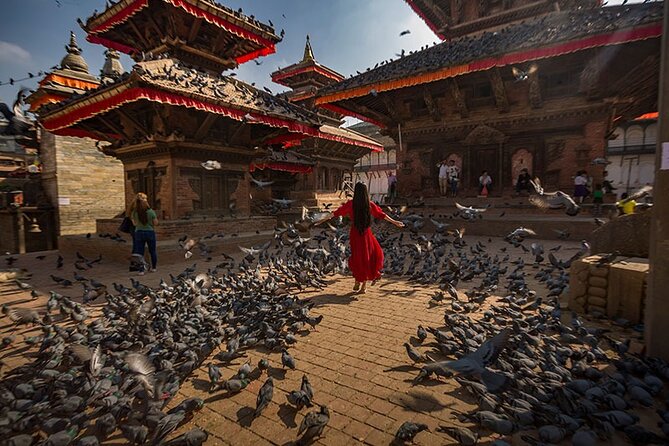
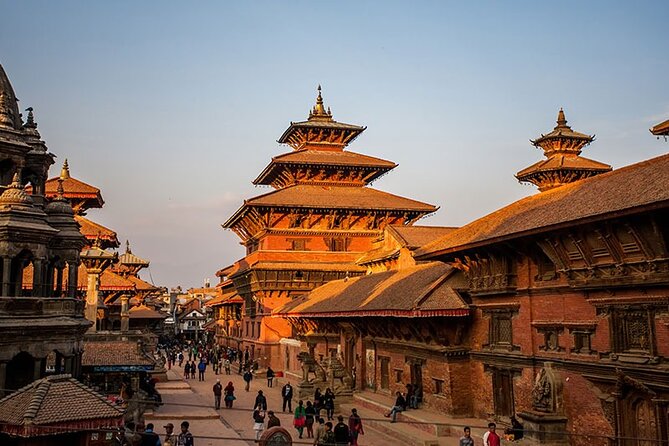
Patan, also called Lalitpur, is known for its craftsmen and traditional art techniques. Patan Durbar Square is a UNESCO site, and its one-and-a-half-hour visit gives you time to notice the carved wood, metalwork, and temple details.
Bhaktapur Durbar Square adds another medieval city center. It is known as the City of Devotees and is one of the three principal durbar squares in the Kathmandu Valley. Entry is not included, so budget for that separately.
Pashupatinath Temple closes the day. Dedicated to Shiva, it is one of Nepal’s most important Hindu pilgrimage sites and one of the country’s UNESCO-designated cultural areas. The visit lasts about 45 minutes, but access to individual temple spaces can depend on religious rules. Your guide should explain what you may see and where you may stand.
This is another full day with several historic centers. Comfortable shoes matter, and you should be prepared for uneven surfaces and periods of standing.
Day 8: Dhulikhel and the Himalayan view
The final outing takes you to Dhulikhel, about 30 kilometers from Kathmandu Durbar Square and 15 kilometers from Bhaktapur. The village is used as a viewpoint for snow-capped Himalayan peaks, with a scheduled visit of about 90 minutes.
Mountain views depend on weather, so treat Dhulikhel as a chance rather than a promise. The tour returns you to your hotel for breakfast and can then drop you at Kathmandu airport, your hotel, or another requested location in Kathmandu.
An Everest flight is not included. It is also subject to weather conditions, so you should not confuse the Dhulikhel viewpoint with an aerial Everest experience.
What the $1,796 price gets you
The price has real value if you select the package with hotels. It includes seven nights on a twin-sharing basis, seven breakfasts, dinner, guides, monument admissions listed in the schedule, private air-conditioned transport, bottled mineral water, taxes, and the Jaipur to Kathmandu flight.
It also covers practical items that can quietly add up, including the Amer Fort jeep and the battery bus or golf cart at the Taj Mahal and Fatehpur Sikri. The main extras are visas, unlisted meals and drinks, the singing bowl session, Bhaktapur entry, and any Everest flight.
Ask exactly which hotels are included before booking. The accommodation wording says seven nights apply if you choose the option including hotels, so the advertised price may not mean the same package for every booking choice.
Who should book this trip
I would recommend it to a first-time visitor who wants the major sights in India and Nepal without arranging separate guides, drivers, hotels, and flights. It also suits families or small private groups that value their own vehicle and want support from airport pickup through final drop-off.
The schedule works less well for you if you prefer slow mornings, long meals, or several free afternoons. India’s road traffic and Nepal’s dense sightseeing schedule leave limited room for spontaneous detours.
The company has used Spanish-speaking guide Ankit for at least some journeys, and the organizer, Kapil Jain, is presented as a hands-on contact who helps solve unexpected problems. If language support matters, request a guide who matches your needs when you book rather than assuming one is available.
Final call: a smart first trip with a fast pace
Book this tour if you want the Taj Mahal, Jaipur’s royal sights, Delhi’s major monuments, Kathmandu Valley’s UNESCO sites, and a Himalayan viewpoint in one organized package. The private transport, included entries, and India to Nepal flight make the $1,796 price reasonable for a tightly planned two-country trip.
Skip it if you want a relaxed vacation or dislike early starts and long road days. Before confirming, verify the starting city, hotel inclusions, flight baggage allowance, Friday and Monday sightseeing changes, and the extra costs for visas and optional activities.
FAQ
Where does the tour start and end?
The sightseeing begins in Delhi, but the meeting-point information lists Kathmandu as the start location. The tour ends in Kathmandu, with drop-off available at Kathmandu Airport, your hotel, or another requested location in the city. Confirm the start arrangement with the operator before booking.
Is the tour private?
Yes. Only your group participates, and other tourists are not shared into your vehicle or activity.
Is the flight from Jaipur to Kathmandu included?
Yes. The scheduled commercial flight from Jaipur to Kathmandu via Delhi is included. The stated checked-baggage allowance is 20 kilograms.
Are hotels included in the price?
Seven nights of twin-sharing hotel accommodation are included when you book the option that includes hotels. Check the selected booking option carefully.
Is the Taj Mahal open every day?
The Taj Mahal is closed every Friday. If your scheduled visit falls on Friday, the itinerary says the visit will be moved to the previous day.
Do I need visas for India and Nepal?
You need a valid Indian visa before arriving in India. A Nepal visa can be obtained on arrival at Kathmandu airport, but visa fees are not included.
Is an Everest flight included?
No. The Mount Everest flight experience is not included, and it is subject to weather conditions.
Newly reviewed around New Delhi
- Private Customized Tour Of Old/New Delhi Spiritual Sites★ 5.0 · 5 reviews
- Yoga and Meditation Classes in Gurgaon★ 4.5 · 8 reviews
- Yoga class in Delhi★ 5.0 · 29 reviews
- Old Town Delhi Walking Tour (2 Hours Guided Tour with Local)★ 4.5 · 22 reviews
- 5 Days Golden Triangle Tour with Ranthambore(Delhi Agra Jaipur Ranthambore Tour)★ 5.0 · 3 reviews
- Wonderful Old & New Delhi sightseeing tour★ 5.0 · 3 reviews
- Hidden Gems of Old Delhi – Walk★ 5.0 · 8 reviews
- Delhi Zoo White Tigers & lions with Old Fort Visit★ 4.5 · 5 reviews
Golden Triangle Tours from Delhi, compared.
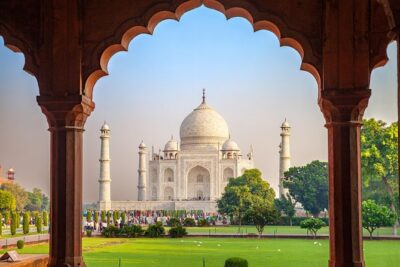
3-Days Private Golden Triangle Tour: Delhi, Agra & Jaipur by Car
Read our review →3-Days Private Golden Triangle Tour: Delhi, Agra & Jaipur by Car
Read our review →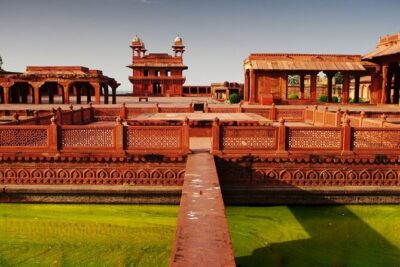
3-Day Delhi, Agra and Jaipur Private Tour – India Golden Triangle
Read our review →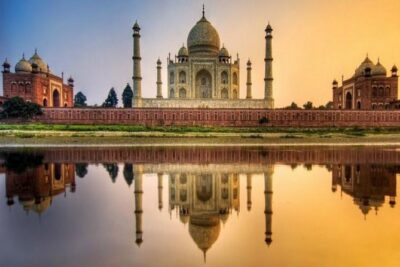
Four-Day Private Luxury Golden Triangle Tour to Agra and Jaipur From New Delhi
Read our review →
5 Nights 6 Days Private Golden Triangle Tour – Delhi Agra Jaipur
Read our review →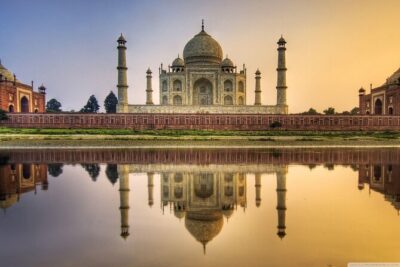
Private Car and Drive for Golden Triangle (4N/5D)
Read our review →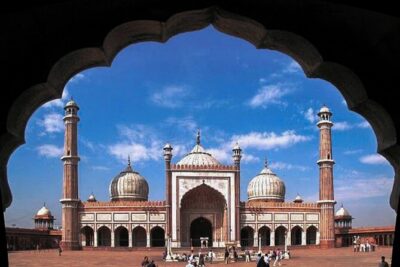
Private Golden Triangle Tour Delhi Agra Jaipur ( Top Rated )
Read our review →Browse the lists this tour appears in