
Reviewed · GOLDEN TRIANGLE TOURS FROM DELHI
5-Day Private Luxury Golden Triangle Tour From Delhi
The Taj Mahal is the star here, but this five-day route gives you much more than a quick Agra photo stop. You move through Delhi’s Mughal and modern landmarks, pause at Fatehpur Sikri, then finish among Jaipur’s palaces, temples, and astronomical instruments. I like the private car and guide, and I like having four hotel nights and breakfast built into one package. The main catch is that monument tickets are extra, and the very low advertised price deserves a careful check before booking.
I also like the useful mix of famous sights and quieter stops, from Humayun’s Tomb and Itmad-ud-Daulah to Raj Ghat and Mehtab Bagh. The tour is made for your group alone, with hotel pickup, bottled water, tolls, parking, and airport drop-off included. Guide Mohd. Riyaz is named in one recent account as a Delhi and Agra guide, though guide assignments can vary.
Key points to know before booking
- The Taj Mahal gets a full morning stop: You also visit Agra Fort, the Baby Taj, and Mehtab Bagh.
- Delhi sightseeing packs in six stops: Humayun’s Tomb, Qutub Minar, Lotus Temple, Jama Masjid, India Gate, and Raj Ghat.
- Jaipur receives a broad final-day look: City Palace, Hawa Mahal, Jantar Mantar, two temples, and Galtaji are included.
- Your group stays private: You travel with an English-speaking guide and private transportation rather than joining a large coach.
- Four nights and four breakfasts are included: The accommodation is described as five-star, but the specific hotels are not named.
- Budget carefully: Monument admission, drinks, and any extras are not included in the $31.50 per-person starting price.
Why this Golden Triangle route works
India’s Golden Triangle links Delhi, Agra, and Jaipur in a compact loop. It gives you three different views of North India: Delhi’s imperial and political landmarks, Agra’s Mughal monuments, and Jaipur’s royal and scientific heritage.
I like this tour because it does not treat the Taj Mahal as the only reason to leave Delhi. You get the grand tomb of Humayun, the soaring Qutub Minar, Akbar’s former capital at Fatehpur Sikri, and Jaipur’s City Palace. The range helps you understand how the region changed across several centuries.
The private format matters. You are not tied to strangers or a fixed coach group, and the guide can explain the sites as you move between them. The data describes the activity as suitable for most people, with only your own group participating.
Still, five days is brisk. Delhi alone has six stops on the first day, and Jaipur has six on the fourth. This is a sightseeing tour, not a slow stay in each city. You will see a lot, but some visits may feel like a first introduction rather than a full study of each monument.
More Golden Triangle routes from New Delhi:
- 3-Days Private Golden Triangle Tour: Delhi, Agra & Jaipur by Car
★ 5.0 · 1,107 reviews - 3-Days Private Golden Triangle Tour: Delhi, Agra & Jaipur by Car
★ 5.0 · 1,098 reviews - 3-Day Delhi, Agra and Jaipur Private Tour – India Golden Triangle
★ 5.0 · 812 reviews
Day 1: Delhi from Humayun’s Tomb to Raj Ghat
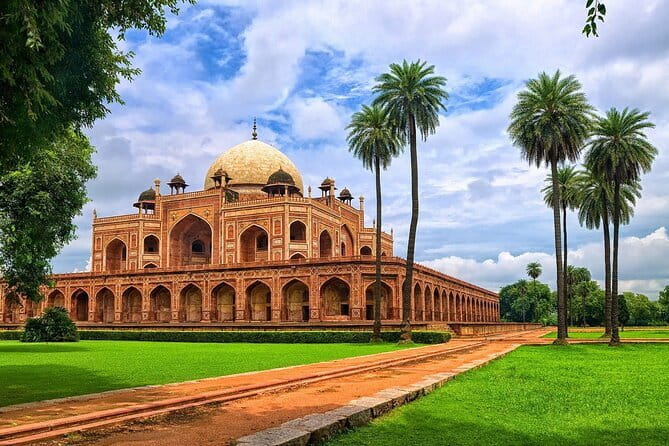
The first stop is Humayun’s Tomb, a major Mughal monument set in formal gardens. Its large dome, red sandstone, white marble details, and balanced layout make it a strong opening to the tour. Allowing about an hour gives you time to appreciate the structure and its garden setting without rushing through in a few minutes.
Next comes Qutub Minar, India’s tallest stone minaret at 72.5 meters. Its carved surfaces include Quranic verses, and the complex reflects the early period of the Delhi Sultanate. The listed visit is about an hour, which should give you a useful look at the tower and surrounding remains.
The first two stops are the most substantial Delhi monuments on this day. Entrance fees are not included, so you should budget separately for both. The tour provides the guide and transport, but you pay the monument charges yourself.
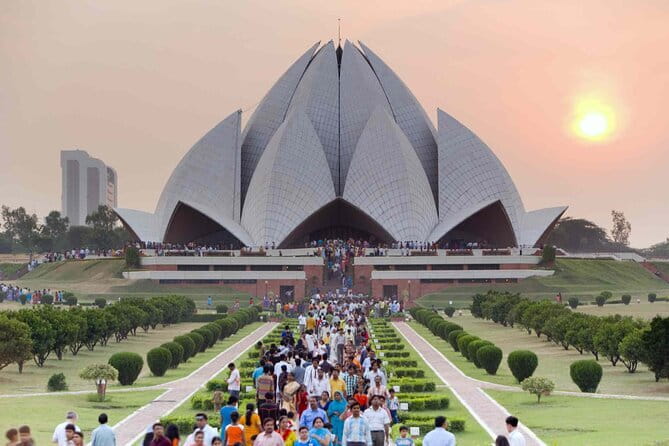
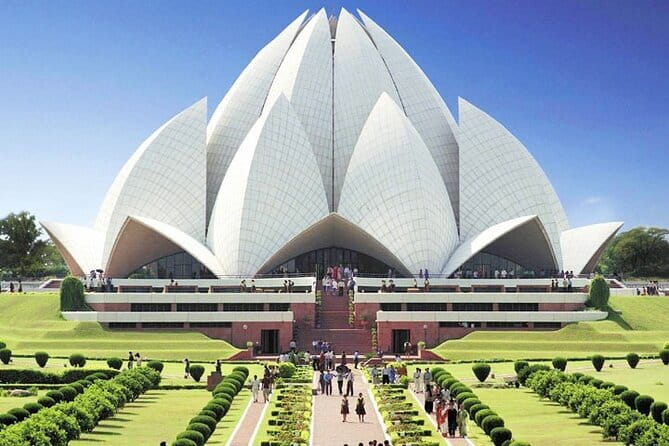
You then make a shorter visit to the Lotus Temple. Its white structure is shaped like a lotus flower and serves as a Baha’i House of Worship open to people of all faiths. The planned stop is 30 minutes. That is enough to see the design and atmosphere, though not enough for a long visit if you encounter a queue.
Jama Masjid brings you into Old Delhi. Built by Shah Jahan in 1656, the mosque uses red sandstone and white marble and is one of the city’s major Islamic monuments. The stop is also about 30 minutes, so treat it as a focused visit rather than a wide exploration of Old Delhi.
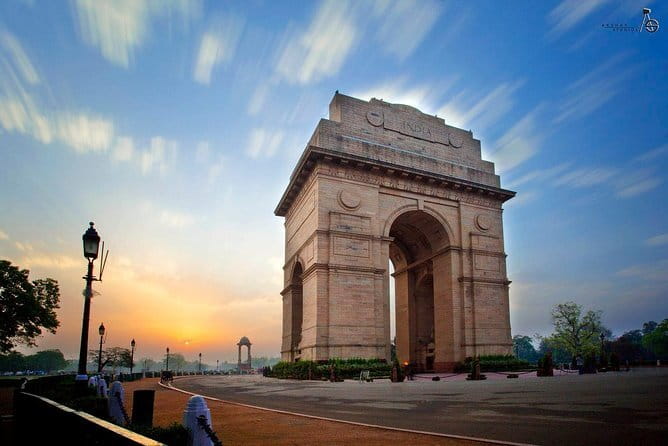
India Gate provides a change of tone. This Lutyens-designed war memorial honors Indian soldiers who died in World War I. The planned 15-minute stop is mainly for viewing and photographs from the surrounding lawns.
The day ends at Raj Ghat, the simple memorial marking Mahatma Gandhi’s cremation site. A black marble platform and quiet gardens create a calmer finish after the heavy architecture of Delhi. Fifteen minutes is brief, but the memorial does not require a long visit to understand its purpose.
The strength of this opening day is variety. You move from Mughal tombs to a medieval minaret, a modern faith center, an Old Delhi mosque, a national memorial, and a Gandhi memorial. The drawback is the pace. If you prefer long museum visits or time to wander markets, this schedule may feel full.
Day 2: The Taj Mahal and Agra’s Mughal monuments
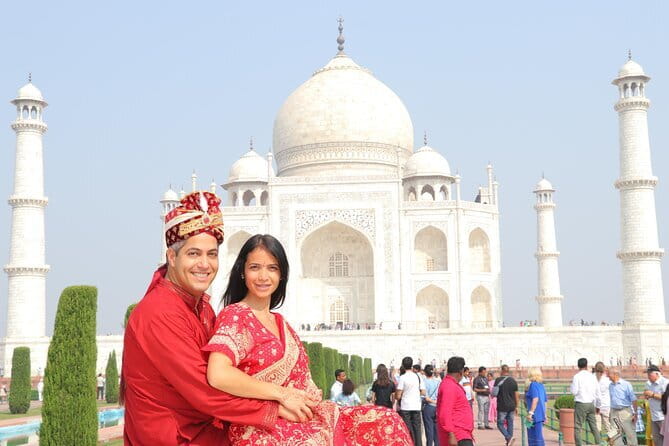
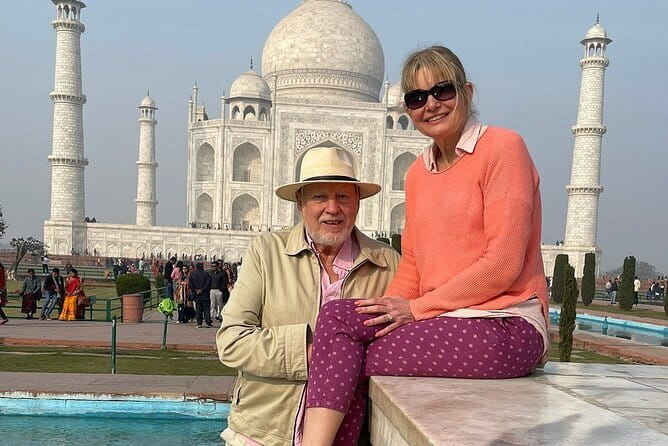
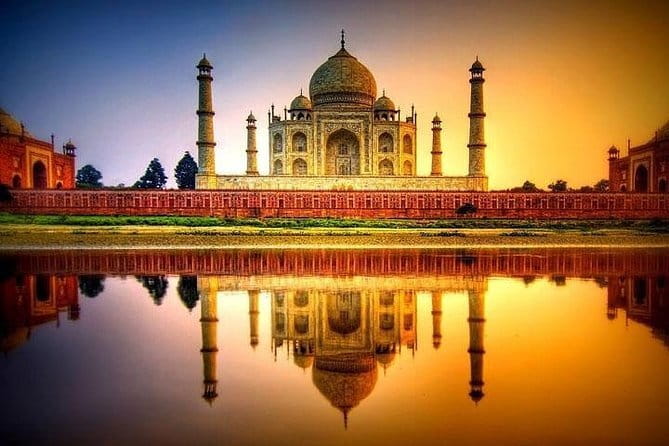
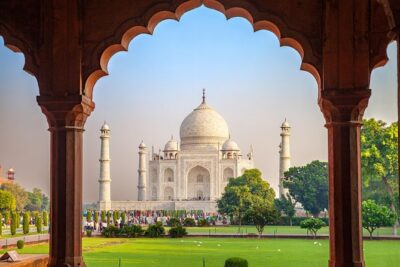
The Taj Mahal is the emotional center of the trip. Built by Shah Jahan in memory of his wife, the white marble mausoleum is known for its symmetry, gardens, and fine decorative work. The planned visit is 45 minutes, which is enough for the main view and a guided explanation, but it leaves little room for lingering.
That short timing is worth noting. The Taj Mahal can reward a slower visit, especially if you want to study the marble inlay, garden alignment, and changing views of the building. Your guide can help you focus on the main details, but the schedule is designed to keep the wider route moving.
Agra Fort follows, with about an hour allotted. Built by Akbar, this red sandstone fortress contains royal spaces connected with later Mughal rulers, including the Jahangir Palace and audience halls. It gives you useful context for the Taj Mahal, since Agra was not simply a city of tombs. It was a seat of power, court life, and imperial planning.
Itmad-ud-Daulah is a smaller mausoleum often called the Baby Taj. Commissioned by Nur Jahan for her father, Mirza Ghiyas Beg, it is especially noted for marble inlay. I like its place in the program because it offers a more intimate contrast with the Taj Mahal’s scale. The 30-minute stop should be enough for the main structure and decoration.
Mehtab Bagh sits across the Yamuna River and offers a view toward the Taj Mahal. It was designed as a charbagh, or formal garden, and is associated with the Mughal garden tradition. The planned 30 minutes makes this a viewpoint stop rather than an extended garden visit.
All four Agra attractions list entrance fees as extra. That matters because the tour price does not represent your complete sightseeing cost. Ask for the current ticket total and confirm exactly which charges are included before you set your budget.
The tour’s Agra day is strong for first-time visitors. You get the famous monument, the fort that explains its political setting, a refined smaller tomb, and a garden view across the river. It is less suitable if you want a long, quiet Taj Mahal visit or several hours for Agra’s wider streets and markets.
Day 3: Fatehpur Sikri and the change toward Jaipur
Fatehpur Sikri receives its own day in the schedule, with about an hour at the UNESCO-listed former city built by Akbar in the 16th century. Its buildings blend Indo-Islamic design and include major courtyards and royal structures.
The value of this stop is its sense of a planned imperial city. Instead of seeing a single monument, you get a group of spaces that show how a ruler organized court life, religion, and administration. An hour gives you a clear introduction, though the complex can reward more time.
The schedule lists only Fatehpur Sikri for Day 3, so confirm the exact transfer plan and overnight location when you book. The wider package includes four hotel nights and continues to Jaipur, but the supplied details do not name each hotel or specify every road segment.
This is also a day when the private format can help. Your driver and guide can manage the transition between major cities without making you solve each transfer yourself. Toll taxes and parking are included, and bottled water is provided while you travel.
A few more New Delhi day trips worth putting side by side
- Private 5-Day Ranthambhore Tiger Tour from Delhi including the Taj Mahal, Agra and Jaipur
★ 5.0 · 197 reviews - 5-Day Private Luxury Golden Triangle Tour to Agra and Jaipur From New Delhi
★ 5.0 · 142 reviews - Private Golden Triangle Tour 5 Days Delhi Agra Jaipur
★ 5.0 · 92 reviews - Five Day – Private Luxury Golden Triangle Tour to Agra & Jaipur From New Delhi.
★ 5.0 · 67 reviews
Day 4: Jaipur’s royal center, temples, and observatory
Jaipur’s City Palace opens the day with courtyards, halls, and royal architecture that blends Mughal and Rajasthani design. It remains connected with Jaipur’s royal family and includes decorative details such as the famous Peacock Gate. The planned hour gives you a solid overview of the complex.
Hawa Mahal is one of Jaipur’s most recognizable façades. Built in 1799 for Maharaja Sawai Pratap Singh, the five-story pink sandstone building contains 953 small windows, or jharokhas. The visit is about 30 minutes. That is enough to admire the front and learn why the structure was designed, but do not expect a long interior exploration from this schedule alone.
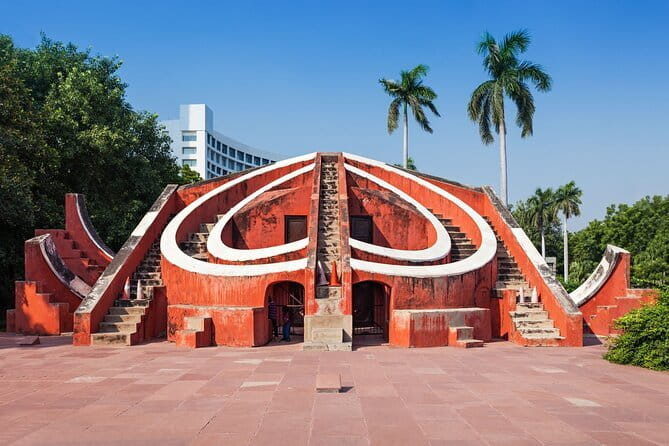
Jantar Mantar gives Jaipur a different identity. This UNESCO-listed observatory contains 19 large instruments built in the 18th century by Maharaja Sawai Jai Singh II. The structures measure time and track celestial movements on a scale that is easier to appreciate with a guide’s explanation.
I especially like having Jantar Mantar beside the palaces. It reminds you that Jaipur’s royal culture included serious scientific work, not only decoration and ceremony. The half-hour visit is concise, so listen closely to the explanations and ask about the instruments that interest you most.
Birla Mandir is a white marble temple dedicated to Vishnu and Lakshmi at the foot of Moti Dungri hill. Its calm setting provides a break from palace architecture. The tour allows about 30 minutes, and entrance is not included.
Govind Dev Ji Temple lies within the City Palace complex and is dedicated to Lord Krishna. Its central idol is associated with Vrindavan, and the temple remains an important place of worship. This is a religious site, so your guide can help you understand its place within Jaipur’s royal center, but the stop may be affected by the rhythm of temple activity.
The final Jaipur visit is Galtaji, often called the Monkey Temple. Set in the Aravalli Hills, it is known for natural springs, sacred water tanks, and pilgrimage buildings. The name points to the monkeys commonly associated with the site, while the religious importance comes from the temple complex and bathing pools.
Jaipur’s day is ambitious. Six stops cover royal life, architecture, astronomy, Hindu worship, and a hill pilgrimage site. You gain breadth, but the schedule leaves limited time for shopping, cafés, or an unplanned pause in the Pink City.
Day 5: Airport drop-off in Jaipur
The tour ends with transfer to Jaipur International Airport, also called Sanganer Airport, about 13 kilometers from the city center. Airport drop-off is included, which is useful if Jaipur is your final stop before flying onward.
Confirm your departure time with the operator before you book the flight. The tour information does not give a detailed Day 5 sightseeing schedule, so you should treat this as a transfer day rather than plan around another attraction.
Hotels, transport, and what the price really means
The package includes four nights of accommodation on single or double sharing, four breakfasts, private transportation, an English-speaking guide, bottled water, toll taxes, parking, and hotel pickup and drop-off. That is a useful bundle for anyone who wants one company handling the main route.
The advertised price of $31.50 per person is unusually low for a private five-day trip that describes its hotels as five-star. It may be a starting rate, a shared-room calculation, or a price that does not reflect every possible charge. The supplied details do not name the hotels, so ask for the property names, room arrangement, and final total in writing.
The biggest extra cost is monument admission. Drinks are also excluded. Since nearly every major paid attraction lists tickets separately, your actual spend will be higher than the headline figure.
Group discounts may help if you are traveling with family or friends. The package also allows a private booking, which is useful for couples, families, and small groups that want to move at their own pace within a fixed schedule.
Who will get the most from this tour
I would recommend this route to a first-time visitor who wants the classic Delhi, Agra, and Jaipur highlights in five days. It suits people who value a private vehicle, a guide, hotel coordination, and a clear sightseeing plan more than slow mornings and long independent visits.
Families may like the door-to-door structure, bottled water, private group format, and airport transfer. Couples can use the itinerary to cover the main landmarks without arranging separate transport between cities. Solo visitors may also appreciate having a guide and driver arranged in advance.
You should think twice if you want to travel slowly. The Taj Mahal visit is listed at 45 minutes, Delhi has six stops on Day 1, and Jaipur has six on Day 4. You will cover a great deal, but you will need to accept short visits at several sites.
The tour has a five-star description, yet the hotel names are not provided. Ask questions before paying, especially if hotel quality is central to your decision. Also confirm whether your guide will be Mohd. Riyaz or another member of the company’s team, since guide assignments are not guaranteed in the package details.
Should you book this five-day Golden Triangle tour?
Book it if you want the standard Golden Triangle route handled privately, with a guide, transport, four hotel nights, breakfast, and airport drop-off in one arrangement. The itinerary gives you the essential monuments plus worthwhile additions such as Mehtab Bagh, Fatehpur Sikri, Jantar Mantar, and Galtaji.
Do not book it without confirming the final cost. The $31.50 price excludes monument tickets and drinks, and the named hotels are not specified. If you accept the brisk pace and check those details first, this can be a practical introduction to North India’s grandest sights.
Cancellation is free up to 24 hours before the start time for a full refund. Cancellations or changes within 24 hours are not refunded or accepted.
FAQ
How long is the tour?
The tour lasts approximately five days and includes four nights of accommodation.
Which cities are included?
The route includes New Delhi, Agra, Fatehpur Sikri, and Jaipur.
Is the tour private?
Yes. Only your group participates in the private activity.
Is hotel pickup included?
Yes. Hotel pickup and drop-off are included.
Is airport drop-off included?
Yes. Drop-off at Jaipur International Airport, also called Sanganer Airport, is included on Day 5.
Is a guide included?
Yes. An English-speaking private guide is included. Mohd. Riyaz is named in one account as a Delhi and Agra guide, but the assigned guide may vary.
Are hotels included?
Yes. Four nights of accommodation are included on a single or double sharing basis. The specific hotel names are not provided.
Are breakfasts included?
Yes. Four breakfasts are included.
Are monument entrance fees included?
No. Monument entrance fees are not included and must be paid separately.
Are drinks included?
No. Drinks are not included. Bottled water while traveling is included.
Can I cancel for a full refund?
Yes. You can cancel at least 24 hours before the experience start time for a full refund. Cancellations within 24 hours are not refunded.
Newly reviewed around New Delhi
- Private Customized Tour Of Old/New Delhi Spiritual Sites★ 5.0 · 5 reviews
- Yoga and Meditation Classes in Gurgaon★ 4.5 · 8 reviews
- Yoga class in Delhi★ 5.0 · 29 reviews
- Old Town Delhi Walking Tour (2 Hours Guided Tour with Local)★ 4.5 · 22 reviews
- 5 Days Golden Triangle Tour with Ranthambore(Delhi Agra Jaipur Ranthambore Tour)★ 5.0 · 3 reviews
- Wonderful Old & New Delhi sightseeing tour★ 5.0 · 3 reviews
- Hidden Gems of Old Delhi – Walk★ 5.0 · 8 reviews
- Delhi Zoo White Tigers & lions with Old Fort Visit★ 4.5 · 5 reviews
Golden Triangle Tours from Delhi, compared.
3-Days Private Golden Triangle Tour: Delhi, Agra & Jaipur by Car
Read our review →3-Days Private Golden Triangle Tour: Delhi, Agra & Jaipur by Car
Read our review →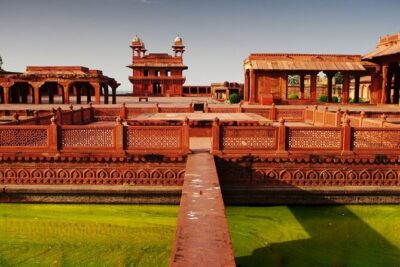
3-Day Delhi, Agra and Jaipur Private Tour – India Golden Triangle
Read our review →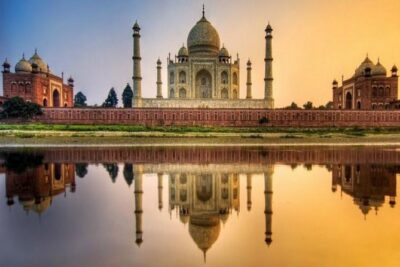
Four-Day Private Luxury Golden Triangle Tour to Agra and Jaipur From New Delhi
Read our review →
5 Nights 6 Days Private Golden Triangle Tour – Delhi Agra Jaipur
Read our review →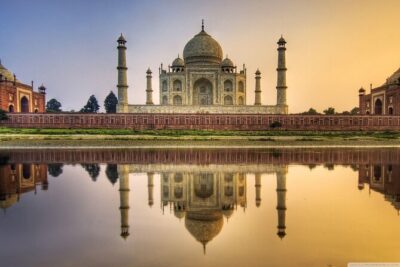

Private Car and Drive for Golden Triangle (4N/5D)
Read our review →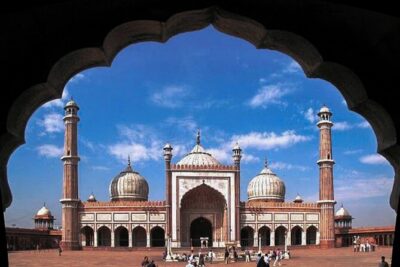
Private Golden Triangle Tour Delhi Agra Jaipur ( Top Rated )
Read our review →Browse the lists this tour appears in