
Reviewed · MATHURA & VRINDAVAN TOURS FROM DELHI
07 Days Golden Triangle Tour with Mathura & Vrindavan
The emotional heart of this seven-day trip comes early: you move from Krishna’s temples in Mathura and Vrindavan to the Taj Mahal, then on to Jaipur’s forts and Delhi’s Mughal monuments. I like the private air-conditioned car, which saves you from arranging several long-distance transfers, and I like that hotels and six breakfasts are already included.
The main catch is that entrance fees, lunch, dinner, and an English-speaking guide cost extra. The schedule also covers a lot of ground, so you should expect several long road days rather than a slow, single-city holiday.
Key points before you book
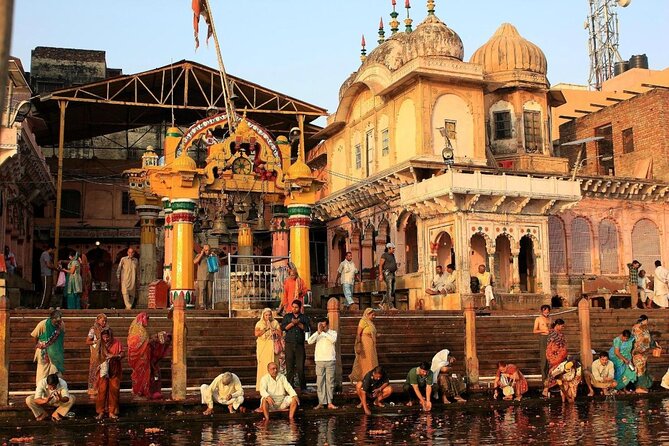
- Mathura and Vrindavan add a religious side trip to the standard Delhi, Agra, and Jaipur route.
- The Taj Mahal visit is planned for early morning, a sensible choice for cooler temperatures and better light.
- Private transport covers the full circuit, with a small car for one to three people and larger vehicles for bigger groups.
- Three-star hotels and six breakfasts are included, helping keep the $400 per-person price under control.
- Craft workshops in Agra and Jaipur are included visits, featuring marble inlay and block printing.
- Your dates matter: the Taj Mahal closes on Fridays, while Delhi’s Red Fort and Lotus Temple close on Mondays.
What the $400 price really covers
At $400 per person, this is priced as a practical package rather than a luxury tour. You receive seven days of private transport, six nights of three-star accommodation, six breakfasts, fuel, tolls, parking, road taxes, and the driver’s accommodation and meals.
That bundle can be useful if you want one point of contact for a complicated route. You do not need to arrange separate hotels in Delhi, Agra, and Jaipur, and you avoid negotiating transport for each leg. The driver also handles the long highway sections, which matters in a trip covering Delhi, Mathura, Vrindavan, Agra, Abhaneri, Jaipur, and Delhi again.
The price does not include monument tickets. It also excludes lunch, dinner, drinks, tips, laundry, luggage handling, personal shopping, and camera fees where charged. An English-speaking guide can be arranged for an extra $10 per person per city. I would budget for these additions before booking, especially if you want guided visits inside several major monuments.
A minimum of two adults is required. For one to three people, transport is usually by Swift Dzire or Etios. Four to six people travel in a Toyota Innova, while seven to ten use a Tempo Traveller. Room arrangements change with group size, so ask how beds will be set up if you are traveling with three or five adults.
More Mathura and Vrindavan days from New Delhi:
- Day Trip to Mathura, Vrindavan with The Taj Mahal, Agra from Delhi
★ 5.0 · 63 reviews - Mathura Vrindavan Divine Love Journey of Radha Krishna From Delhi
★ 5.0 · 40 reviews - From Delhi: Taj Mahal & Mathura, Vrindavan Private Day Trip
★ 5.0 · 31 reviews
Day 1: A simple Delhi arrival
The tour begins with an airport greeting in New Delhi, followed by a transfer to your hotel. This is a useful first day because you do not need to find a taxi after a long flight or work out Delhi traffic on your own.
Hotel check-in is normally at noon, and an early-arriving flight does not guarantee an immediate room. The room is provided earlier only if one is available. Keep that in mind if your flight lands in the morning.
There is no major sightseeing scheduled for this day. That is a good thing after an international arrival, since the remaining days are full. Use the evening to rest, sort your bags, and prepare for an early start toward Mathura.
Day 2: Krishna temples in Mathura and Vrindavan
After breakfast, you leave Delhi for Mathura, the city associated with Krishna’s birth. The first visit is Shri Krishna Janmasthan, the temple complex connected with that tradition. The planned stop is about 30 minutes, and the admission fee is not included.
From Mathura, the route continues to Vrindavan and Shri Banke Bihari Temple. This temple is dedicated to Krishna and is one of the key religious sites in the area. The listed visit is also about 30 minutes, with free admission.
The short timings tell you what this day is designed to do: give you an introduction to the religious center rather than a long, detailed temple study. Temple visits can be intense and crowded, and the pace may feel quick if you want time for prayer, observation, or photography. Dress respectfully and follow any rules at the entrances.
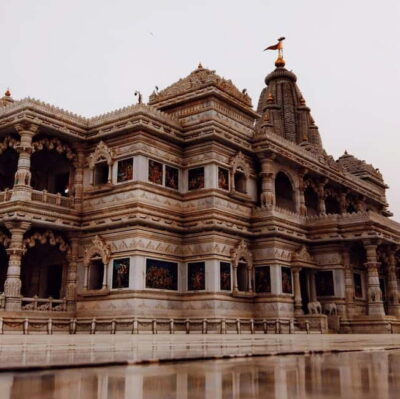
Prem Mandir is the final major stop. The complex occupies a 55-acre site and is maintained by the Jagadguru Kripalu Parishat. You have about an hour here, and admission is free. It offers a different visual experience from the older temple sites, with a large, carefully finished complex and displays connected with Krishna and Radha.
This is one of the tour’s most distinctive features. Many Golden Triangle trips run straight from Delhi to Agra, but this route adds Mathura and Vrindavan before the Mughal monuments. If religious places interest you, the detour gives the journey more variety. If your priority is only architecture and museums, you may find the day less satisfying because the temple visits are short and the extra driving takes time.
Day 3: Agra Fort and the road to the Taj Mahal
After breakfast, you leave for Agra, check in to the hotel, and visit Agra Fort. The fort is planned for about an hour, with admission extra.
Agra Fort is not simply a defensive wall. It is a large Mughal complex where red sandstone and palace buildings help explain the political world behind the Taj Mahal. An hour gives you a useful first look, although a guide would add context to the courtyards, audience spaces, and royal buildings.
The order of this day works well. You reach Agra, settle into the hotel, and see the fort before the early Taj Mahal visit the following morning. The hotel stay also breaks up the road journey instead of sending you directly onward to Jaipur.
Agra includes a visit to a marble inlay workshop. This is included in the tour, and it connects directly with the stonework associated with the Taj Mahal. You can see how decorative marble work is made, though you should remember that workshops often sell finished products. If you are not shopping, make that clear politely and enjoy the demonstration for what it is.
More Golden Triangle routes from New Delhi:
- 3-Days Private Golden Triangle Tour: Delhi, Agra & Jaipur by Car
★ 5.0 · 1,107 reviews - 3-Days Private Golden Triangle Tour: Delhi, Agra & Jaipur by Car
★ 5.0 · 1,098 reviews - 3-Day Delhi, Agra and Jaipur Private Tour – India Golden Triangle
★ 5.0 · 812 reviews - Four-Day Private Luxury Golden Triangle Tour to Agra and Jaipur From New Delhi
★ 5.0 · 807 reviews
Day 4: Sunrise timing at the Taj Mahal and Chand Baori
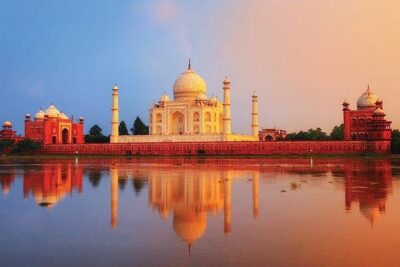
The Taj Mahal is scheduled for early morning, with about two hours at the monument. That timing is one of the strongest parts of the plan. The white marble changes with the morning light, temperatures are generally more manageable, and an early visit leaves room for the next part of the journey.
You cannot visit Agra without allowing proper time for the Taj Mahal, and two hours is a fair minimum for the main complex. You can take in the entrance, gardens, reflecting pools, marble mausoleum, and nearby details without reducing the stop to a quick photograph.
The admission fee is extra. The monument closes every Friday, so check your dates before paying for the trip. If your Taj visit falls on Friday, the schedule needs to be adjusted to the previous or following day.
After Agra, the route continues toward Jaipur with a stop at Chand Baori in Abhaneri. This stepwell is planned for about 30 minutes, and its entrance fee is not included. Its sharply arranged steps create a striking geometric pattern and offer a welcome change from the grand palace and tomb visits.
Thirty minutes is enough to see the structure and take photographs, but not enough for a long visit. The stop also makes the road to Jaipur more interesting. Rather than spending the entire day in the car, you get a brief look at an unusual piece of water architecture before reaching your hotel.
Day 5: Jaipur’s forts, palaces, and astronomy
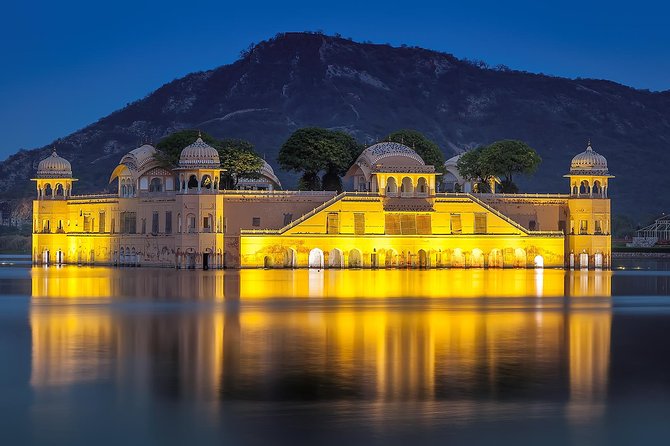
Jaipur receives the fullest sightseeing day. The route begins with a drive past Hawa Mahal, the pink facade built in 1799 by Maharaja Sawai Pratap Singh. The stop is described as a drive-by rather than a full interior visit, so plan on seeing it from the road and taking photographs if traffic allows.
Jantar Mantar comes next, with about 30 minutes scheduled. Maharaja Sawai Jai Singh II built these large masonry instruments in the eighteenth century to study the movement of stars and planets. The instruments make astronomy physical and easy to see, though half an hour is brief if you want to understand how each one works.
The City Palace receives about an hour. Located in the heart of the old city, it combines Rajput and Mughal design and includes the seven-storey Chandra Mahal. The admission charge is extra. This is a place where a guide can make a real difference, especially if you want to understand how the palace buildings were used and how the two architectural traditions meet.
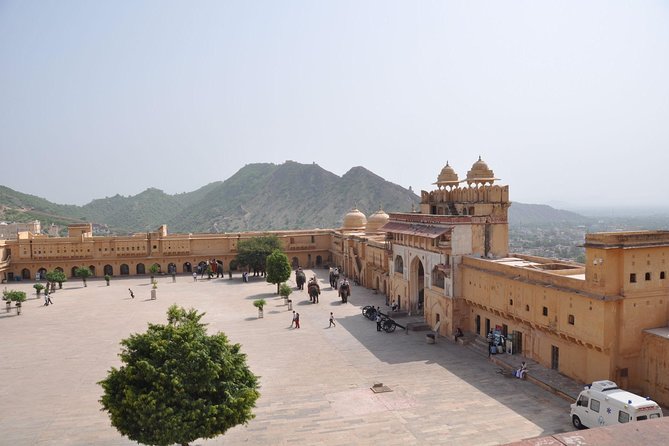
The main event is Amber Palace, also called Amer Fort, with about two hours planned. The old capital sits among rugged hills, and the fort combines strong defensive walls with ornate palace spaces. Two hours gives you enough time to appreciate both the setting and the buildings without making the stop feel rushed.
On the return route, you stop at Jal Mahal for about 15 minutes. The small palace sits in Man Sagar Lake and is mainly a photograph stop. Renovation around the lake is in progress, so do not expect a long lakeside visit.
Albert Hall Museum is another short stop, listed at about 15 minutes, mostly as a drive-by. The building sits in Ram Niwas Garden and dates from the period of Prince Albert. A quarter hour is not enough for a serious museum visit, so treat it as an exterior look unless the timing changes.
Jaipur’s day offers plenty, but it is busy. Jantar Mantar, City Palace, and Amber Fort each deserve attention, while Hawa Mahal, Jal Mahal, and Albert Hall are brief views. The extra block-printing workshop is included, giving you a look at another Jaipur craft tradition. As in Agra, you may be invited to shop, so decide in advance how much time and money you want to spend.
Day 6: Returning to Delhi
After breakfast, you check out and drive from Jaipur to Delhi. On arrival, you check into the Delhi hotel for the final night.
This is mainly a transport day, and that is worth understanding before you book. The tour does not add major sightseeing here, so you have a chance to rest before the final Delhi circuit. It also means the seventh day carries a large amount of sightseeing, including Old Delhi and several widely separated monuments.
The private car is especially useful on this day because you are moving with luggage and do not need to manage an intercity transfer on your own. Your driver, including Rajesh if he is assigned to your group, remains a practical point of help with hotel check-ins and route planning.
Day 7: Old Delhi, Mughal monuments, and Qutub Minar
The final sightseeing day begins at Jama Masjid in Old Delhi. The mosque is one of the major historic buildings in the old city, and the planned visit is about 30 minutes. Admission is free, though local rules and clothing requirements should be respected.
Red Fort follows, with about an hour scheduled. Its long walls and Mughal palace complex make it one of Delhi’s essential visits. The entrance fee is extra, and the fort closes on Mondays. If your seventh day is Monday, the route must be rearranged.
India Gate is included as a drive-by. The memorial honors Indian soldiers who died while serving in the British Army during the First World War. It is a quick exterior stop rather than a museum visit.
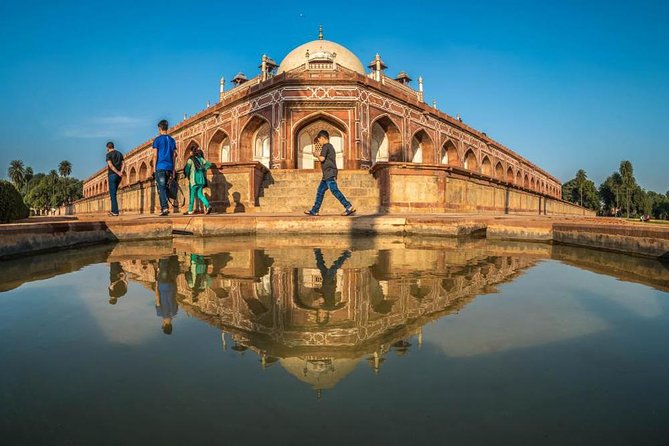
Humayun’s Tomb receives about an hour. The tomb, built in 1570, is especially worthwhile because it helps you see the architectural ideas that later appeared in the Taj Mahal. The admission fee is extra. By this point, the connection between Delhi’s Mughal buildings and Agra’s monument becomes easier to understand.
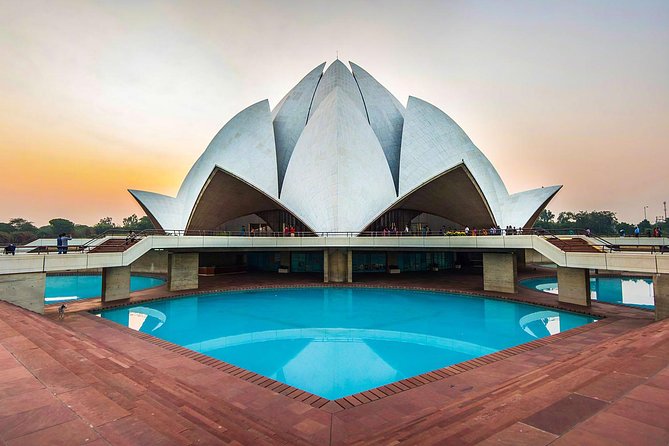
The route then passes the Lotus Temple. The Bahai temple is known for its lotus-shaped design and white exterior. It is a drive-by rather than a guaranteed interior visit, and the temple closes on Mondays.
The final major stop is Qutub Minar, with about an hour planned. The tall brick minaret is a major example of early Indo-Islamic architecture, and the surrounding complex adds more to see than the tower alone. Admission is extra.
This is an ambitious final day. Jama Masjid, Red Fort, Humayun’s Tomb, Lotus Temple, and Qutub Minar are spread across Delhi, so road traffic can affect the pace. The private vehicle gives you flexibility, but it cannot remove the city’s congestion.
Hotels, meals, and the day-to-day practical side
The package includes three-star accommodation in Delhi, Agra, and Jaipur. The exact hotel names are not provided, so ask for them before departure if location or room style matters to you. The accommodation has been described as neat and clean, but you should still treat the category as budget to midrange rather than luxury.
Six breakfasts are included. Lunch and dinner are not, which lets you choose how much and where you eat, but it also means you need a daily food budget. Drinks are not included either.
The driver provides the backbone of the trip. Fuel, tolls, parking, state taxes, and the driver’s food and lodging are included. The tour is private, so only your group participates. That is a better fit than a large coach if you want control over stops and do not want to wait for strangers.
The tour is listed for an 8:00 a.m. start, but Day 2 and the Taj Mahal morning require an early departure. Confirm the exact pickup time with the operator. Carry an umbrella or raincoat during July and August.
Who should book this seven-day route?
I would choose this tour if you want to see the major Golden Triangle sights but also want Mathura and Vrindavan included. It works particularly well for first-time visitors who prefer one driver, prearranged hotels, and a set route.
It also suits families and small groups. The private car avoids public transport, and the vehicle size changes according to the number of people in your party. Most people can participate, and the tour is near public transportation, though the schedule still involves substantial walking at forts, tombs, temples, and palace complexes.
You may want a different arrangement if you prefer slow mornings, long museum visits, or high-end hotels. The short stops at Hawa Mahal, Albert Hall, Jal Mahal, and Chand Baori are useful introductions, but they are not deep visits. Adding the optional English-speaking guide is sensible if you want more than the driver’s route assistance.
Free cancellation is available if you cancel at least 24 hours before the local start time. Changes made inside that period are not accepted, and late cancellations are not refunded. A passport is required for all participants at booking.
Should you book it?
Book this tour if you value convenience, private transport, and broad coverage more than a relaxed pace. For $400 per person, the inclusion of hotels, breakfast, transport, road costs, and airport transfer gives you a practical base for a demanding route.
Before booking, confirm the hotel names, vehicle type, guide cost, monument fees, and your exact Taj Mahal date. If you can handle early mornings and several road transfers, this is a sensible way to combine Delhi, Agra, Jaipur, Mathura, and Vrindavan in one trip. If you want a slower cultural holiday, remove a few stops or arrange extra nights.
FAQ
What is included in the $400 tour price?
The price includes a private air-conditioned car with driver, three-star accommodation, fuel, road and state taxes, tolls, parking, the driver’s food and lodging, six breakfasts, and visits to marble inlay and block-printing workshops.
Are monument entrance fees included?
No. Monument tickets and applicable camera fees are paid separately at the entrances.
Is an English-speaking guide included?
No. An English-speaking guide can be arranged for an additional $10 per person per city.
Does the tour include Mathura and Vrindavan?
Yes. Day 2 includes Shri Krishna Janmasthan in Mathura, Shri Banke Bihari Temple in Vrindavan, and Prem Mandir.
What happens if the Taj Mahal visit falls on a Friday?
The Taj Mahal is closed every Friday. The visit can be arranged for the previous or following day, depending on the travel schedule.
Which Delhi attractions are closed on Mondays?
Red Fort and Lotus Temple are closed on Mondays. The route should be adjusted if your Delhi sightseeing day falls on that day.
What vehicle is used for different group sizes?
One to three people travel by Swift Dzire or Etios. Four to six people use a Toyota Innova, and seven to ten people travel by Tempo Traveller.
Newly reviewed around New Delhi
- Private Customized Tour Of Old/New Delhi Spiritual Sites★ 5.0 · 5 reviews
- Yoga and Meditation Classes in Gurgaon★ 4.5 · 8 reviews
- Yoga class in Delhi★ 5.0 · 29 reviews
- 5 Days Golden Triangle Tour with Ranthambore(Delhi Agra Jaipur Ranthambore Tour)★ 5.0 · 3 reviews
- Wonderful Old & New Delhi sightseeing tour★ 5.0 · 3 reviews
- Old Town Delhi Walking Tour (2 Hours Guided Tour with Local)★ 4.5 · 22 reviews
- Hidden Gems of Old Delhi – Walk★ 5.0 · 8 reviews
- Delhi Zoo White Tigers & lions with Old Fort Visit★ 4.5 · 5 reviews
Mathura & Vrindavan Tours from Delhi, compared.
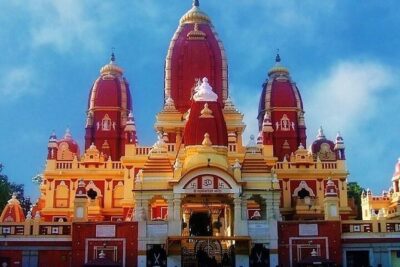
Day Trip to Mathura, Vrindavan with The Taj Mahal, Agra from Delhi
Read our review →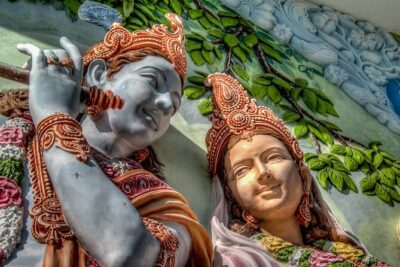
Mathura Vrindavan Divine Love Journey of Radha Krishna From Delhi
Read our review →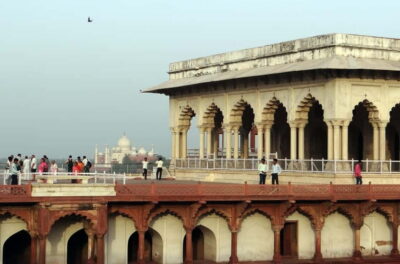
Day Trip to The Taj Mahal, Agra with Mathura & Vrindavan from Delhi
Read our review →
Magical Mathura Vrindavan Tour: Krishna’s Homeland
Read our review →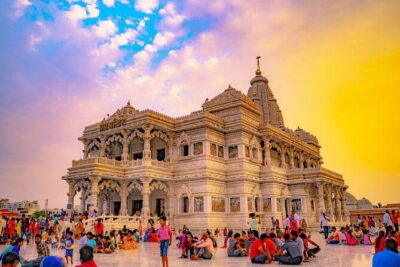

Browse the lists this tour appears in